

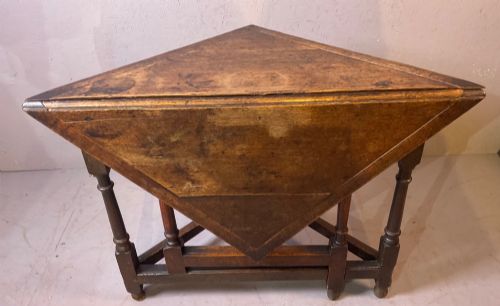


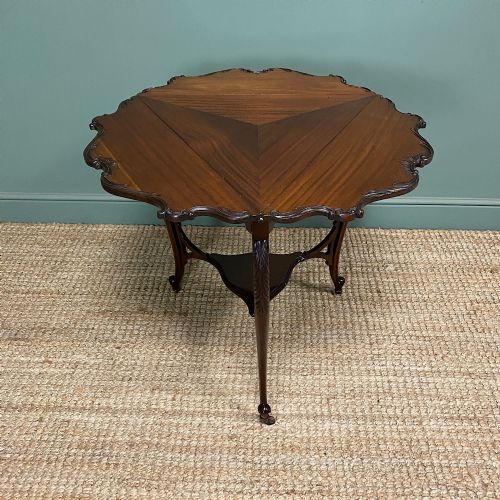


Triangular Drop Leaf Table
These triangular drop leaf tables are ingenious folding surfaces of the eighteenth and nineteenth centuries, designed to tuck neatly into corners or expand when needed.
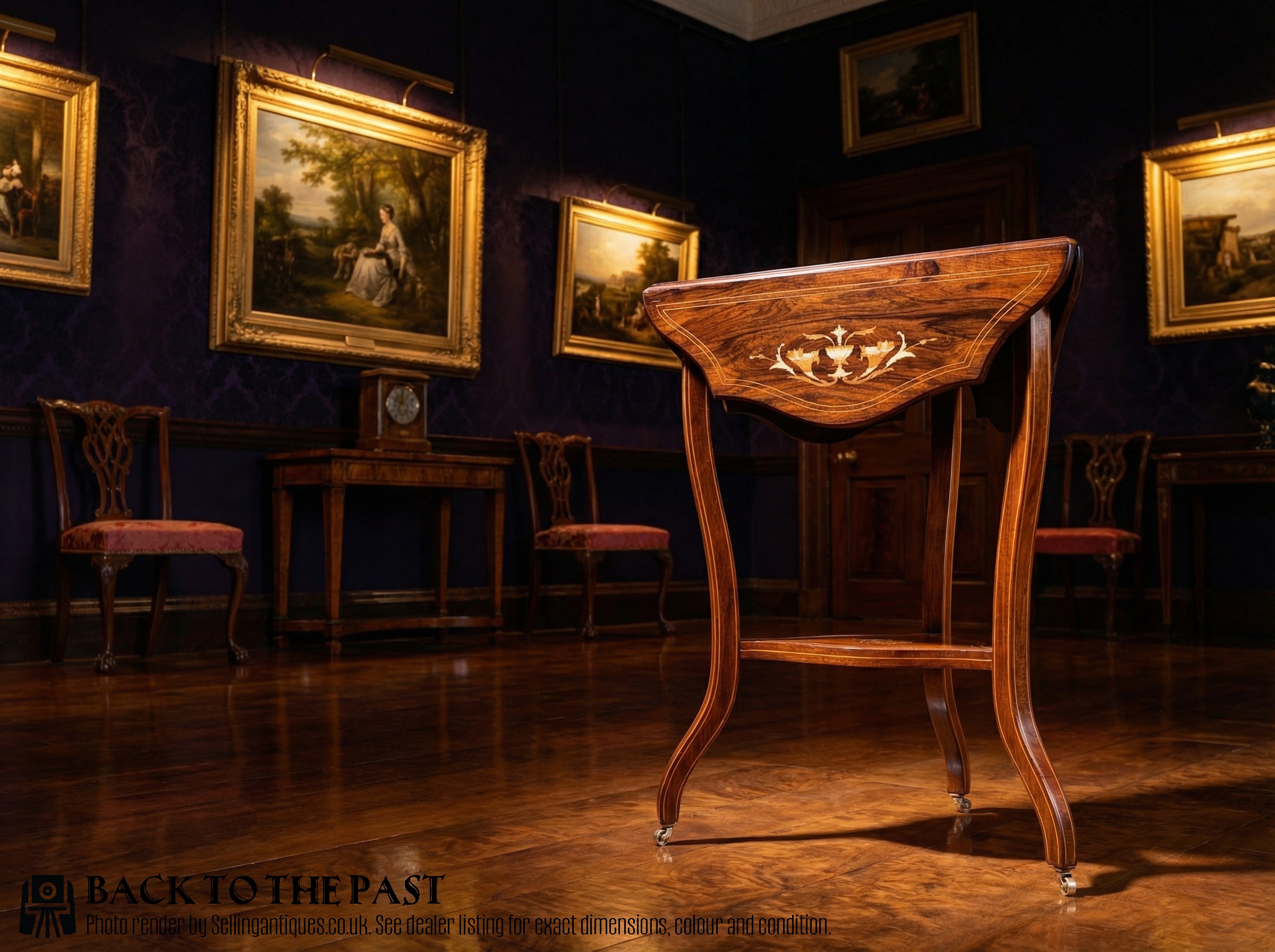
Triangular Drop Leaf Table
A triangular drop leaf table is an adaptable space-saving item of furniture that appears across several periods from the seventeenth century onwards. These pieces function as occasional tables, side tables, and console tables within domestic interiors, often designed to fit snugly into room corners.
The form encompasses various specific types including corner tea tables, handkerchief tables, and cricket tables. Buyers frequently encounter George II red walnut examples alongside later Victorian and Edwardian rosewood versions with intricate inlay.
Early iterations lean towards robust construction in oak and red walnut, while later nineteenth-century pieces favour decorative rosewood and satinwood inlay. The overarching characteristic is a hinged flap that folds out to transform the triangular footprint into a larger surface.
Materials and construction
Cabinet makers utilised a select palette of timber, predominantly relying on mahogany, oak, and rosewood for the primary structure. Decorative elements frequently involved boxwood and satinwood inlay to create contrasting geometric or floral patterns on the top surfaces.
The folding mechanisms depend on sturdy gate legs, pivoting flaps, and brass hinges that allow the triangular leaves to operate smoothly. Earlier pieces show solid oak or red walnut construction, whereas Victorian and Edwardian examples often employ delicate veneering and marquetry techniques.
Triangular Drop Leaf Table Retail Price Guide 2026
Typical asking prices for triangular drop leaf table among the pieces listed under this phrase on Sellingantiques today, from the lower quarter to the upper quarter. They describe what is for sale here now, not the wider market.
Some Victorian handkerchief tables possess such intricate folding flaps that guests might need a demonstration to unfold them correctly.
Judging quality and craft
Quality rests heavily on the integrity of the timber selection and the precision of the folding mechanism. Superior examples display tightly figured grain, harmonious inlay work, and joints that remain stable when the leaves are fully extended.
The finesse of the carving and the condition of the original brass fittings distinguish finer workshop output from more utilitarian items. Balance and proportion are paramount, ensuring the table stands firmly whether folded against a wall or opened in the centre of a room.
The Triangular Drop Leaf Table Glossary
- Drop leaf table
- A table with a fixed central section and hinged flaps that fold down to save space or lift up to enlarge the surface area. These mechanisms were vital in smaller rooms of the Georgian and Victorian periods.
- Marquetry
- The art of applying pieces of veneer to a structure to form decorative patterns and pictures. Makers often utilised contrasting woods like satinwood and boxwood on rosewood surfaces.
- Cricket table
- A small three-legged occasional table, typically dating from the seventeenth or eighteenth century in oak. The three-legged design ensured stability on uneven floors.
- Gate leg table
- A table with legs on hinged frames that swing out to support the drop leaves when raised. This design provides sturdy structural support beneath the extended flaps.
- Pad foot
- A simple foot shape where the leg terminates in a rounded, flattened pad resting directly on the floor. This feature is commonly found on eighteenth-century furniture forms.
Triangular Drop Leaf Table: Frequently Asked Questions
How were triangular tables used historically?
These tables served multiple functions in domestic spaces, acting as tea tables in corners during the Georgian period or as occasional display surfaces in Victorian drawing rooms. Their triangular shape allowed them to fit neatly into room angles when folded.
When unfolded, they provided temporary surface area for dining, writing, or displaying flowers without permanently dominating the floor space of smaller rooms.
What is a handkerchief table?
A handkerchief table is a specific form of folding table featuring a triangular top that resembles a folded square handkerchief. These clever pieces often include trifold mechanisms.
They gained popularity in various woods like mahogany and rosewood, offering a decorative surface that could expand dramatically when the hinged flaps were opened.
How do I date a drop leaf table?
Dating relies on examining the timber species, construction joints, and decorative styles present on the piece. Seventeenth and early eighteenth-century examples are typically fashioned from solid oak or red walnut.
Later Victorian and Edwardian iterations frequently incorporate rosewood with satinwood inlay, alongside differing hinge technologies and finishing techniques.
Where should I place this table at home?
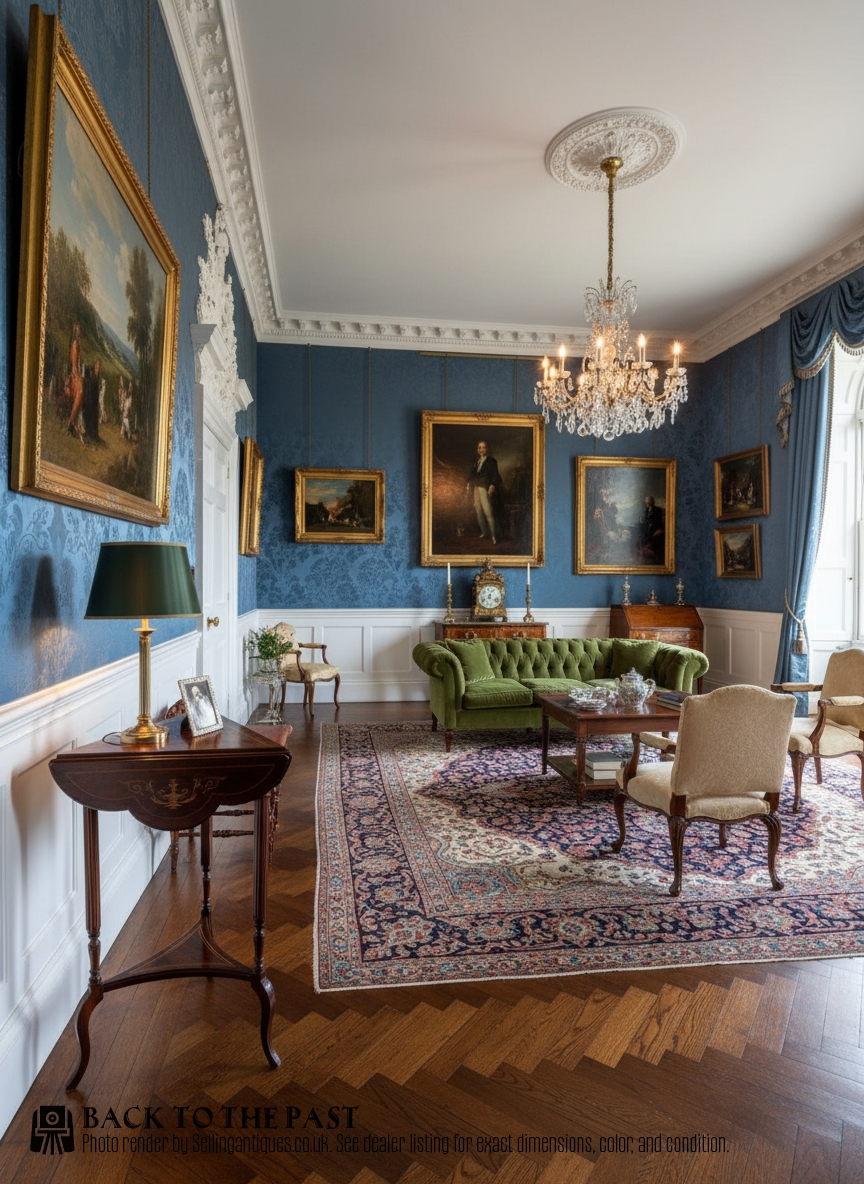
These tables work exceptionally well in hallways, living rooms, and bedrooms where space is at a premium. Placing one flat against a wall utilises its triangular footprint effectively.
Opening the leaves allows the piece to function as a central lamp table or side table when guests visit, combining decorative presence with practical adaptability.