
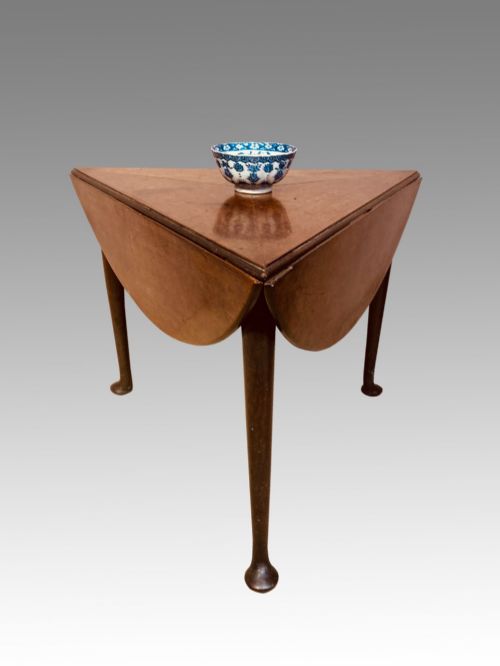
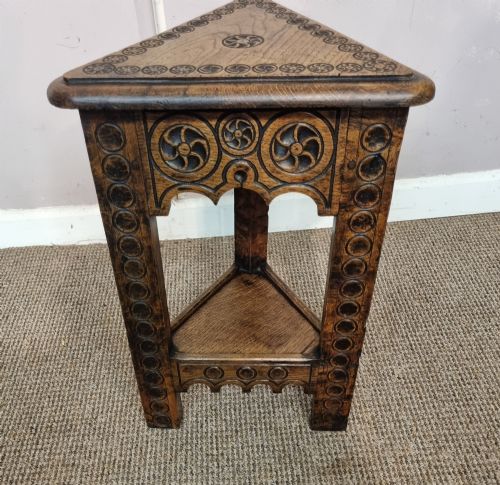


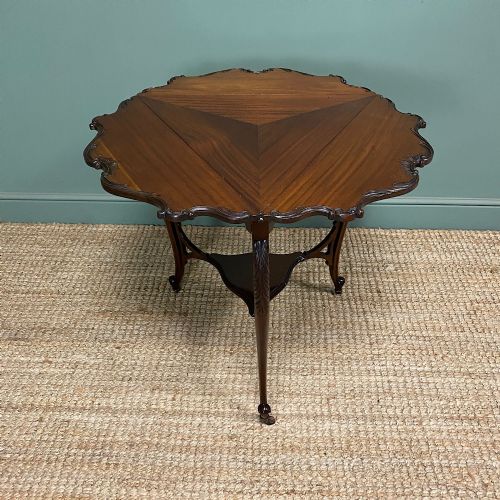


Triangular Occasional Table
These triangular occasional table pieces offer neat, compact surfaces for small corners, combining clever folding mechanisms with rich timber grains.
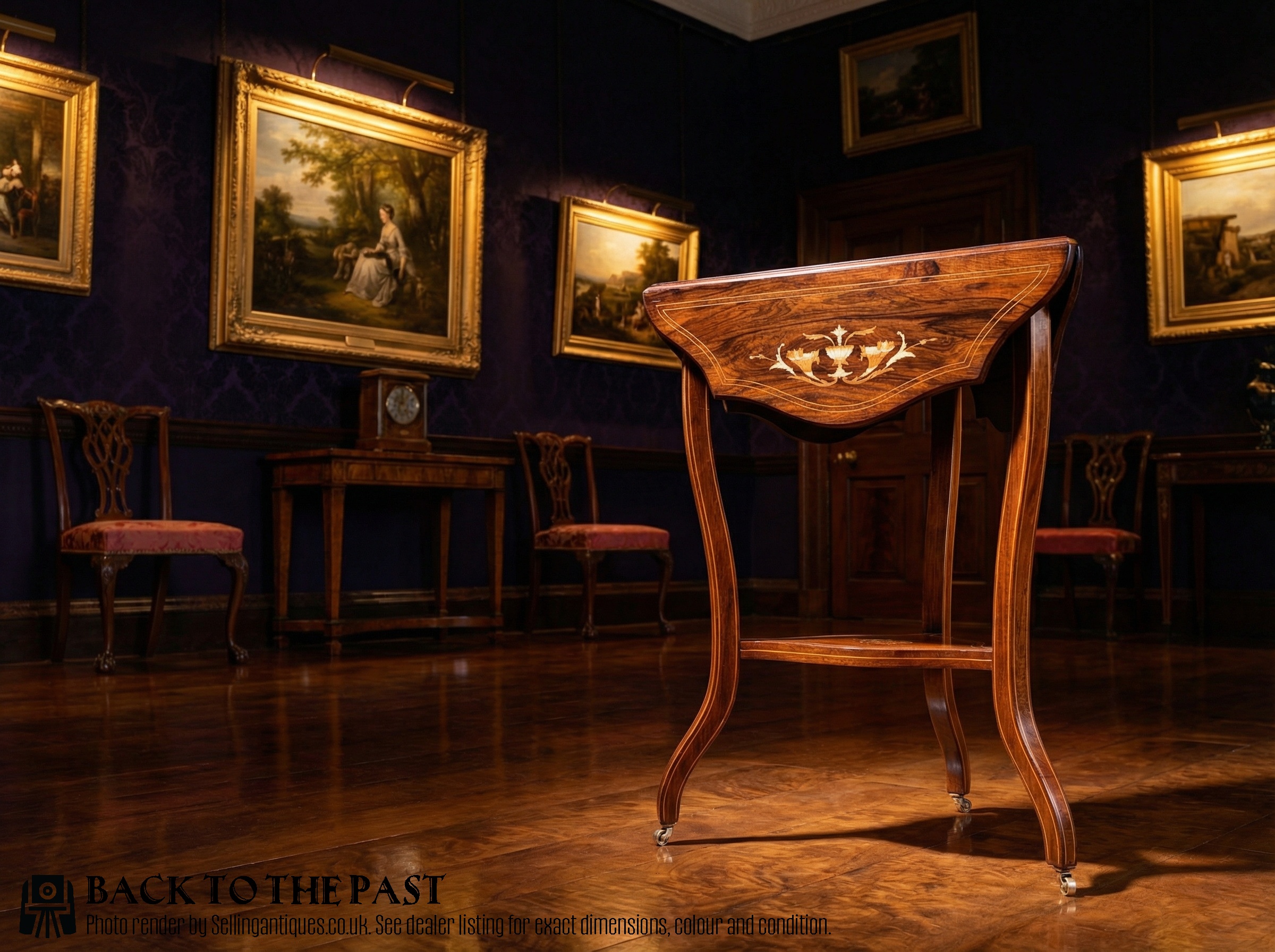
Triangular Occasional Table
A triangular occasional table brings a distinct three-sided footprint to a room, fitting neatly into corners or serving as a compact centrepiece. The selection includes drop leaf variants, folding corner tables, and drop flap designs that expand when needed.
Most examples you meet here date from the Victorian, Edwardian, and Georgian periods, with earlier 18th-century oak forms also appearing. Makers utilised varied formats like handkerchief tables, cricket tables, and lift top storage pieces to maximise utility in smaller spaces.
Styles range across Gothic Revival, Arts and Crafts, Aesthetic Movement, and English Country, reflecting how different eras reinterpreted the three-legged or three-sided form. Whether in dark oak or inlaid rosewood, each piece provides a functional surface with historical character.
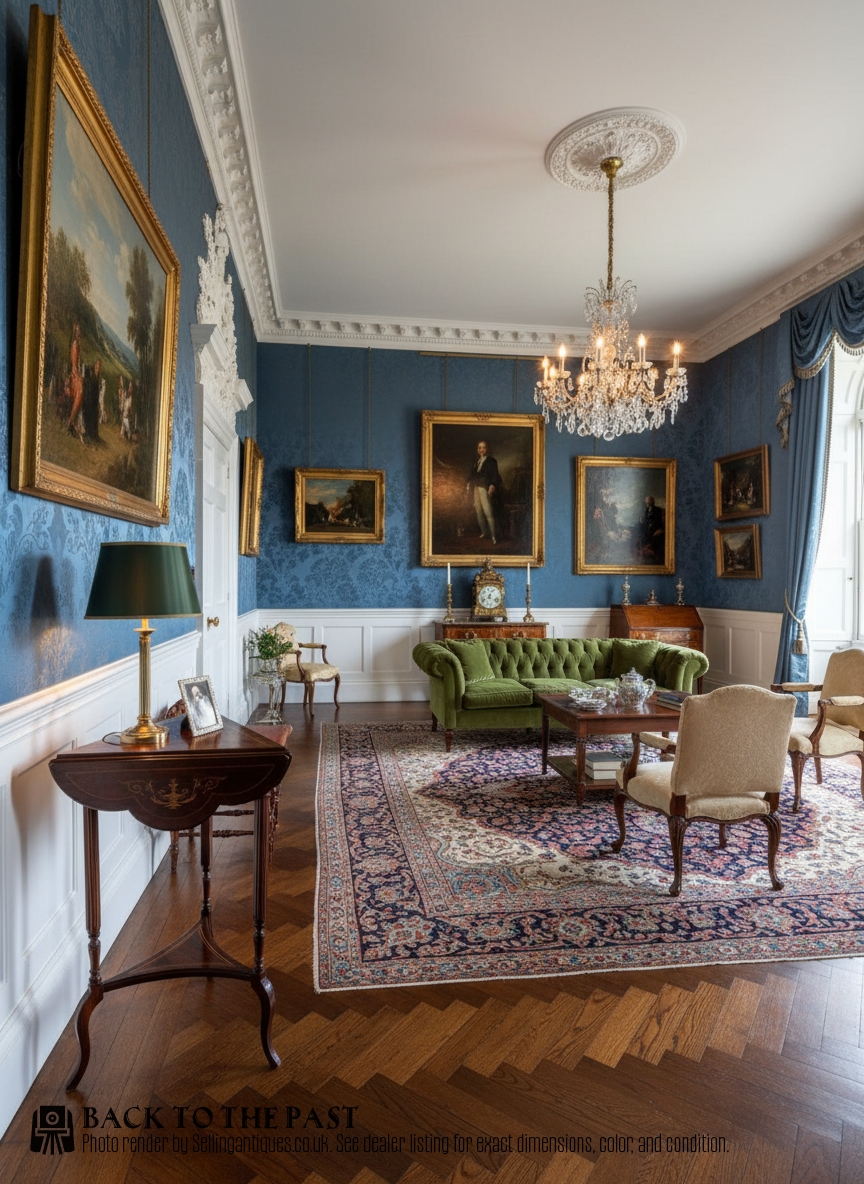
Materials and construction
Makers built these tables from timbers such as rosewood, mahogany, oak, red walnut, and elm, often applying boxwood or satinwood inlay to enrich the surfaces. Brass hinges and folding brackets support the drop leaves and flaps on many of the designs.
Carpenters joined the three-sided frames using traditional methods to ensure stability on three legs, integrating clever pivoting leaves and trifold mechanisms. Surface decoration relies on marquetry, contrasting stringing, and carved detailing rather than applied metalwork.
Listings span periods from the 18th century through to the Edwardian era, featuring woods like rosewood, oak, mahogany, and elm.
Distinguishing quality
The sophistication of the timber selection and the precision of the inlay set the finer examples apart from simpler utilitarian pieces. Dense rosewood figures combined with crisp satinwood stringing indicate workshop effort above standard domestic furniture.
The mechanical ingenuity of the folding or drop leaf action dictates how successfully a table bridges display and daily utility. Smooth operation of the pivoting leaves and stability in the three-legged frame separate superior cabinetmaking from basic construction.
The Triangular Occasional Table Glossary
- Drop leaf table
- A table with hinged flaps on the sides that fold down to save space or lift up to enlarge the surface. These are common among the rosewood and mahogany pieces.
- Marquetry
- Decorative patterns formed by the insertion of pieces of wood, shell, or ivory into a veneer to form geometric or floral designs. This technique appears frequently on Victorian examples.
- Cricket table
- An early three-legged wooden table, typically in oak or elm, designed for uneven floors. The three legs ensure it stands firmly without rocking.
- Handkerchief table
- A small folding table with a triangular top that opens out, named for its resemblance to a folded square of cloth. These often feature drop leaves supported by swing legs.
- Inlay
- A method of ornamenting a surface by embedding pieces of contrasting wood, such as boxwood or satinwood, flush with the surrounding timber.
Triangular Occasional Table: Frequently Asked Questions
What is a triangular occasional table?
A triangular occasional table is a small, three-sided piece of furniture designed for flexible placement in corners or compact rooms. Many feature folding leaves or drop flaps to alter their footprint.
These tables date across several centuries, appearing in sturdy oak for early country houses and polished rosewood with inlay for later Victorian parlours.
How do you use a folding triangular table?
Folding triangular tables serve as lamp stands, display surfaces, or small side tables that can expand when extra top space is required. The drop leaves lift on pivoting wooden supports or brass hinges.
In daily life, they tuck neatly into corners to hold books or decorative objects without blocking walkways.
How do I date an antique triangular table?
Dating relies on timber choice, construction methods, and decorative styles visible across the piece. Georgian and 18th-century examples tend to use solid oak, mahogany, or red walnut with simpler lines.
Victorian and Edwardian versions frequently showcase rosewood veneers, marquetry, and intricate satinwood inlay reflecting Aesthetic Movement or Arts and Crafts tastes.