


Edwardian Corner Table
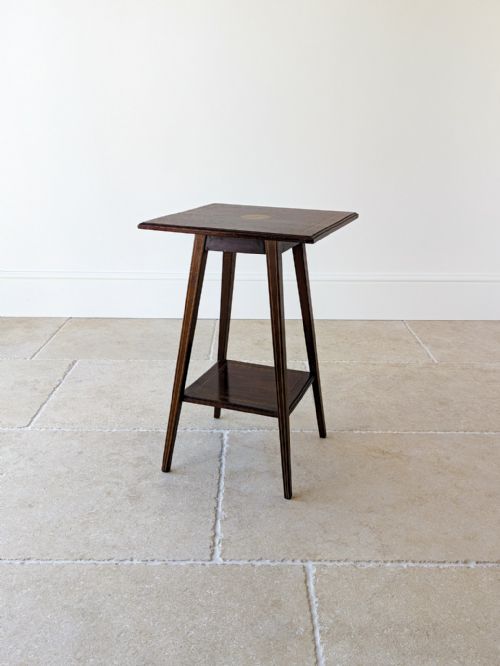
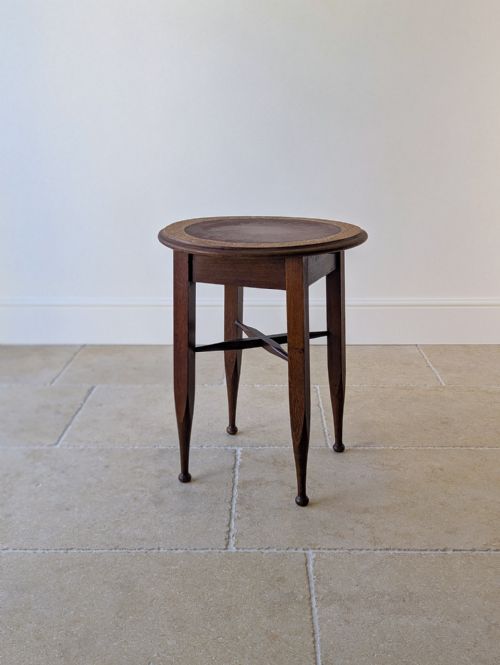
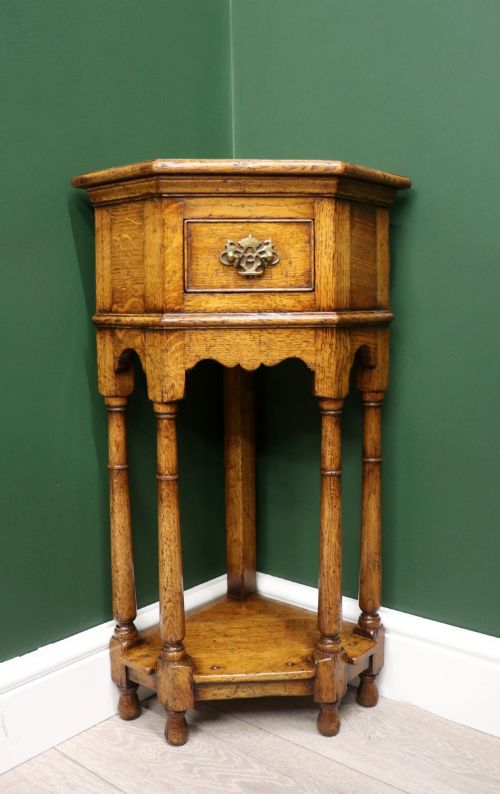
An edwardian corner table brings useful surface space into tight domestic spots, built mostly in mahogany, rosewood and oak with period detail.
Edwardian Corner Table
An edwardian corner table fills unused room angles with compact surfaces intended for lamps, plants or small ornaments, appearing most often in mahogany and rosewood. These pieces date principally from the early twentieth century, though related examples span from late Victorian decades into the nineteen-twenties.
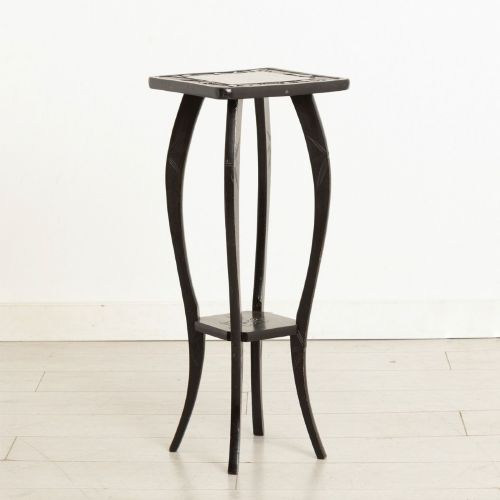
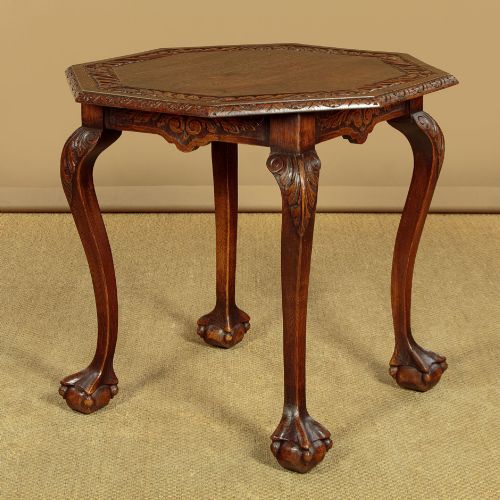
The selection ranges from simple oak frames to delicate sheraton revival designs featuring satinwood inlay and drop leaves. Triangular and multi-tiered formats dominate the selection, making efficient use of interior perimeters.
Materials and Construction
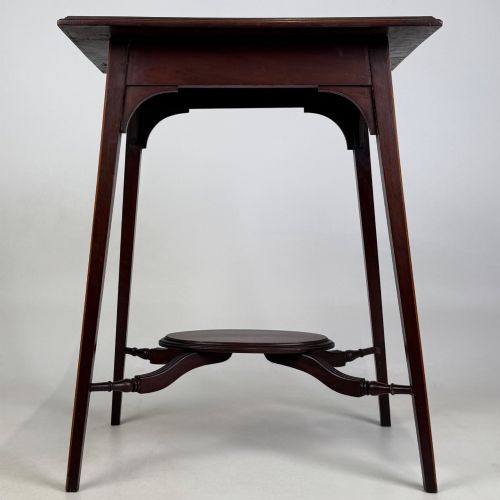
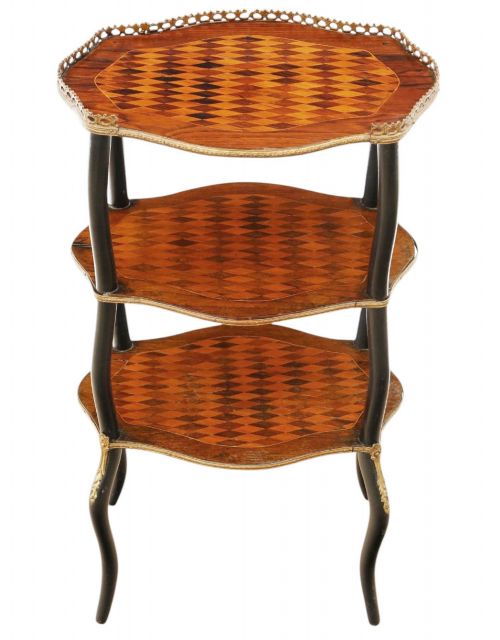
Cabinet makers built these tables using dense timbers like mahogany, walnut, rosewood and oak, often incorporating boxwood and satinwood inlay to create contrasting borders and decorative motifs. Brass fittings occasionally appear on hinges, castors or drop handles, while turned legs provide structural support.
Joinery methods of the period relied on secure mortise and tenon joints for frames, alongside finely cut veneers applied to stable softwood or hardwood cores. Drop leaf mechanisms and tiered shelving structures required careful hinge placement and balanced weight distribution.
The listings on this site combine mahogany, rosewood, oak and walnut with decorative satinwood inlay across multiple decades.
Evaluating Execution
The distinction between standard utility items and finer examples rests in the precision of the parquetry, the crispness of carved wooden details and the selection of figured timber veneers. Superior pieces display harmonious grain matching across table tops and meticulous inlay work that remains flush with the surrounding wood.
Structural integrity also separates the tier of pieces: stable leg joints, smooth operation of drop leaf flaps and original brass hardware indicate higher workshop standards during manufacture.
Liberty of London
The Edwardian Corner Table Glossary
- Edwardian
- A stylistic period spanning the reign of King Edward VII and the early twentieth century, characterised by lighter furniture forms and revivals of earlier eighteenth-century designs.
- Inlay
- A decorative technique where contrasting woods, such as boxwood and satinwood, are fitted into recesses carved into the primary timber surface.
- Drop leaf
- A table top design featuring hinged flaps that fold down to save space when the surface is not in use.
- Sheraton Revival
- A late nineteenth and early twentieth century style copying the classical symmetry, fine tapering legs and delicate marquetry associated with designer Thomas Sheraton.
- Parquetry
- Geometric mosaic woodwork arranged in patterns resembling tiles, frequently used to ornament table tops.
Edwardian Corner Table: Frequently Asked Questions
Where did people place these tables?
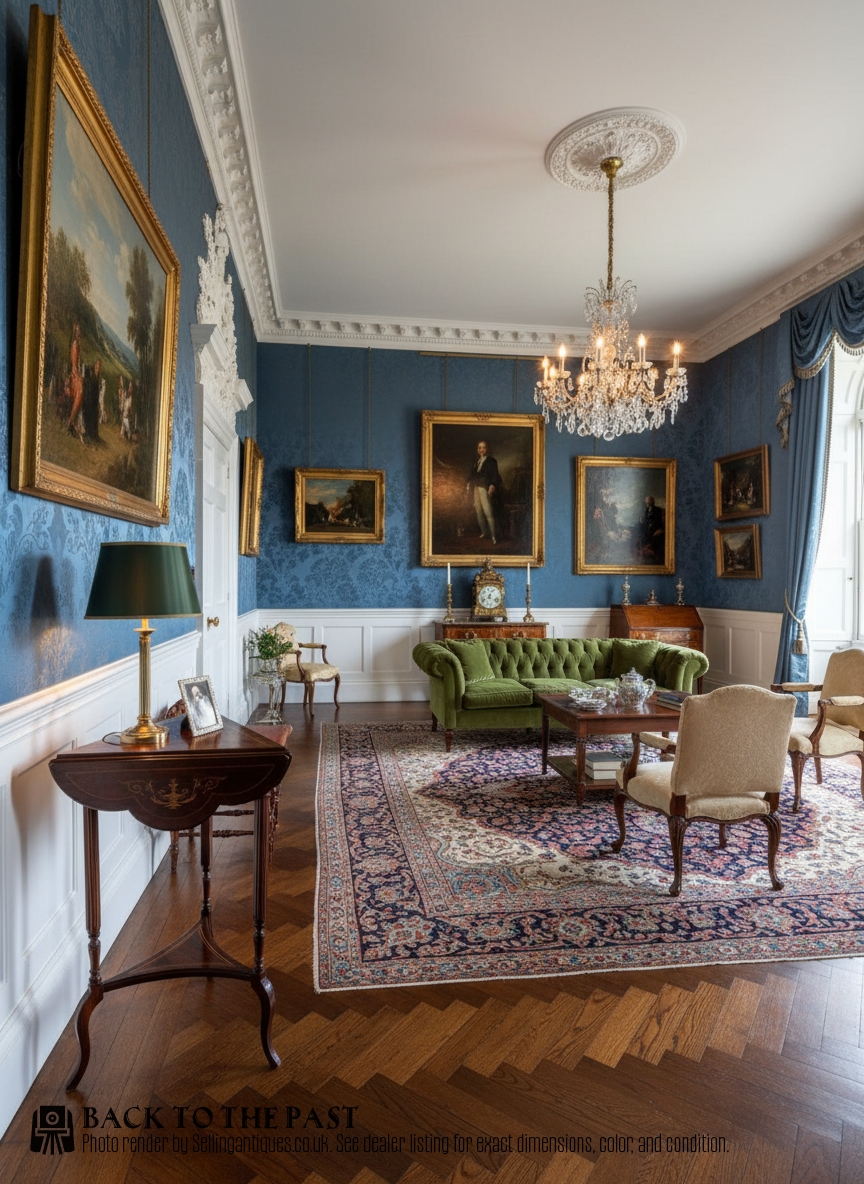
These tables fit neatly into empty room corners where standard square furniture would block pathways. Homeowners used them to hold table lamps, small clocks or decorative ceramic plant pots.
Their compact triangular or multi-tiered shapes made them practical additions to hallways, drawing rooms and studies without cluttering the floor plan.
How do I spot a sheraton revival piece?
Sheraton revival items display lighter proportions, straight tapered legs and contrasting satinwood stringing. Makers drew inspiration from eighteenth-century neoclassical designs.
Look for symmetrical geometric inlay, polished mahogany surfaces and refined banding around the edges of the table top.
Are drop leaves common on corner tables?
Drop leaves appear frequently on rosewood and mahogany examples from this era. Hinged flaps allowed owners to expand the surface area when hosting guests.
When folded down, the table sat flush against the intersecting walls to maintain an open walkway.
What woods were used most often?
Mahogany and rosewood serve as the primary dark timbers for polished parlour tables. Oak appears more often in arts and crafts or country vernacular formats.
Lighter woods like satinwood and boxwood provided contrast through inlaid borders and decorative motifs.