

Edwardian Inlaid Lamp Table
When searching for an edwardian inlaid lamp table, buyers encounter small occasional furniture designed to hold portable lighting beside seating.
Edwardian Inlaid Lamp Table
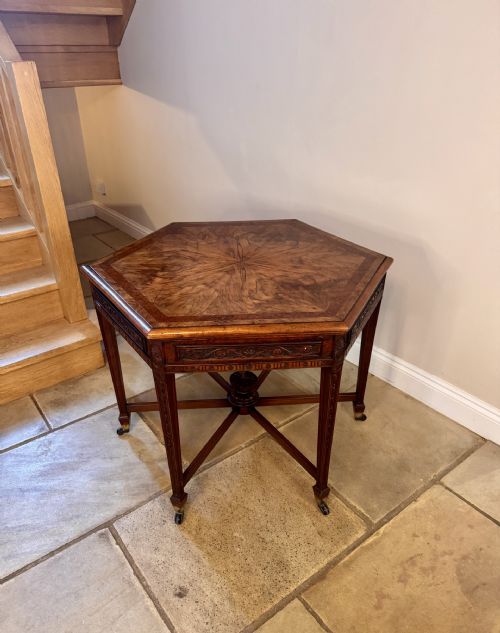
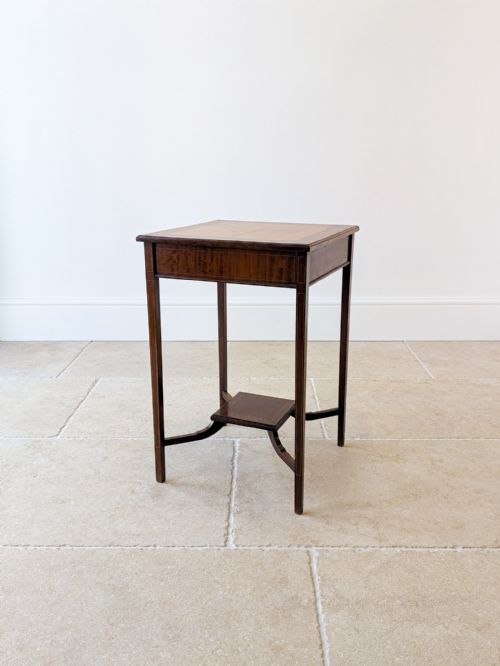
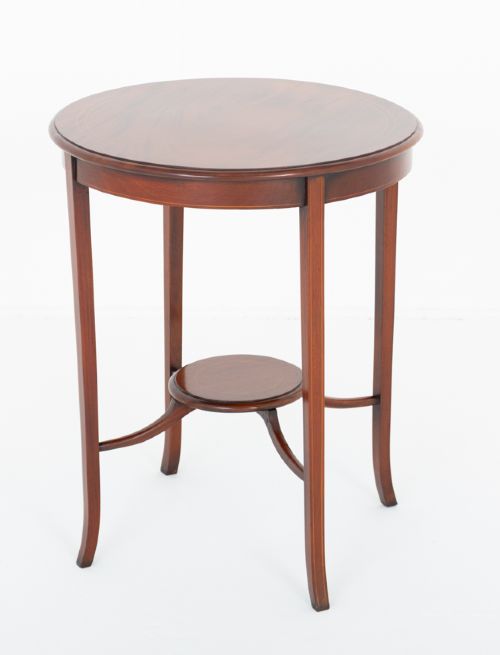
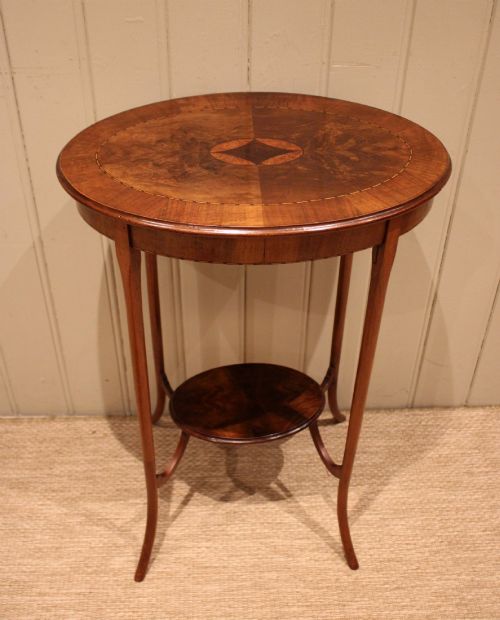
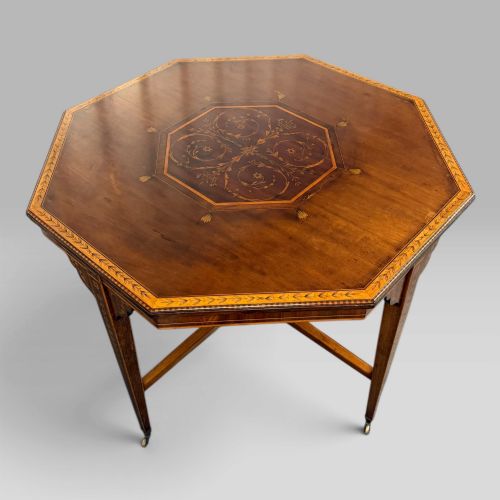
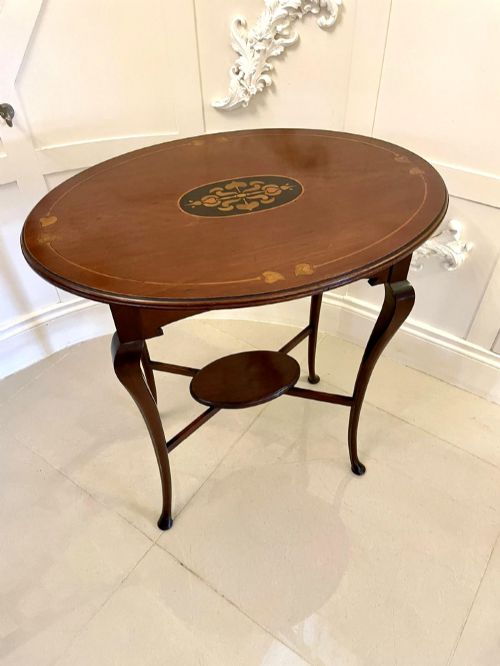
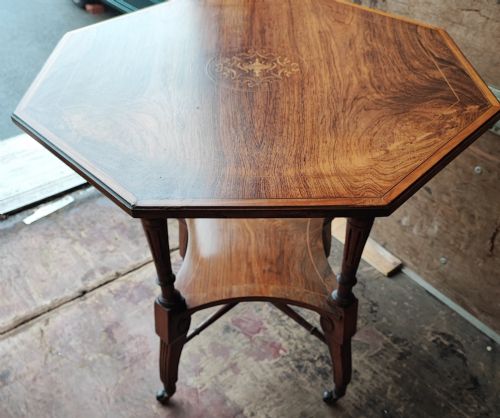
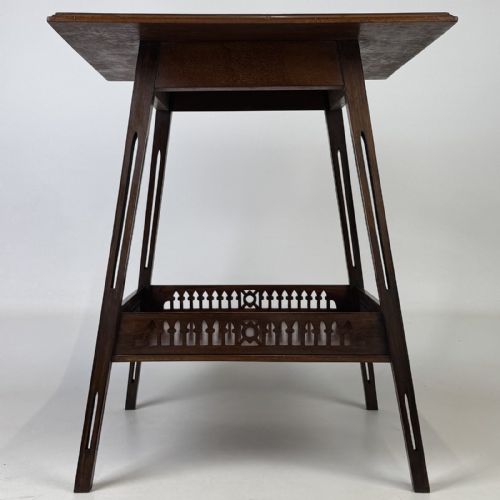
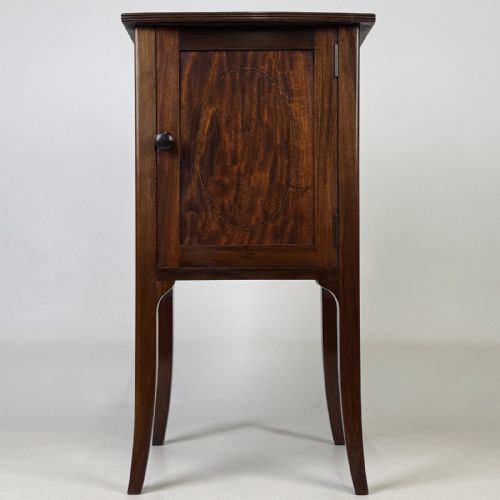
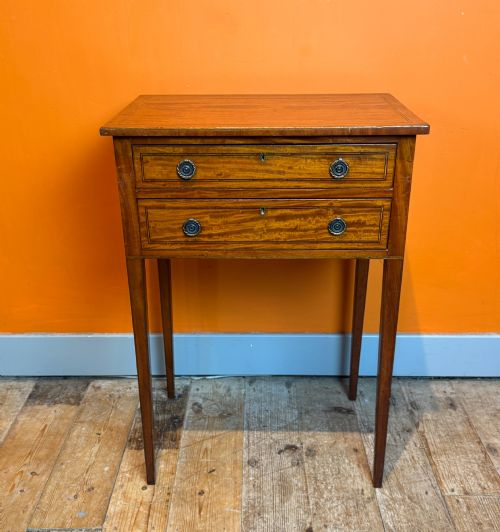
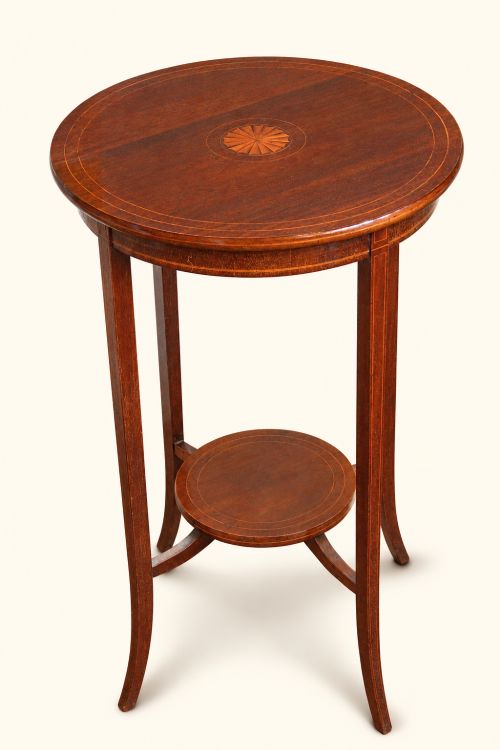
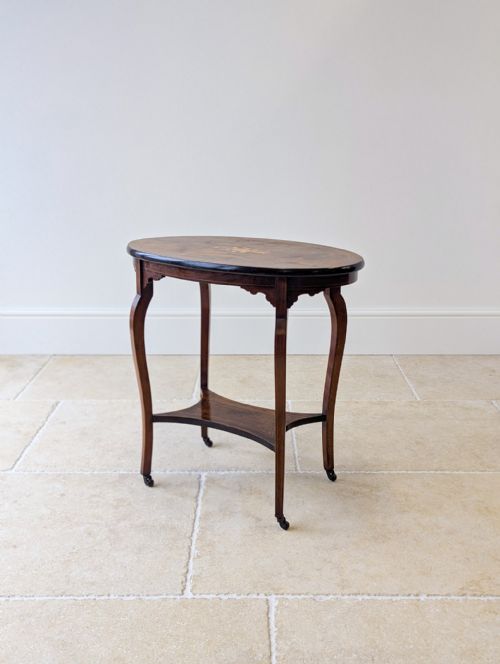
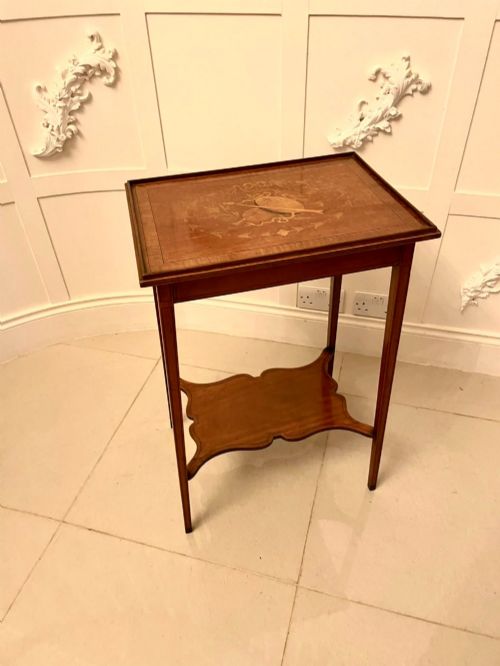
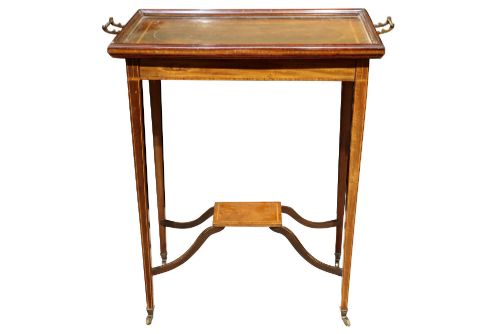
The edwardian inlaid lamp table emerges primarily from the period around the turn of the twentieth century, drawing on late Victorian precedents and Sheraton Revival taste. These pieces take various forms including circular, oval, octagonal and rectangular tables, often serving multifunctional roles as side, wine or occasional tables. Most examples discovered on this page date from the Edwardian era through to the early decades of the twentieth century, constructed for domestic sitting rooms and halls.
How they were made
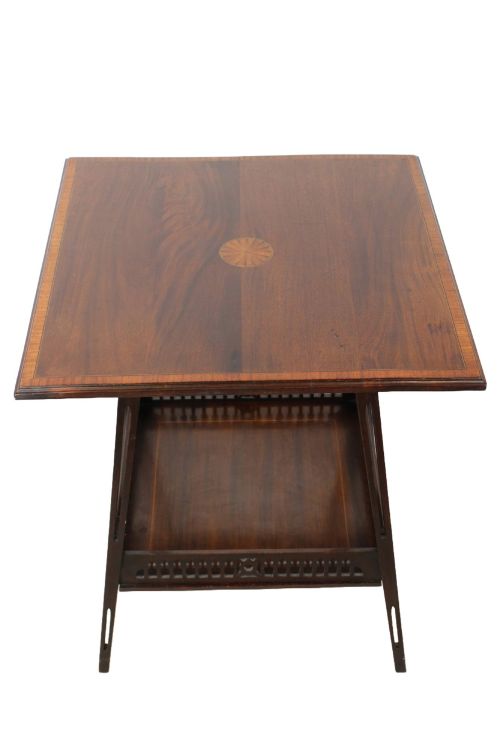
Cabinet makers utilised mahogany as the primary timber for these tables, frequently combining it with contrasting woods such as satinwood, boxwood and rosewood for decorative effect. Surfaces receive delicate stringing and marquetry motifs, which define the edges of tabletops and panels with geometric or floral patterns.
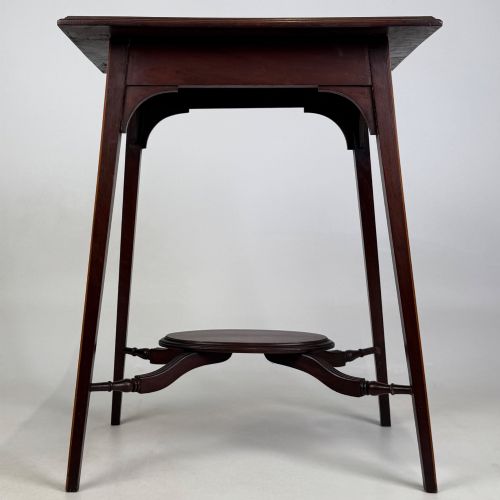
Construction techniques involve traditional framing and jointing to support slender legs, which sometimes manifest as tapered square supports, delicate turned stems or tripod configurations. Inlaid sections are set flush into the primary timber ground, demonstrating precise woodworking standards typical of the period.
Edwardian Inlaid Lamp Table Retail Price Guide 2026
Typical asking prices for edwardian inlaid lamp table among the pieces listed under this phrase on Sellingantiques today, from the lower quarter to the upper quarter. They describe what is for sale here now, not the wider market.
Several tables include hidden silk pockets designed specifically for Victorian needlework, proving that historical tidiness involved a surprising amount of fabric.
What varies in quality
The distinction between standard commercial production and finer workshops lies in the selection of figured timber veneers and the precision of the marquetry inlay. Superior examples display carefully matched grain patterns across the top and intricate, tight-fitting wood contrasts without gaps around the borders.
Structural harmony also dictates standing value, where slender legs meet aprons with robust internal joints rather than relying solely on adhesive. Attention to secondary details, such as finished undershelves or fine brass fittings on drop-leaf supports, separates workshop pieces from mass-market output.
Trevor Page & Co·Liberty & Co·William Birch·Collingson & Lock·Maples & Co
The Edwardian Inlaid Lamp Table Glossary
- Inlay
- A technique where pieces of contrasting wood, shell or metal are embedded into a recess within the primary surface to form a decorative design. This method provides the characteristic ornamentation found across Edwardian occasional furniture.
- Marquetry
- Elaborate veneer work assembled into pictorial or decorative patterns before being applied to a carcass or tabletop. It differs from simple stringing by forming complex compositions of various wood species.
- Occasional table
- A movable, small-scale table designed for specific, intermittent household tasks rather than permanent dining or writing use. These forms include lamp tables, wine stands and plant supports.
- Sheraton Revival
- A design style popular during the late nineteenth and early Edwardian periods that reinterpreted the light, neoclassical forms associated with eighteenth-century designer Thomas Sheraton. It relies on satinwood, slender supports and delicate floral inlay.
- Stringing
- Narrow strips of contrasting timber let into grooves on table borders and legs to create thin linear framing lines. This decorative banding typifies Edwardian cabinet work.
Edwardian Inlaid Lamp Table: Frequently Asked Questions
How do I use a lamp table today?
These tables adapt easily to modern rooms as bedside stands, plant supports or surfaces for reading lights beside low seating. Their compact footprints allow placement in narrow hallways or corners where larger furniture cannot fit.
Positioning them away from direct heat sources prevents timber splitting and protects the delicate inlaid veneers from drying out over time.
Were these tables only used for lamps?
Original domestic use encompassed a wide range of small household tasks, including holding tea services, displaying decorative ornaments or supporting sewing baskets. Some incorporate drop leaves or folding tops intended for card games and casual writing.
Such versatility explains the variety of top shapes, from octagonal display surfaces to round trays designed to contain small items safely.
How do I distinguish Edwardian from Victorian tables?
Edwardian tables generally feature lighter proportions, paler secondary timbers like satinwood, and more restrained neoclassical inlay derived from Sheraton Revival patterns. Victorian predecessors tend to use heavier mahogany or walnut with darker finishes and denser carvings.
Examining the underside and drawer construction, where present, often reveals the lighter framing characteristic of the Edwardian period.
What is satinwood crossbanding?
Crossbanding involves applying a border of veneer where the grain runs perpendicular to the main surface timber, often using bright satinwood to create a contrasting frame around the tabletop. This technique draws the eye toward the centre panel and highlights the geometric shape of the table.
Cabinet makers used this method extensively on late nineteenth and early twentieth-century occasional furniture to add visual depth without heavy carving.