


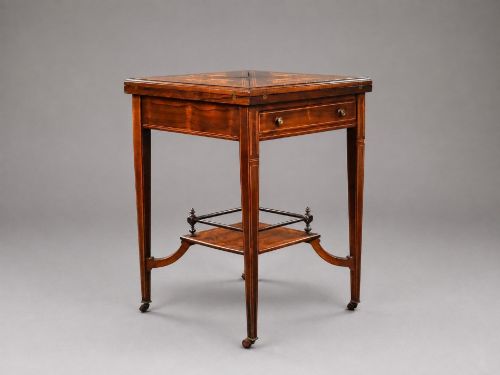
Inlaid Folding Table
When you handle an inlaid folding table, you touch centuries of clever engineering designed to transform domestic spaces with timber, brass and meticulous craft.
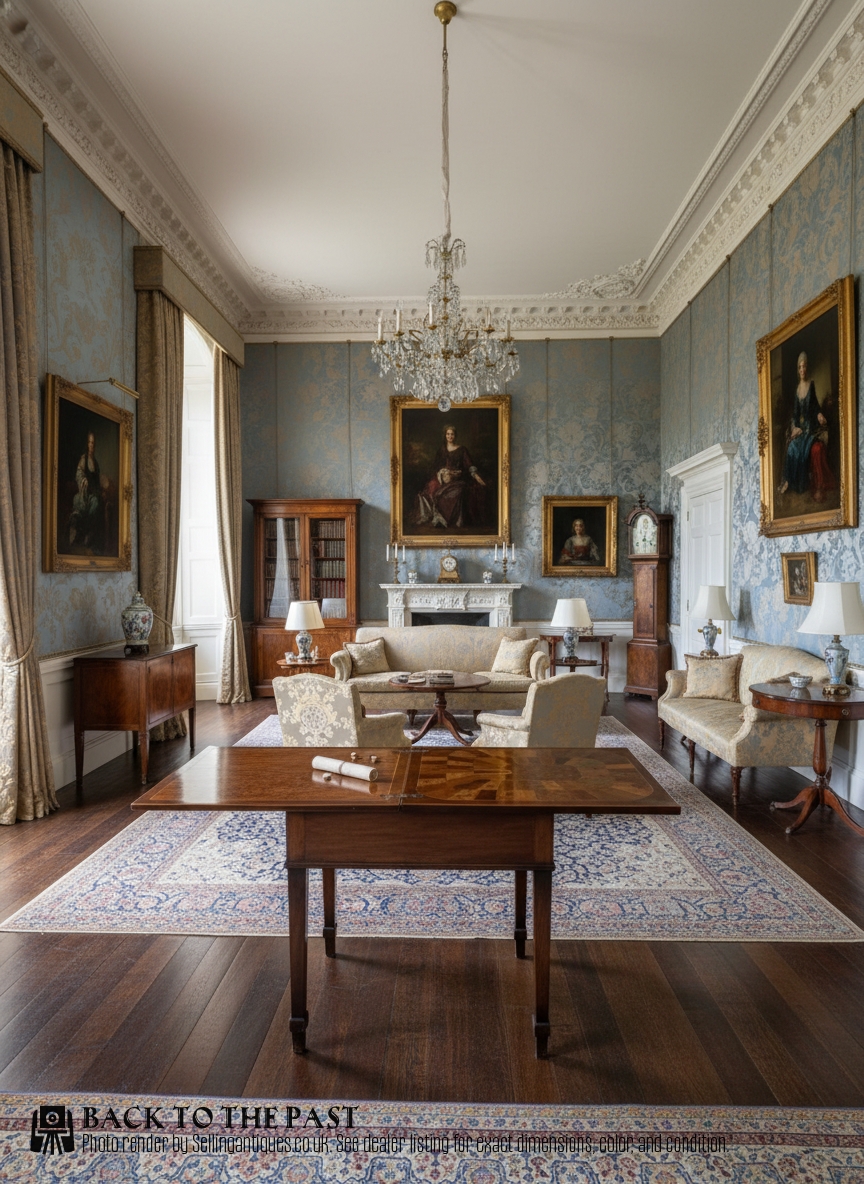
Inlaid Folding Table
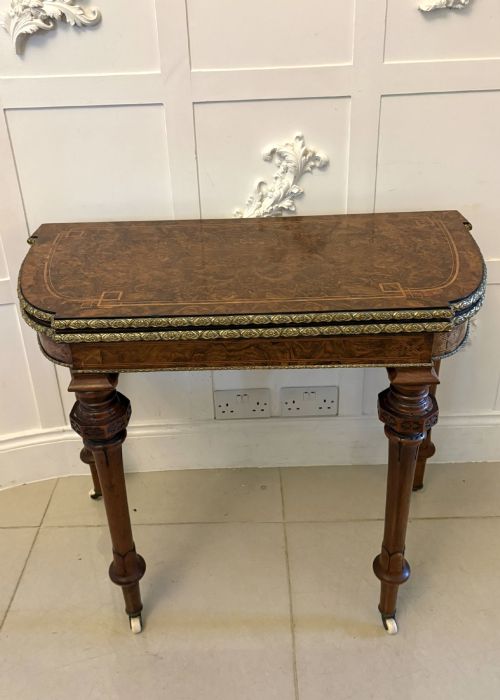
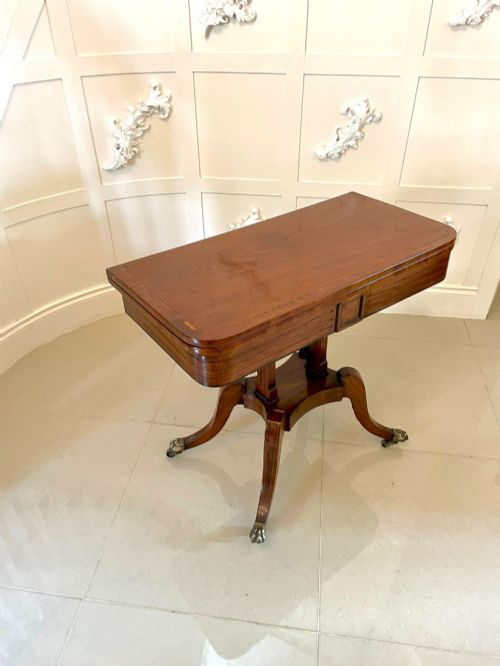
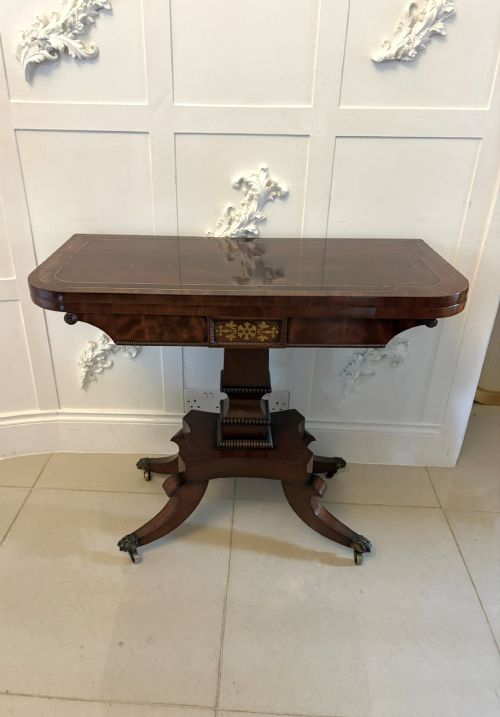
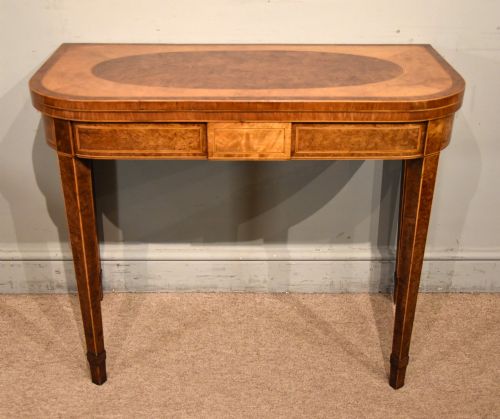
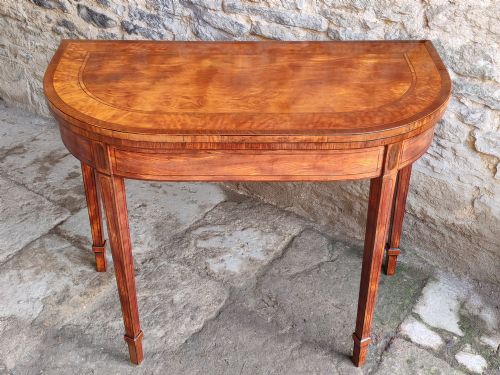
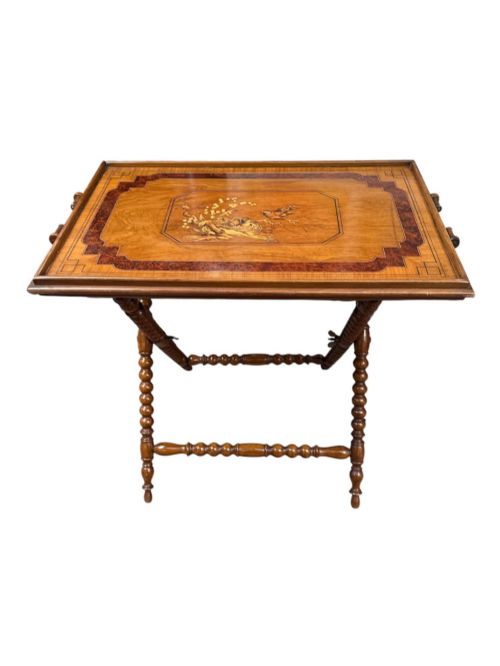
An inlaid folding table serves multiple functions, appearing primarily as card tables, games tables, tea tables and occasional tables across Georgian, Regency, Victorian and Edwardian periods.
The form relies on hinged tops, swivel mechanisms or collapsible stands that allow surfaces to expand for social use and fold flat against a wall when not needed.
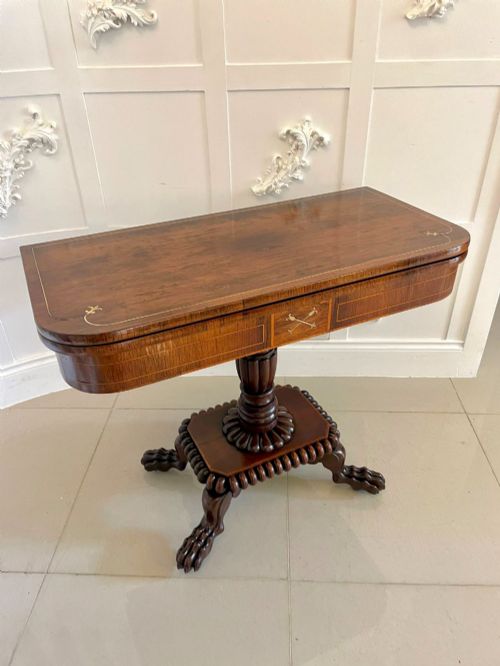
Mahogany and rosewood provide the primary structural timbers, whilst satinwood, boxwood, mother of pearl and bone form intricate decorative motifs across the surfaces.
Materials and technique
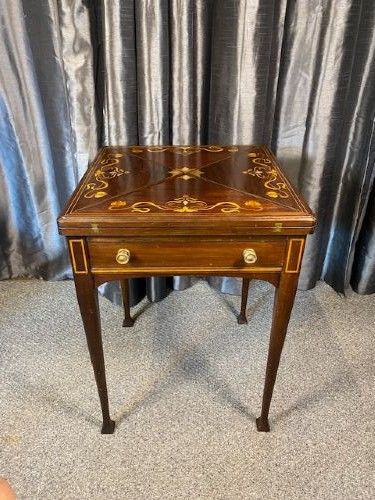
Cabinetmakers applied delicate wood veneers and stringing into solid timber carcases, utilising contrasting species like boxwood and ebony to create geometric or floral borders.
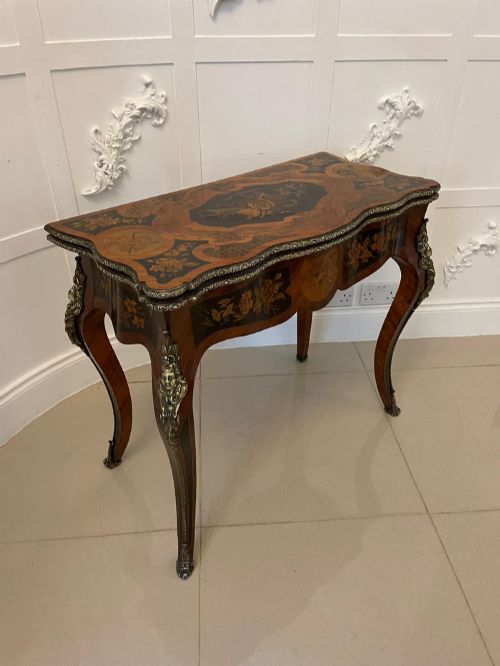
Brass inlay and ormolu mounts feature prominently on Regency and Victorian examples, contrasting sharply against dark tropical hardwoods and polished fruitwoods.
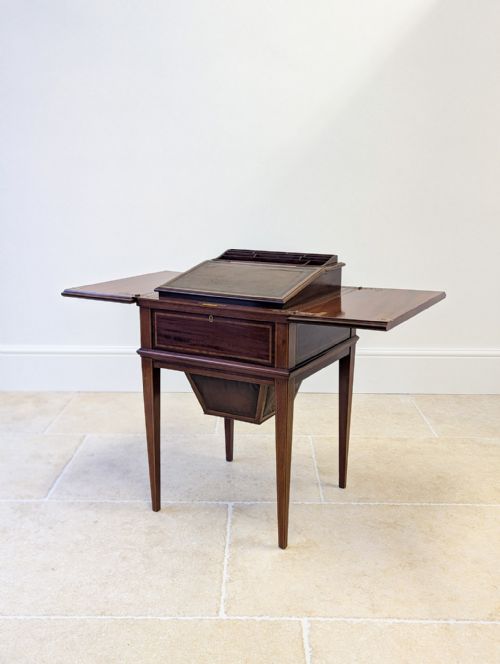
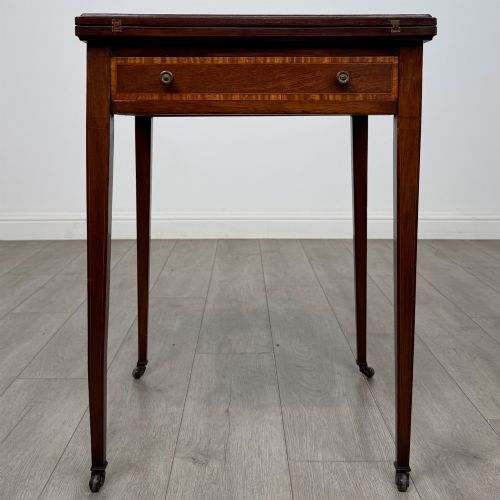
Folding mechanisms rely on precision hinges, rotating rule joints and complex underframes that support cantilevered leaves without sagging.
Some nineteenth-century tables cleverly concealed chess, backgammon and card playing surfaces within a single rotating top to settle after-dinner disputes.
The spectrum of quality
Quality reveals itself in the crispness of the timber selection, where highly figured veneers and perfectly aligned grain patterns distinguish superior workshops from standard production.
The integrity of the folding mechanism dictates daily utility; superior tables operate with smooth, silent precision where legs lock firmly into position without lateral movement.
Inlaid elements demonstrate craftsmanship through tight joints with zero visible filler, maintaining flush surfaces even after decades of seasonal wood movement.
George Bullock·Bruce And Burns Of Edinburgh·C Sterley
The Inlaid Folding Table Glossary
- Fold-over
- A table top hinged along the back edge that opens out to double the surface area, commonly supported by a swing leg or a pivoting frieze drawer.
- Marquetry
- Elaborate pictorial or geometric patterns assembled from thin veneers of various woods, shells or metals, glued onto a carcase.
- Stringing
- Very narrow strips of contrasting wood inlaid into channels in the solid timber to outline panels, drawers or table edges.
- Demilune
- A half-moon shape characteristic of side and card tables designed to sit flush against a wall when folded.
- Sutherland table
- A narrow drop-leaf table with exceptionally small flaps supported by swinging gate legs, often featuring inlaid surfaces.
Inlaid Folding Table: Frequently Asked Questions
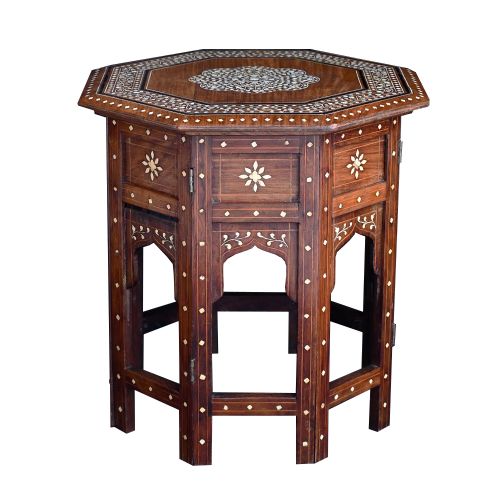
Where were octagonal folding tables made?
Octagonal folding tables frequently originate from Anglo-Indian workshops, particularly centres like Hoshiarpur, where artisans carved dense hardwoods and inlaid them with bone, ivory or brass.
These pieces feature collapsible arcaded or pierced bases designed for easy transport and assembly, combining regional carving traditions with British domestic utility.
How do I distinguish a Regency model from a Victorian one?
Regency tables often showcase clean architectural lines in mahogany or rosewood with restrained brass inlay and classical pedestal bases. Victorian pieces tend to introduce heavier proportions, burr walnut veneers, and more ornate marquetry or ormolu mounts.
Examining the internal secondary timbers and the style of the hinges provides further confirmation of the period of manufacture.
Can these tables be used for daily dining?
While many folding tables served multiple functions like tea, games and writing, their delicate hinges and veneered surfaces require careful consideration for heavy daily use.
Utilising coasters and protective pads helps preserve the antique polish and prevents moisture rings on the delicate timber and inlay work.