

French Card Table
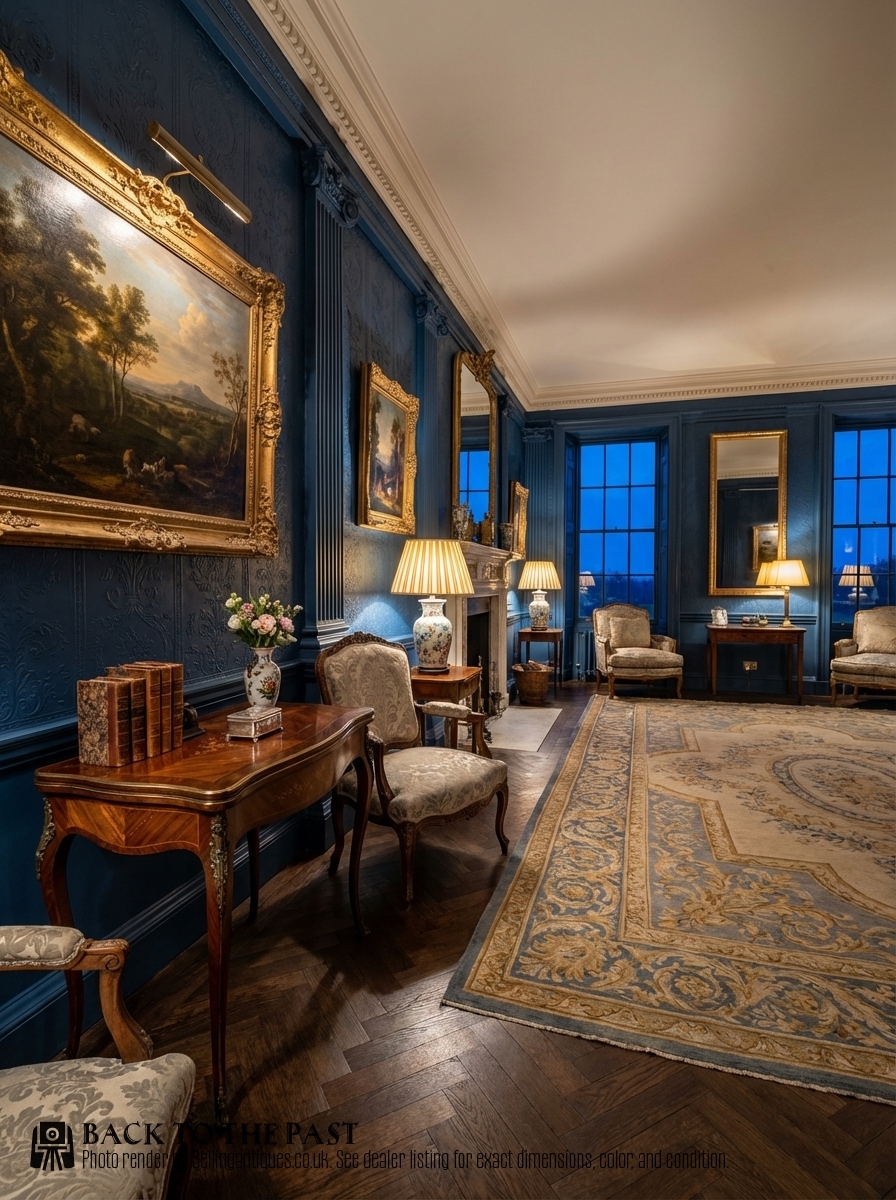
A french card table brings tactile elegance to an interior, offering a concealed surface for social play that transforms effortlessly into a console.
Identifying the French Card Table
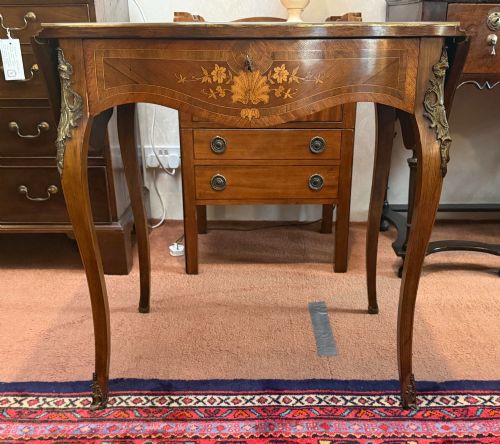
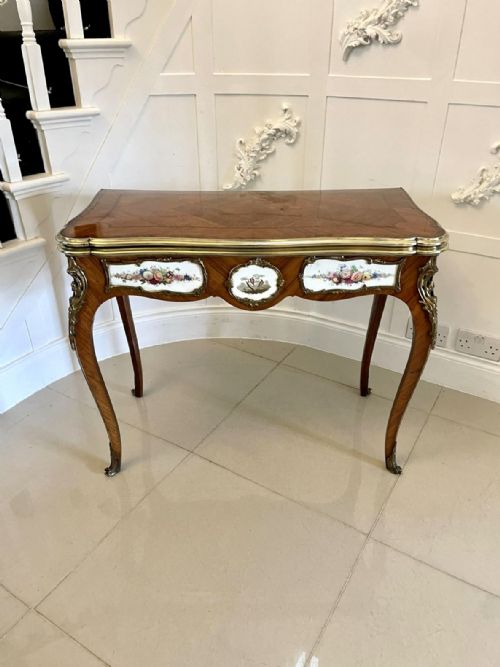
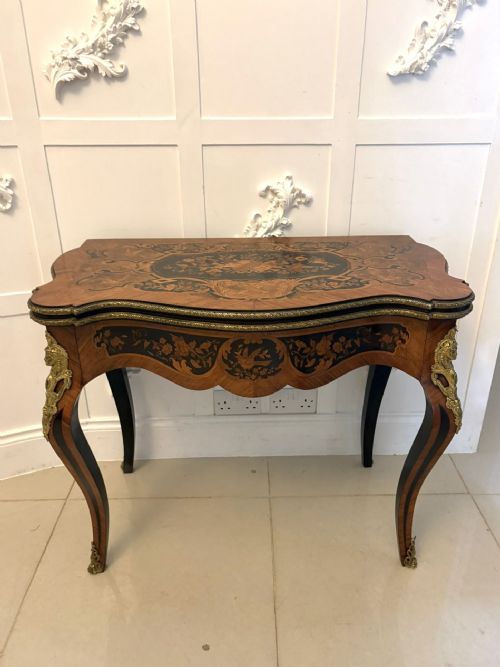
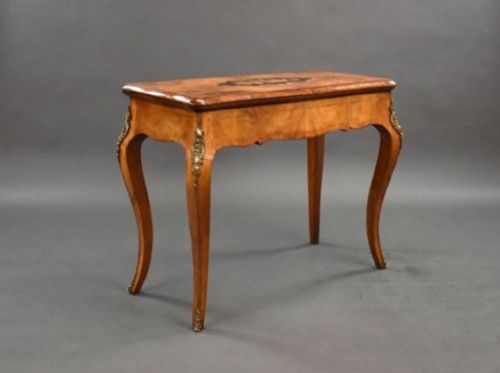
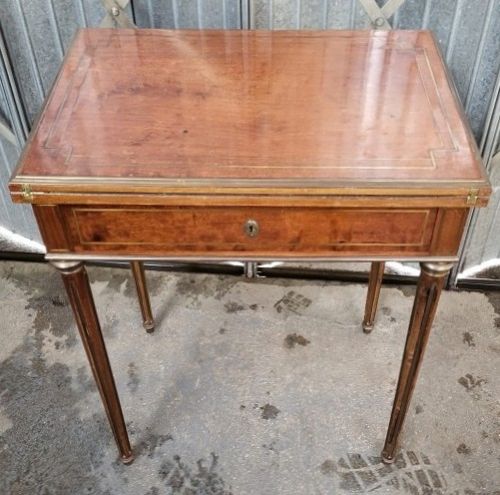
A french card table is an adaptable piece of nineteenth-century furniture designed primarily for domestic games and social gatherings. These pieces typically feature a fold-over top or a rotating mechanism that reveals a baize-lined playing surface when opened, functioning equally well as a decorative console or side table against a wall when closed.
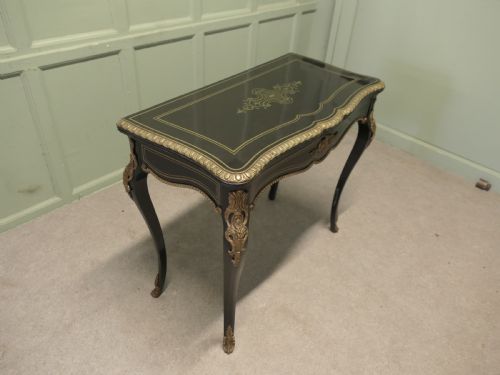
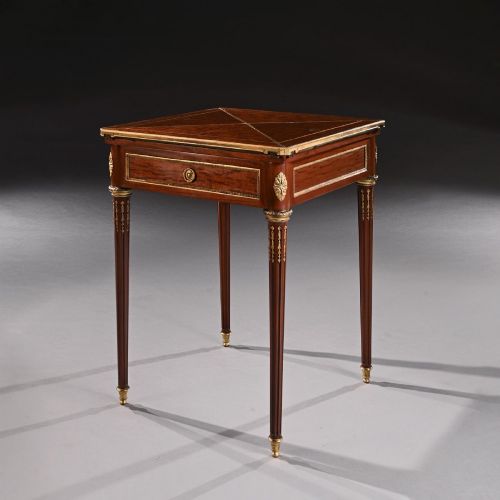
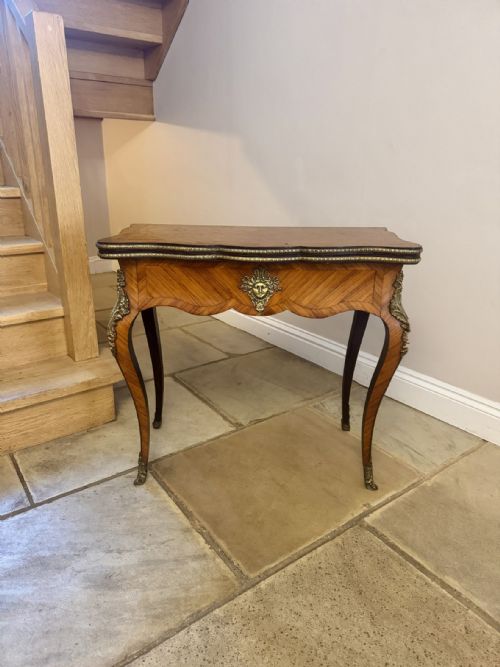
Examples on this page span the nineteenth century, including Victorian interpretations and specific years like 1850, 1880, 1890, and 1900. Styles lean heavily towards revival aesthetics such as Louis XV, Louis XVI, French Rococo, and French Chateau, reflecting historical design movements that favoured serpentine forms and decorative woodwork.
Materials and Construction Techniques
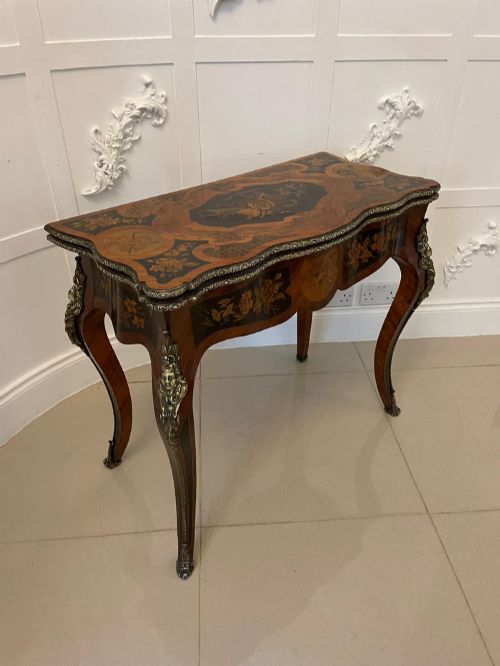
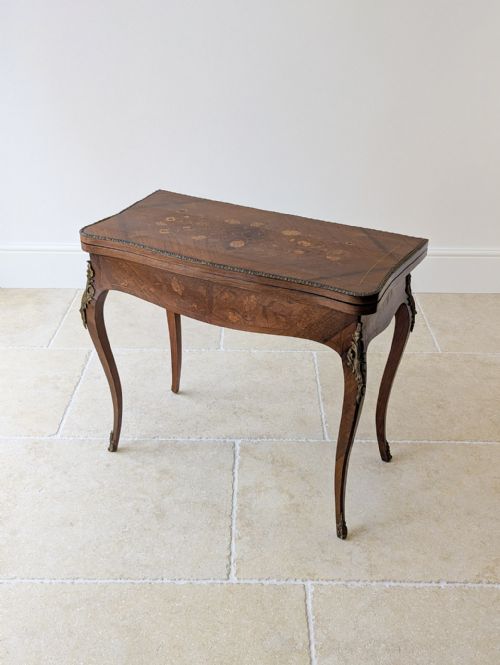
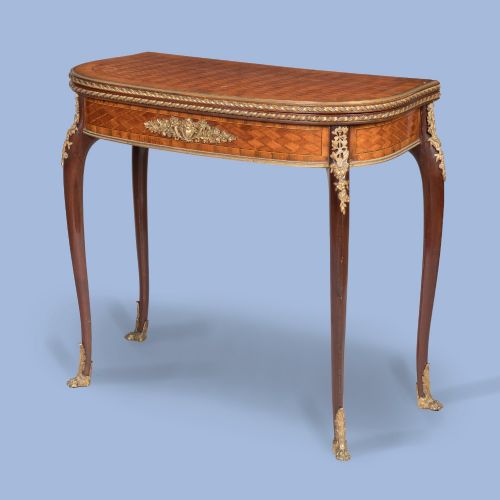
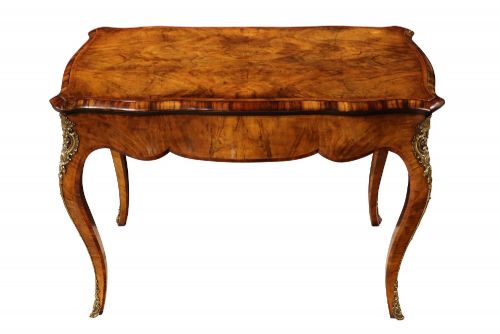
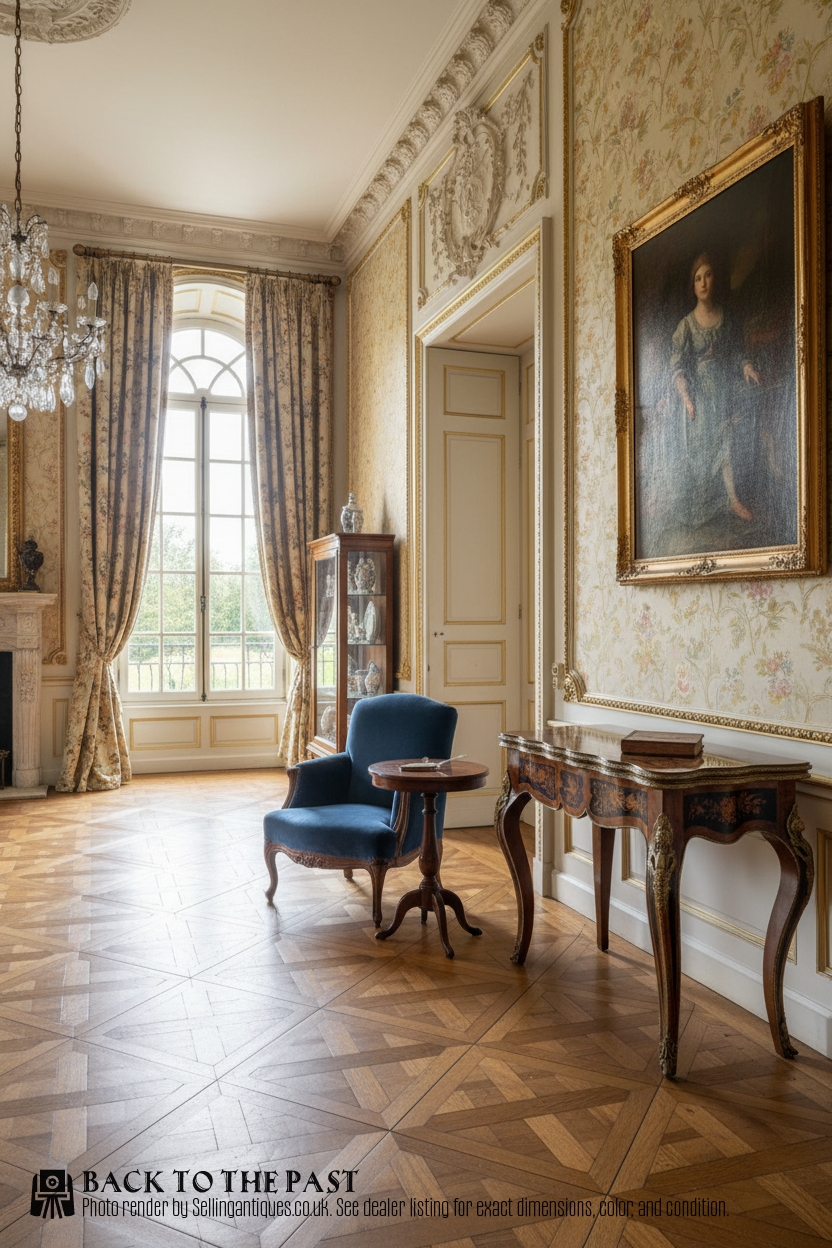
Cabinet makers utilised a rich palette of timbers, pairing structural woods with decorative veneers such as kingwood, rosewood, walnut, burr walnut, mahogany, and ebony. Cross-banding and parquetry geometric patterns frequently define the table tops, while marquetry introduces intricate floral or pictorial inlay using contrasting wood grains.
Metalwork played a defining role in finishing these tables, with cast ormolu mounts framing corners, aprons, and cabriole legs. Brass inlay and fine brass mouldings also feature prominently in certain designs, embedded directly into the wooden surfaces to accentuate structural lines.
Retail Price Guide 2026
Typical UK retail prices for french card table, calculated from the Sellingantiques database of over a million retail prices indexed since 2003. This retail price guide relies exclusively on Sellingantiques data; no external sources or auction records are used, so the figures do not describe the wider market.
Materials recorded across the inventory include ormolu, kingwood, rosewood, walnut, burr walnut, and brass inlay.
Distinguishing Quality and Execution
The division between standard production and exhibition quality rests on the precision of the marquetry and the weight of the bronze or ormolu mounts. Finer examples display seamless timber matching across the fold, where grain patterns align precisely when the top is opened.
Makers known for exceptional cabinet making, such as Henry Dasson, Krieger of Paris, or Francois Linke, achieved superior execution in the smoothness of the pivoting mechanisms and the crispness of the gilt bronze mounts. Lower tiers rely on simpler veneers and cast elements with less hand-chased definition.
Joseph Emmanuel Zwiener·Henry Dasson·Krieger of Paris·Francois Linke
The French Card Table Glossary
- Ormolu
- Gilded bronze used for decorative mounts and accents. This material is cast and chased by hand to achieve sharp detail before receiving a gold wash.
- Marquetry
- The art of applying small pieces of veneer to form decorative patterns or pictures. Craftsmen select contrasting woods to create naturalistic floral or architectural motifs.
- Parquetry
- Geometric wood inlay forming repeating patterns such as cubes or chequers. This technique requires precise cutting of timber veneers to ensure tight joints.
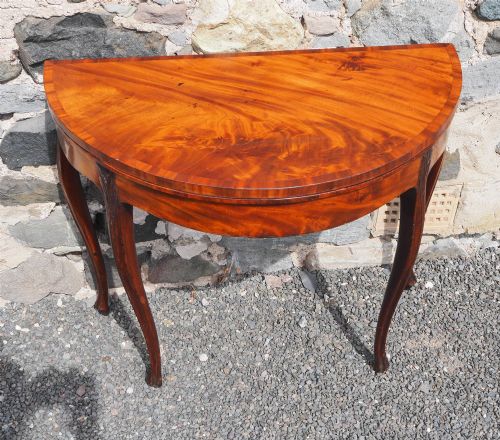
- Demi-lune
- Half-moon shaped furniture designed to sit flat against a wall. These tables often feature fold-over tops supported by a swinging rear leg.
- Kingwood
- A dense, heavily figured Brazilian timber with dark violet-brown tones. It was favoured by elite cabinet makers for high-status French revival pieces.
Frequently Asked Questions
How do you open a French card table?
Most models feature a fold-over top that swings open on hinges, requiring the supporting leg or frame to pivot outward to bear the weight of the leaf. Some variants use a rotating mechanism that turns ninety degrees before opening.
Once unfolded, the top reveals a lined playing surface, often covered in green or coloured baize or felt designed for card games.
What were French card tables used for?
These tables served as functional furniture for parlour games like whist, quadrille, or backgammon during the nineteenth century. When not in use for gaming, they stood against drawing room walls as console or side tables.
Their dual purpose made them practical for entertaining guests in formal domestic settings.
How can you tell Louis XV style from Louis XVI style?
Louis XV style tables emphasise curved lines, asymmetric floral marquetry, and sweeping cabriole legs characteristic of Rococo revival pieces. These forms feel organic and fluid.
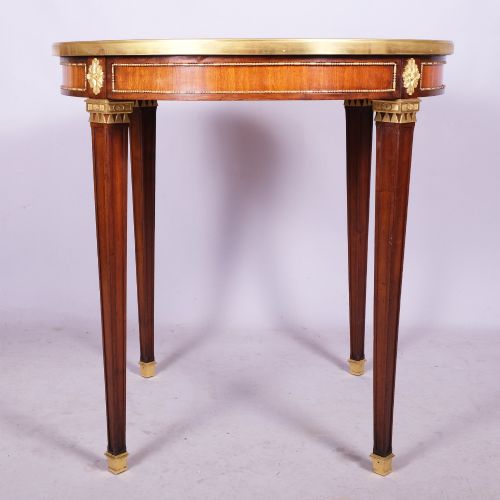
In contrast, Louis XVI style embraces symmetry, straight tapered legs, and neoclassical geometric parquetry patterns inspired by ancient architectural motifs.
What timbers were commonly used?
Cabinet makers relied on walnut, burr walnut, mahogany, rosewood, and kingwood as primary surfaces. Exotic veneers allowed workshops to create striking grain contrasts across table tops.
Ebony also appears as a dark contrasting ground, particularly on pieces featuring intricate brass inlay.