
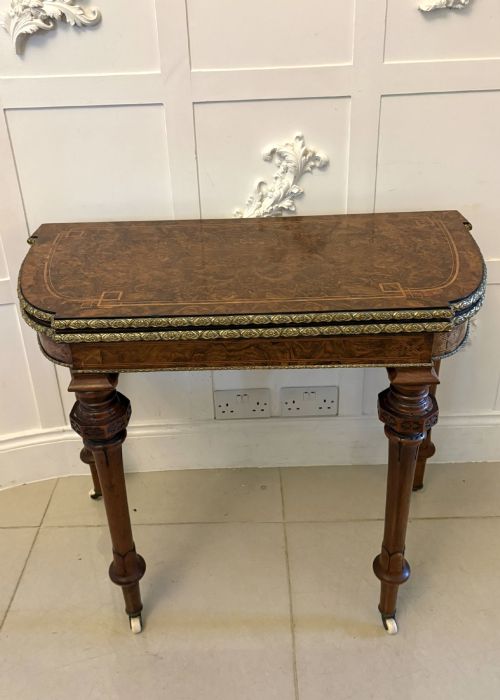
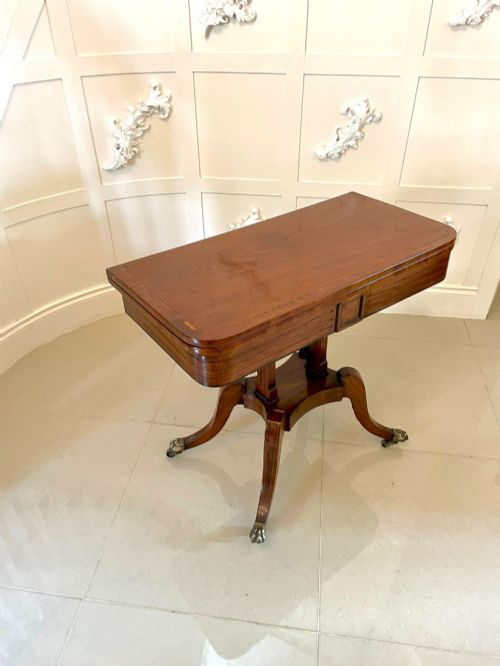


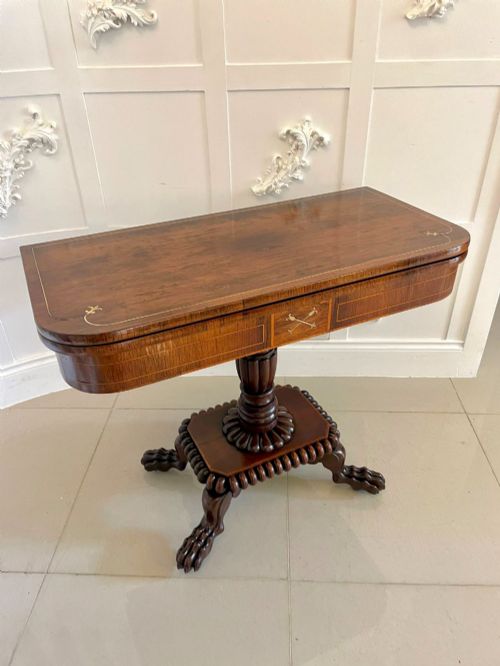
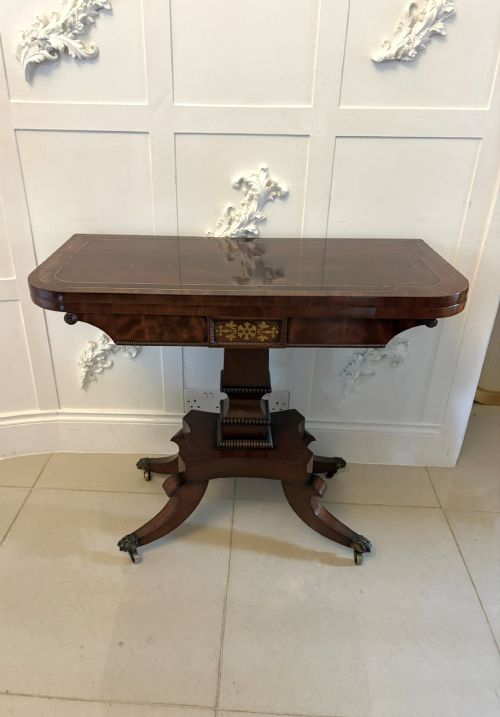
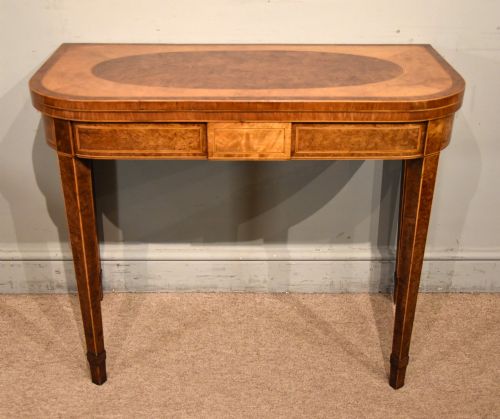
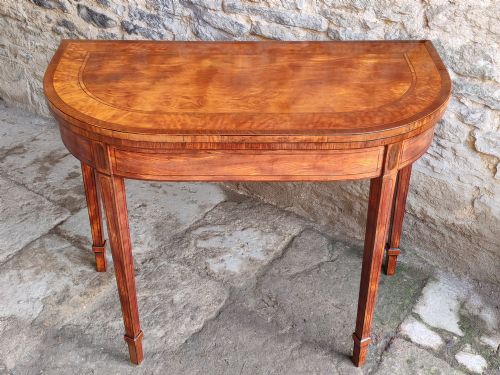
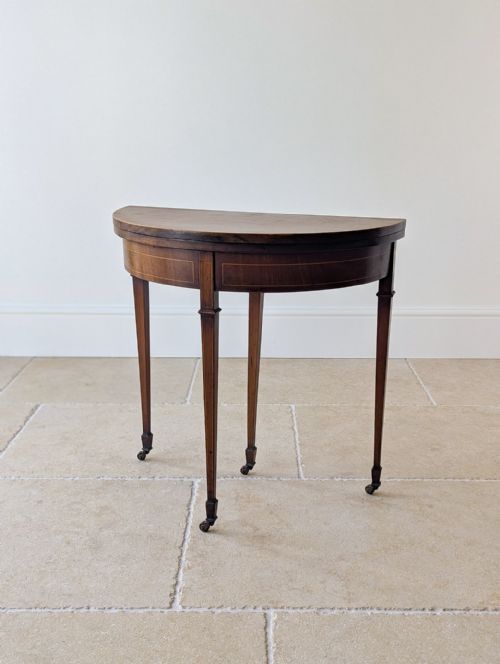
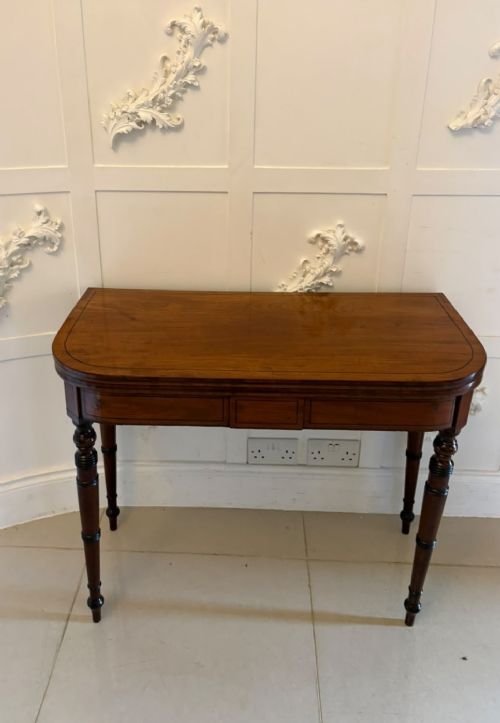
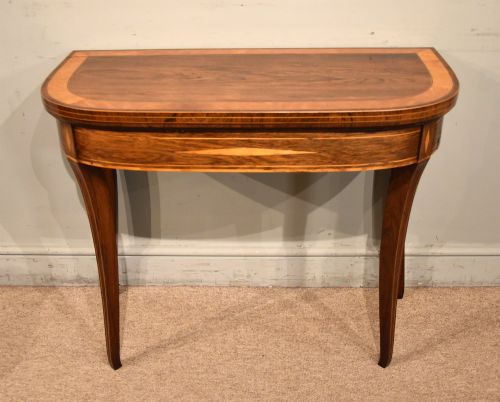
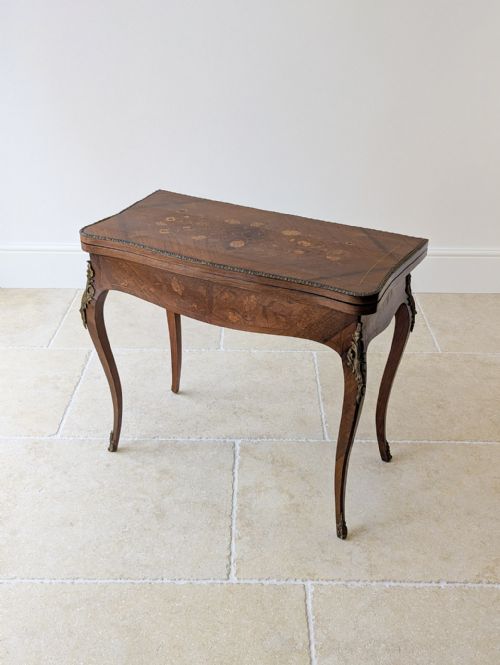
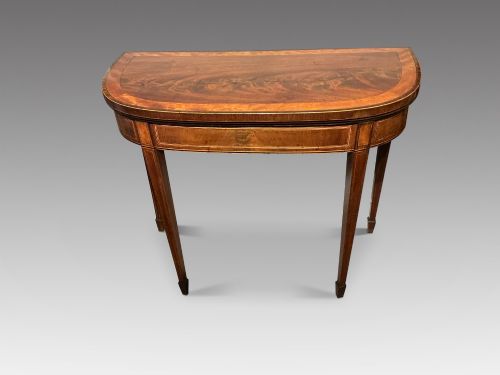


Inlaid Fold Over Table
An inlaid fold over table is a versatile dual-purpose piece that transforms from a compact console into a fully expanded surface for cards, tea, or writing.
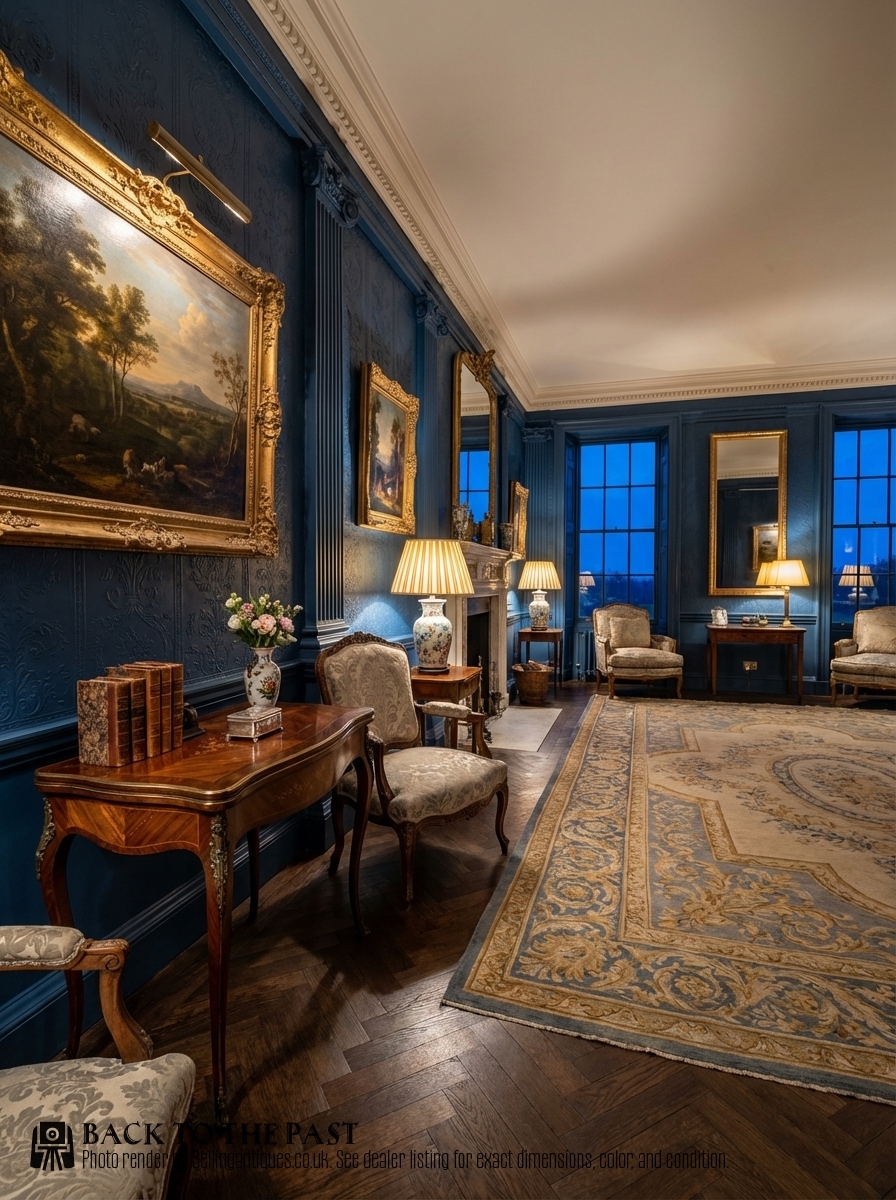
Inlaid Fold Over Table
When searching for an inlaid fold over table, buyers encounter formats designed primarily for card playing, tea service, or general console use against a wall.
The most common examples on this page span the Georgian, Regency, and Victorian eras, taking shapes that range from rectangular tops to semicircular demi-lune designs.
Originating largely from British workshops, these tables frequently employ mahogany, rosewood, and walnut as structural and veneering timbers.
Materials and Construction
Cabinetmakers utilised dense primary timbers such as mahogany and rosewood, applying fine veneers of satinwood, burr walnut, and amboyna over secondary framing woods.
Decorative surfaces incorporate contrasting stringing and marquetry executed in boxwood, ebony, and brass inlay to frame the pivoting or folding top leaf.
Inlaid Fold Over Table Retail Price Guide 2026
Typical asking prices for inlaid fold over table among the pieces listed under this phrase on Sellingantiques today, from the lower quarter to the upper quarter. They describe what is for sale here now, not the wider market.
Listings feature mahogany, rosewood, satinwood, and walnut across Georgian, Regency, and Victorian periods.
Assessing Craftsmanship
Superior examples demonstrate precise alignment between the folding top leaves and the underlying hinge mechanisms, ensuring the table sits flush in both configurations.
The fineness of the inlaid motifs, the complexity of the secondary wood selection, and the stability of the pedestal or leg joints distinguish standard production from exhibition pieces.
George Bullock·Bruce & Burns of Edinburgh
The Inlaid Fold Over Table Glossary
- Demi-lune
- A half-moon shape used for console and card tables designed to stand flat against a wall.
- Crossbanding
- A border veneer applied around the edge of a tabletop with the grain running perpendicular to the central panel.
- Marquetry
- Elaborate decorative patterns formed by fitting together contrasting pieces of wood veneer or other materials.
- Stringing
- Thin, linear inlay of a contrasting wood or brass used to outline borders and panels.
- Ormolu
- Gilded bronze mounts applied to furniture for decorative enrichment, particularly prominent on Victorian and French revival pieces.
Inlaid Fold Over Table: Frequently Asked Questions
What is an inlaid fold over table used for?
These tables served primarily as space-saving furniture in domestic parlours and drawing rooms, functioning as slim side consoles when closed.
Opening the hinged top revealed a baize-lined surface for card games or a polished timber expanse suited for afternoon tea.
How do I date an inlaid fold over table?
Dating relies on identifying the prevailing timber choices, leg profiles, and inlay styles characteristic of specific periods like the Georgian, Regency, or Victorian eras.
For instance, brass inlay combined with rosewood often points to the Regency period, while burr walnut with marquetry typically indicates later Victorian production.
Are these tables sturdy when opened?
The structural stability of an open top depends on the underlying support mechanism, which usually involves a pivoting leg, a swing-out rear leg, or a concertina frame.
Quality pieces maintain balance and rigidity across the entire jointed surface without placing excessive strain on the hinges.
How do I care for the veneered surface?
Maintenance involves protecting the delicate timber veneers and inlaid brass or light woods from direct sunlight and excessive humidity fluctuations.
Regular dusting with a dry cloth preserves the polished finish without risking moisture damage to the antique glue and joinery.