
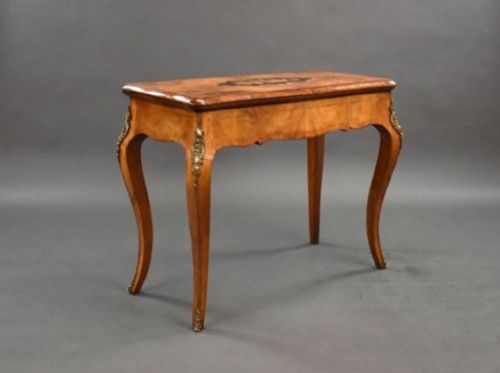


French Marquetry Console Table
A French marquetry console table brings intricate wood inlay and gilt bronze mounts to a room, offering the elegance of nineteenth-century revival design.
What these pieces are
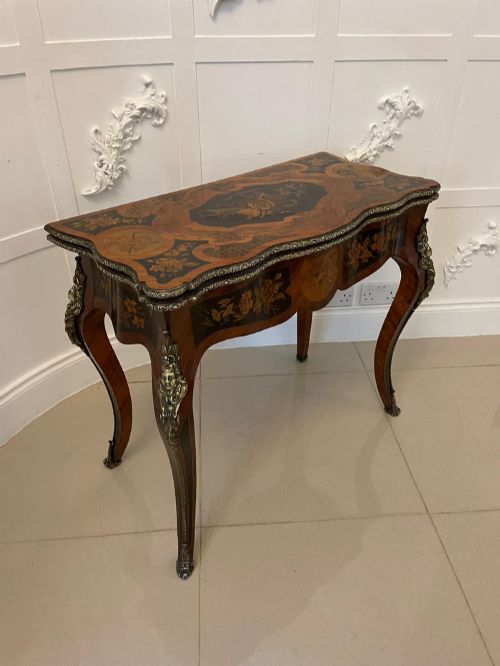
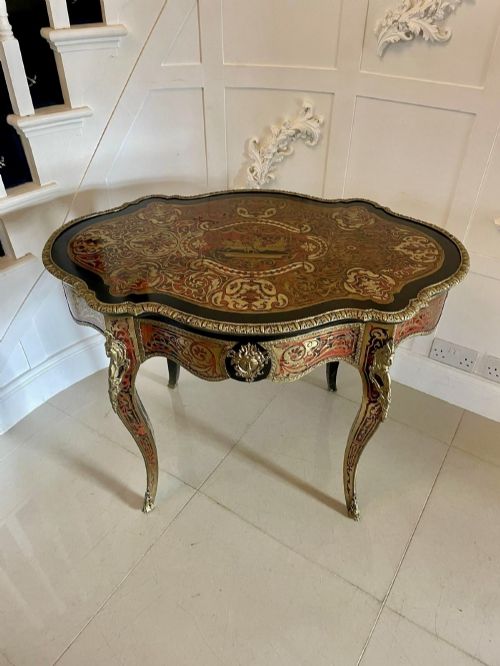
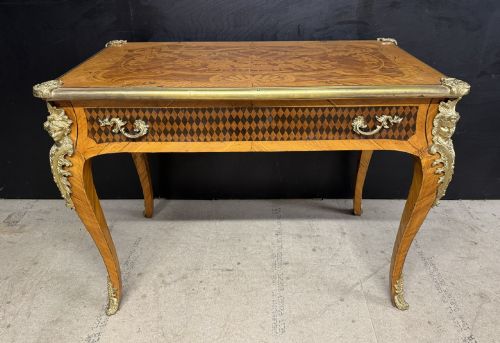
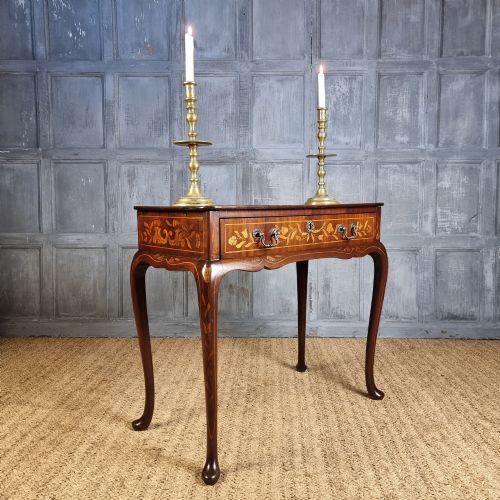
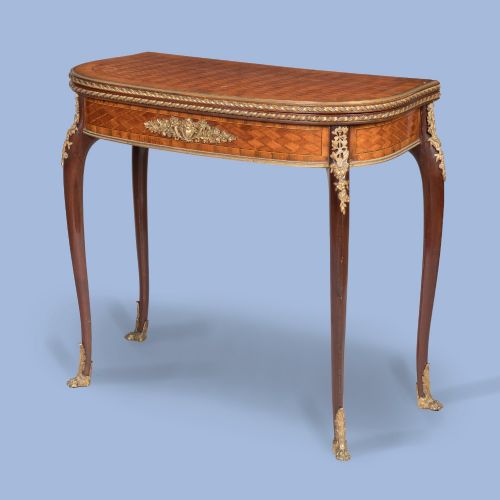
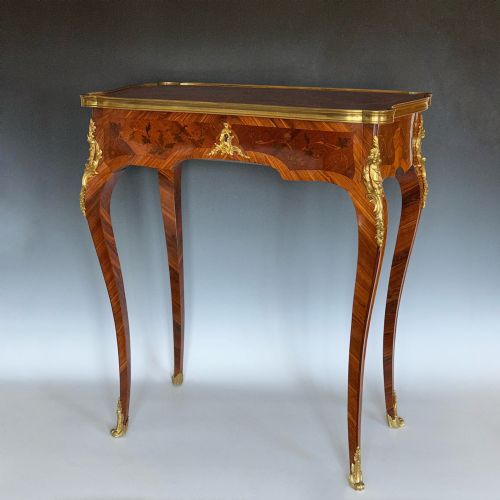
When you search for a French marquetry console table, you are looking at nineteenth-century furniture built in the Louis XV and Louis XVI revival styles. These tables combine decorative wood inlay with forms designed for display and multifunctional use in reception rooms.
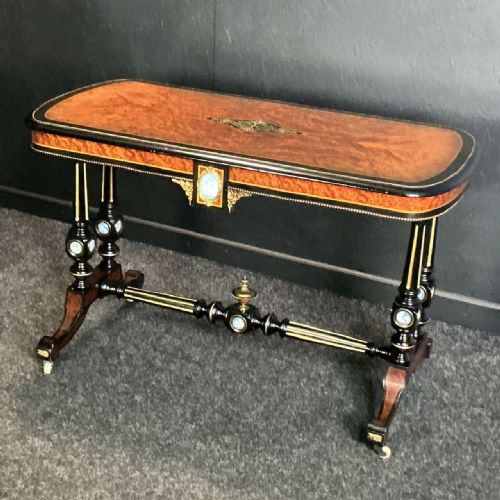
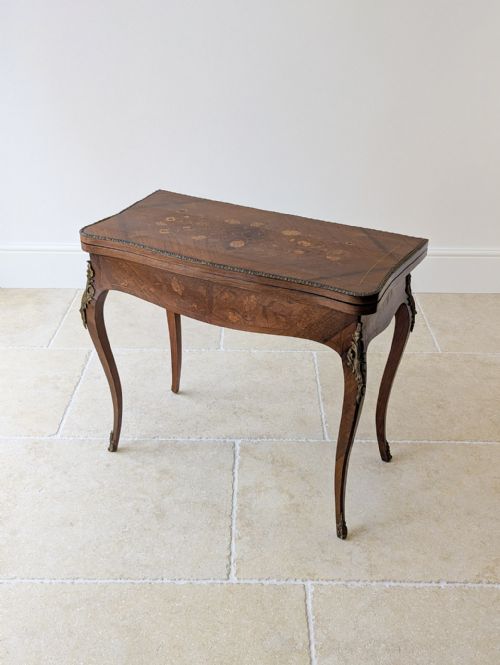
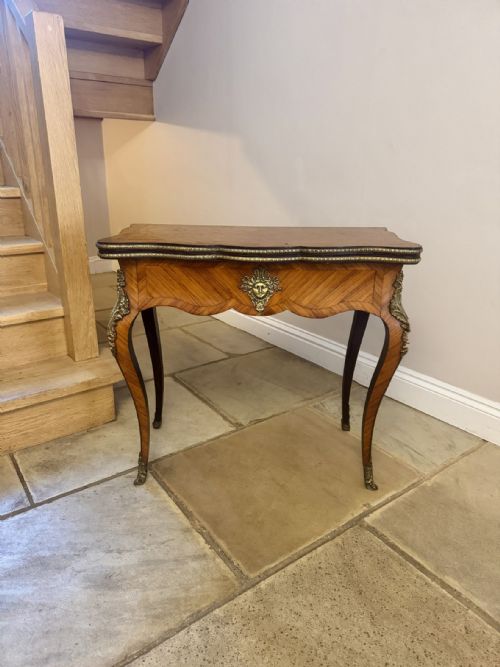
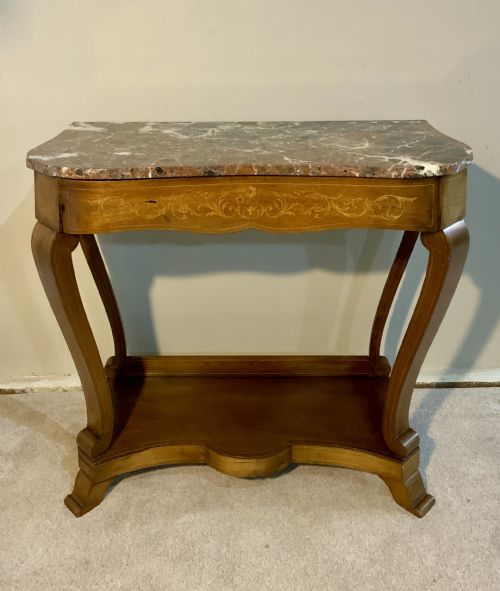
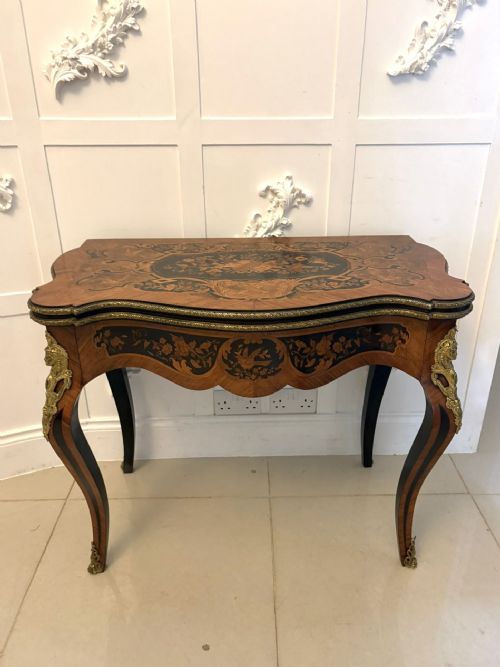
The versions most commonly met on this page are card tables, games tables, and demi-lune or serpentine console tables. Many examples feature folding tops that reveal baize-lined surfaces, alongside fixed serving and side tables from the 1860s to the 1890s.
How they were made
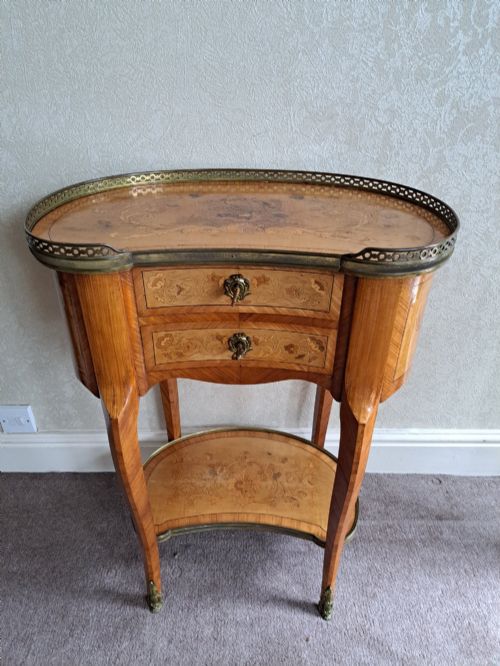
Cabinet makers built these pieces using walnut, kingwood, fruitwood, and ebonised wood as a carcase, applying detailed marquetry veneers across the surfaces. Brass inlay and brass details frequently complement the complex floral and geometric wood patterns.
Mounts in ormolu and gilt bronze accent the structural curves and corners of the tables. These metal elements were cast and chased to highlight the revival styles of the period.
Retail Price Guide 2026
Typical UK retail prices for french marquetry console table, calculated from the Sellingantiques database of over a million retail prices indexed since 2003. This retail price guide relies exclusively on Sellingantiques data; no external sources or auction records are used, so the figures do not describe the wider market.
Materials appearing across the inventory include ormolu, walnut, kingwood, ebonised wood, brass, gilt bronze, and fruitwood.
What varies in quality
The standard of a piece is defined by the precision of the marquetry cut and the variety of timbers used in the floral or pictorial compositions. Finer tables demonstrate meticulous matching of the wood grains across the folding tops and friezes.
Quality also rests in the crispness of the gilt bronze and ormolu mounts, where deeper chasing and heavier casting distinguish exhibition pieces from standard workshop output.
Joseph Emmanuel Zwiener
The French Marquetry Console Table Glossary
- Marquetry
- Decorative patterns made by fitting small pieces of veneer into a wood foundation. This technique allows for detailed pictorial and floral designs across table tops.
- Ormolu
- Gilt bronze mounts applied to furniture for decoration and edge protection. The material adds metallic contrast to the timber surfaces.
- Kingwood
- A dense, richly figured wood utilised for high-end veneers throughout the nineteenth century. Its dark grain provides a striking background for marquetry.
- Demi-Lune
- A half-moon shape characteristic of console and games tables designed to sit flush against a wall. This form allows the table to occupy minimal space when closed.
- Serpentine
- A curved line that undulates inward and outward across the front or sides of a table. It creates a fluid, organic silhouette typical of Rococo revival pieces.
Frequently Asked Questions
What is a French marquetry console table?
These are nineteenth-century decorative tables featuring intricate wood veneer patterns, often combining walnut, kingwood, and fruitwood.
They frequently double as card or games tables with folding tops and are accented with ormolu mounts in Louis XV or Louis XVI revival styles.
How were these tables used originally?
They served as decorative furniture in reception rooms and parlours for display against walls.
Many examples were built with folding mechanisms to function as card or games tables during evening gatherings.
How do I identify the revival style?
Louis XV revival pieces tend to display flowing serpentine curves and asymmetrical floral marquetry. Louis XVI revival items lean toward straighter lines, symmetry, and neoclassical geometric brass inlay.
How do I care for wood marquetry?
Keep the timber away from direct sunlight and steady heat sources to prevent the delicate veneers from drying out or lifting.
Apply a traditional wax polish occasionally to maintain the lustre of the walnut and kingwood surfaces.