


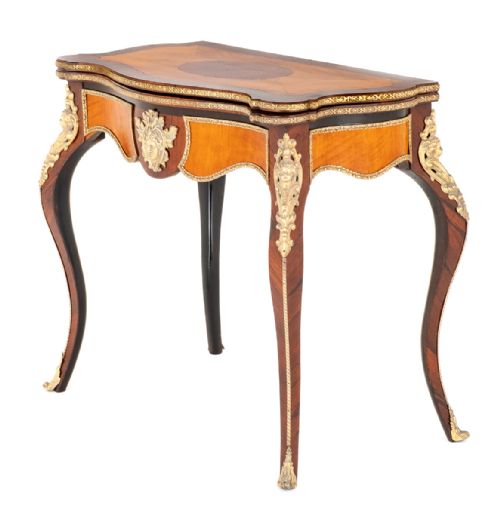


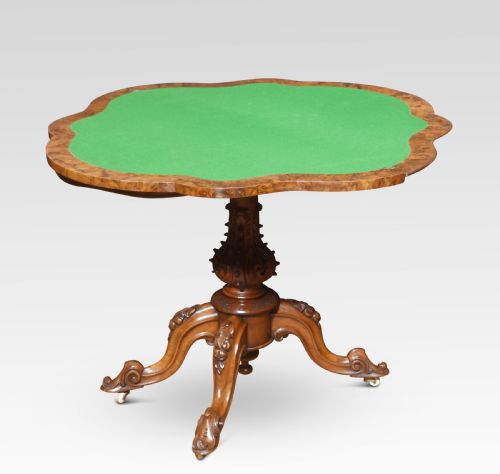
Rococo Revival Card Table
These rococo revival card table pieces bring architectural flair to a room, offering the intricate woodwork and folding surfaces that Victorian homes favoured.
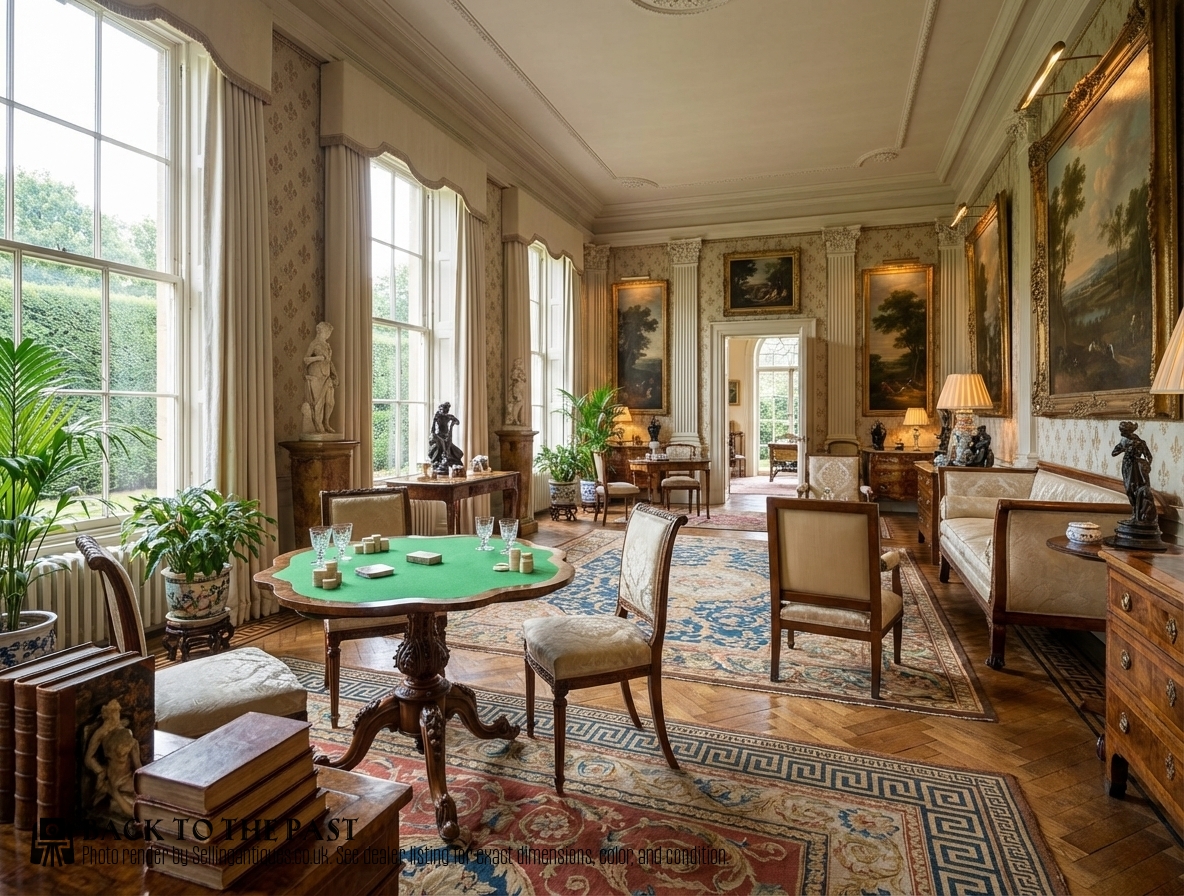
What They Are
A rococo revival card table provides a dual-purpose surface designed for parlour games and formal entertaining during the nineteenth century. These items typically date from the Victorian era, specifically spanning the decades around eighteen sixty and eighteen seventy.
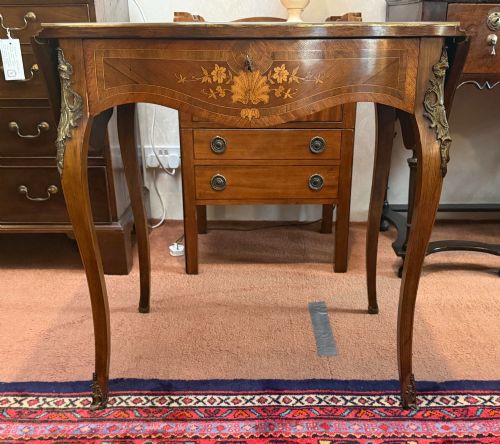
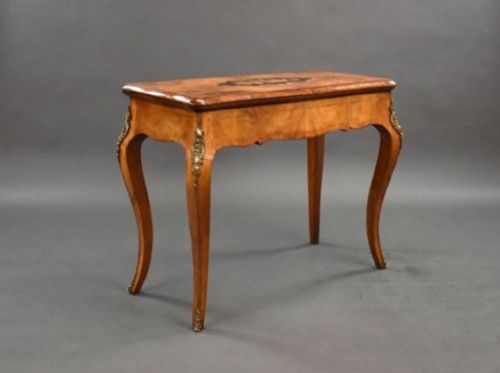
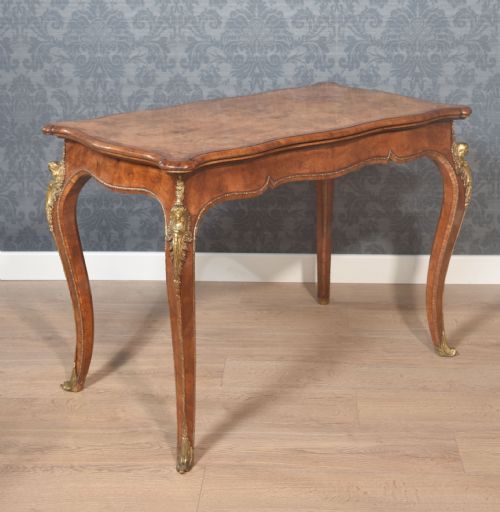
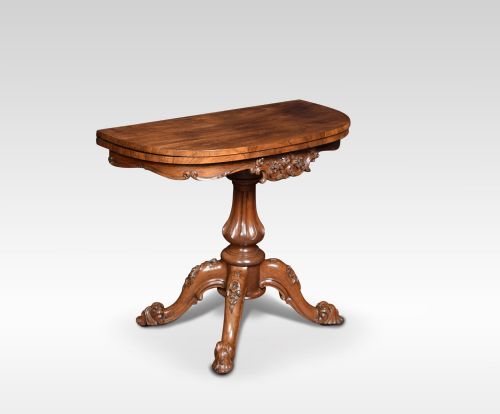
The objects take the form of card tables influenced by French rococo and Louis XV revival styles. Examples on this page include butterfly-shaped designs alongside traditional walnut games tables.
Origin and period markers place these pieces firmly within nineteenth century craftsmanship. Makers drew upon French design idioms while producing furniture for British and continental interiors.
How They Were Made
Cabinetmakers utilised walnut and burr walnut as the primary structural timbers for these tables. Workshops also incorporated kingwood alongside complex marquetry inlaid wood to create decorative surface patterns.
Detailed carving defines the construction, complemented by brass and ormolu mounts on select examples. Interior surfaces frequently feature baize or felt linings intended to cushion card playing.
Retail Price Guide 2026
Typical UK retail prices for rococo revival card table, calculated from the Sellingantiques database of over a million retail prices indexed since 2003. This retail price guide relies exclusively on Sellingantiques data; no external sources or auction records are used, so the figures do not describe the wider market.
What Varies in Quality
The distinction between standard and superior pieces rests upon the complexity of the timber selection and the precision of the marquetry. Burr walnut veneers and intricate inlaid wood indicate a higher grade of workshop production.
Carving depth and the integration of ormolu or brass elements separate basic utilitarian tables from elaborate revival showpieces. The execution of the folding mechanism and the finish of the timber ground determine the overall refinement.
The Rococo Revival Card Table Glossary
- Burr Walnut
- A figured timber harvested from walnut tree growths, valued for its swirling grain patterns on table tops. Cabinetmakers prized this material for high-status Victorian furniture.
- Marquetry
- The art of applying pieces of veneer to a structure to form decorative patterns and pictures. This technique appears frequently on French revival surfaces.
- Ormolu
- Gilt bronze ornamentation mounted onto furniture frames. It provides metallic contrast against dark woods like walnut and kingwood.
- Baize
- A coarse woolen material used to line the playing surfaces of card tables. It provides a soft texture suitable for handling cards.
Frequently Asked Questions
What is a rococo revival card table?
It is a nineteenth-century folding table designed for games, featuring ornamental carvings and styles inspired by earlier French periods.
These pieces combine decorative woodwork with practical hinged tops that open to reveal a baize or felt playing surface.
How do you date a card table?
Dating relies on stylistic markers, timber choices, and construction methods characteristic of the Victorian era.
Pieces on this page connect to the eighteen sixties and eighteen seventies through specific revival motifs and walnut veneers.
What woods were used?
Cabinetmakers primarily worked with walnut, burr walnut, and kingwood for these decorative tables.
Additional visual detail was achieved through marquetry inlaid wood and contrasting ormolu mounts.
How were these tables used?
They functioned as console or pier tables against a wall when folded shut during the day.
When guests arrived, the top unfolded to create a stable surface for card games and parlour entertainment.