
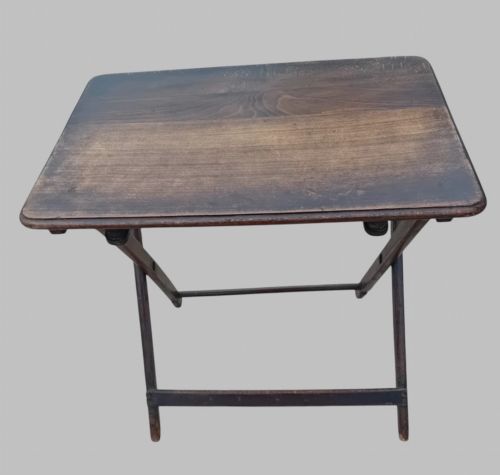
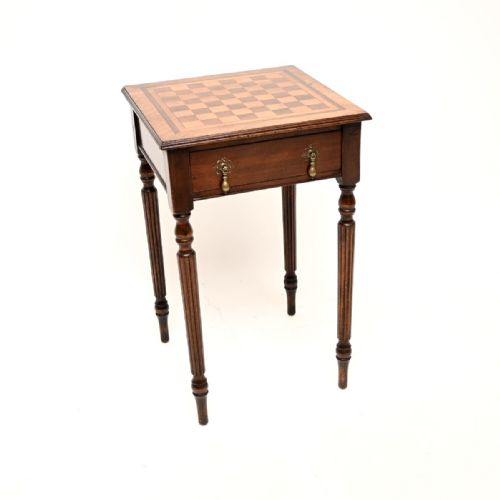
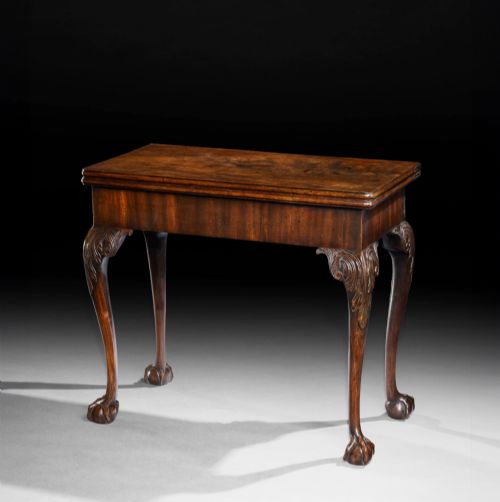


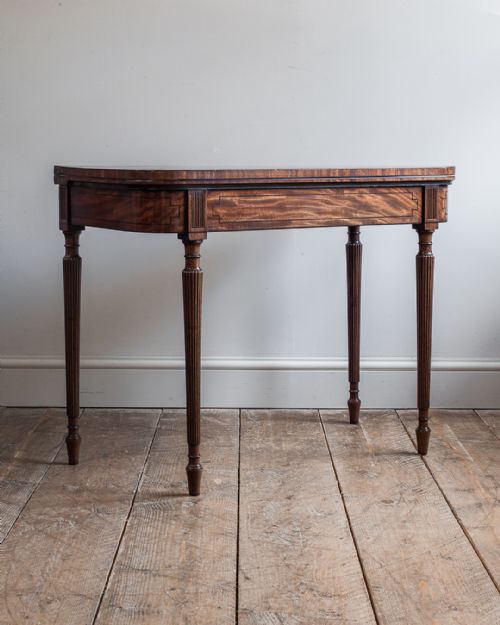
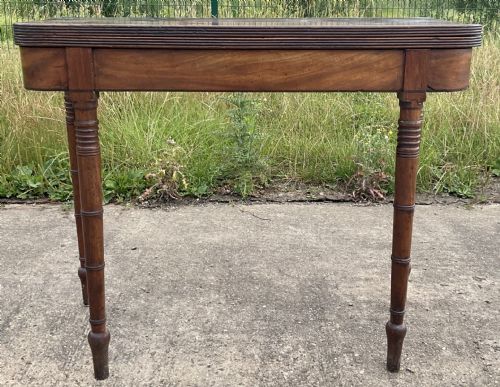
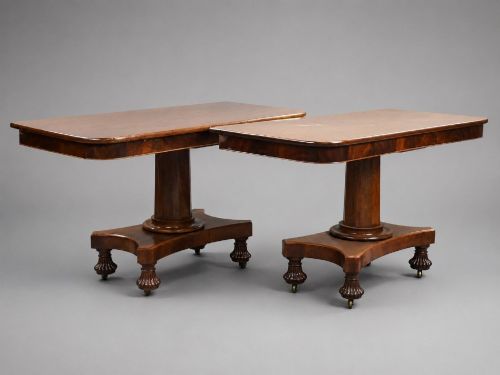
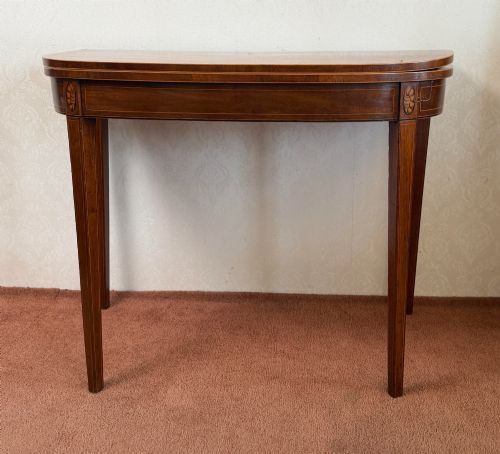
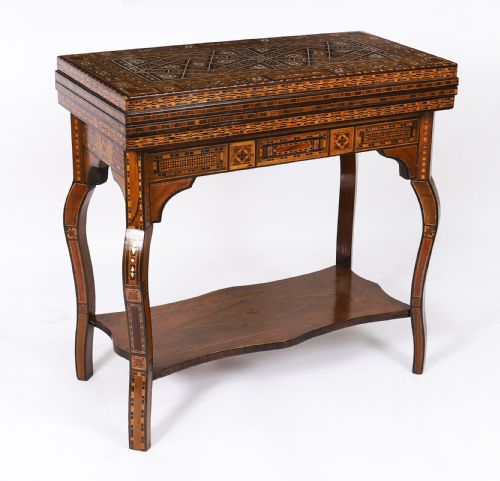
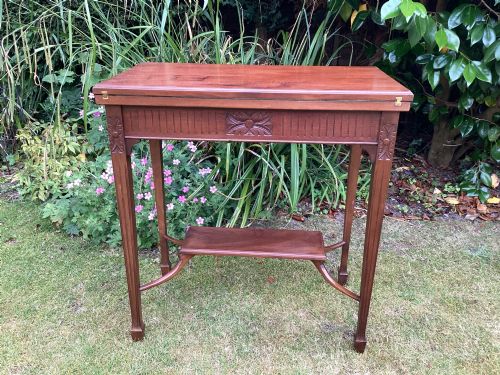
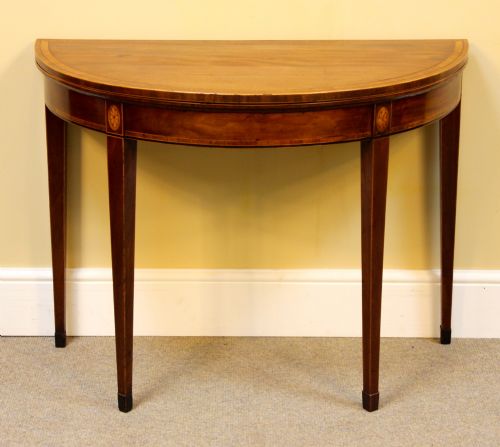
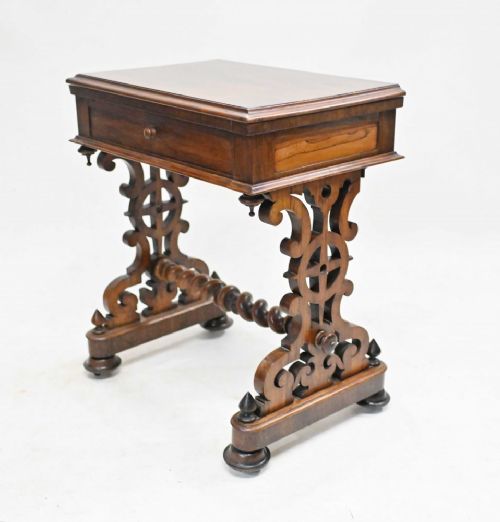
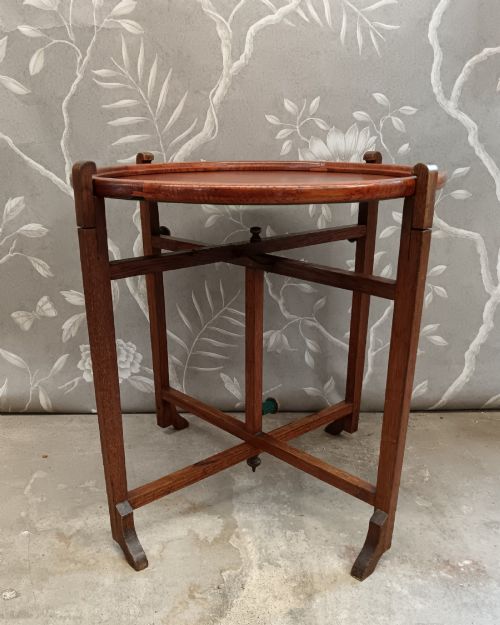
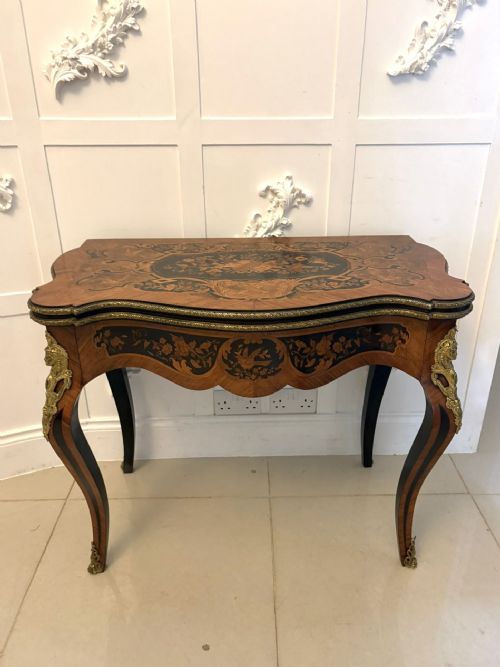

Brown Wooden Card Table
A brown wooden card table is a folding piece designed for parlour games and tea, combining clever joinery with compact elegance.
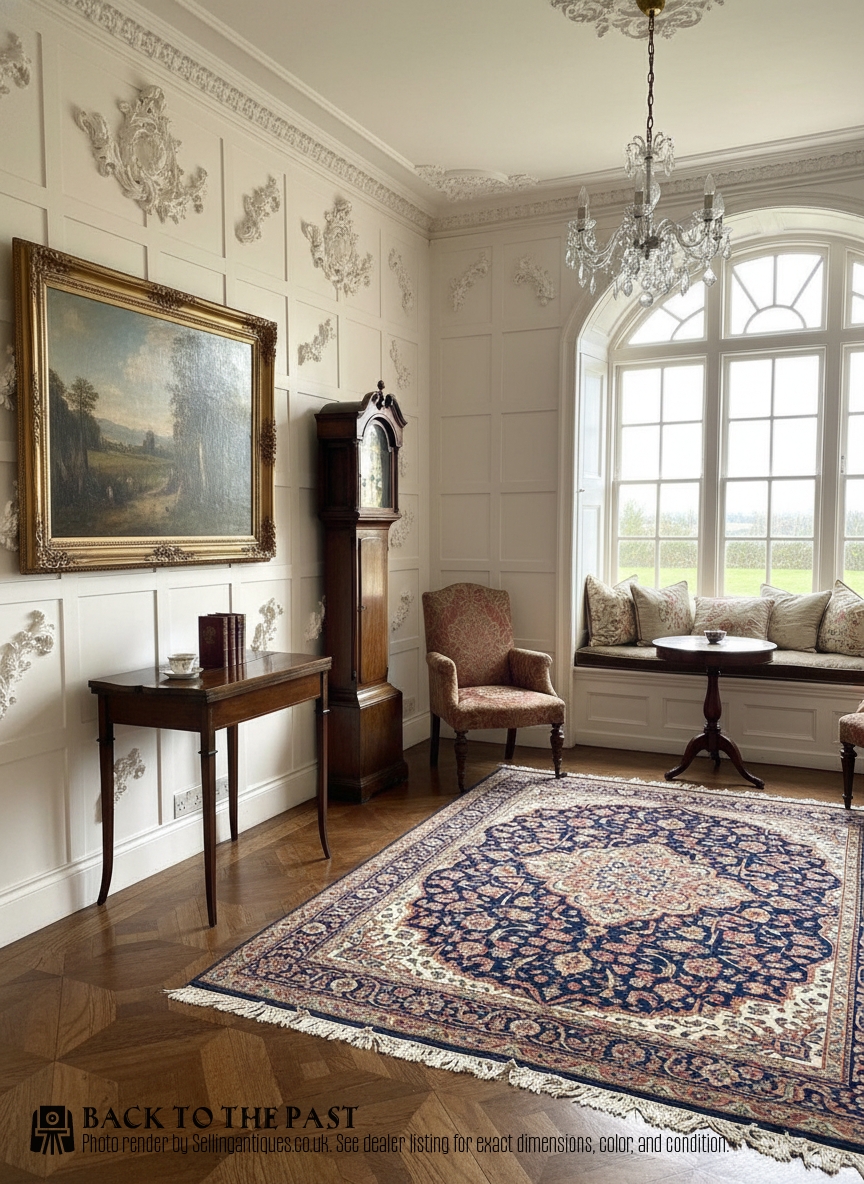
What a brown wooden card table is
When you search for a brown wooden card table, you encounter practical entertaining furniture built to adapt from a modest console to a stable surface for cards or tea. The pieces on this page span the eighteenth century, the Regency period, and the Victorian era, offering a distinct progression of forms from early walnut folding games tables to later mahogany and oak variations.
You are most likely to meet mahogany and walnut examples, ranging from George II concertina action designs and George III triple top formats to Victorian carved games tables and Edwardian inlaid versions. These objects served households as versatile occasional furniture, frequently doubling as tea tables or lamp tables when folded against a wall.
The styles recorded here move through Queen Anne, Georgian, Chippendale manner, Regency, and Victorian Rococo revival, reflecting changing domestic tastes in timber furniture. Makers utilised Cuban mahogany, burr walnut, fruitwood, and satinwood or boxwood inlay to articulate the surfaces of these dual-purpose tables.
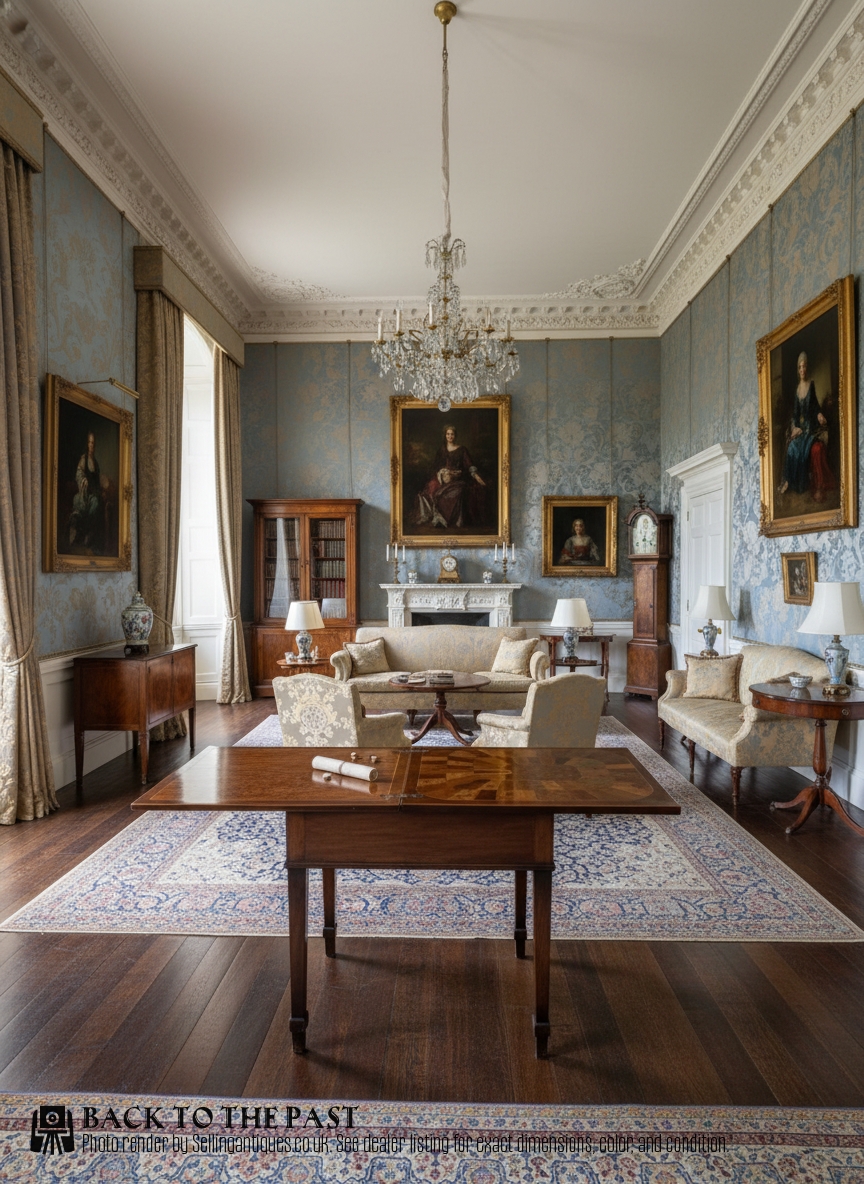
How they were made
Craftsmen built these tables using dense timbers such as mahogany, Cuban mahogany, and walnut, frequently enhancing the primary wood with satinwood inlay, boxwood lines, or fruitwood details. Concertina actions and folding mechanisms required precise joinery to ensure the hinged top rested level when opened for play.
Surface decoration included hand-painted elements, carved foliage typical of Victorian Rococo revival, and counter wells recessed into the timber tops. Pedestal bases and folding frames provided stability without obstructing the knees of seated players.
Retail Price Guide 2026
Typical UK retail prices for brown wooden card table, calculated from the Sellingantiques database of over a million retail prices indexed since 2003. This retail price guide relies exclusively on Sellingantiques data; no external sources or auction records are used, so the figures do not describe the wider market.
Listings feature tables spanning the 18th century, Regency period, and Victorian era, constructed in mahogany, walnut, oak, and fruitwood.
What varies in quality
Quality rests upon the selection of timber, visible in the rich grain of Cuban mahogany or figured burr walnut, alongside the precision of the satinwood and boxwood inlay. Superior examples feature complex internal mechanisms, such as concertina actions that maintain seamless alignment when extended.
Carving depth and sharpness define the finer pieces, particularly where artisans shaped the mahogany or oak edges and pedestal supports. The integration of functional details like counter wells and secondary folding leaves separates standard production from exceptional cabinet work.
Giles Grendey
The Brown Wooden Card Table Glossary
- Concertina action
- An expanding frame mechanism that allows all four legs to move outward when the table is opened, providing symmetrical support.
- Counter well
- A small circular depression carved into the timber surface to hold gaming counters or coins securely during play.
- Triple top
- A multi-layered folding table design that reveals different surfaces for dining, tea, and card games beneath each leaf.
- Inlay
- A decorative technique where contrasting woods like satinwood or boxwood are fitted flush into the primary timber surface.
- Cuban mahogany
- A dense, dark hardwood prized by eighteenth-century cabinet makers for its deep grain and stability.
Frequently Asked Questions
What is a brown wooden card table used for?
These tables were designed to fold flat against a parlour wall when not in use, serving as a console or tea table during the day. When opened, the hinged top provided a stable surface covered in baize or polished wood for card games and social gatherings.
Later Edwardian versions also functioned as lamp tables, demonstrating how domestic furniture adapted to changing household habits while retaining its core folding mechanism.
How do I identify an eighteenth-century table?
Eighteenth-century examples often feature dense timbers like Cuban mahogany or walnut, simple concertina actions, and restrained proportions associated with Georgian and Chippendale styles. Look at the construction of the folding leaf and the joinery of the frame beneath.
Earlier pieces from the George II and George III periods rely on clean lines and timber selection rather than heavy carving, distinguishing them from later Victorian revivals.
How do I care for a wooden card table?
Keep wooden furniture away from direct sunlight and rapid temperature fluctuations to prevent the timber and veneer from splitting. Dust regularly with a dry cloth and avoid harsh chemical polishes that can damage historic finishes.
When opening or folding the top, operate the mechanism gently and support the moving legs to avoid putting stress on the internal hinges.