



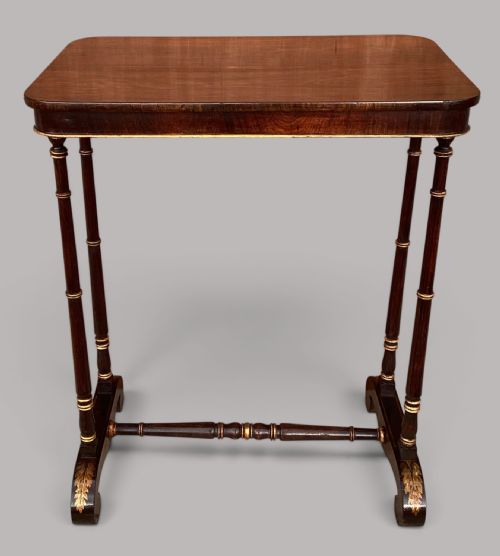
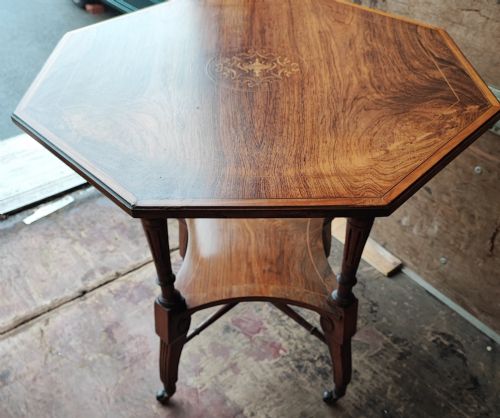

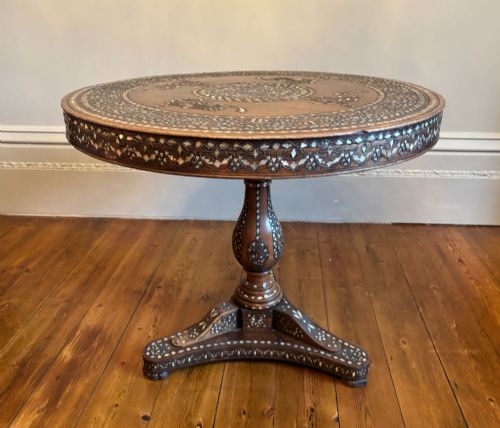

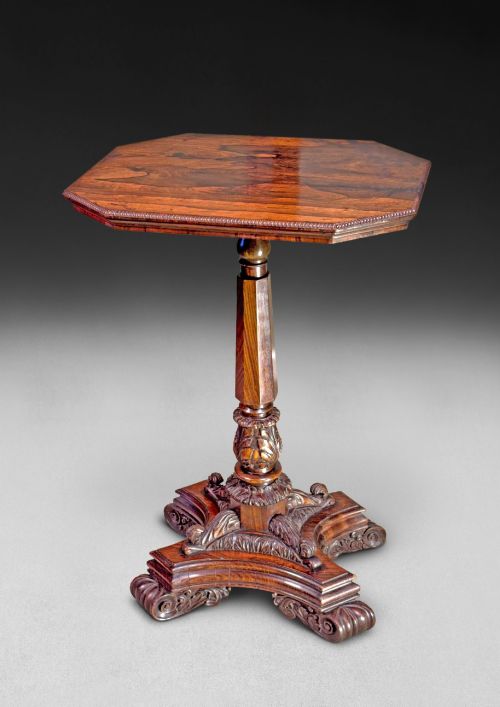
Antique Rosewood Accent Table
An antique rosewood accent table brings rich grain and refined proportion to a room, offering surface space with genuine period character.
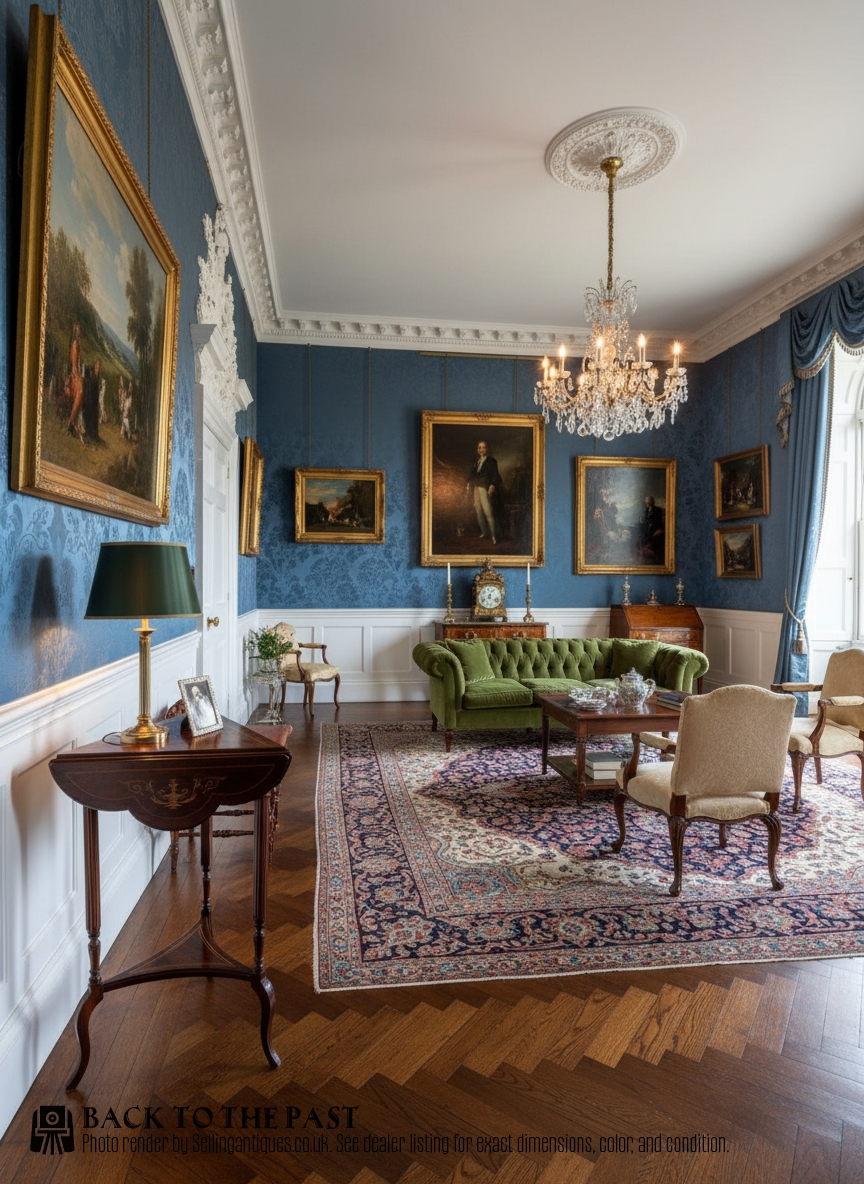
Antique Rosewood Accent Table
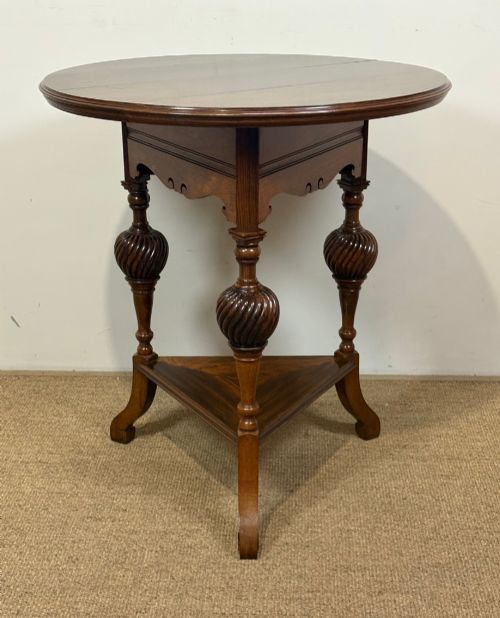
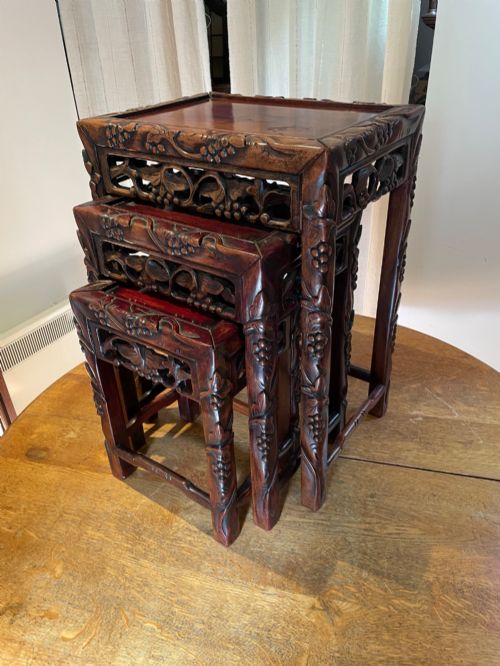
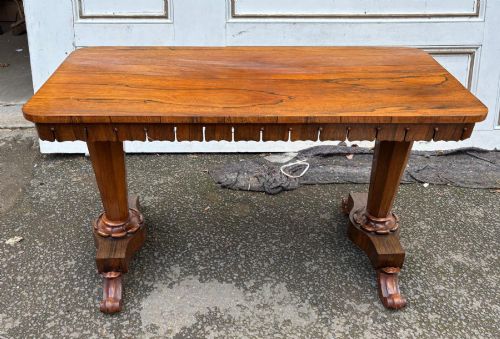
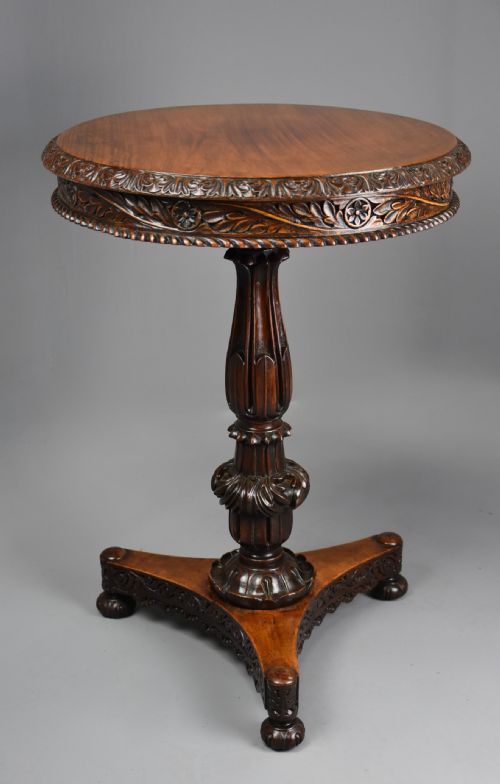
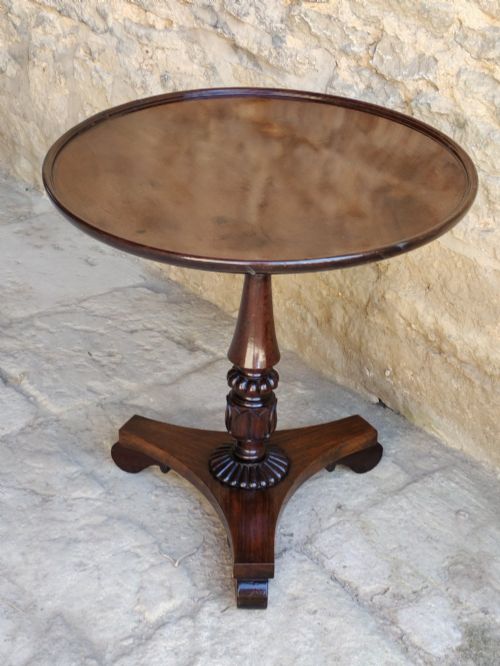
An antique rosewood accent table encompasses occasional tables, side tables, drop leaf lamp tables, and work sewing tables designed for domestic use. The pieces span several eras, with examples appearing from the George III period, the Regency era, and Edwardian times around nineteen hundred. They function as versatile furniture that balances decorative appeal with practical utility in a drawing room or study.
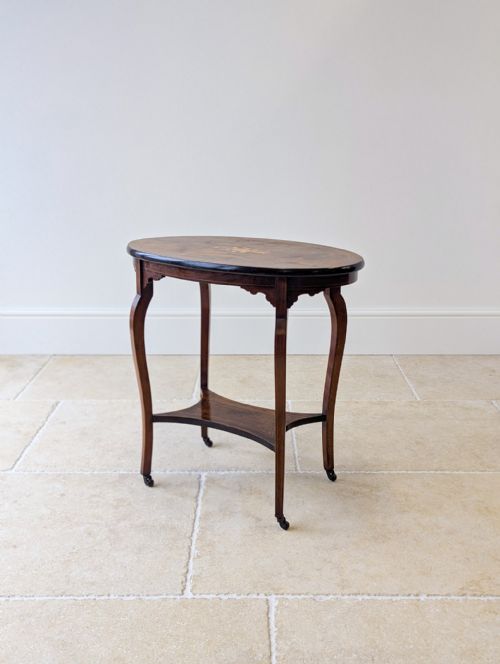
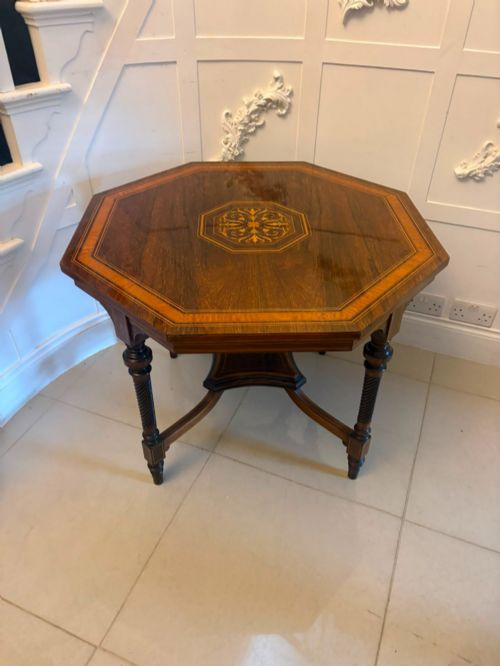
Buyers frequently encounter Edwardian inlaid versions alongside earlier Georgian and Regency forms in the current selection. These items utilise rich rosewood timbers, often enhanced with contrasting boxwood and satinwood inlay to create decorative surfaces. Their compact proportions make them suitable for modern interiors while retaining traditional craftsmanship.
How they were made
Cabinet makers constructed these tables using solid rosewood and selected veneers over secondary timbers, occasionally incorporating painted timber elements. Artisans shaped the wood by hand, joining structural components with traditional joinery techniques suited to each specific form. Surfaces received careful smoothing and polishing to highlight the natural figuring of the dark timber.
Decoration relied on precision woodworking skills such as stringing and marquetry, utilising contrasting light woods like boxwood and satinwood. Some specialist pieces feature trompe l'oeil work, creating optical illusions on the tabletop through meticulous arrangement of wood veneers. Metal fittings such as brass castors or handles appeared on mobile or multifunctional forms like sewing tables.
Antique Rosewood Accent Table Retail Price Guide 2026
Typical asking prices for rosewood accent table among the pieces listed under this phrase on Sellingantiques today, from the lower quarter to the upper quarter. They describe what is for sale here now, not the wider market.
Materials recorded across these listings include rosewood, satinwood, boxwood, painted timber, and brass.
What varies in quality
The standard of an antique rosewood accent table depends heavily on the precision of its timber selection and veneer matching. Finer examples display continuous, symmetrical grain patterns across the primary surfaces, while simpler pieces show less attention to the visual flow of the wood. The intricacy and execution of boxwood and satinwood inlay further distinguish high-end workshops from standard production.
Structural integrity and the retention of original brass hardware or fitted interiors influence the standing of each piece. Tables that maintain their crisp carving lines, tight joints, and original polished finish without excessive restoration hold greater fidelity to their period origins. Minor details, such as the neatness of trompe l'oeil execution or the subtlety of edge moulding, separate ordinary furniture from superior examples.
The Antique Rosewood Accent Table Glossary
- Rosewood
- A dense, dark timber prized for its rich grain and purplish-brown colouring, frequently utilised in fine cabinet making. It polishes to a high gloss and forms the primary visual element of these tables.
- Trompe l'oeil
- An artistic technique that uses realistic imagery to create an optical illusion of three dimensions on a flat surface. In furniture, it often involves intricate veneer work to deceive the eye.
- Drop leaf table
- A table featuring hinged flaps on the sides that can be raised to expand the surface area or lowered to save space. This mechanism offers flexibility in smaller rooms.
- Inlay
- A decorative technique where pieces of contrasting material, such as boxwood or satinwood, are inserted into recessed portions of the base timber. It creates flat, ornamental patterns across the surface.
Antique Rosewood Accent Table: Frequently Asked Questions
How were these tables used originally?
In period homes, these tables served multiple everyday functions depending on their specific form and internal fittings. Sewing tables held needlework supplies in integrated fabric bags or compartments, while lamp tables supported lighting in the evening.
Occasional and side tables provided temporary surfaces for books, drinks, or decorative objects within the principal rooms. Their movable nature allowed servants or residents to reposition them easily according to daily requirements.
How do I distinguish Edwardian tables from earlier periods?
Edwardian tables, often dating around nineteen hundred, typically feature lighter construction with delicate boxwood and satinwood inlay influenced by revival styles. They frequently incorporate practical modern conveniences like combined lamp and drop leaf functions.
Earlier Georgian and Regency examples rely more heavily on the natural beauty of solid rosewood and classical proportions rather than extensive surface embellishment. Examining the structural joinery and the style of any brass hardware helps confirm the manufacturing era.
Where should I place an accent table?
These tables suit placement beside armchairs or sofas where they can hold everyday items within easy reach. Their decorative timber surfaces also allow them to stand freely against a wall or in an entrance hall as a visual focal point.
Because rosewood is sensitive to direct sunlight and extreme temperature changes, positioning them away from heat sources and bright windows helps preserve the finish. Using coasters protects the polished wood from moisture.