


Antique Triangular Table
An antique triangular table offers clever geometry and historic charm, fitting neatly into corners or anchoring a room with distinct three-legged forms.
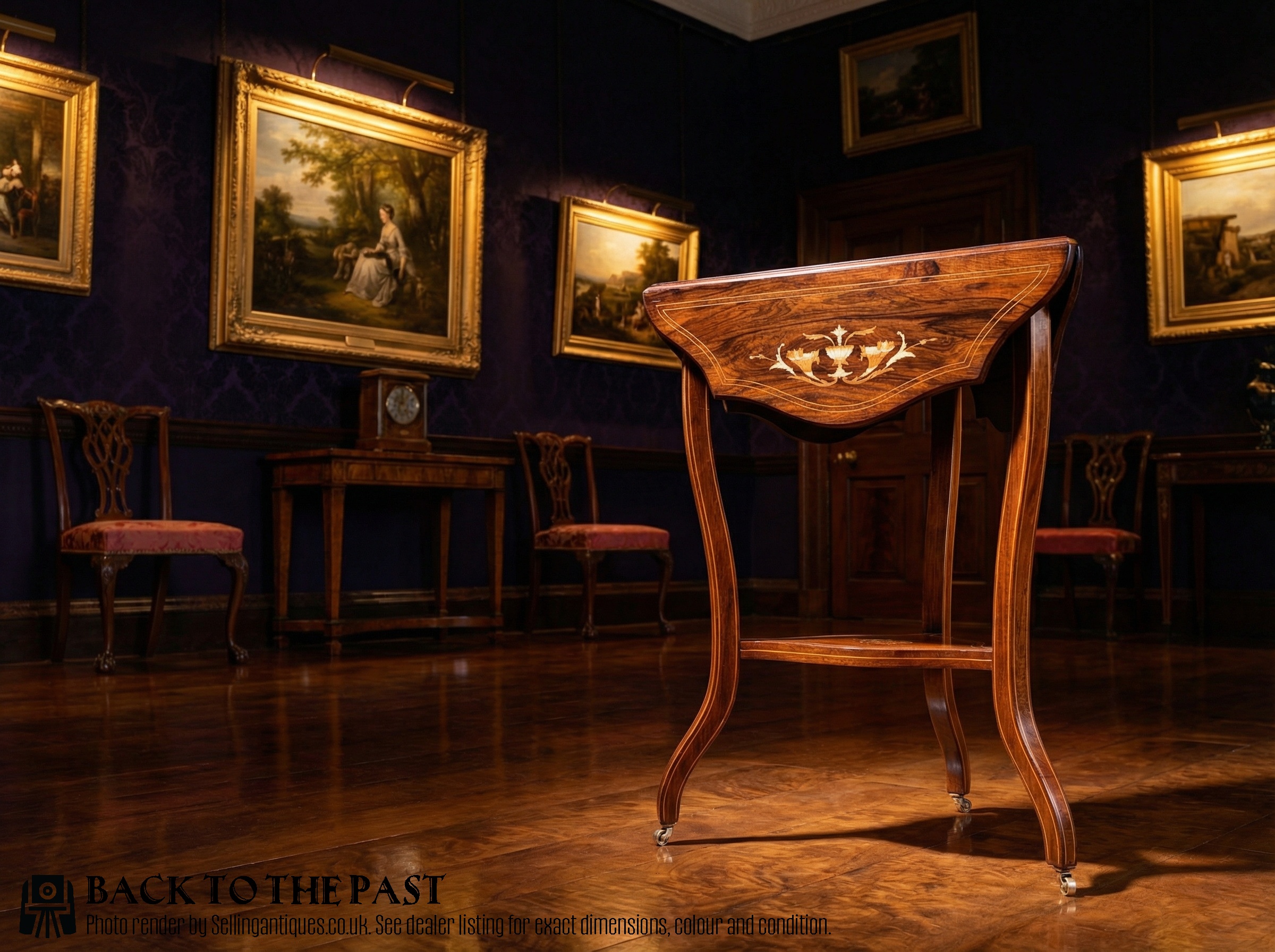
Antique Triangular Table
An antique triangular table encompasses a fascinating variety of three-sided forms designed for corners, card games, or occasional display. These pieces range from early oak gateleg and cricket tables to sophisticated George II and Edwardian drop-leaf models.
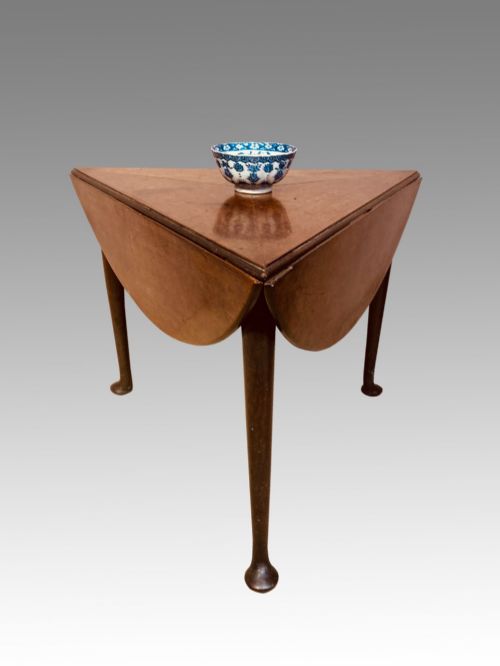
The versions most frequently met on this page include Edwardian rosewood inlaid occasional tables, mahogany envelope or handkerchief tables, and sturdy oak pieces from the 18th and 19th centuries. They utilise compact footprints to maximise surface space in smaller rooms.
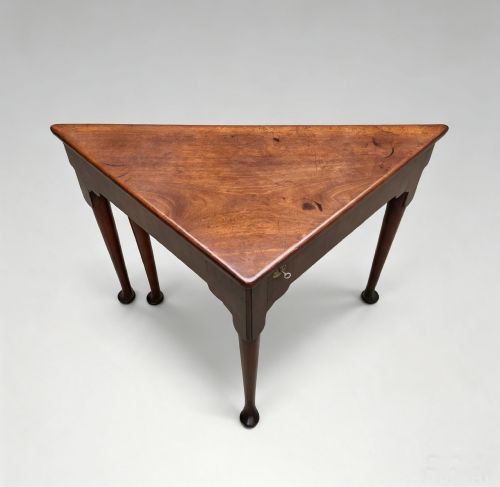
Makers and cabinetmakers adapted the triangular shape for specialised functions, including corner tea tables and folding card tables. Their unusual silhouettes distinguish them from standard rectangular or circular antiques.
How they were made
Cabinetmakers constructed these tables using dense timbers such as oak, mahogany, rosewood, and elm, often supported by brass hardware or fruitwood elements. Grain patterns and structural integrity dictated the choice of wood for folding leaves and gateleg mechanisms.
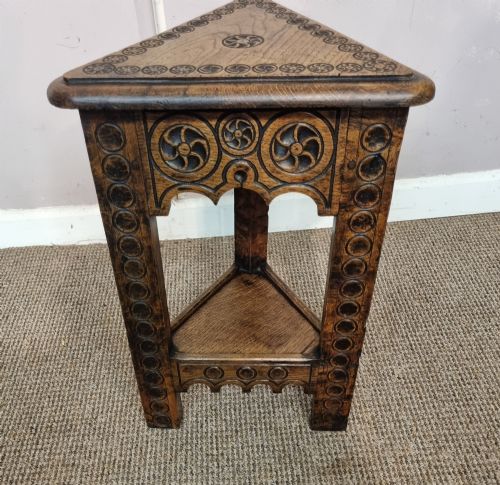
Decoration relied on precise techniques like satinwood inlay, marquetry, and carving, particularly evident in Edwardian and Georgian examples. Bentwood methods also appear in later 19th-century designs, showcasing evolving timber-shaping capabilities.
Listings feature periods spanning from the 17th century through the Edwardian era, highlighting enduring forms in oak, mahogany, and rosewood.
What varies in quality
The standard of timber selection and the crispness of inlaid details set finer examples apart from simpler utility pieces. Richly figured rosewood or finely grained mahogany elevate the visual weight of the furniture.
The ingenuity and smoothness of folding mechanisms, drop-leaf hinges, and gateleg supports demonstrate the maker's skill. Robust joinery ensures that functional folding sections operate reliably over centuries.
The Antique Triangular Table Glossary
- Handkerchief table
- A small occasional table featuring triangular folding leaves that resemble a folded handkerchief. When opened, they reveal a larger square or diamond-shaped surface.
- Gateleg table
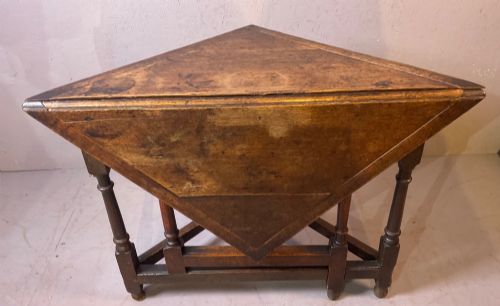
- A table with hinged leaves supported by swing-out legs that resemble a gate. This construction provides robust support for drop-leaf surfaces.
- Marquetry
- The art of applying decorative veneer pieces in various woods to create pictorial or geometric patterns. It appears frequently on Dutch and Edwardian tabletop surfaces.
- Drop-leaf
- A table design featuring hinged flaps that can be lowered or raised as needed. This flexibility allows the furniture to save space when not in use.
Antique Triangular Table: Frequently Asked Questions
How do I place a triangular table?
These tables fit naturally into unused corners, making them ideal for awkward spaces or tight hallways. Corner drop-leaf versions can sit flush against walls until extra surface area is required.
In larger rooms, certain freestanding designs act as striking centrepieces or card tables. Their distinct three-legged geometry draws the eye without overwhelming the surrounding furniture.
How do I date an oak triangular table?
Dating relies heavily on construction methods, timber choice, and the style of turning on the legs. Early 17th and 18th-century examples often utilise heavy oak with pegged mortise and tenon joints.
Later Victorian and Edwardian iterations show machine-sawn components, lighter secondary timbers, and refined surface veneers such as satinwood inlay.
Were these tables used for card games?
Many triangular and envelope tables served specifically as gaming surfaces during the 18th and 19th centuries. The folding mechanisms allowed players to conceal or expand the playing area as needed.
Their three-sided design often accommodated corner seating arrangements in fashionable parlours. Interior surfaces sometimes featured baize or leather inserts for card playing.