
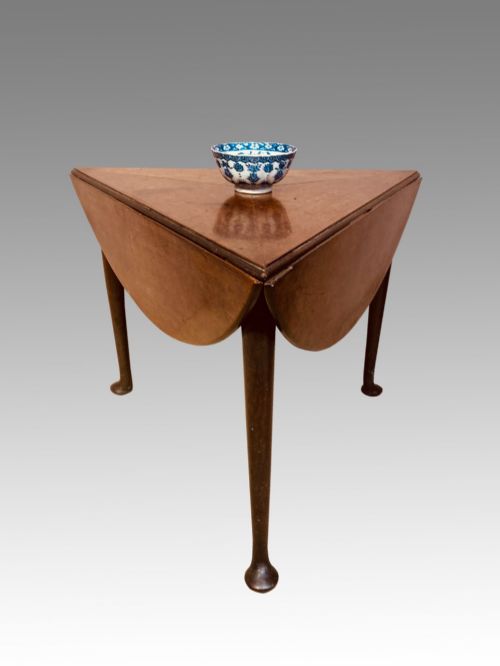
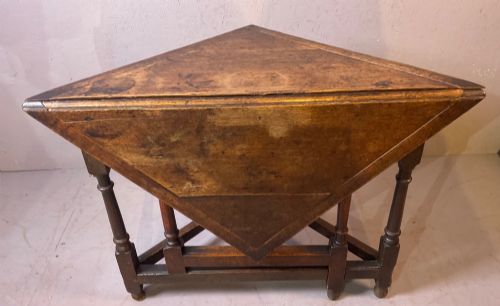
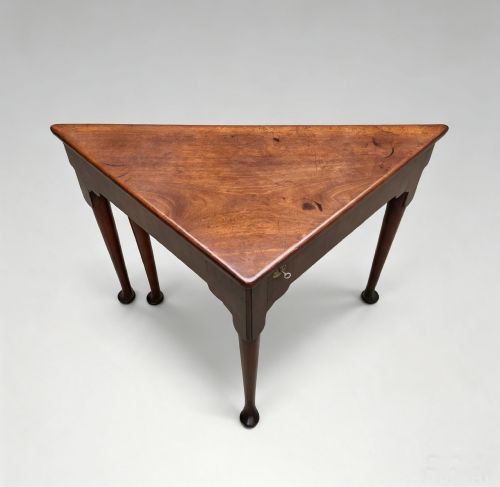


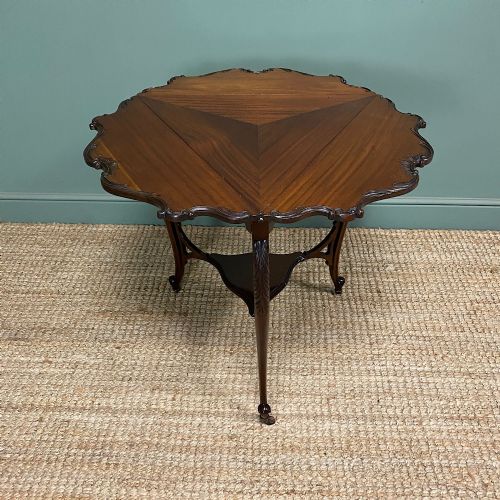


Antique Corner Drop Leaf Table
An antique corner drop leaf table saves space in a tight room while offering fold-out surfaces for tea or supper.
Antique Corner Drop Leaf Table
An antique corner drop leaf table fits neatly into the angle of a room, bringing folding leaves into play when extra surface area is required. These versatile items appear in forms such as occasional tables, side tables, and console tables designed to make the most of awkward corners.
The selections span centuries of British and continental design, from seventeenth century oak up to Edwardian inlaid rosewood and walnut pieces. Georgian examples include George II red walnut versions and George III folding or tea tables fitted with clever hinges and drop leaves.
Makers adapted the triangular or square-folding footprint for various domestic uses over time, producing supper tables, lamp tables, and sutherland tables with canted corners. Buyers frequently encounter Edwardian rosewood models featuring delicate inlay alongside earlier mahogany and red walnut iterations.
How They Were Made
Cabinetmakers worked primarily in solid hardwoods such as mahogany, oak, and red walnut, often incorporating secondary timbers like boxwood or satinwood for contrasting details. Selected items utilise intricate satinwood inlay and crossbanding to decorate the top surfaces and borders.
Construction relied on stable joinery to support folding flaps and gate legs, sometimes incorporating brass hinges, castors, or distinctive foot carvings like hoof feet on Georgian models. Craftsmen shaped corners and edges carefully to ensure the hinged flaps aligned flat when extended.
Materials appearing across the inventory include mahogany, oak, rosewood, walnut, satinwood, boxwood, and brass.
What Varies in Quality
The grade of timber and the precision of the inlay dictate much of the distinction between standard items and finer examples. Richly figured grain in mahogany, rosewood, or red walnut elevates a piece visually, as does crispness in carved details such as hoof feet or edge moulding.
Structural integrity in the folding mechanism and hinges determines how well the table functions day to day. Pieces that retain their original brass hardware, stable gate legs, and evenly matched veneer panels command greater appreciation among collectors.
The Antique Corner Drop Leaf Table Glossary
- Drop leaf
- A table with a fixed central section and hinged flaps that fold down when not in use. These flaps are supported by swing legs or brackets.
- Sutherland table
- A narrow table with exceptionally slender drop leaves that fold down almost vertically on either side. It sits on a gated frame.
- Crossbanding
- A strip of veneer applied to the border of a table top with the grain running perpendicular to the main surface. It creates a defined frame.
- Canted corner
- A corner that has been cut off at an angle rather than meeting in a sharp ninety-degree point. This softens the silhouette of square tables.
- Gate leg
- A leg hinged to a swinging frame that pulls out like a gate to support an extended table leaf. It provides sturdy reinforcement for folding flaps.
Antique Corner Drop Leaf Table: Frequently Asked Questions
Where should I place a corner drop leaf table?
These tables fit snugly into empty room corners where standard rectangular furniture would block pathways or waste space. They provide an instant surface for lamps, decorative displays, or cups when the leaves are lifted.
When extra floor space is needed, simply drop the leaves down to keep the room feeling open. Their compact footprint makes them particularly useful in hallways, bedrooms, or smaller reception rooms.
How do I distinguish between Georgian and Edwardian examples?
Georgian pieces from the eighteenth century typically rely on dense timbers like mahogany and red walnut, sometimes featuring carved details like hoof feet or plain gate leg frames. Their proportions reflect the functional demands of tea and supper use during that era.
Edwardian tables often display lighter timbers such as rosewood, walnut, and satinwood, frequently decorated with intricate inlay and crossbanding. They tend to serve as occasional, lamp, or sutherland tables designed for decorative utility.
Can these tables hold heavy items when extended?
The stability of the extended leaves depends on the condition of the swing legs and hinges beneath the top. Well-constructed gate legs provide firm support for lighter objects like lamps, books, or tea services.
It remains wise to check how securely the hinges lock into position before placing valuable items on the flaps. Avoid putting excessive downward pressure on the outer edges of older folding leaves.
What maintenance do polished wood surfaces require?
Polished timber benefits from regular dusting with a soft, dry cloth to prevent grit accumulation on the finish. Avoid placing damp items or unshielded hot cups directly onto the antique wood to prevent water rings and heat marks.
Occasional application of appropriate wax polish helps nourish the grain and maintain a natural sheen. Keeping the table away from direct sunlight and extreme temperature shifts protects the timber and veneer from drying out.