


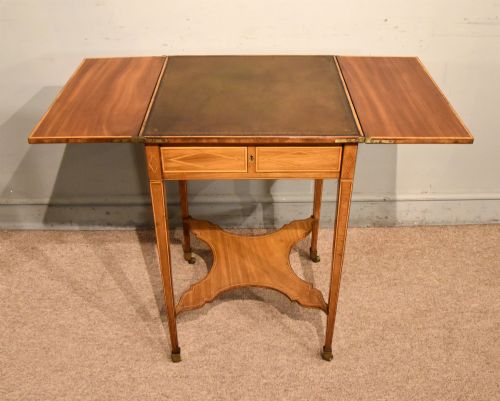
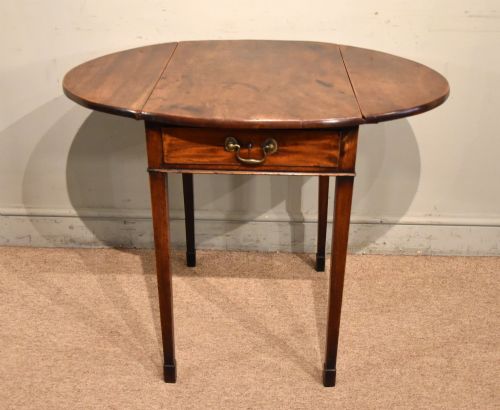
Antique Mahogany Drop Leaf Table
An antique mahogany drop leaf table offers folding versatility and rich timber grain, serving dining rooms and sitting spaces with understated grace.
The Form and Character of the Antique Mahogany Drop Leaf Table
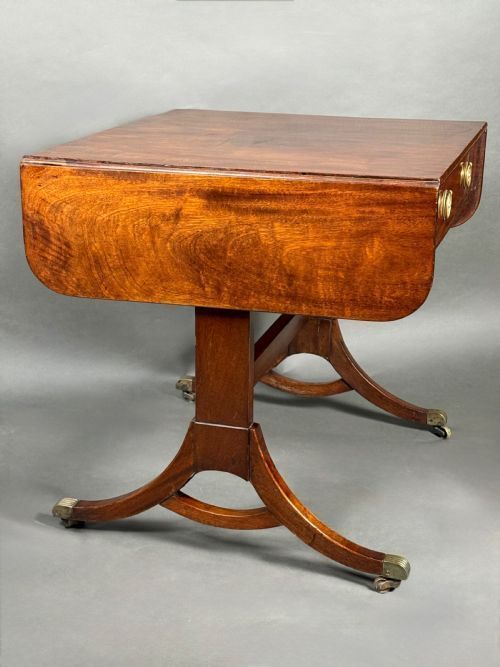
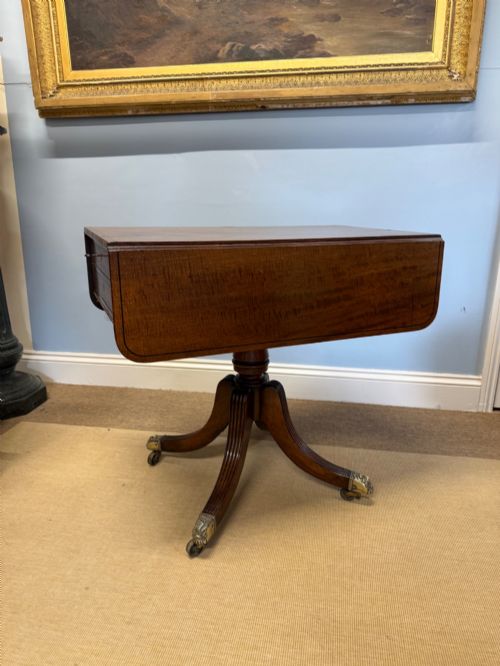
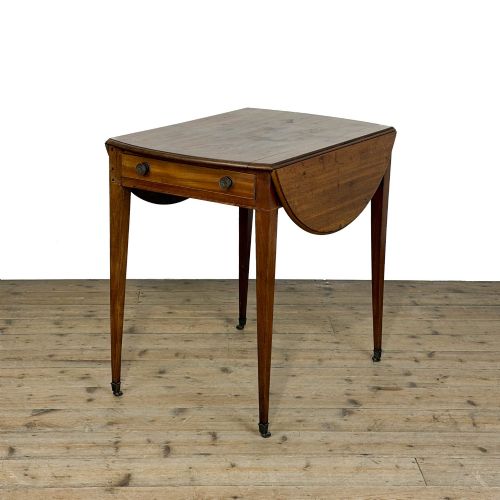
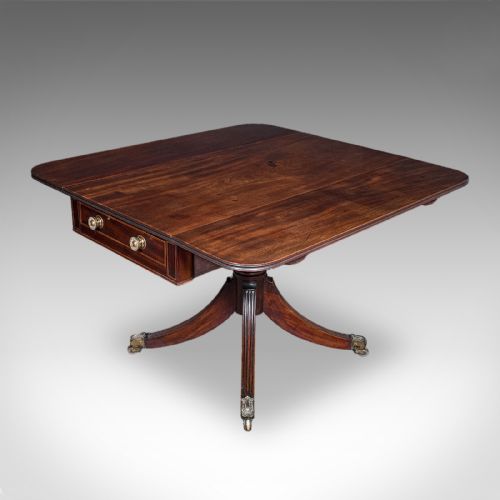
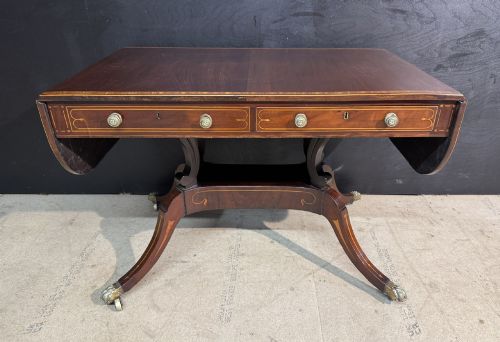
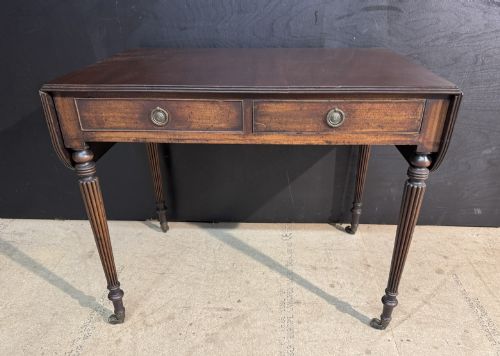
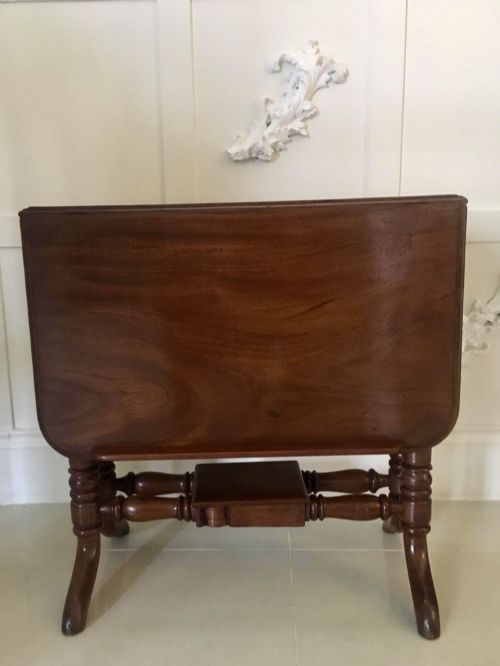
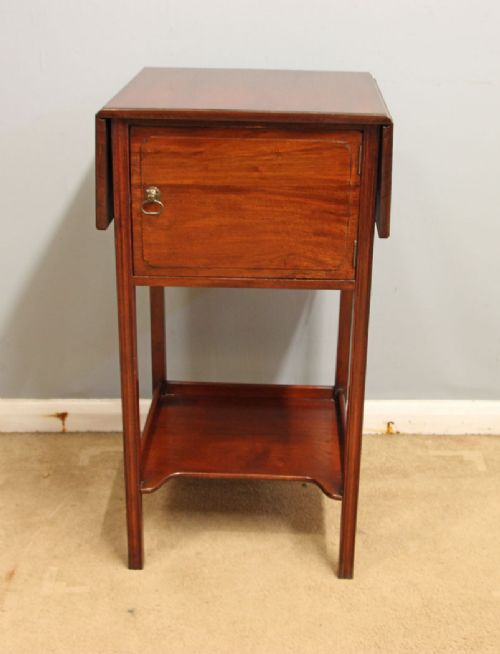
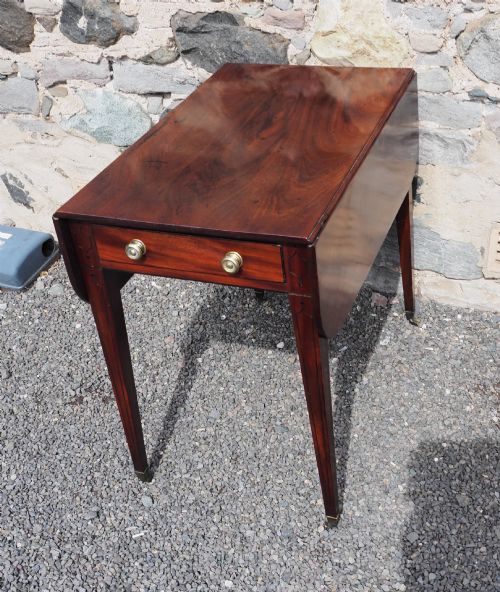
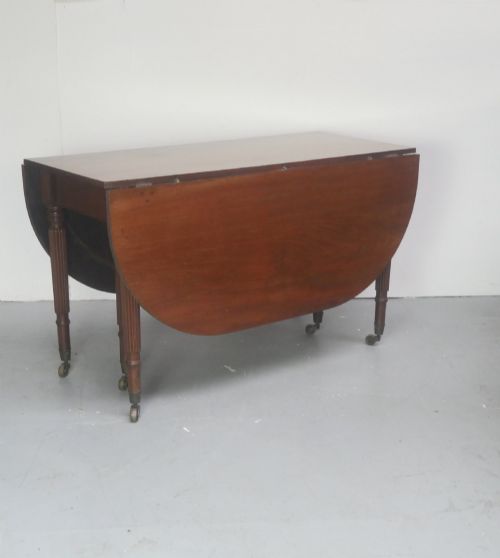
An antique mahogany drop leaf table functions as a flexible surface with hinged flaps that lower when space is required or rise to accommodate meals and gatherings. The pieces recorded here span centuries of British cabinet making, encompassing compact side tables, occasional pembroke forms, and substantial dining tables designed to seat several guests.
Georgian and Regency examples dominate the selection, bringing classic proportions and architectural restraint to domestic interiors. Buyers encounter everything from delicate spider leg tables to large dining surfaces intended for daily use in period homes.
Timber Selection and Joinery
Craftsmen utilised solid mahogany and Cuban mahogany, selecting timber for deep colour and dense grain before shaping the leaves and supporting frames. Brass hinges and castors frequently appear on finer examples to assist the movement of folding flaps and heavy legs.
Joinery relies on traditional framing methods, including rule joints that allow drop leaves to meet the fixed top smoothly when raised. Makers incorporated swing legs, gates, and clever pivot mechanisms to support the extended leaves securely under weight.
Retail Price Guide 2026
Typical UK retail prices for mahogany drop leaf table, calculated from the Sellingantiques database of over a million retail prices indexed since 2003. This retail price guide relies exclusively on Sellingantiques data; no external sources or auction records are used, so the figures do not describe the wider market.
Spider leg tables require a gentle touch, as their remarkably slender limbs look ready to scuttle across the floor.
Judging Quality and Proportion
The division between standard utility pieces and finer examples rests on timber selection, figure depth, and structural harmony. Tables with rich, highly polished grain and substantial solid mahogany construction command greater appreciation than plain variants.
Refinement shows in the turnings of the legs, the crispness of edge mouldings, and the stability of the drop leaf action when fully extended. Pieces that retain original brass castors and smooth operating hinges demonstrate superior original craftsmanship.
The Antique Mahogany Drop Leaf Table Glossary
- Drop leaf
- A table with a fixed centre section and hinged flaps on either side that lower or rise on supporting legs.
- Pembroke table
- A small occasional table equipped with two hinged drop leaves and typically featuring one or more drawers.
- Rule joint
- A rounded moulding joint connecting the drop leaf to the table top, hiding the gap and hinge mechanism.
- Spider leg
- A style characterised by exceptionally slender, delicate turned legs braced by fine stretchers, often found on lighter occasional tables.
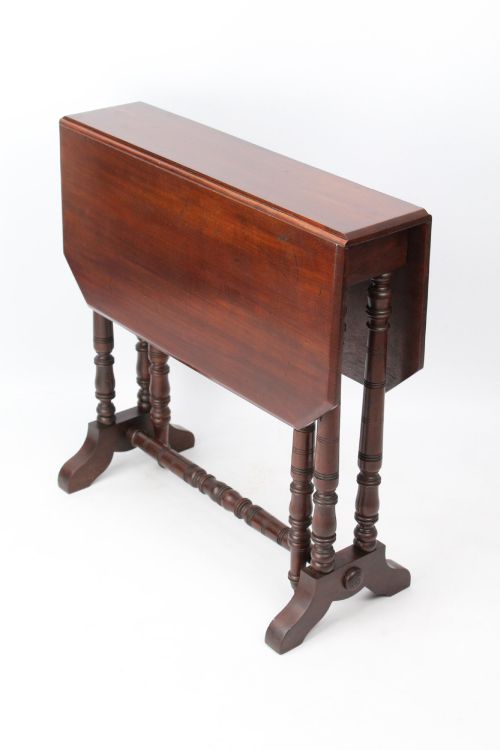
- Sutherland table
- A narrow-profile drop leaf table featuring very slender legs and leaves that fold down almost vertically.
Frequently Asked Questions
How do I use a drop leaf table in a small room?
Keep both flaps lowered against a wall to serve as a console or hallway surface until extra space is required for dining or writing.
Raise one or both leaves only when entertaining or working, returning the table to its compact profile afterward.
Are these tables sturdy enough for daily dining?
Georgian and Regency dining versions were built from solid timber specifically for robust, long-term household use.
Check that the swing legs or support gates lock firmly into position before placing heavy items upon the extended leaves.
What is the difference between a pembroke and a dining drop leaf table?
Pembroke tables are smaller occasional pieces built with drawers and narrow leaves, intended for bedside, sofa, or light writing use.
Large drop leaf dining tables possess wide leaves and sturdy framing designed to seat four to eight people comfortably for meals.
How do I care for antique mahogany surfaces?
Dust regularly with a soft, dry cloth and avoid placing the timber in direct sunlight or near sudden heat sources that cause splitting.
Apply high quality beeswax periodically to nourish the grain and maintain the natural lustre of the polished wood.