

Georgian Mahogany Breakfast Table
A georgian mahogany breakfast table is a versatile surface crafted for morning dining and informal gatherings.
Identifying georgian mahogany breakfast tables
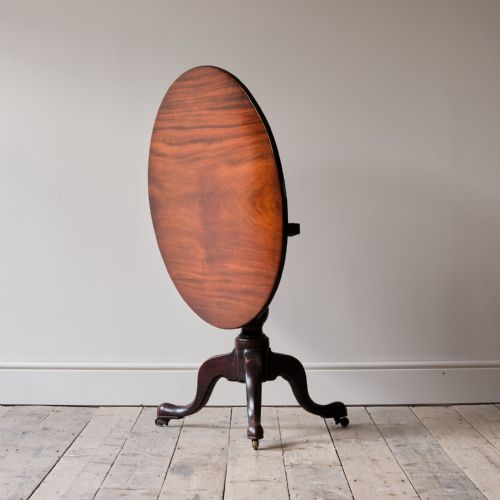
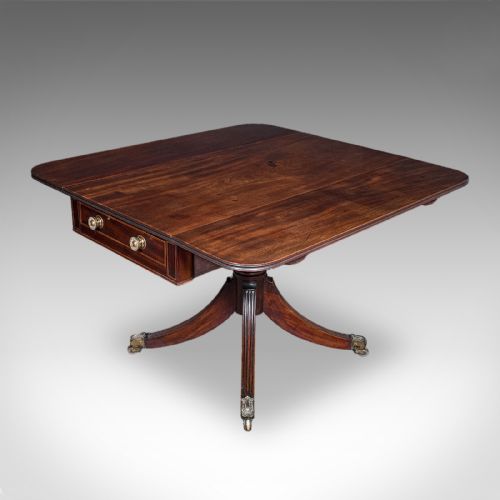
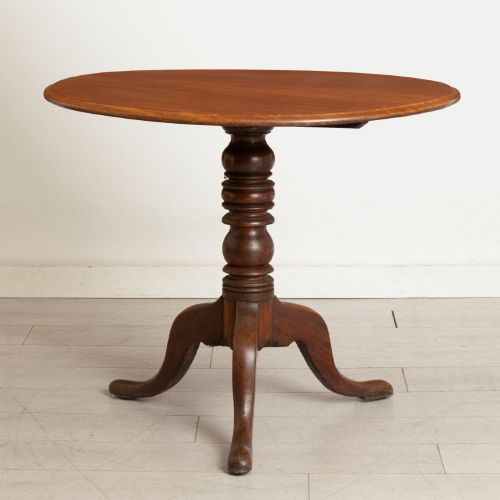
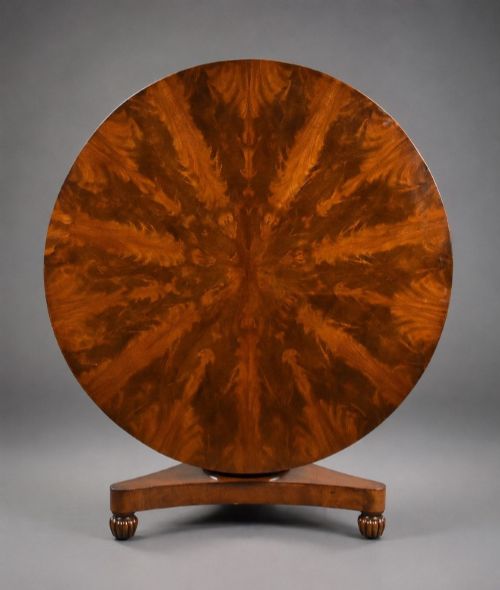
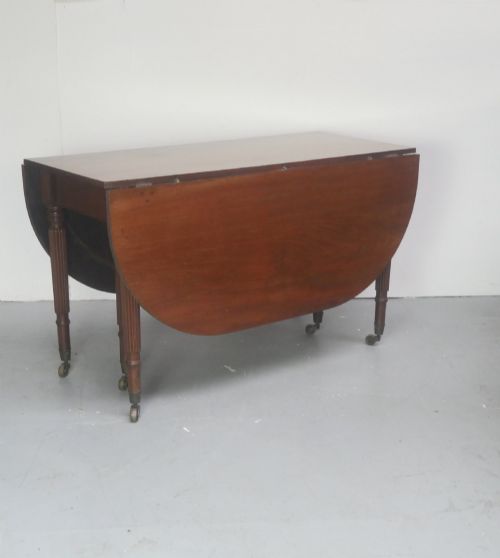
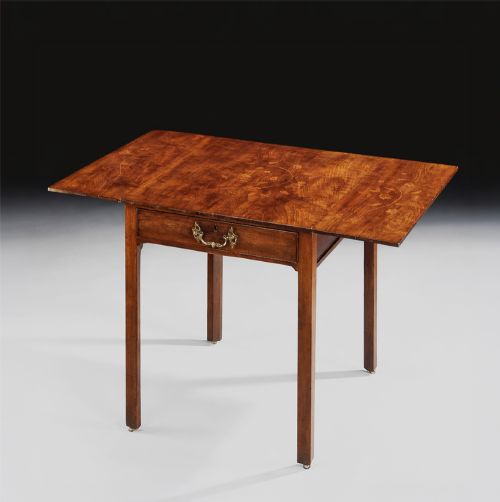
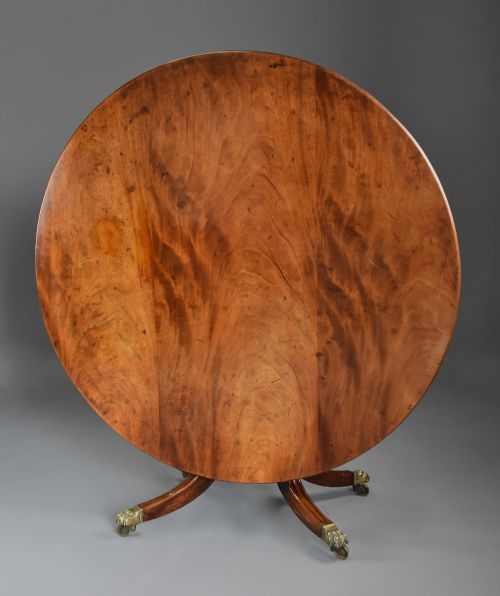
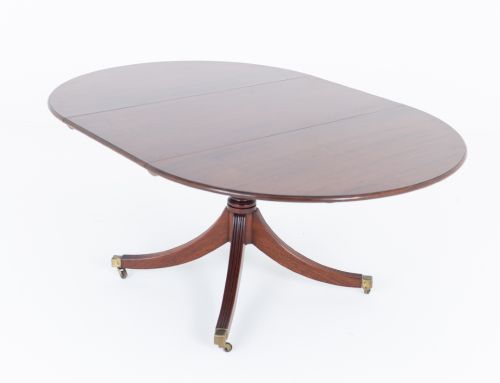
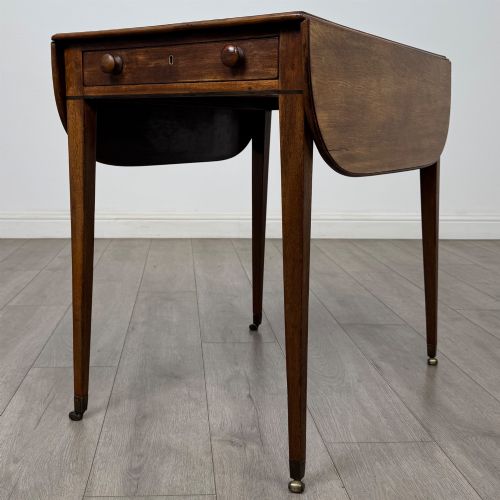
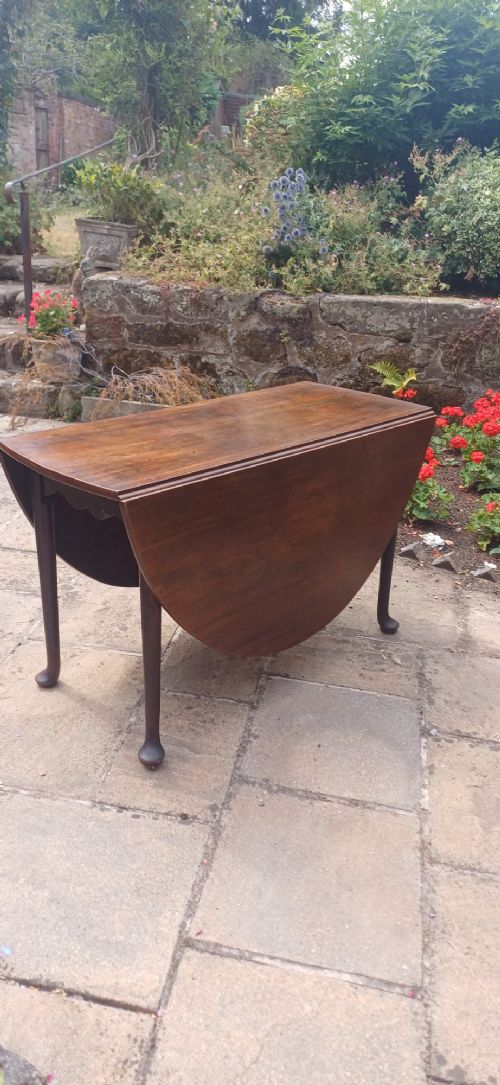
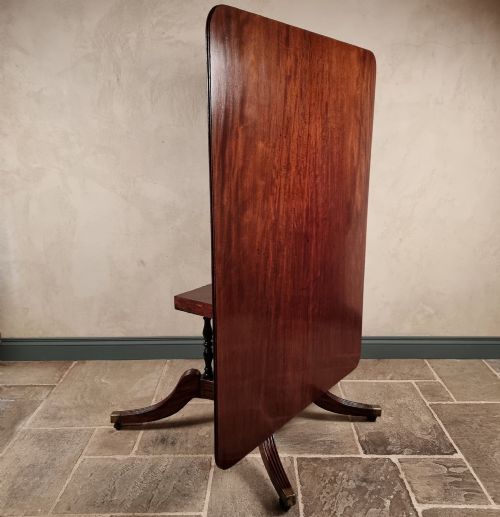
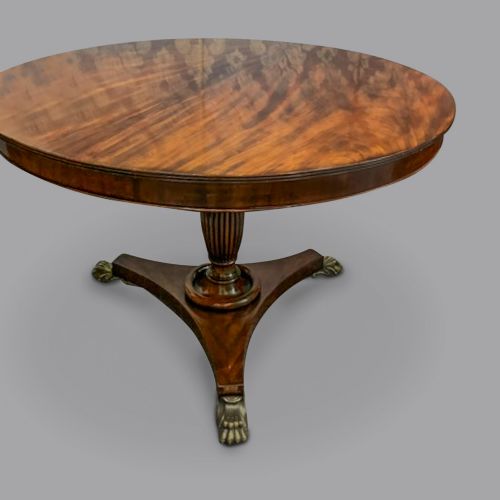
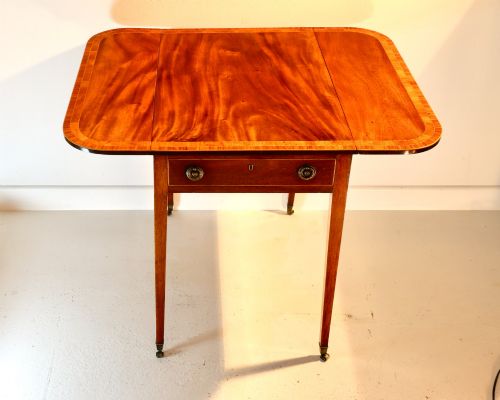
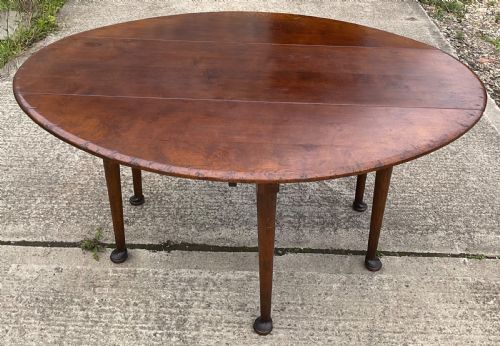
The georgian mahogany breakfast table appears in various forms across the eighteenth and nineteenth centuries, including pedestal designs, tilt-top versions, and dropleaf pembroke formats. Makers produced these pieces during the Georgian, George III, and Regency periods to serve dining and occasional use.
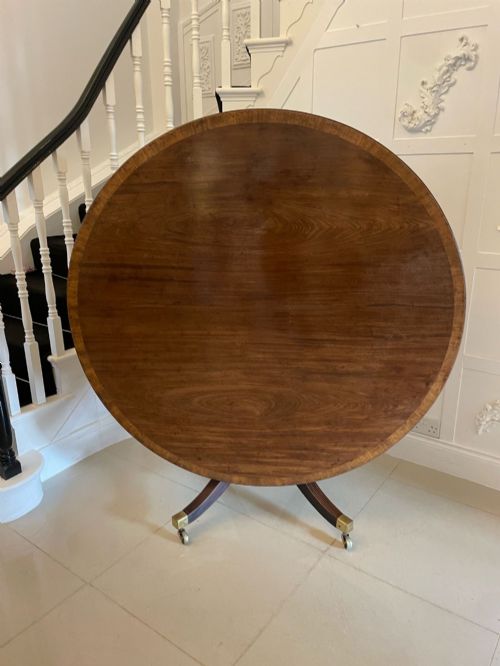
Most examples show substantial timber selection, featuring figured grain patterns and occasionally satinwood inlay or crossbanding. Common structural formats include tripod bases, pedestal columns, and folding or drop-leaf tops designed to save space when not fully extended.
Materials and construction
Cabinetmakers utilised solid and veneered mahogany for the primary surfaces, often selecting figured timber for the top to create visual depth. Brass fittings appear on castors and hinge mechanisms, while lighter woods such as satinwood provide contrasting detail through inlay.
Joinery methods include stable pedestal mounts, tilt-top mechanisms pivoting on pillar supports, and drop-leaf folding joints. Timber movement is managed through traditional framing and stable underlying construction beneath the polished mahogany top.
Retail Price Guide 2026
Typical UK retail prices for georgian mahogany breakfast table, calculated from the Sellingantiques database of over a million retail prices indexed since 2003. This retail price guide relies exclusively on Sellingantiques data; no external sources or auction records are used, so the figures do not describe the wider market.
Recorded pieces span the Georgian, George III, and Regency periods, utilising mahogany, satinwood, and brass.
Judging quality and execution
Quality rests primarily on the selection of the mahogany veneer and the crispness of any inlaid satinwood or crossbanding. Superior examples display carefully matched timber grain across large folding or tilt tops rather than plain or patched boards.
Structural harmony separates standard pieces from finer work, visible in the proportions of the pedestal column, the turning of the tripod legs, and the integration of brass castors. The precision of the tilt mechanism and stability of the joints indicate superior workshop standards.
The Georgian Mahogany Breakfast Table Glossary
- Mahogany
- A dense tropical hardwood prized for its rich reddish-brown colour and stable grain. Cabinetmakers utilised it extensively for fine furniture throughout the eighteenth and nineteenth centuries.
- Tilt-top
- A hinged tabletop mechanism that allows the surface to rotate vertically and rest flat against the pedestal when not in use. This design saved floor space in smaller rooms.
- Pembroke table
- A small rectangular table featuring two hinged drop leaves on opposing sides. Many examples include a small drawer beneath the surface.
- Crossbanding
- A decorative border of veneer laid perpendicular to the grain of the main surface. It frames the central panel using contrasting timber orientation.
- Tripod base
- A support structure comprising three spreading legs radiating from a central pillar. This configuration ensured stability on uneven historical floors.
Frequently Asked Questions
How were these tables used originally?
These tables served primarily for morning meals and informal dining in private apartments or breakfast parlours. Their adaptable forms allowed servants to move or stow them easily.
Tilt-top and drop-leaf variations meant the furniture could stand against a wall when not required for eating. They also functioned as writing surfaces or occasional tables during the day.
How do I tell a tilt-top from a pedestal table?
A tilt-top table incorporates a clever pivot mechanism beneath the surface, allowing the top to hinge vertically against the central column. This makes storage straightforward.
Pendestal versions remain fixed in the horizontal position, supported by a heavy pillar and spreading legs without the pivoting mechanism.
What is the difference between Georgian and Regency examples?
Georgian pieces generally date from the eighteenth into the early nineteenth century under George III, showing restrained classical proportions and solid timber construction.
Regency examples reflect early nineteenth-century taste influenced by classical revival styles, often featuring bolder figured mahogany veneer, brass castors, and architectural pedestals.
How do I care for a mahogany breakfast table?
Keep the timber away from direct heat sources and strong sunlight to prevent the mahogany veneer from drying out or fading. Maintain a stable indoor environment.
Apply gentle beeswax polish occasionally to nourish the polished surface and buff with a soft cloth. Avoid placing hot items or liquids directly onto the wood.