
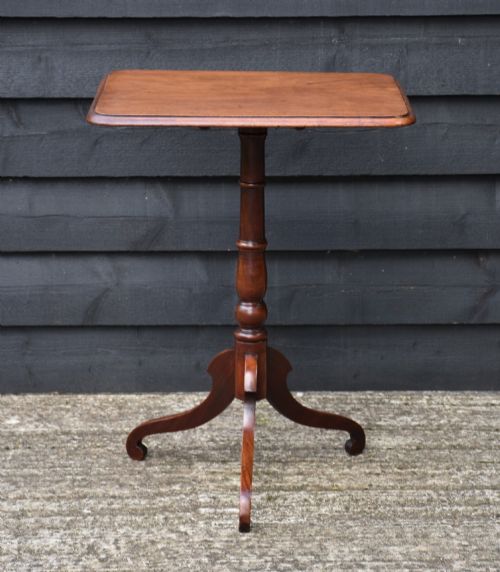
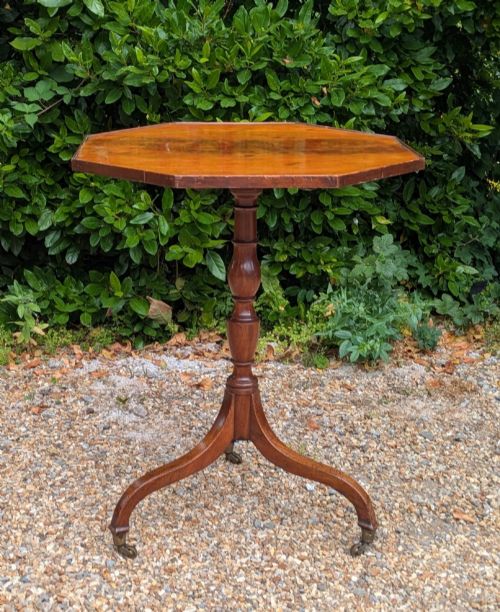

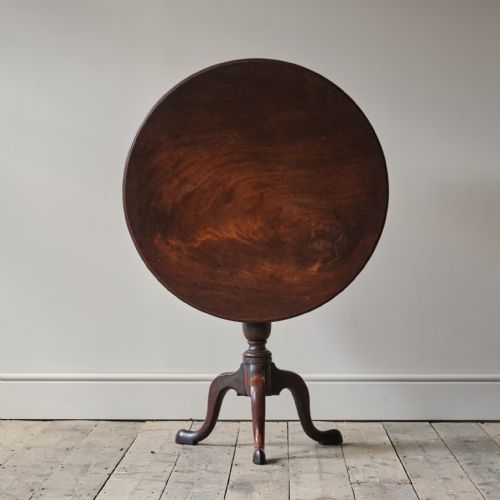
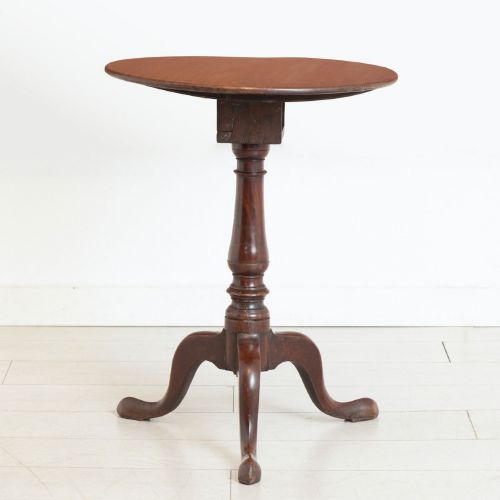


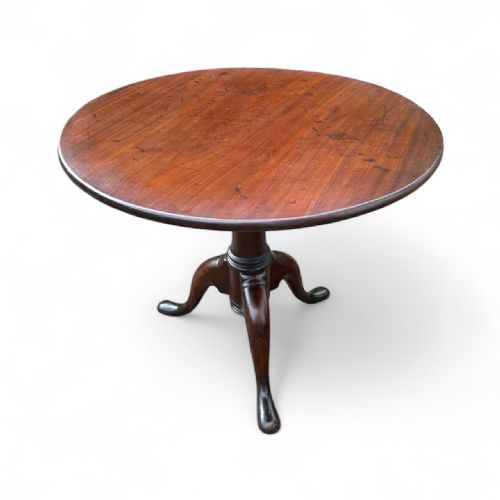

Antique Tilt Action Table
An antique tilt action table combines clever domestic engineering with timber of remarkable grain, designed to tilt flat and tuck away when the room needs space.

Antique Tilt Action Table
When you search for an antique tilt action table, you encounter practical domestic furniture engineered to pivot flat against its pedestal when not in use. These pieces span the Georgian, Regency, and Victorian periods, taking forms from small wine and tea tables to large oval dining and loo tables.
Originating in British homes to maximise floor space in parlours and dining rooms, these tables balance heavy timber tops with stable, supportive bases. The pivot mechanism allows the top to lock securely in the horizontal position for daily use or fold vertically for storage against a wall.
Materials and construction methods
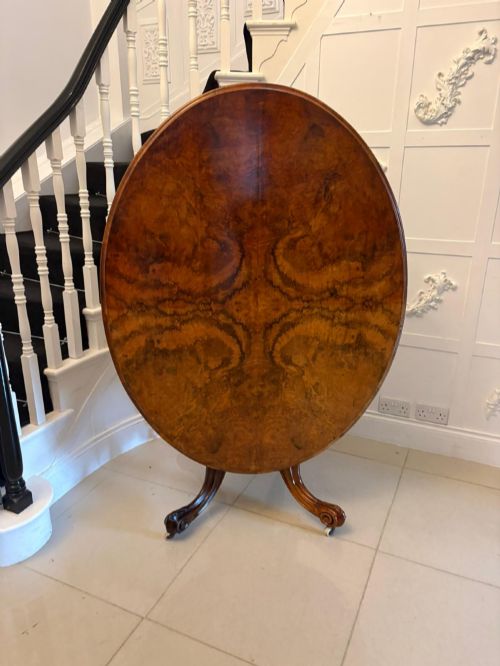
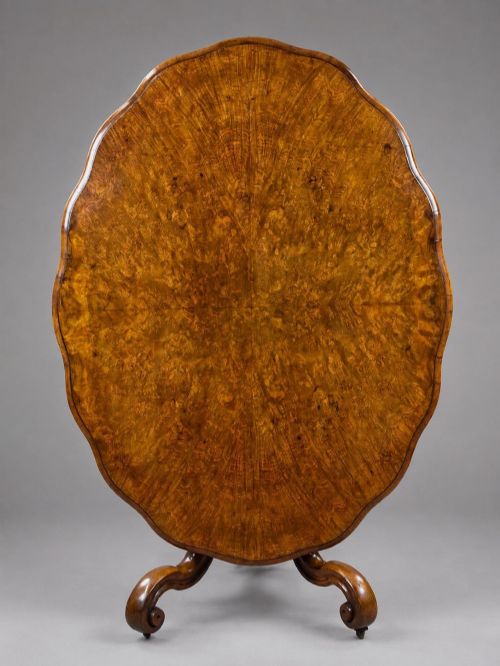
Makers relied heavily on dense timbers such as mahogany, red walnut, and burr walnut veneer, selecting boards with rich figuration for the primary surfaces. Solid oak and rosewood also feature in specific regional or later Victorian examples, providing durability and varied natural colour.
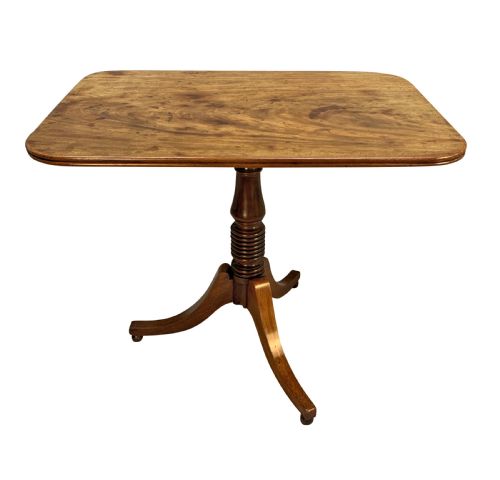
The characteristic pivot action relies on sophisticated joinery, frequently incorporating a birdcage framework of small wooden spindles that allows the top to both tilt and rotate. Tripod bases are joined to the central pillar with precise dovetails or tenons, ensuring the whole structure remains rigid under weight.
Antique Tilt Action Table Retail Price Guide 2026
Typical asking prices for tilt action table among the pieces listed under this phrase on Sellingantiques today, from the lower quarter to the upper quarter. They describe what is for sale here now, not the wider market.
Many a midnight snack was hastily cleared when a poorly latched tabletop unexpectedly snapped back to vertical.
Distinguishing quality across the range
The standard of craftsmanship shows clearly in the timber selection for the top, where superior examples utilise a single wide board rather than multiple joined planks. Figured veneers and intricate edge treatments like pie crust carving or brass inlay indicate a workshop of higher ambition.
Mechanical precision sets the best pieces apart, specifically how smoothly the birdcage or latch mechanism operates and whether the locked top sits completely flat without wobble. The carving on the knees of tripod legs and the weight of the central pedestal further distinguish standard domestic items from elite commissions.
The Antique Tilt Action Table Glossary
- Tilt-top table
- A table with a hinged top that pivots to a vertical position when not in use. This clever design enabled households to clear floor space quickly in smaller rooms.
- Birdcage
- A rotating wooden frame fitted beneath the table top that houses the pivot axis. It allows the surface to spin horizontally as well as tilt.
- Snap top
- An alternative term for a tilt action table featuring a spring or catch mechanism. The latch secures the top firmly in place when lowered.
- Tripod table
- A freestanding table supported by a central pillar resting on three legs. This configuration prevents rocking on uneven historical floors.
- Pie crust edge
- A decorative moulded tabletop edge carved with raised undulations resembling pastry. It requires skilled hand-chasing by the cabinet maker.
Antique Tilt Action Table: Frequently Asked Questions
How do I operate the tilt mechanism safely?
Most tables use a wooden catch or brass latch beneath the top that you release while supporting the weight of the timber. Guide the top smoothly between the vertical and horizontal positions rather than letting it drop.
Ensure any locking peg is fully engaged before placing items on the surface to prevent accidental movement during use.
Where were these tables used in the home?
Smaller tripod and wine versions stood in parlours and drawing rooms for holding tea services or reading materials. Larger breakfast and loo tables occupied the centre of dining rooms.
Because they folded flat against walls when cleared, they suited multi-purpose living spaces where floor area was at a premium.
How do I date a Georgian tilt top table?
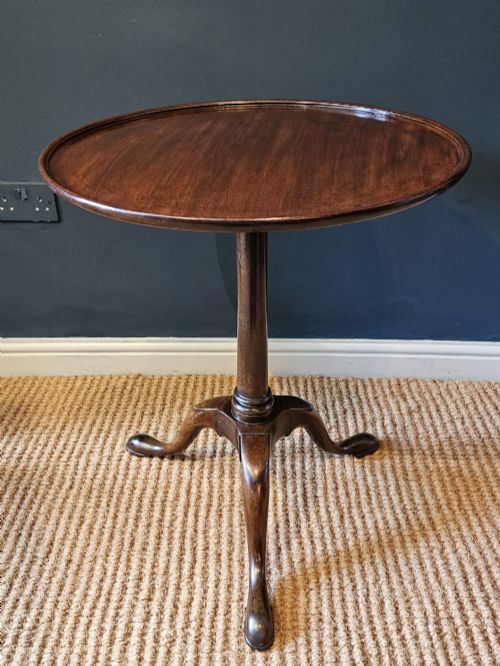
Look to the form of the pedestal, the shaping of the tripod legs, and the presence of a birdcage mechanism. Earlier 18th-century pieces often feature dish tops and delicate pad feet.
Later Georgian and Regency examples tend towards heavier turned columns, brass castors, and more elaborate veneering on the primary surface.
Can I use an antique tilt table daily?
These tables served generations of households for dining, writing, and social gatherings, so they remain robust for modern living. Treat the polished wooden surfaces with care by using coasters and avoiding excessive moisture.
Regular waxing preserves the finish while allowing the natural grain of the mahogany or walnut to shine through.