

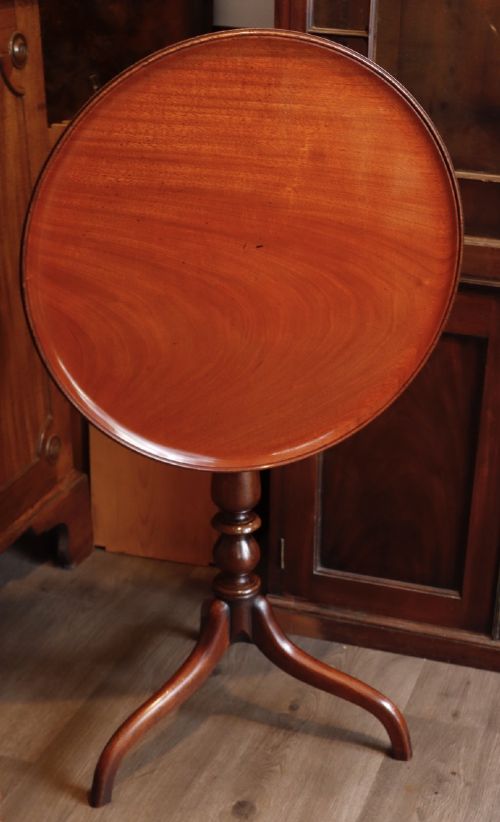


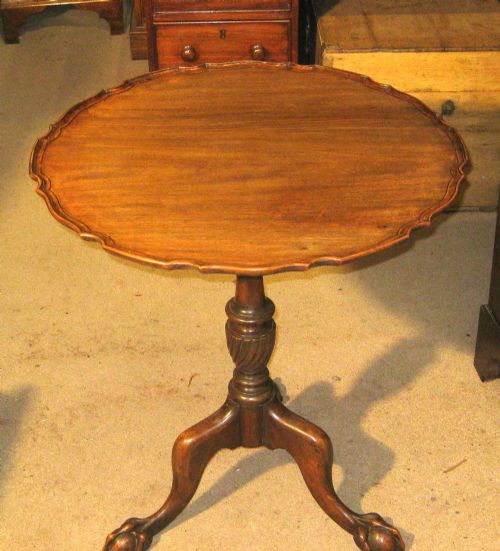
Chippendale Style Tripod Table
A chippendale style tripod table brings three legs and a circular top together in mahogany, balancing everyday utility with the carved detail of the eighteenth century.
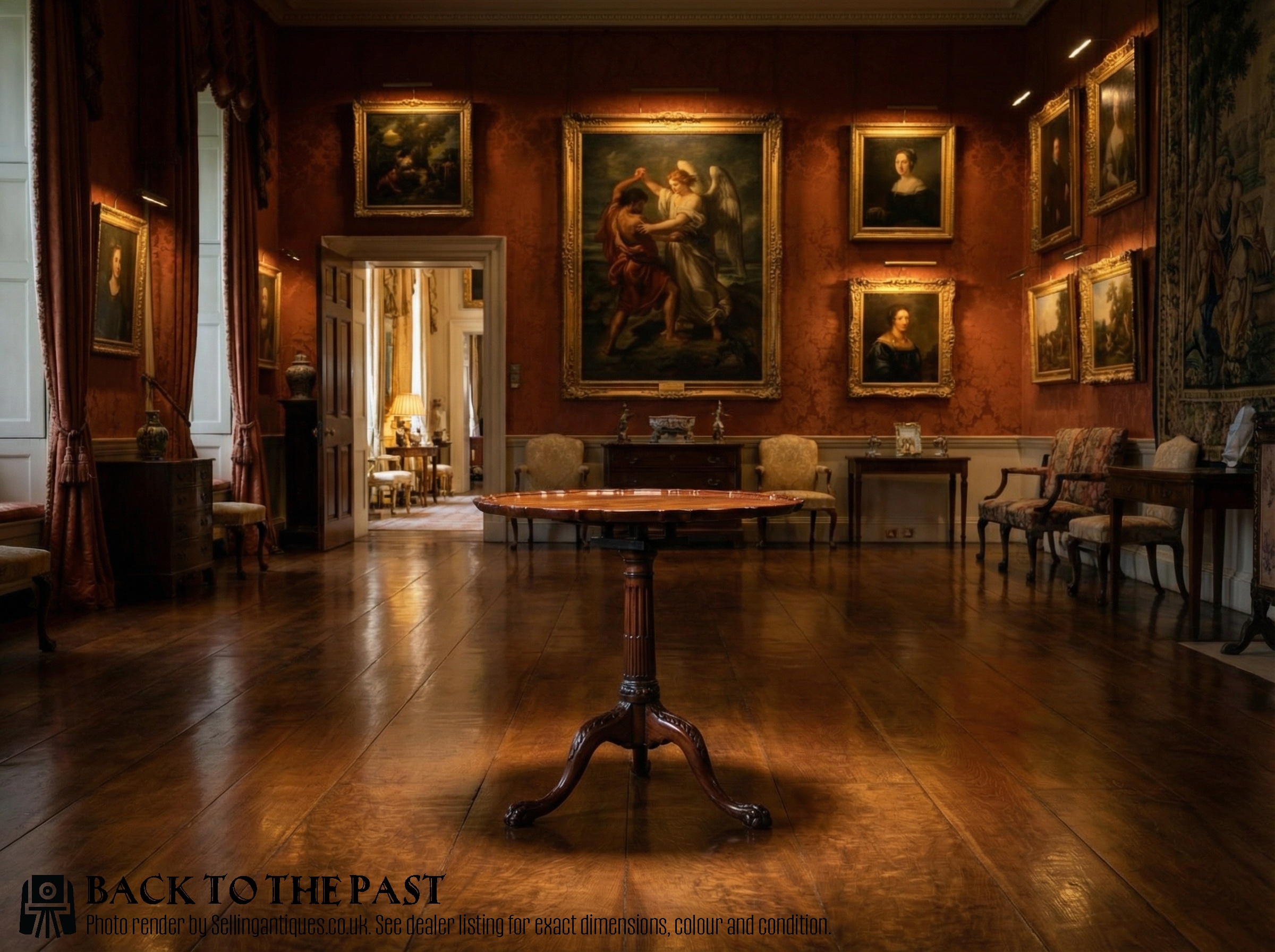
Chippendale Style Tripod Table
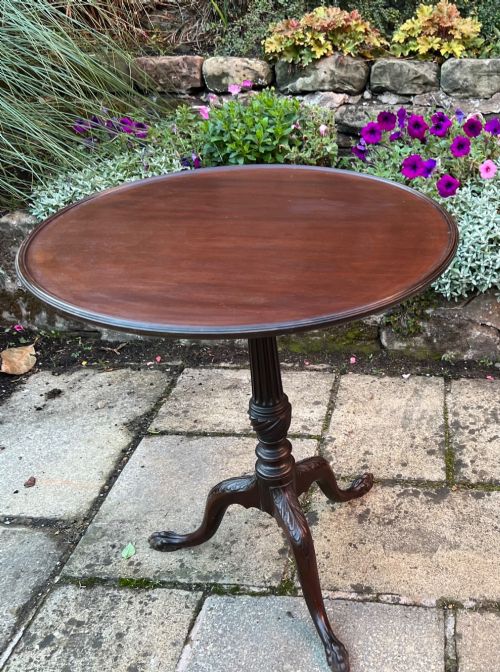
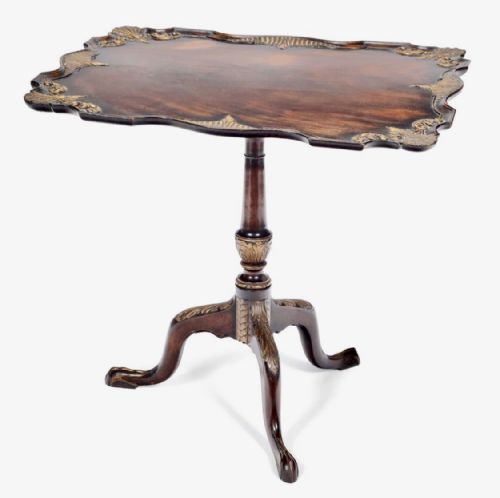
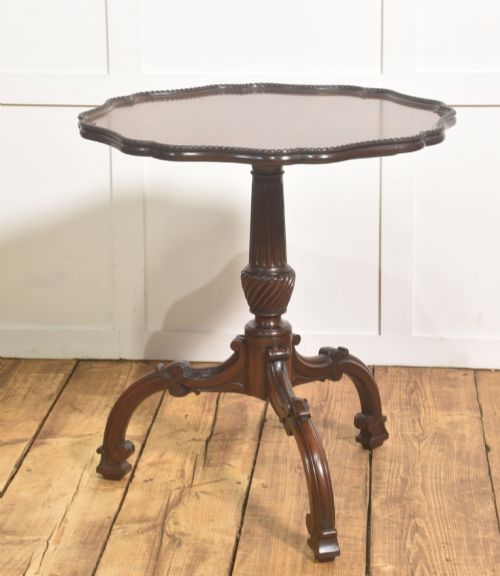
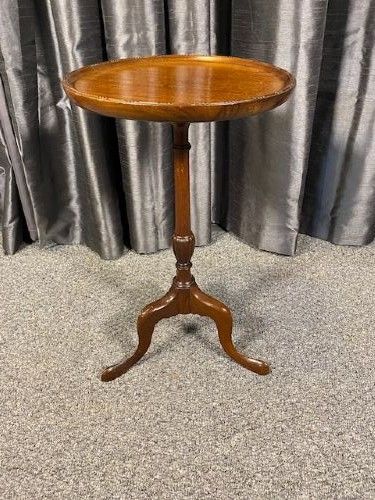
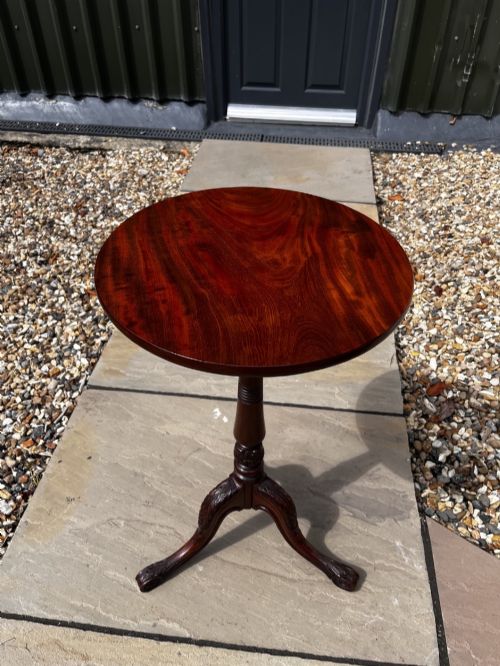
A chippendale style tripod table is a freestanding circular stand raised on a central pillar supported by three radiating feet. These pieces serve as wine tables, occasional tables, or tea tables, and they appear frequently with tilting tops.
The selections span from eighteenth-century George III originals through nineteenth-century Victorian interpretations to twentieth-century revivals from the Edwardian era and the 1920s or 1930s. Mahogany is the dominant timber, though walnut, figured walnut, and oak also surface.
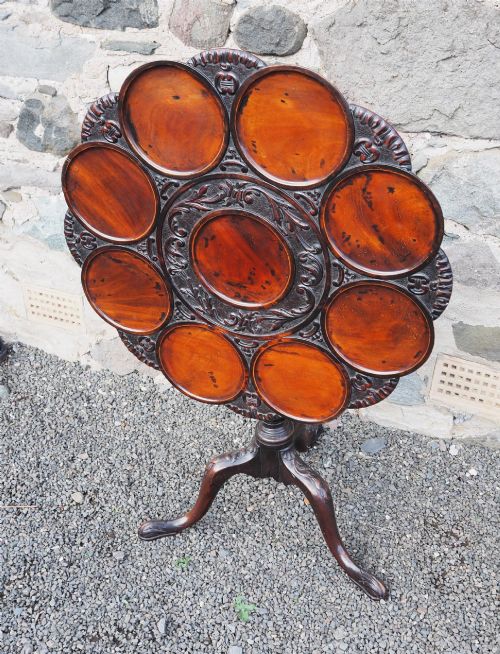
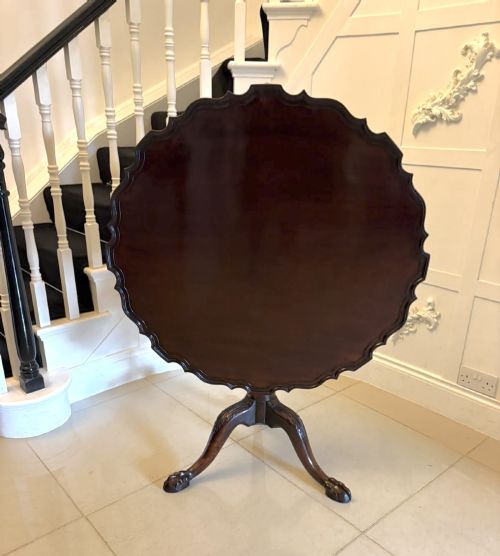
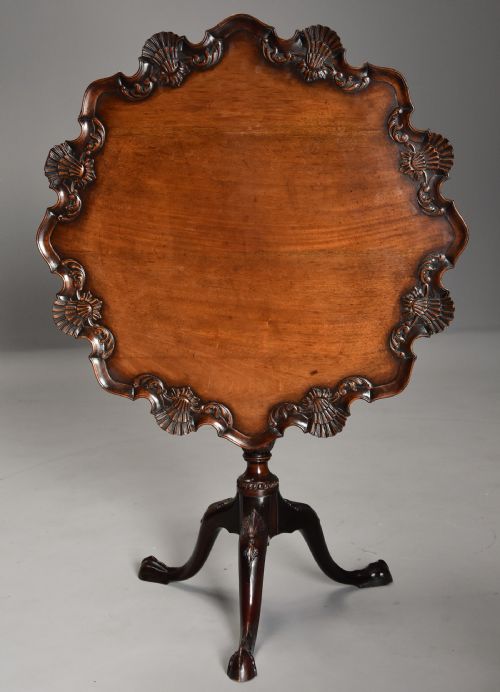
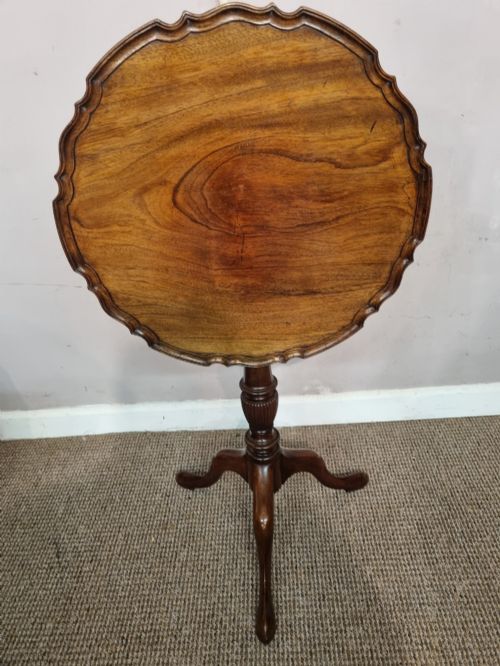
Buyers encounter forms ranging from plain tops to raised pie crust edges, serpentine galleries, and birdcage mechanisms that allow the table top to pivot and rotate. Smaller wine tables and lamp tables sit alongside larger tea and supper tables.
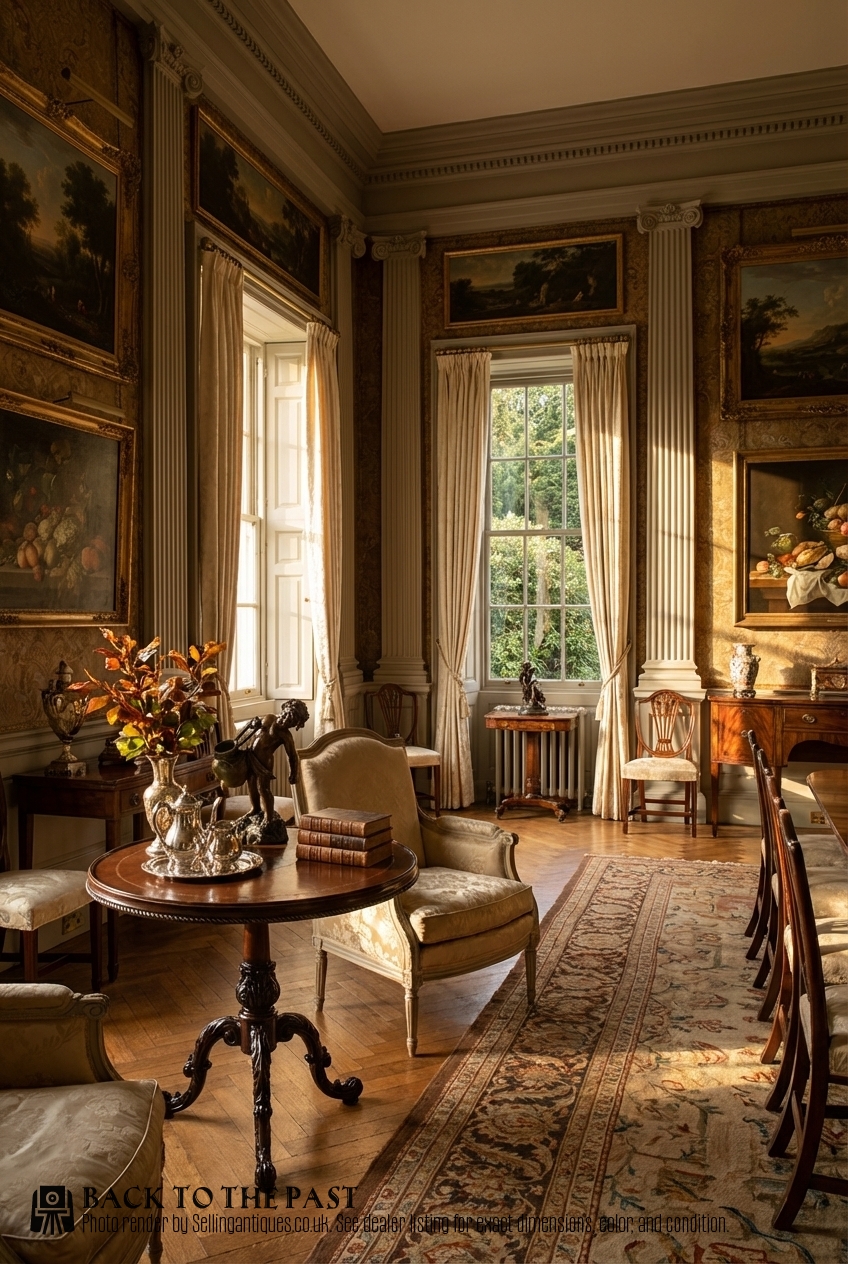
How They Were Made
Cabinetmakers worked primarily in solid mahogany and walnut, occasionally incorporating parcel gilding, brass fittings, or leather insert tops. Timber selection focused on grain movement and stability for the circular tops.
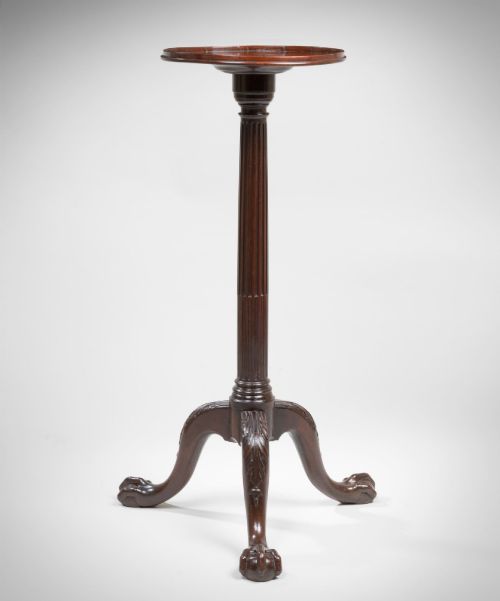
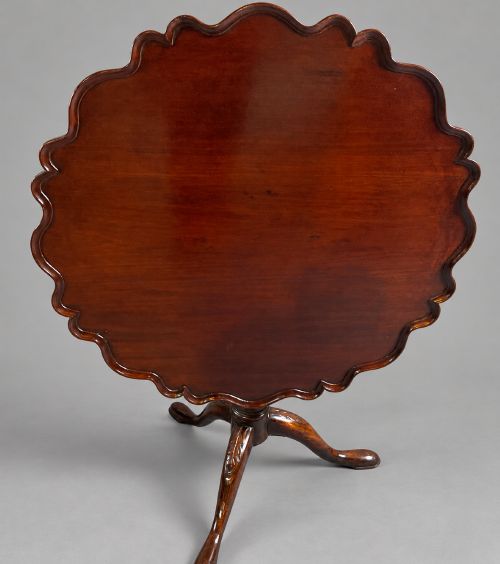
Carving defined the style, utilising techniques for ball and claw feet, acanthus leaves on the knees of the cabriole legs, and fluted central pillars. Pie crust edges were painstakingly shaped by hand from solid timber rather than applied separately.
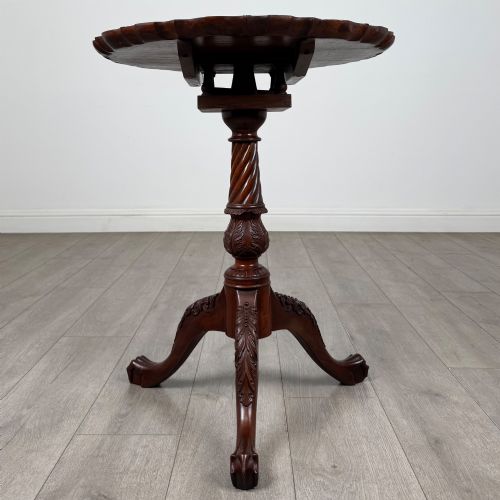
The tilting mechanism relied on a clever birdcage block or a simple hinge block secured by a wooden catch pin. This allowed the top to fold flat against the pedestal when not in use.
Chippendale Style Tripod Table Retail Price Guide 2026
Typical asking prices for chippendale style tripod table among the pieces listed under this phrase on Sellingantiques today, from the lower quarter to the upper quarter. They describe what is for sale here now, not the wider market.
Materials recorded across the inventory include solid mahogany, figured walnut, oak, brass, and leather.
What Varies in Quality
The depth and crispness of the hand carving separate standard production from exceptional examples. Sharp detailing on the claw and ball feet and deep relief on the pillar indicate superior workshop standards.
Proportion and balance dictate the integrity of the piece, particularly how the three legs extend from the central column to ensure steady weight distribution. The weight of the timber and the tightness of the birdcage pivot mechanism also mark the tier of manufacture.
S and H Jewell London
The Chippendale Style Tripod Table Glossary
- Tripod table
- A small freestanding table supported by a central pillar and three legs. This format gained immense popularity during the Georgian period for tea and card playing.
- Tilt-top table
- A table designed with a hinged top that folds into a vertical position. This mechanism saved valuable floor space in smaller eighteenth-century parlours.
- Pie crust edge
- A raised, scalloped rim carved directly from the solid edge of the table top. It resembles the fluted pastry edge of a pie.
- Birdcage mechanism
- A wooden framework beneath the table top that enables the surface to revolve and tilt. It uses two parallel wooden discs connected by four small vertical pillars.
- Torchere
- A tall, slender stand designed to hold a light source or a plant. These vertical pieces share the tripod base construction of smaller tables.
Chippendale Style Tripod Table: Frequently Asked Questions
What is a birdcage mechanism?
The birdcage is a small wooden framing device fitted beneath the table top. It allows the top to both tilt vertically and rotate horizontally on its central axis.
This clever engineering allowed eighteenth-century households to store the table flat against a wall when not in use.
How do I use a wine table today?
These compact stands work well beside a reading chair, sofa, or bed as a surface for a lamp or a cup. Their small footprint allows them to fit into tight corners where standard tables will not go.
Leaving the top tilted when not in use displays the craftsmanship of the underside while protecting the polished surface.
How do I tell an 18th century table from a revival piece?
Examining the timber shrinkage, the tool marks inside the pillar joints, and the wear patterns on the feet helps distinguish period pieces from later Edwardian or 1920s reproductions. Eighteenth-century construction often reveals hand-cut joinery and subtle asymmetries.
Revival pieces from the late nineteenth and early twentieth centuries frequently show machine-sawn components and more uniform patination.
Why do some tables have raised edges?
Raised rims, such as pie crust edges or serpentine galleries, were designed to prevent tea cups, saucers, and wine glasses from sliding off the surface when the table was tipped or bumped.
Carving these borders from solid timber required considerable skill and marked a more expensive piece of furniture.