

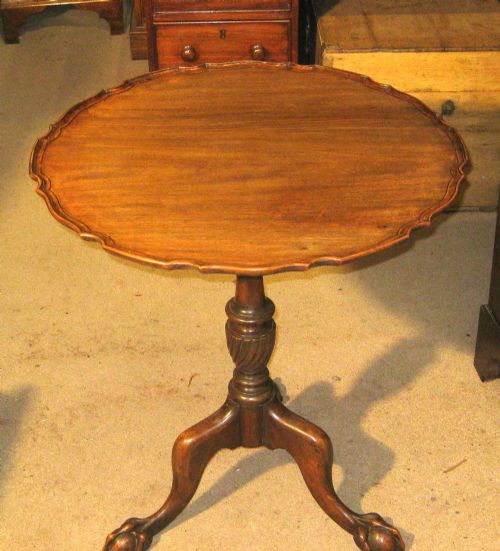
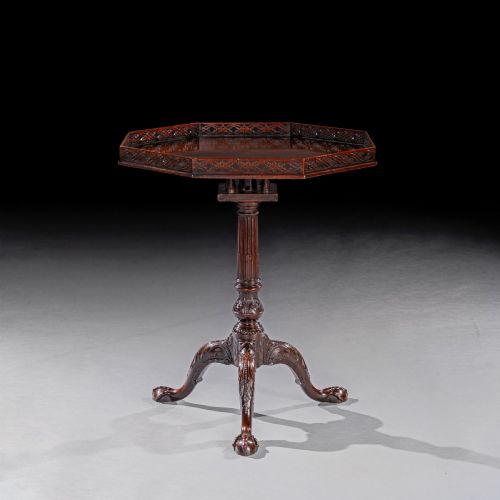
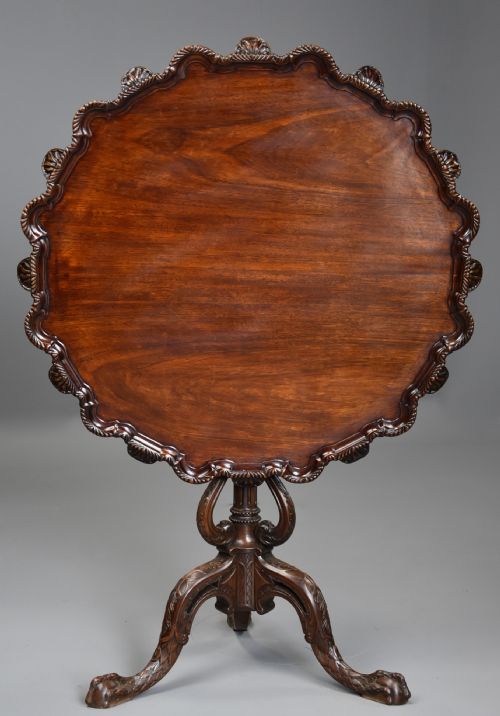


Claw and Ball Tripod Table
These claw and ball tripod table examples combine sturdy column supports with carved terminals, offering practical surface space rooted in centuries of craftsmanship.
Claw and Ball Tripod Table
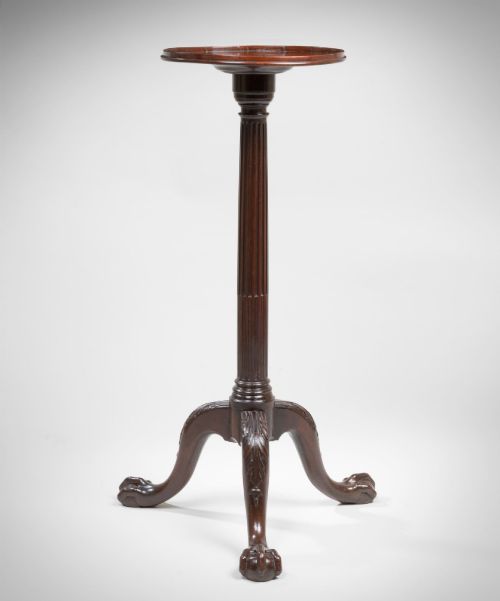
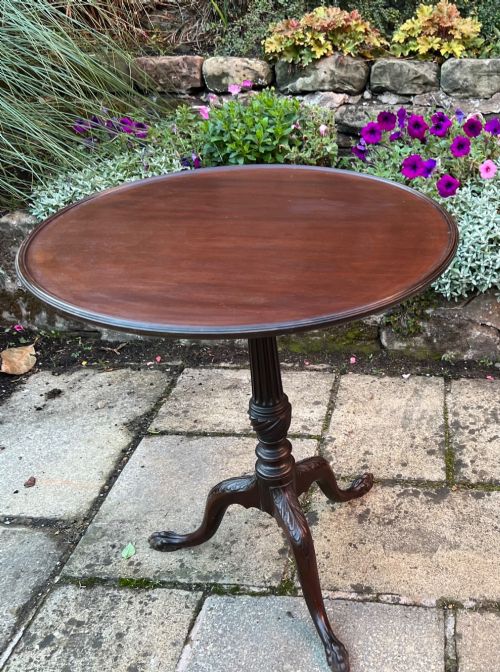
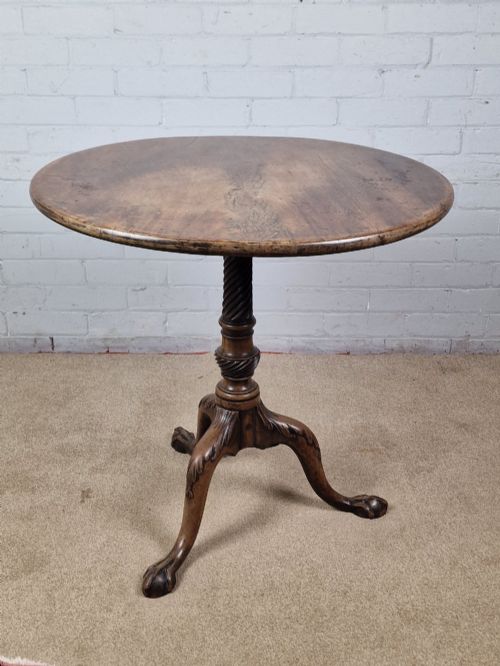
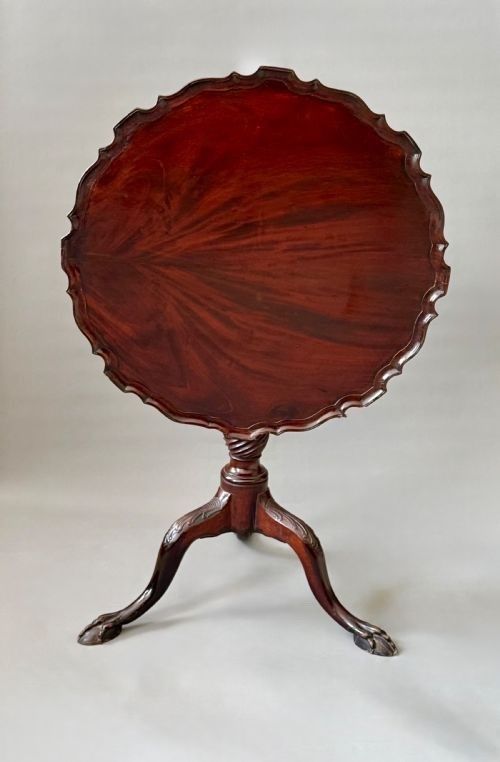
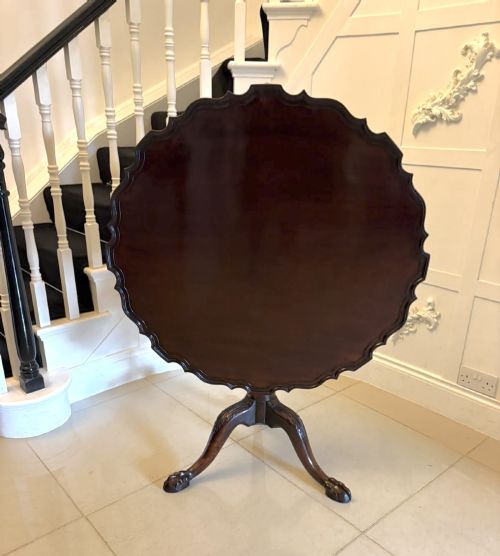
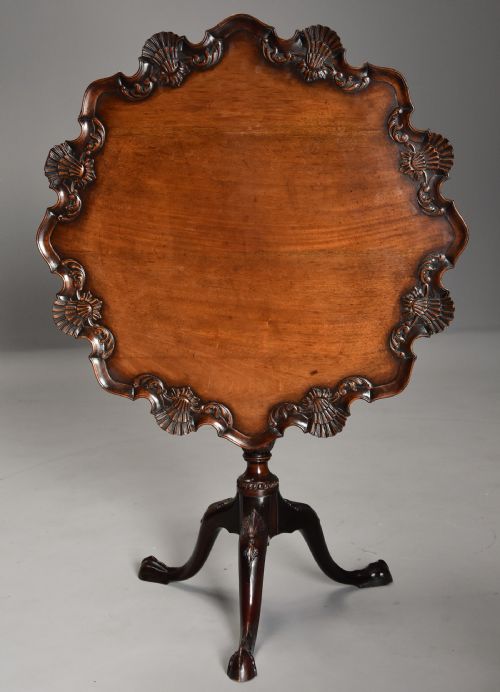
A claw and ball tripod table rests upon a central pillar supported by three legs, terminating in distinctive foot carvings. When you search for a claw and ball tripod table, you encounter forms designed for tea service, dining, or occasional use.
The versions most commonly met on this page span the eighteenth century alongside later revivals from the nineteenth and early twentieth centuries. These pieces appear as occasional tables, side tables, tilt-top tables, and wine tables, executed primarily in mahogany.
Originating during the Georgian and George II periods, these tables frequently incorporate styles associated with Chippendale cabinetmaking. Later interpretations from the Edwardian era and the early twentieth century continue these established forms.
Distinctions in Quality and Execution
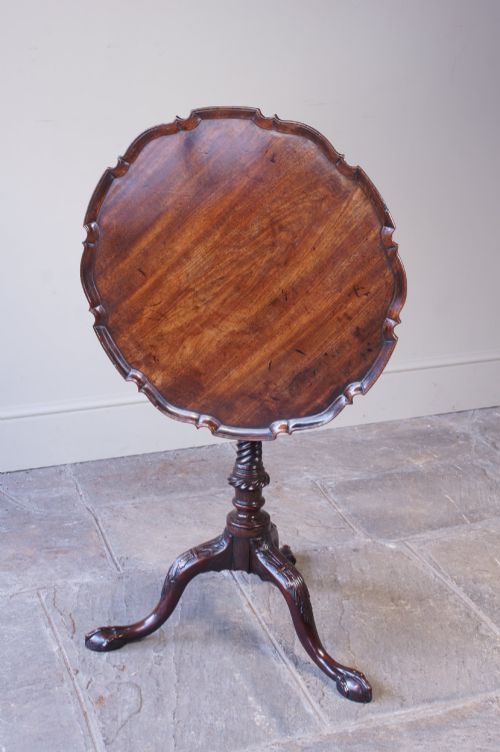
The fineness of the foot carving dictates the upper tier of quality, separating vigorous bird or beast claws gripping a sphere from flat, mechanical tooling. Proportion between the slender column, the spread of the tripod legs, and the top defines structural harmony.
Surface preservation marks the distinction between untouched period pieces and heavily restored examples. Depth of colour and the preservation of original patination on mahogany surfaces indicate how the wood has aged through centuries of use.
Claw and Ball Tripod Table Retail Price Guide 2026
Typical asking prices for claw and ball tripod table among the pieces listed under this phrase on Sellingantiques today, from the lower quarter to the upper quarter. They describe what is for sale here now, not the wider market.
The listings demonstrate a strong preference for eighteenth-century Georgian forms alongside Chippendale revival pieces executed in solid mahogany.
S and H Jewell
The Claw and Ball Tripod Table Glossary
- Tilt-top table
- A table with a hinged top that pivots to a vertical position when not in use. This mechanism allowed the furniture to be stored flat against a wall.
- Piecrust rim
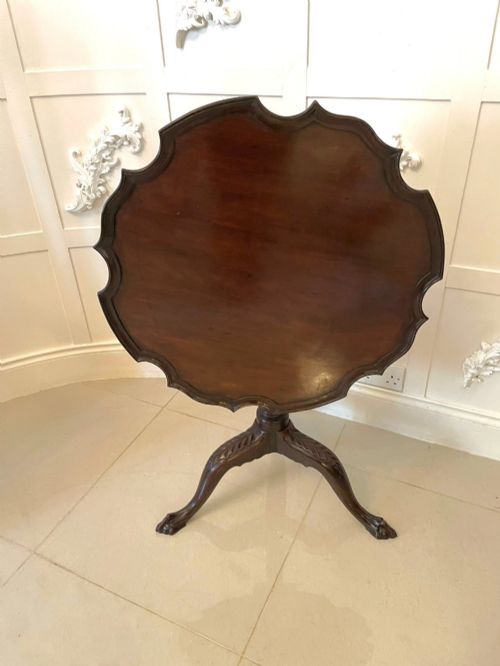
- A raised, scalloped edge carved directly from the solid perimeter of the tabletop. It resembles the fluted pastry edge of a pie.
- Birdcage
- A revolving wooden framework beneath the tabletop that allows the surface to both tilt and rotate. This mechanism connects the top to the central pillar.
- Snap top
- A table top secured by a wooden catch or spring mechanism that locks the surface horizontally. It prevents the top from pivoting unexpectedly during use.
- Galleried edge
- A raised miniature railing surrounding the perimeter of the tabletop. This feature prevents small items from rolling off the surface.
Claw and Ball Tripod Table: Frequently Asked Questions
What is a birdcage mechanism?
A birdcage is a revolving wooden assembly positioned beneath the tabletop that permits both rotation and tilting.
This construction element allows the surface to turn independently of the central column while remaining securely fastened.
Why did they make tilt top tables?
Tilt top tables provided a space-saving solution in eighteenth-century domestic interiors where rooms served multiple daily functions.
Pivoting the top vertical allowed the furniture to stand compactly against a wall when dining or tea service concluded.
How do I identify a Georgian example?
Georgian pieces display timber selection with deep patination and hand-cut joinery methods characteristic of eighteenth-century workshop production.
Proportions remain balanced, and decorative carving on the knees and feet shows fluid movement rather than mechanical replication.
What is a piecrust edge?
A piecrust edge is a decorative, raised perimeter carved from the solid timber of the tabletop into undulating curves.
Cabinetmakers shaped this border by hand to contain porcelain tea sets and prevent items from slipping.
How do I care for mahogany?
Mahogany requires stable room humidity away from direct heat sources and strong sunlight to prevent timber shrinkage and splitting.
Routine dusting with a dry cloth maintains the surface without the need for heavy modern polishes.