
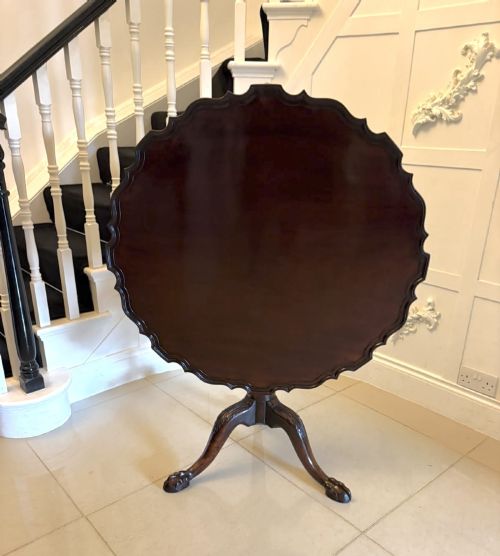
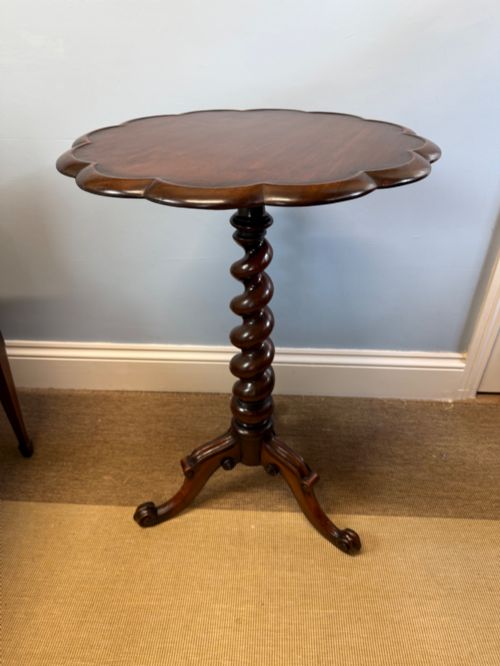
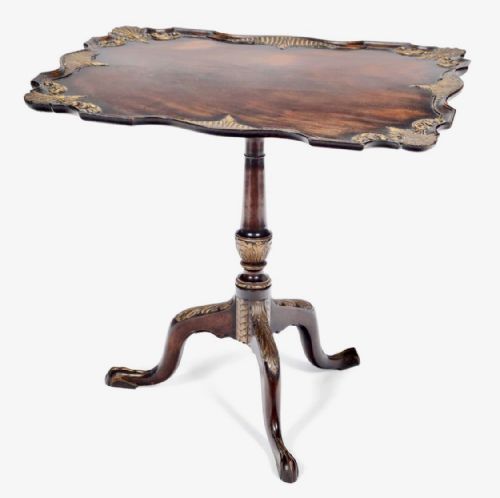
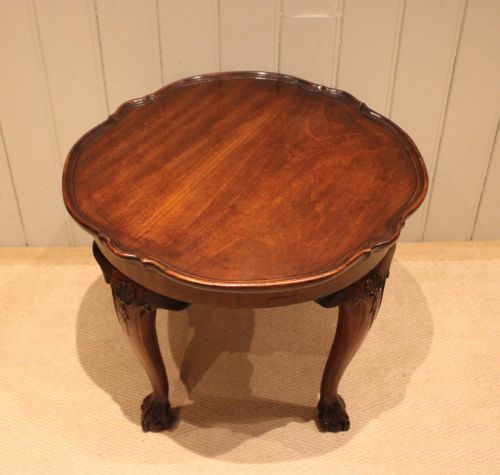
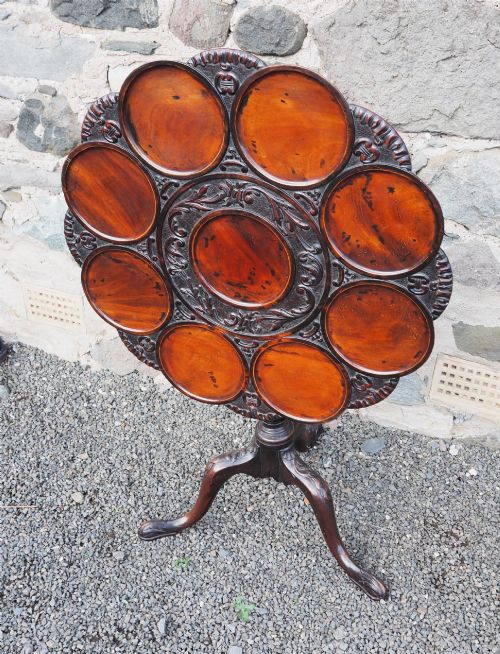
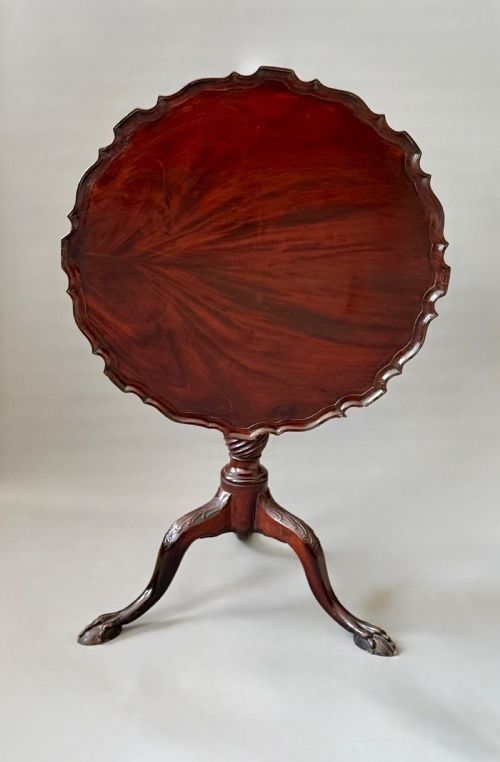
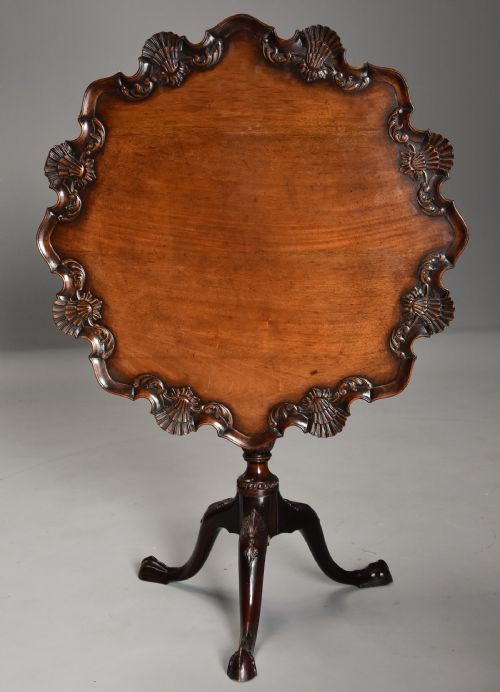
Piecrust Tea Table
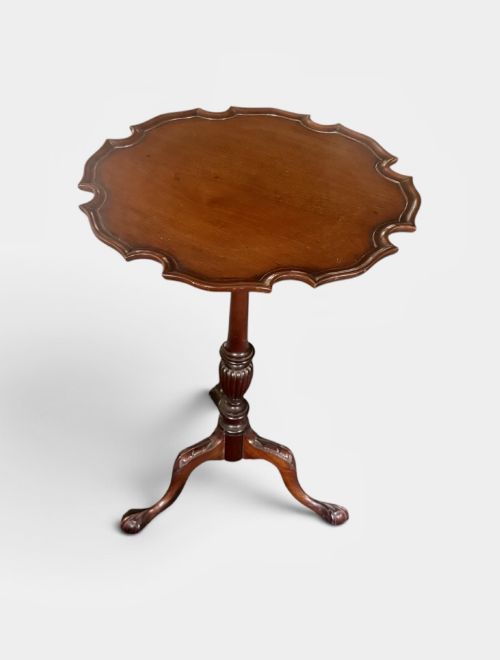
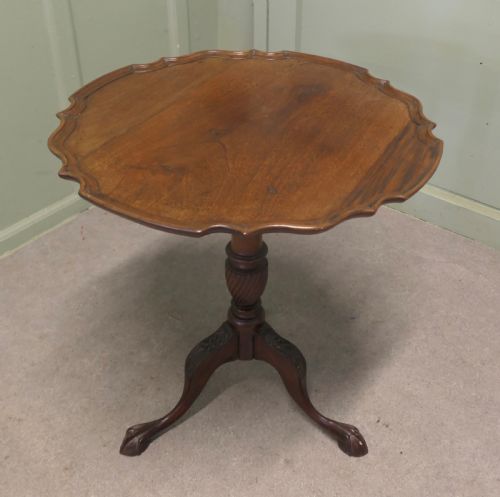
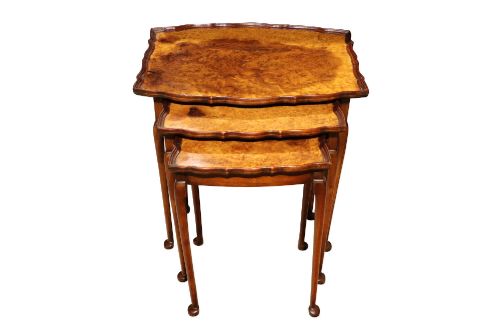
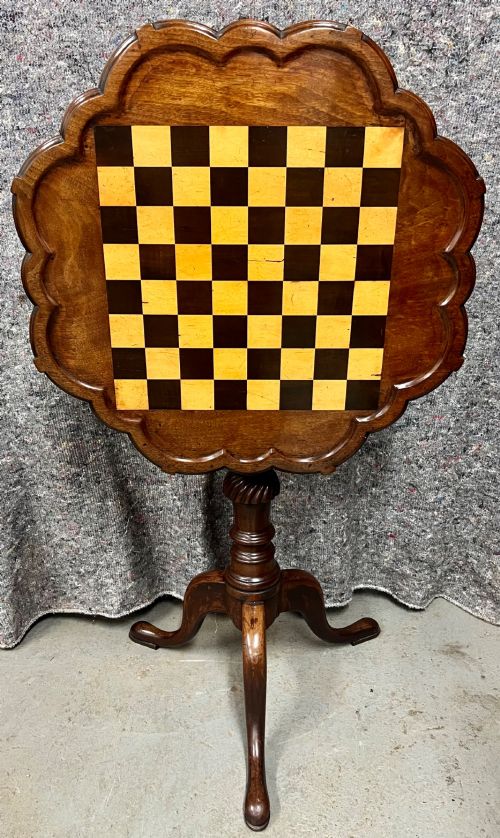
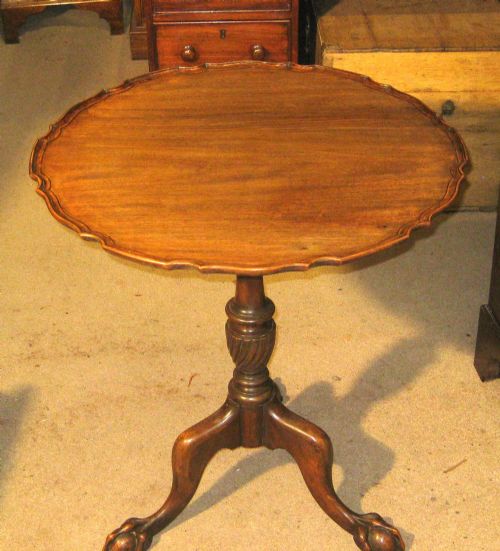
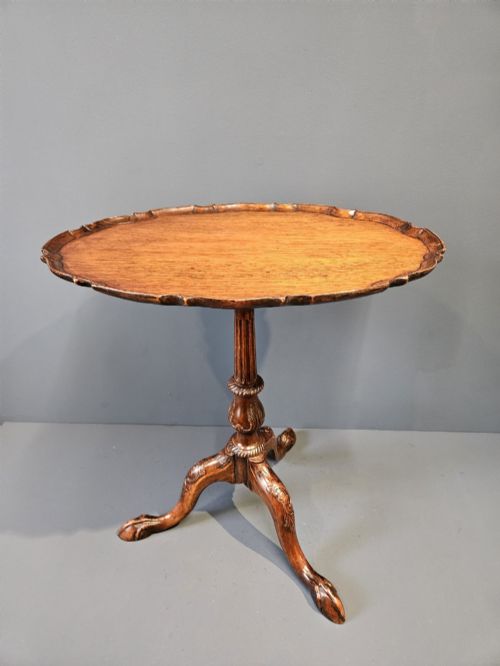
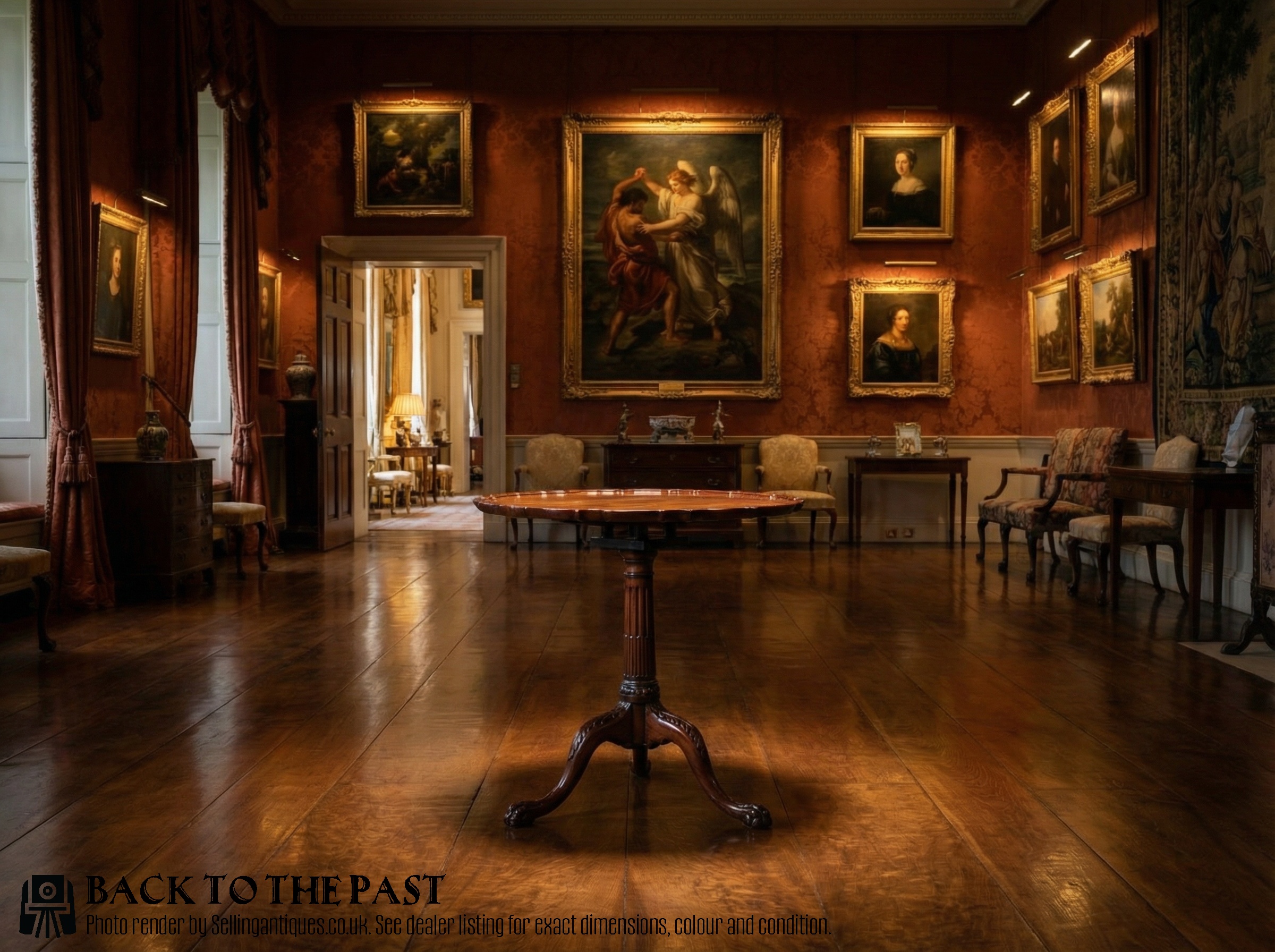
A piecrust tea table brings sophisticated moulded wooden edges and sturdy tripod support into a traditional interior.
How they were made
Cabinetmakers constructed these tables predominantly using solid mahogany, complemented by figured walnut, burr walnut and satinwood veneers. Artisans carved the distinctive raised rims directly from solid timber blanks rather than applying separate mouldings.
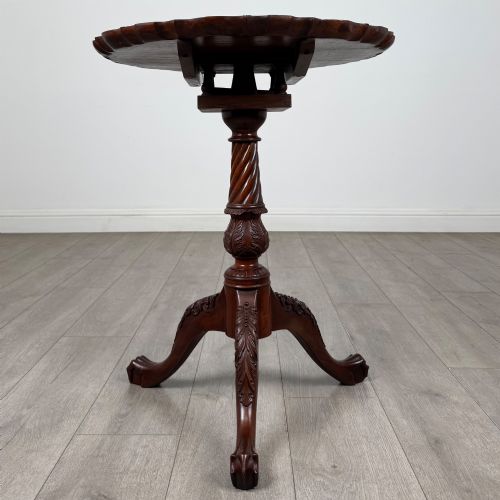
The tilt-top mechanism frequently incorporates a sophisticated birdcage assembly of small wooden turnings and pivots. Tripod bases join the central column through precise dovetail or tenon joints.
What varies in quality
Quality rests in the crispness of the edge carving and the proportions of the tripod legs. Superior examples display deep, flowing moulding profiles without clumsy timber thickness.
The integrity of the mechanical joints in the birdcage and tilt mechanism dictates mechanical success. Well-executed timber selection yields rich surface figuring that ages with a deep patina.
Early pastry cooks might not recognise the carpentry, but these tables keep your teacup safely corralled all the same.
Shapland and Petter
The Piecrust Tea Table Glossary
- Piecrust rim
- A raised, scalloped edge carved into the perimeter of a circular tabletop. This decorative moulding emulates pastry work and stops small items from rolling away.
- Tilt-top
- A hinged tabletop mechanism that allows the surface to pivot into a vertical position. This clever engineering saves domestic floor space when the furniture is not in use.
- Birdcage
- A timber framework situated beneath the tabletop that permits both rotation and tilting. It uses small vertical spindles to connect the top to the central pillar.
- Tripod base
- A supporting structure consisting of three curved legs radiating from a central column. This arrangement ensures stable placement on uneven historical floorboards.
Piecrust Tea Table: Frequently Asked Questions
What is a piecrust tea table?
A piecrust tea table is a small circular support table featuring a raised, scalloped wooden rim. The design developed during the Georgian period for serving tea and displaying decorative objects.
Most versions stand on a single pillar with three carved legs. Many incorporate tilt-top mechanisms for compact storage against a wall.
How do I use a tilt top?
The tilt mechanism relies on a wooden catch or a birdcage pivot beneath the surface. Releasing the catch allows the circular top to swing from horizontal to vertical.
This engineering enabled historical households to clear floor space quickly when entertaining guests. Ensure you support the weight of the top securely while operating the catch.
How do I date these tables?
Dating relies upon timber selection, leg profiles, and the complexity of the undercarriage construction. Eighteenth-century versions often utilise dense mahogany with hand-carved cabriole legs terminating in pad or claw-and-ball feet.
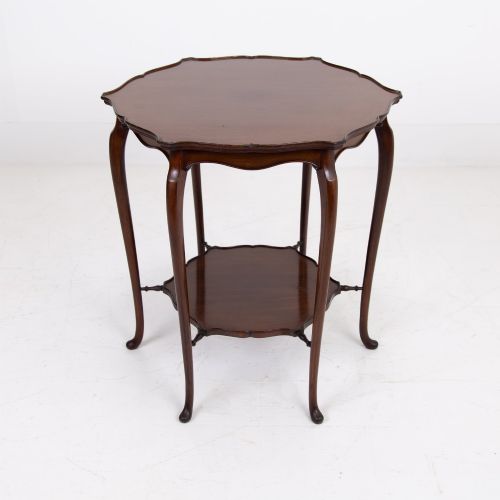
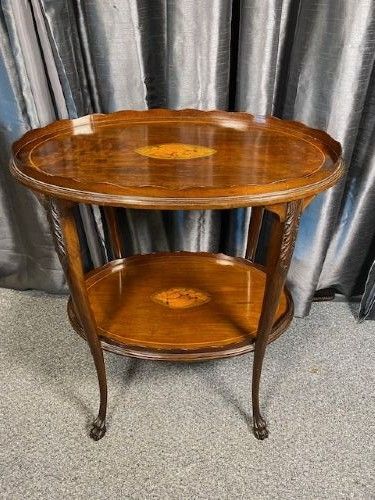
Later Edwardian and 1920s revival pieces display machine-tooled elements and lighter wood veneers. Comparing the patina and joinery helps distinguish original Georgian manufacture from later stylistic copies.
Where should I place one?
These compact tables suit corners, beside seating areas, or as central display points for small decorative items. Their circular footprint allows them to fit comfortably into restricted spaces.
Avoid positioning them in direct sunlight or beside active heat sources to protect the polished wood surfaces and historical veneers.