


Mahogany Piecrust Table
A mahogany piecrust table offers the refined surface of Georgian craftsmanship, designed to bring both practical elegance and historical character to a room.
Mahogany Piecrust Table
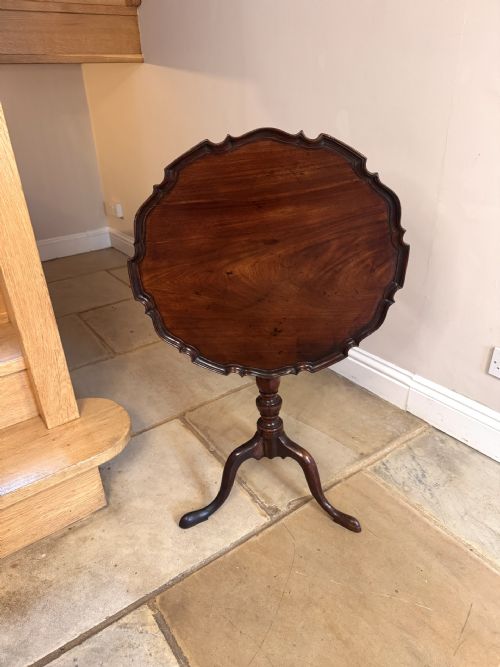
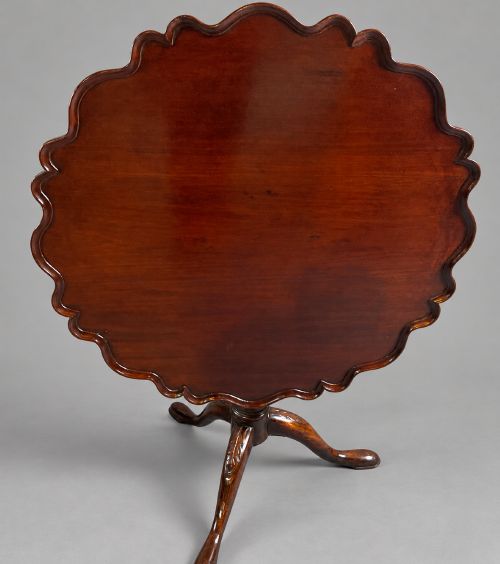
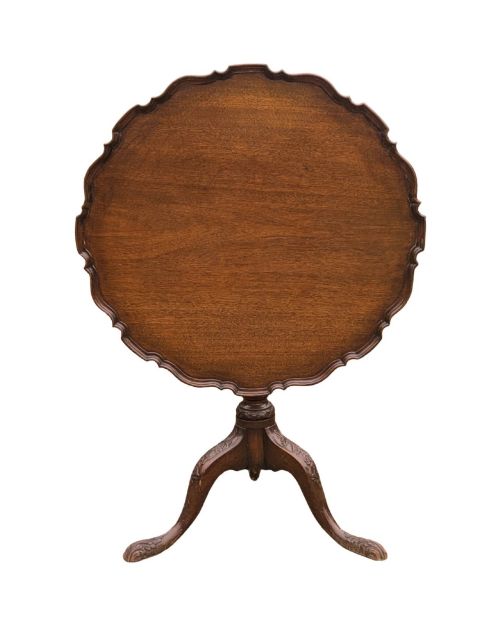
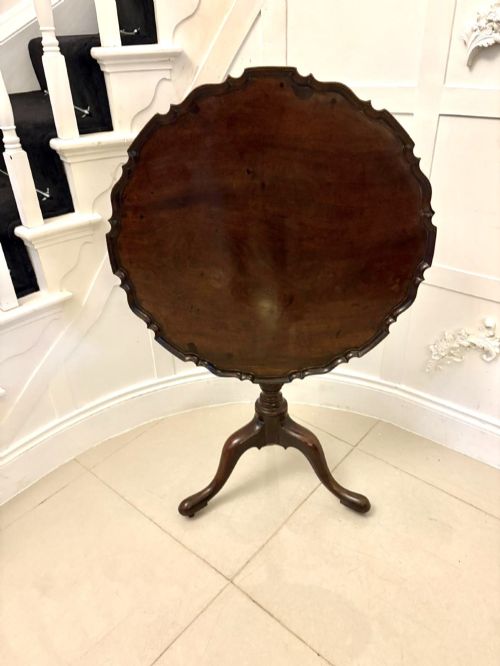
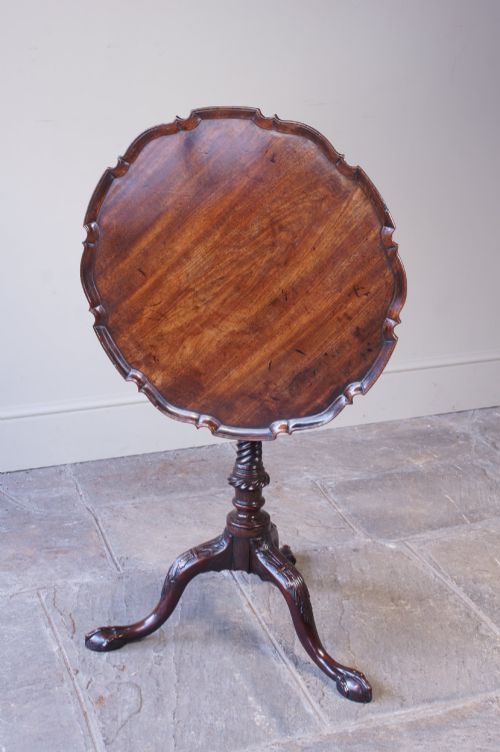
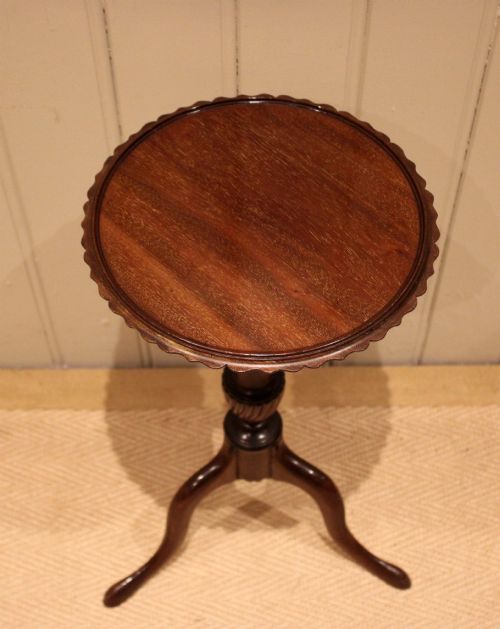
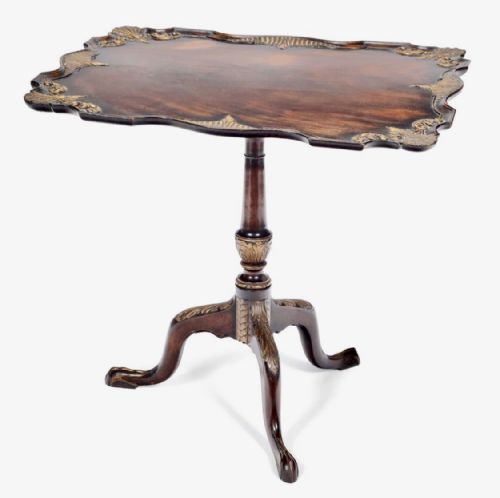
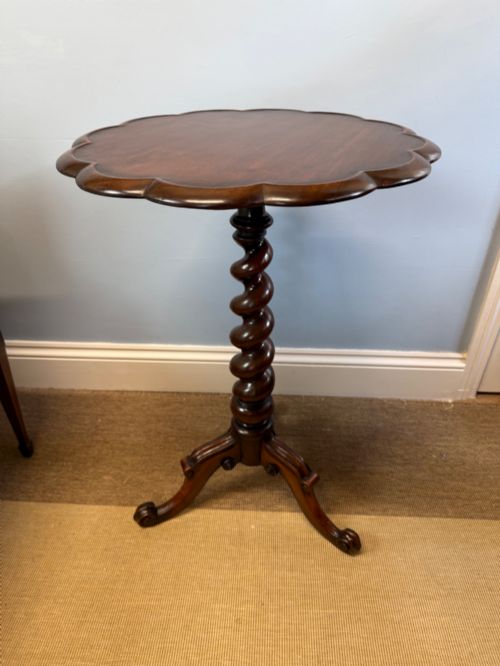
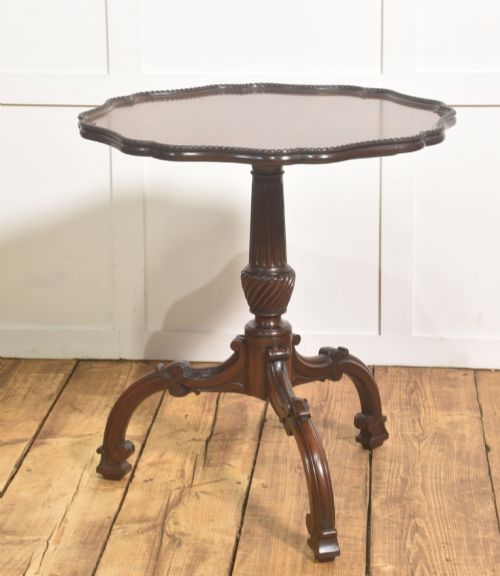
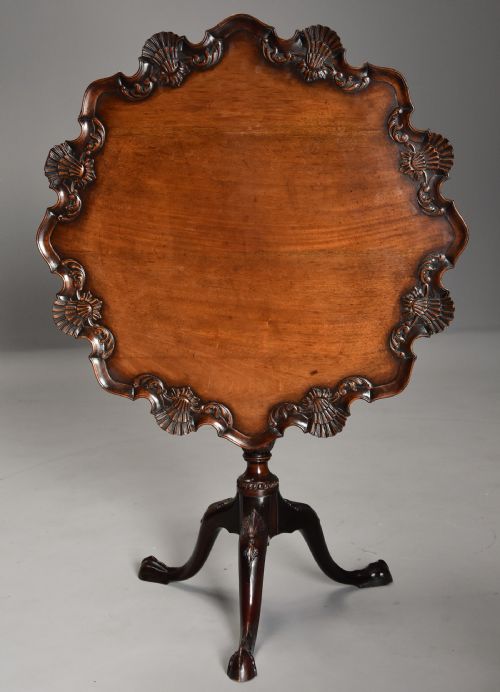
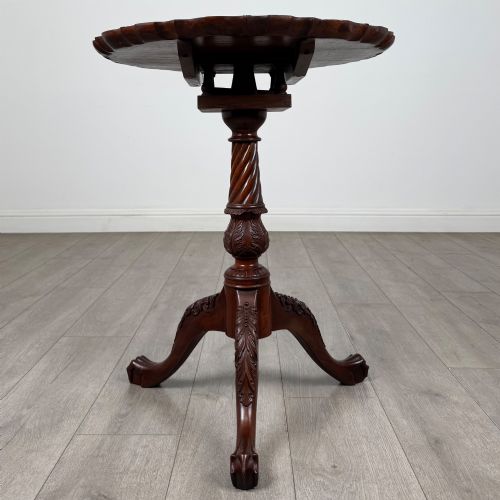
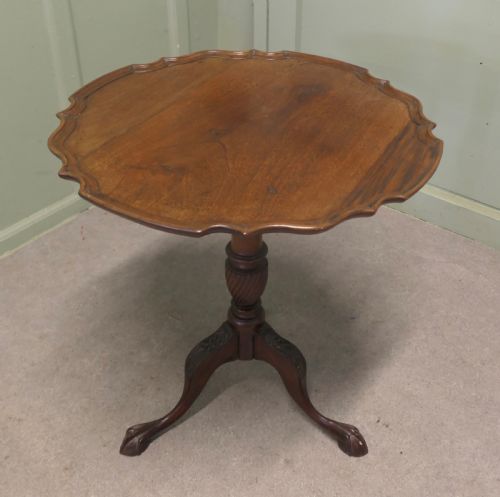
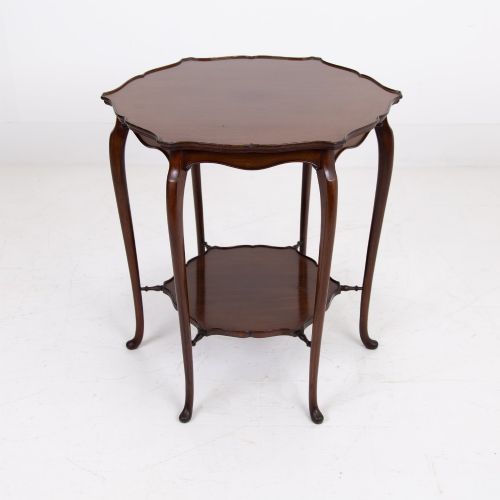
A mahogany piecrust table is an occasional piece defined by its raised, carved edge resembling pastry work, typically supported by a central column and tripod legs. These tables appear across the Georgian and George III periods, as well as in later Edwardian revivals and nineteenth-century interpretations.
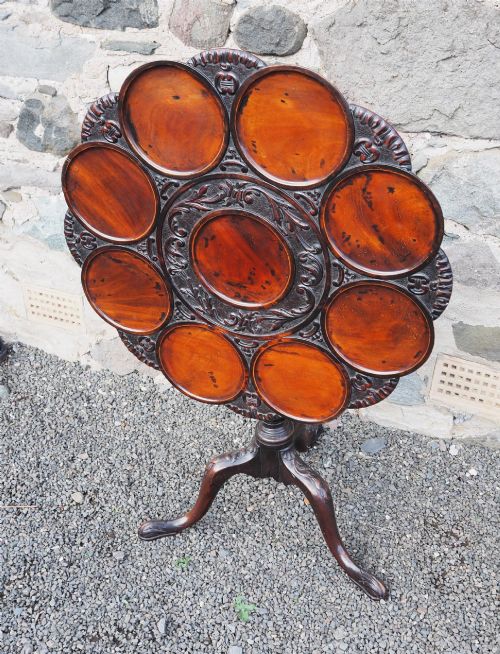
The form functions primarily as a wine table, tea table, or occasional surface, frequently incorporating a tilt-top or birdcage mechanism for easy storage when not in use.
Buyers encountering this page will find pieces ranging from eighteenth-century examples to later nineteenth and early twentieth-century variations in mahogany, occasionally paired with brass or iron elements.
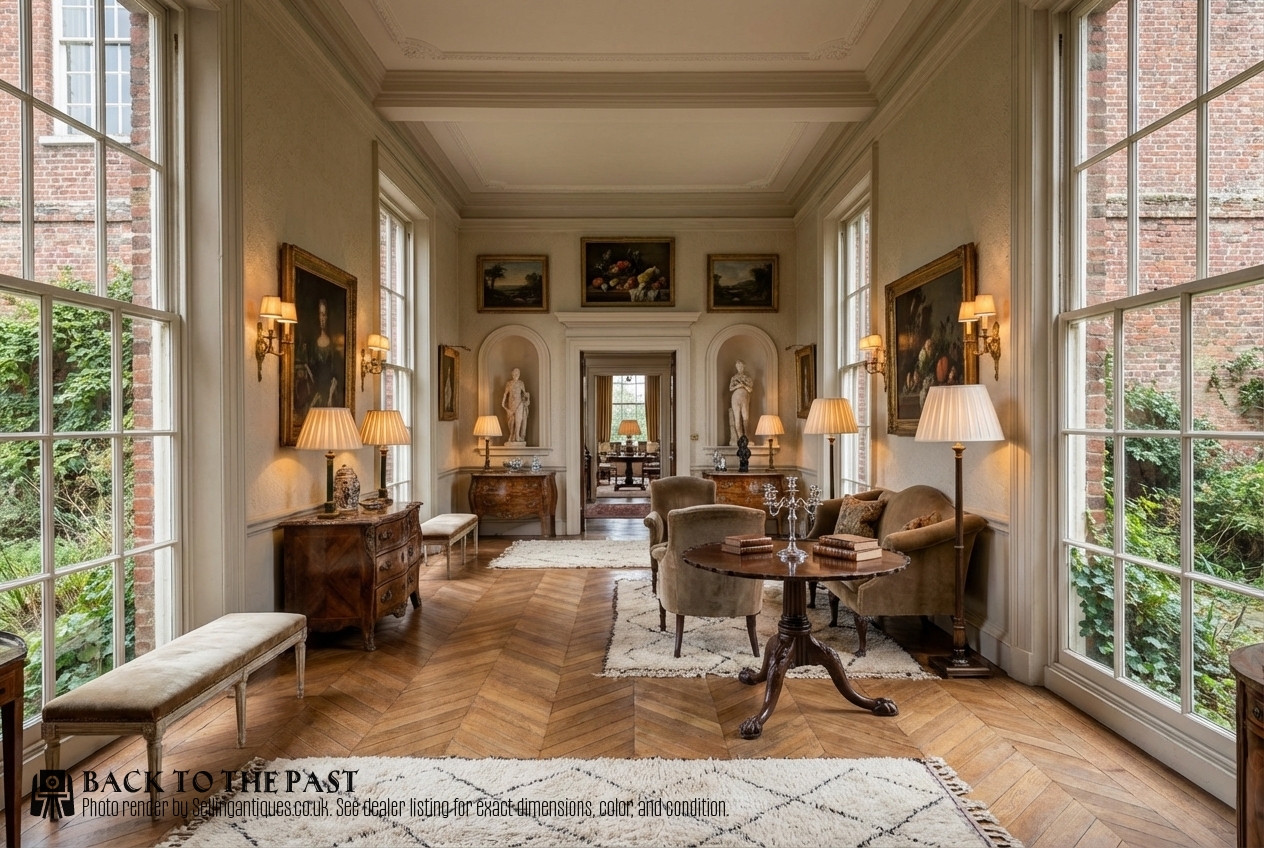
Materials and construction
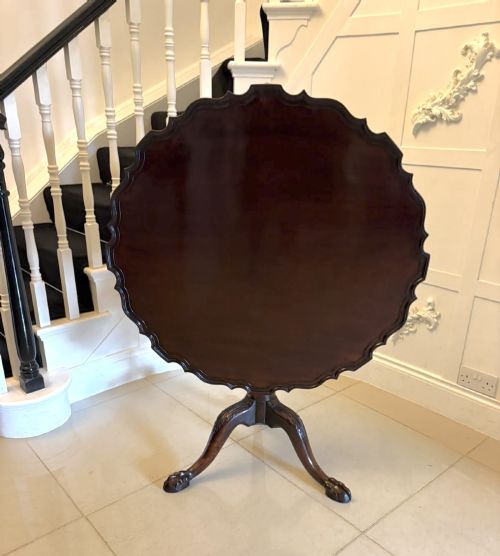
Construction relies heavily on solid mahogany, shaped to create the characteristic scalloped rim and supported by turned tripod legs. Many examples utilise a tilt-top mechanism, allowing the surface to tip vertically.
Joinery methods include traditional tripod bases joined to a central pillar, sometimes incorporating birdcage mechanisms that permit both tilting and rotation of the top surface.
Mahogany Piecrust Table Retail Price Guide 2026
Typical asking prices for mahogany piecrust table among the pieces listed under this phrase on Sellingantiques today, from the lower quarter to the upper quarter. They describe what is for sale here now, not the wider market.
Listings span the eighteenth century, the Georgian and Edwardian periods, utilising mahogany alongside brass and iron.
Understanding quality
Quality in these pieces is dictated by the depth and crispness of the carved rim and the proportion of the tripod base. Superior examples display rich patination on the timber and hand-carved detailing rather than mechanical replication.
The integrity of the tilt-top mechanism and the snugness of the joints also separate finer period pieces from later interpretations, reflecting the skill of the original cabinetmaker.
The Mahogany Piecrust Table Glossary
- Piecrust edge
- A raised, scalloped perimeter carved directly from the solid timber of the table top, mimicking pastry crust. This decorative technique requires skilled hand-carving.
- Tripod base
- A three-legged support structure radiating from a central pillar. It provides stability on uneven floors.
- Tilt-top
- A hinged mechanism allowing the table top to pivot into a vertical position. This saved space in historic interiors.
- Birdcage
- A timber framework beneath the table top allowing it to rotate and tilt. It is a hallmark of sophisticated eighteenth-century construction.
Mahogany Piecrust Table: Frequently Asked Questions
What is a piecrust table?
A piecrust table is a small occasional table featuring a raised, scalloped edge carved into the wooden top. These surfaces were used for serving tea or wine in historic homes.
They typically stand on a central pillar supported by three legs, often with mechanisms that allow the top to tilt.
How do I use one today?
These tables function well as bedside stands, lamp tables, or accent pieces beside armchairs. Their compact footprint suits smaller spaces.
Because many feature tilt-top mechanisms, they can also be displayed flat against a wall when not in active use.
How old are these tables?
The listings include examples originating in the eighteenth century during the Georgian and George III periods. Other pieces date from the nineteenth and early twentieth centuries.
Revival pieces from later eras frequently emulate the earlier Georgian aesthetic and construction methods.
What materials were used?
Mahogany serves as the primary timber for these pieces, valued for its rich colour and durability. Secondary materials such as brass and iron occasionally appear in mechanism hardware or fittings.
Solid mahogany construction is common in eighteenth-century examples.