

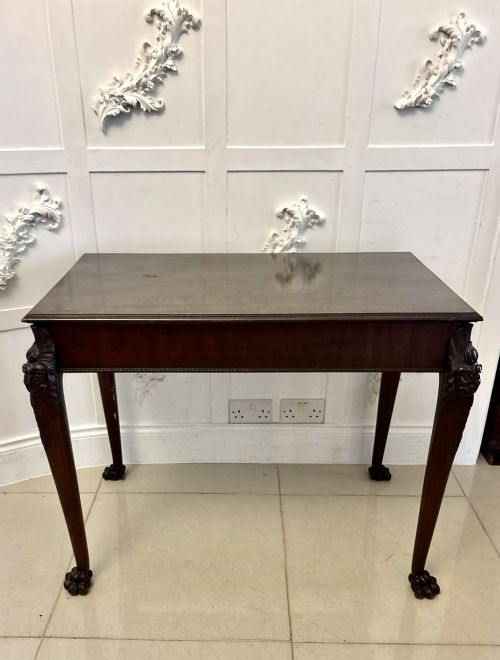
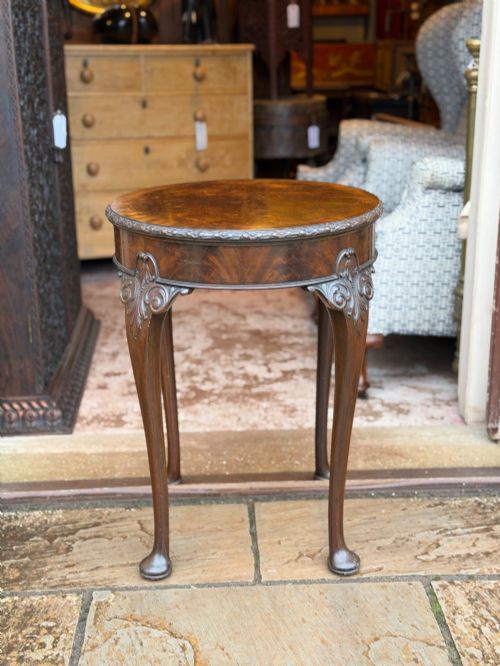
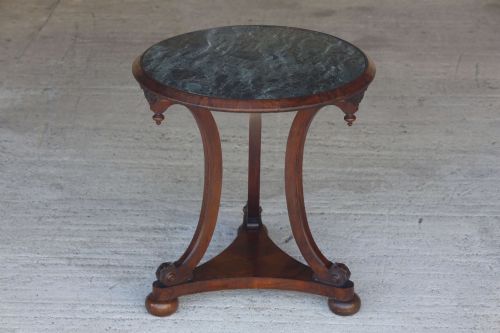
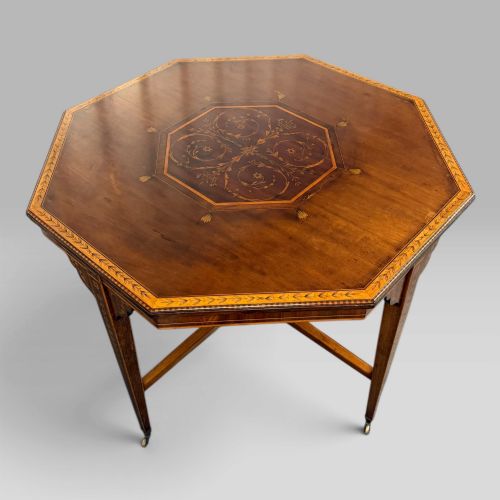
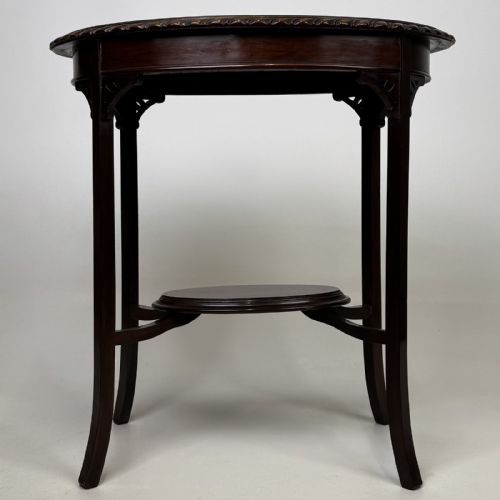
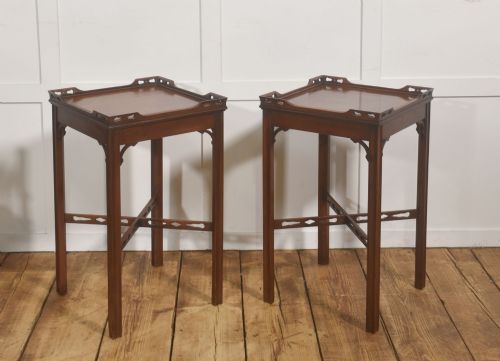
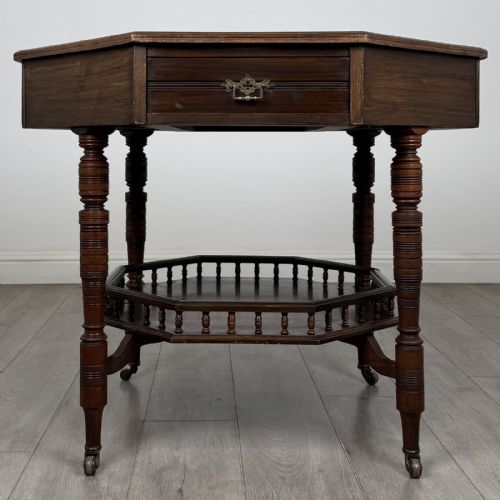
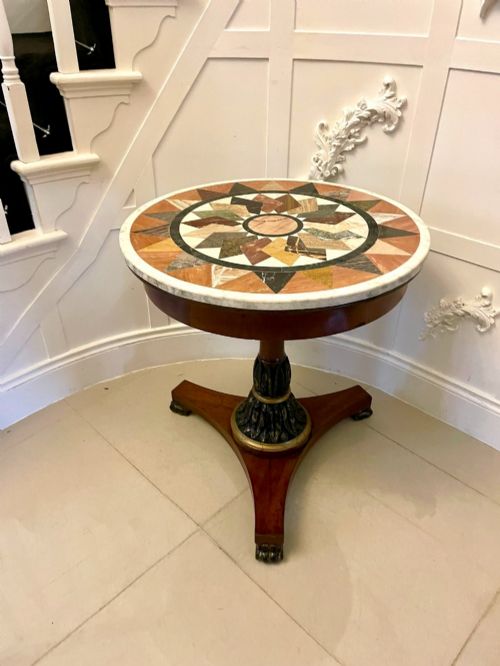
Carved Mahogany Accent Table
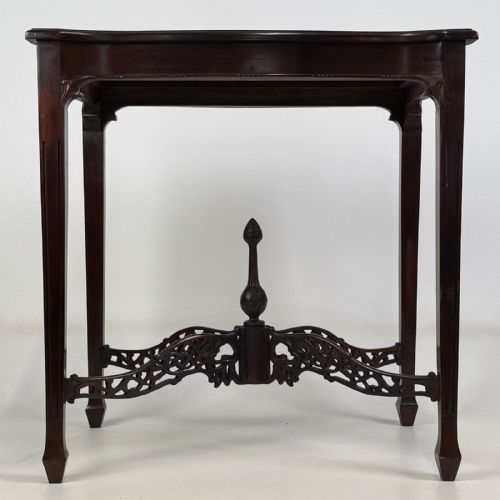
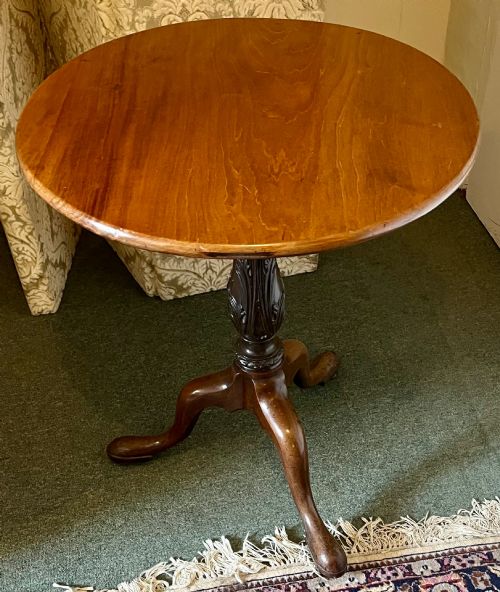
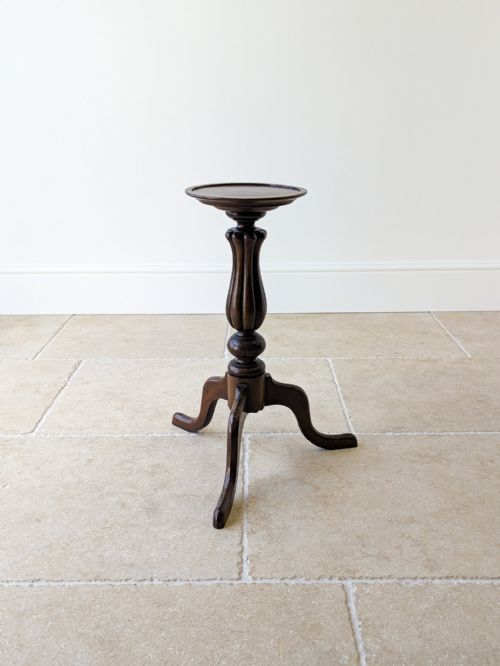
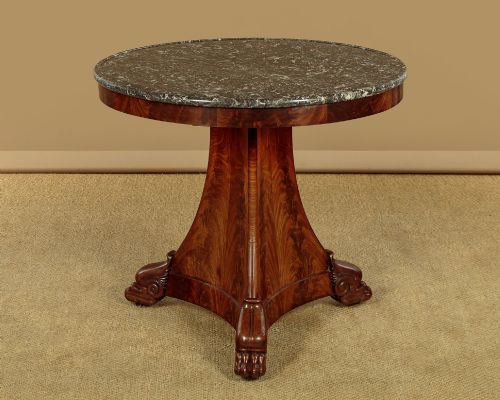
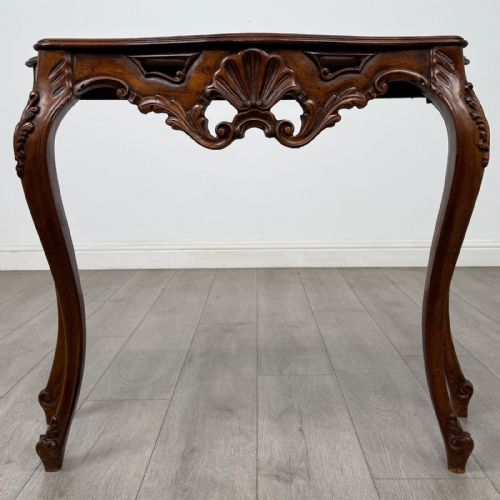
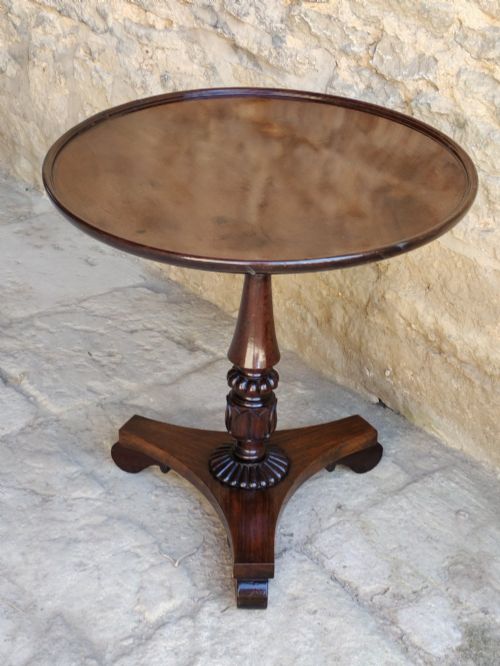
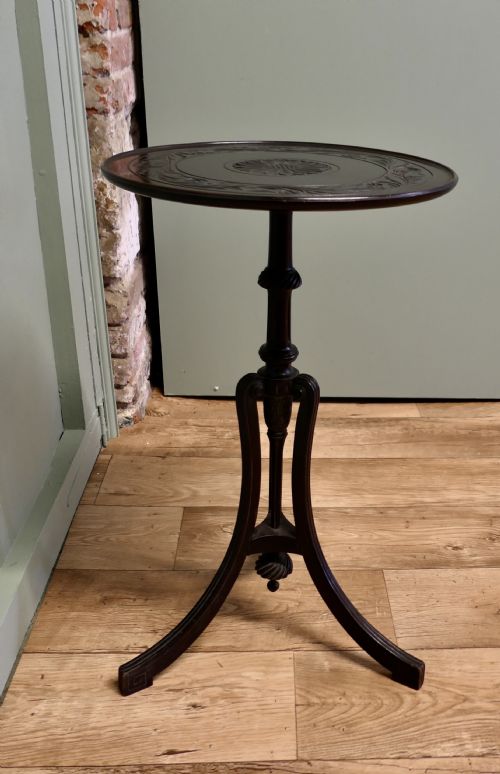
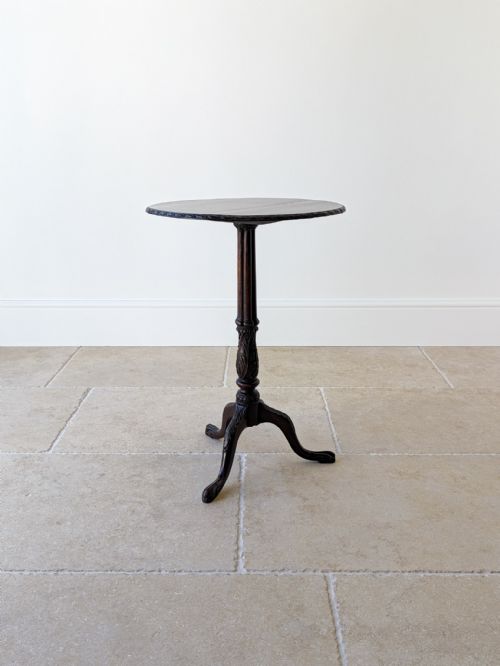
A carved mahogany accent table brings rich timber grain and sculptural tripod or drop-leaf forms into a room, serving reliably as a lamp or wine stand.
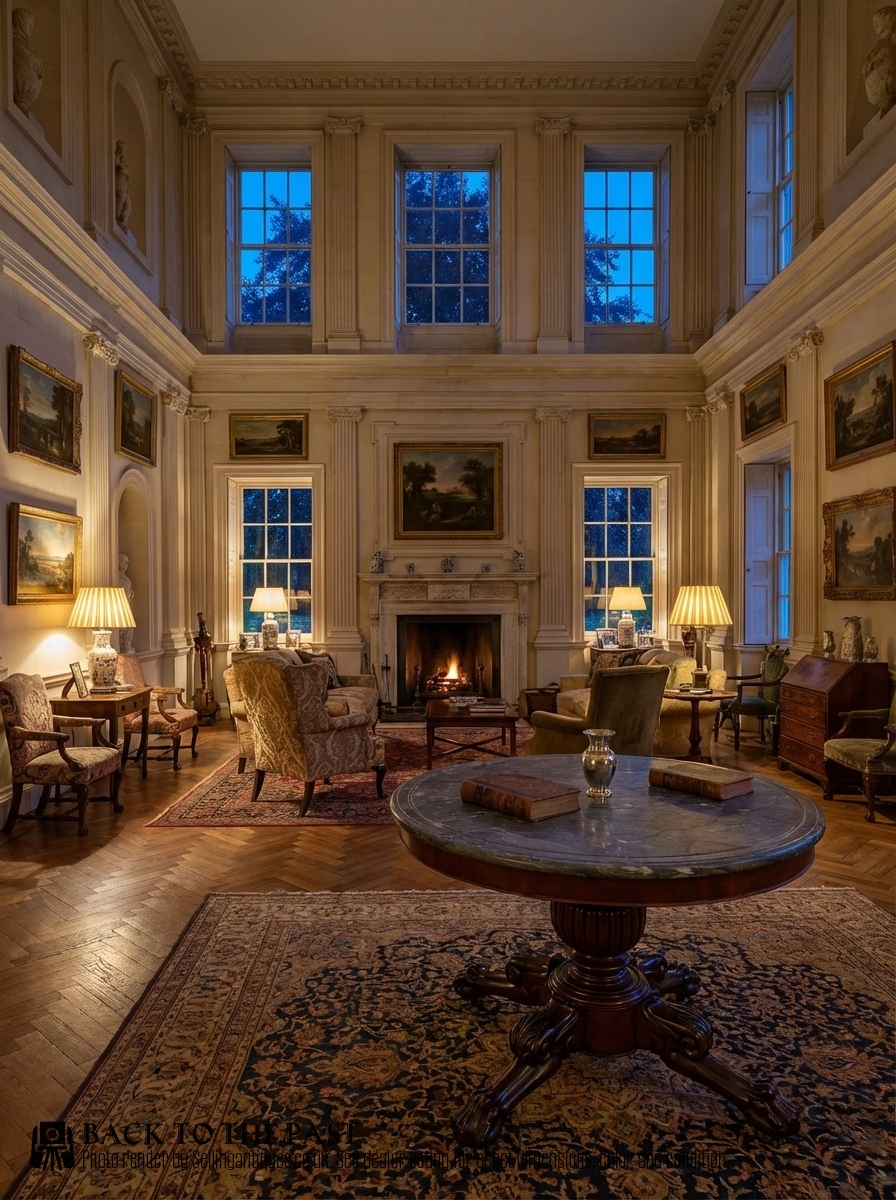
Carved Mahogany Accent Table
A carved mahogany accent table encompasses a variety of smaller occasional forms, with side tables, tripod wine tables, and Pembroke tables appearing most frequently on this page. These pieces date across several distinct eras, spanning 18th century George III and Georgian examples through Regency, Victorian, and Edwardian revivals up to the early twentieth century.
The physical shapes vary from round tilt-top and dishtop surfaces to drop-leaf designs and two-tier lamp stands. Makers utilised mahogany primarily, frequently augmenting the timber with burr wood, satinwood, or leather inserts depending on the period and stylistic influence.
Materials and construction methods
Makers constructed these tables predominantly using solid mahogany and mahogany veneers, often selecting figured timber for prominent surfaces like table tops. Subsidiary woods provide structural support within frames and drawer linings.
Joinery techniques include traditional mortise and tenon joints for frames, alongside finely turned pillars and tripod legs. Carving appears directly on timber edges, such as pie crust rims, or along cabriole and tapering legs influenced by Chippendale and Georgian designs.
Carved Mahogany Accent Table Retail Price Guide 2026
Typical asking prices for carved mahogany accent table among the pieces listed under this phrase on Sellingantiques today, from the lower quarter to the upper quarter. They describe what is for sale here now, not the wider market.
Some Edwardian tables feature revolving tiers designed to keep multiple books or tea items within arm's reach without stretching.
Judging the quality of craftsmanship
Quality rests in the crispness of the timber carving and the selection of the mahogany itself, where rich grain patterns and deep natural colour elevate a piece. Superior examples exhibit harmonious proportions between the top, the central column or legs, and the base.
The integrity of the construction, from stable tilt-top mechanisms to firmly fitted drop-leaves and tight joints, dictates the standing of an individual table. Later revival pieces match the craftsmanship of earlier Georgian originals when executed by skilled workshops.
Shapland and Petter·Waring and Gillow
The Carved Mahogany Accent Table Glossary
- Tripod table
- A small freestanding table supported by a central pillar resting on three legs. These are often designed for use as wine or lamp tables.
- Pembroke table
- A drop-leaf table featuring hinged flaps on two opposing sides, typically fitted with a drawer or dummy drawer.
- Pie crust rim
- A raised, decoratively carved border shaped in undulating curves around the edge of a circular table top.
- Tilt-top mechanism
- A hinge arrangement beneath the table top allowing the surface to tilt vertically for storage when not in use.
Carved Mahogany Accent Table: Frequently Asked Questions
What is a Pembroke table?
A Pembroke table is a compact drop-leaf table with hinged flaps that can be raised to extend the surface area. They frequently include a small drawer and were originally designed for multiple domestic uses.
Their versatile proportions make them well suited for placement beside seating or against walls in smaller rooms.
How do I use a tripod wine table?
A tripod wine table provides a stable, compact surface intended for holding glasses, bottles, or small lamps. The three-legged pedestal base prevents rocking even on uneven historic flooring.
These pieces function effectively as moveable accents beside armchairs or in corners where larger furniture will not fit.
What distinguishes Chippendale style tables?
Chippendale style tables draw inspiration from eighteenth-century cabinet maker designs, featuring carved details such as ball and claw feet, acanthus leaves, or shaped pie crust edges. Revival versions produced in the Victorian and Edwardian eras adopted these same classical motifs.
The aesthetic emphasises sculptural woodwork and balanced proportions derived from Georgian precedent.
Are tilt-top tables stable?
Tilt-top tables rely on a catch mechanism beneath the surface that locks the top horizontally onto the central pillar. When properly adjusted, the mechanism holds the top securely for daily use.
The pivoting function was originally intended to save floor space by storing the table flat against a wall.