



Chippendale Revival Table
Chippendale revival tables combine eighteenth-century aesthetic ambition with late Victorian and Edwardian cabinet-making skill, offering functional elegance for modern interiors.

Chippendale Revival Table
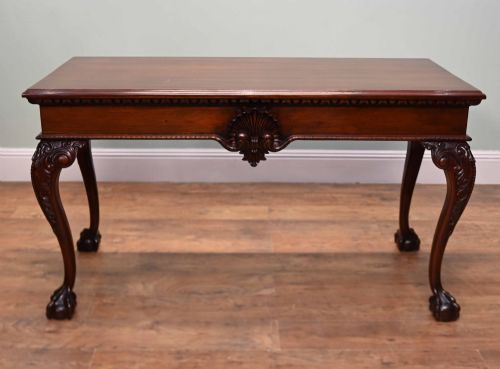
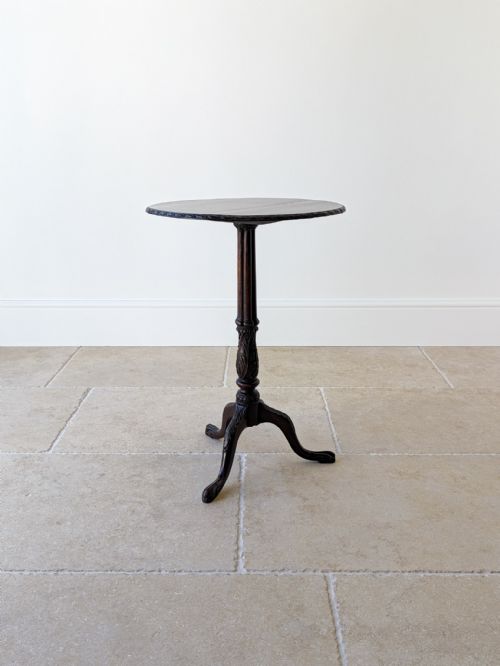
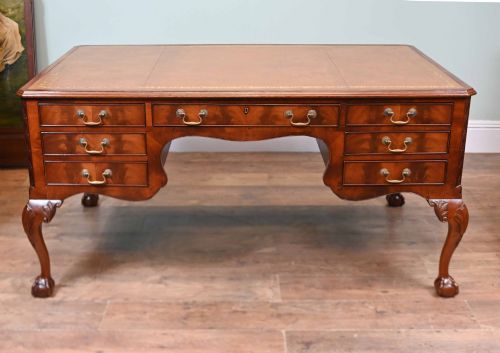
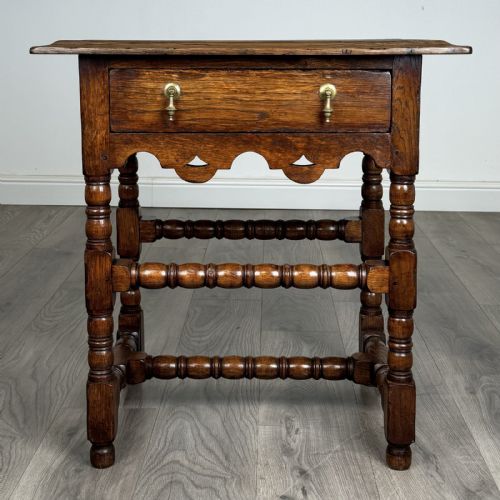
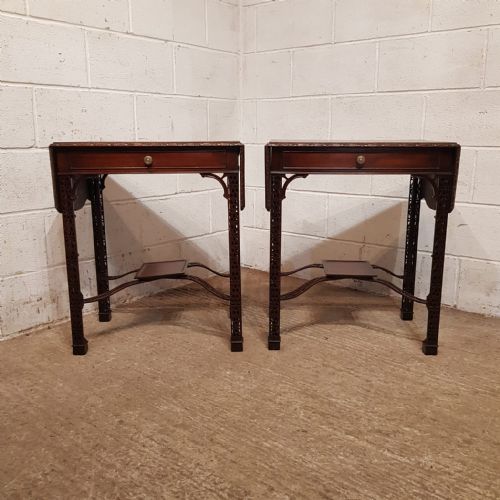
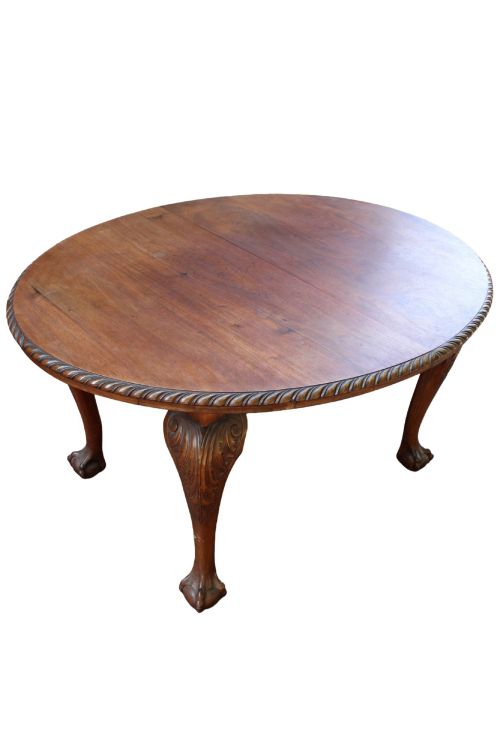
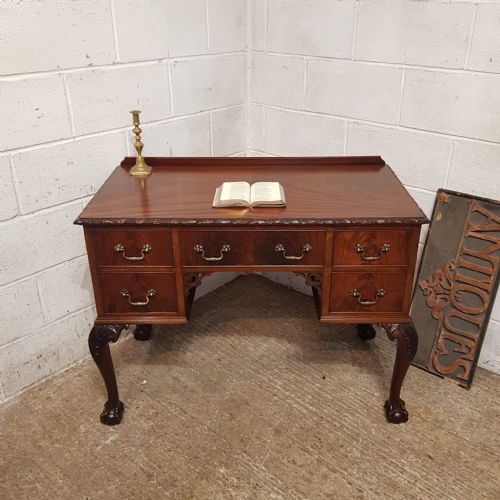
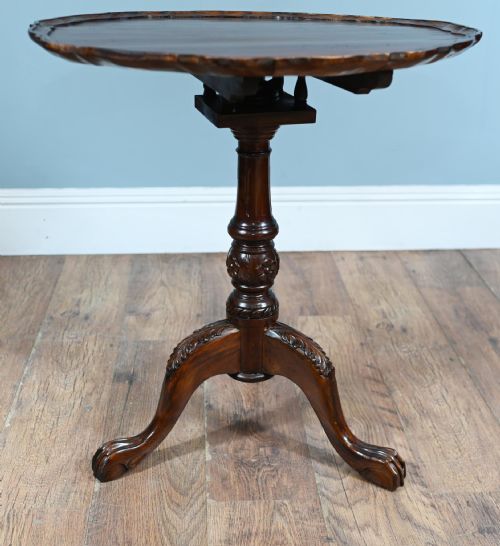
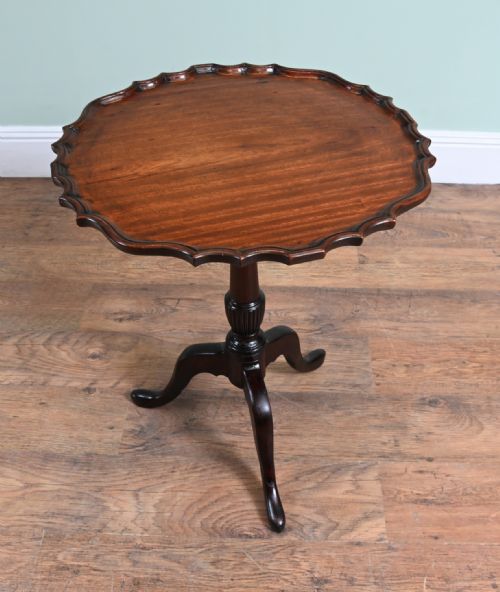
When you search for a chippendale revival table, you encounter pieces originating primarily from the Victorian and Edwardian eras, alongside later pieces from around nineteen-twenty. The selection spans dining tables, writing desks, card tables, and smaller occasional pieces such as tripod wine tables and silver tables.
The most common formats on this page are side tables, writing desks, and extending dining tables rooted in late nineteenth-century and early twentieth-century design. Makers of this period reinterpreted earlier Georgian motifs, producing functional household furniture for contemporary homes.
Materials and Construction
Mahogany serves as the principal timber across these pieces, frequently complemented by satinwood, oak, and walnut, while structural additions include brass hardware, glass tops, and leather or fabric desk inserts.
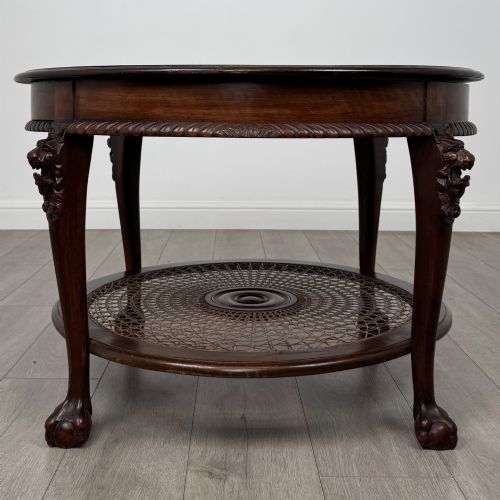
Cabinet-makers employed traditional joinery alongside hand-carved detailing, shaping solid and figured timbers into serpentine fronts, claw-and-ball feet, and carved tripod bases.
Chippendale Revival Table Retail Price Guide 2026
Typical asking prices for chippendale revival table among the pieces listed under this phrase on Sellingantiques today, from the lower quarter to the upper quarter. They describe what is for sale here now, not the wider market.
Listings span the Victorian and Edwardian eras, predominantly featuring mahogany alongside brass, leather, and oak.
Evaluating Craftsmanship
The distinction between standard production and exceptional work lies in the depth and crispness of the timber carving, particularly on moulded edges, friezes, and ball-and-claw feet.
Superior examples feature well-figured solid mahogany, precise mechanical actions on extending dining or envelope card tables, and documented attribution to established firms.

James Shoolbred & Co.·Gillows·Edwards and Roberts·Maple & Co Of London
The Chippendale Revival Table Glossary
- Chippendale Revival
- A late nineteenth and early twentieth-century movement recreating and adapting eighteenth-century Thomas Chippendale designs. Cabinet-makers used these classical proportions for contemporary dining and living spaces.
- Silver Table
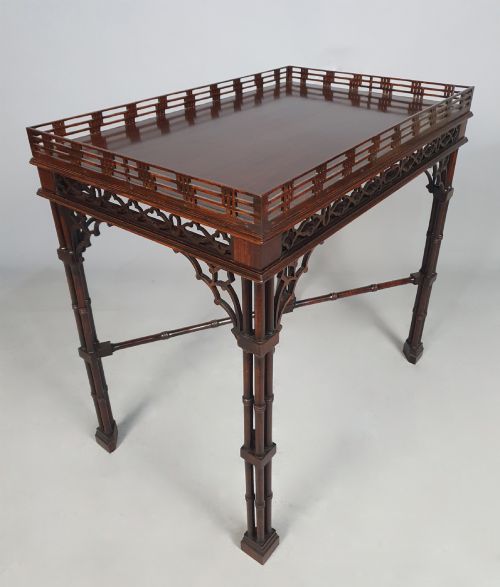
- A raised-edge occasional table originally intended for displaying silver tea services. These tables often feature fretwork galleries and slender cabriole legs.
- Tripod Table
- A small round table supported by a pillar on three spreading feet. Many examples include a tilt-top mechanism or a detachable top.
- Pie Crust Edge
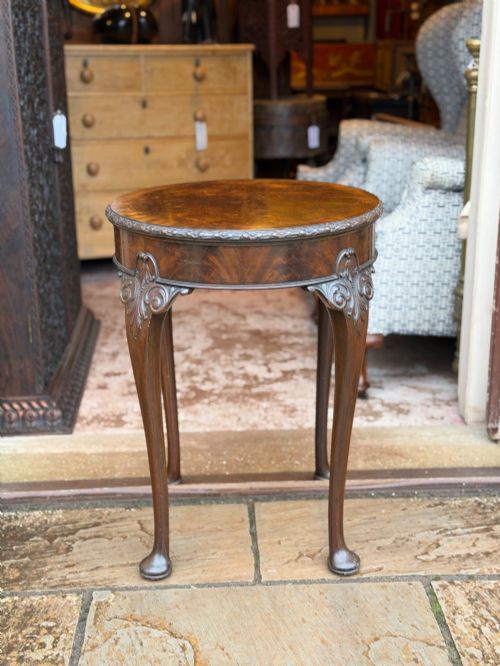
- A carved, raised decorative border resembling pastry crust, typically found on the circular tops of wine tables. This technique requires skilled hand-carving from a solid timber blank.
- Wind Out Table
- An extending dining table operated by a metal internal screw mechanism activated via a crank handle. This system allows the insertion of extra leaves.
Chippendale Revival Table: Frequently Asked Questions
What is a silver table?
A silver table is a decorative occasional piece designed with a raised gallery rim to display silverware and tea wares.
These tables frequently incorporate intricate fretwork brackets and slender cabriole legs characteristic of revival craftsmanship.
How do I use a tripod wine table?
Tripod wine tables function well as flexible mobile surfaces for holding drinks or books beside seating.
Their compact footprint and tilting or detachable top mechanisms historically allowed servants to store them flat against walls when not in use.
How do I distinguish Edwardian from Victorian pieces?
Victorian examples often display heavier proportions and deeper, more robust carving, reflecting mid to late nineteenth-century tastes.
Edwardian pieces generally lean towards lighter structures, delicate satinwood inlay, and refined proportions suited to brighter, smaller rooms.
Are extending dining tables practical for daily use?
Extending dining tables combine everyday dining utility with the capacity to host larger gatherings through internal leaves.
Wind-out mechanisms or drop-leaf systems permit smooth adjustment of the table length to suit the occasion.