
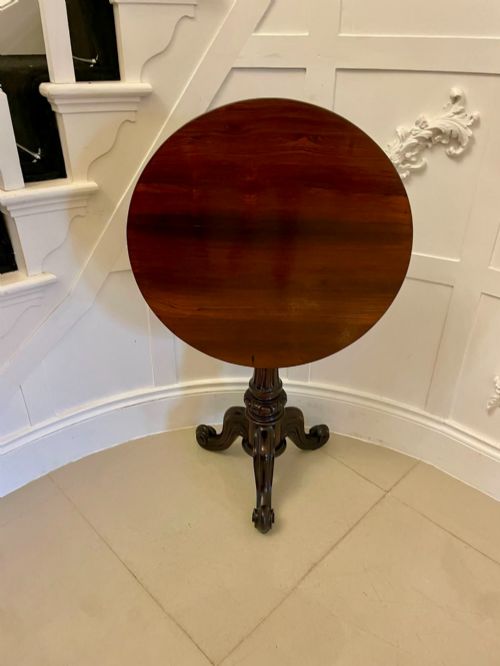

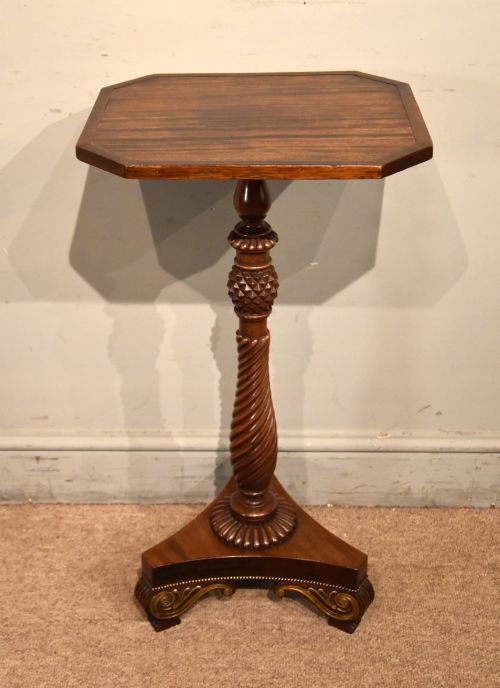
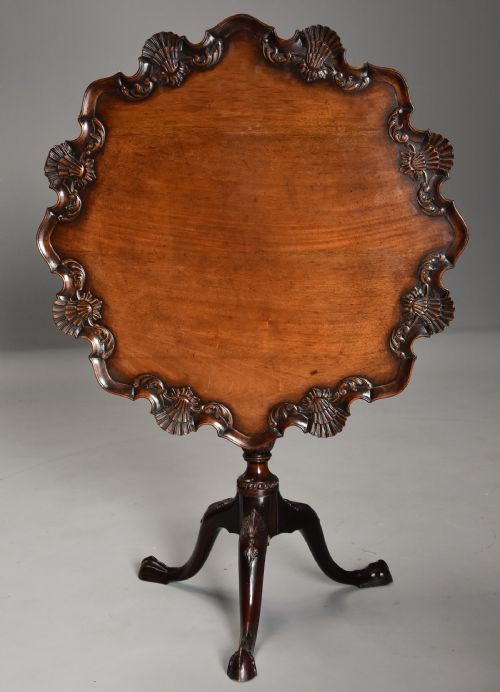
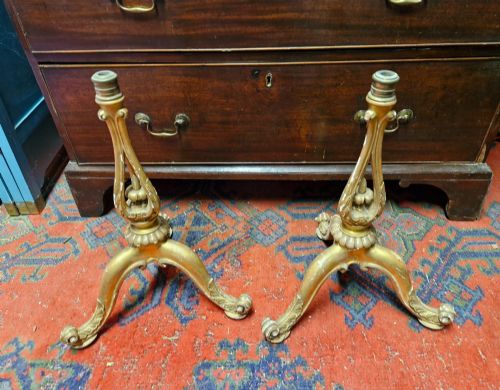

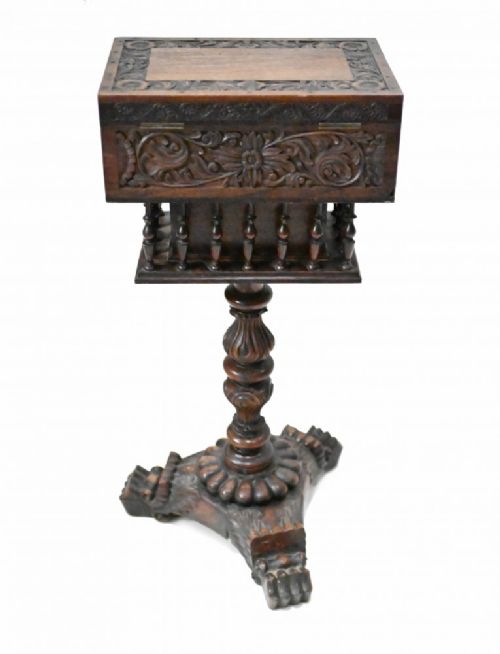
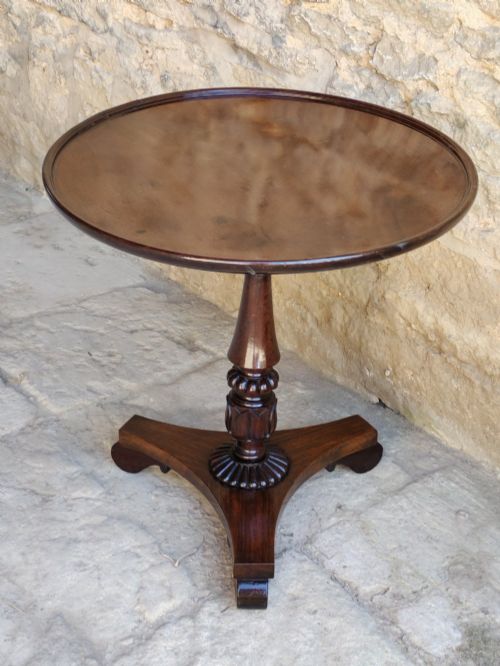
Carved Tripod Base Table
These carved tripod base table pieces bring useful circular surfaces and sculptural pillars to a room.
What they are
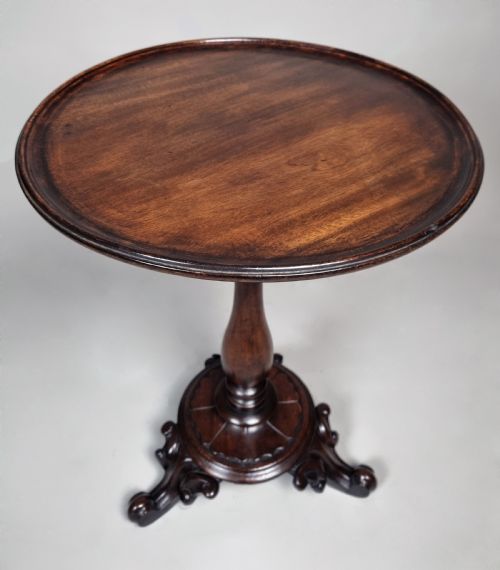
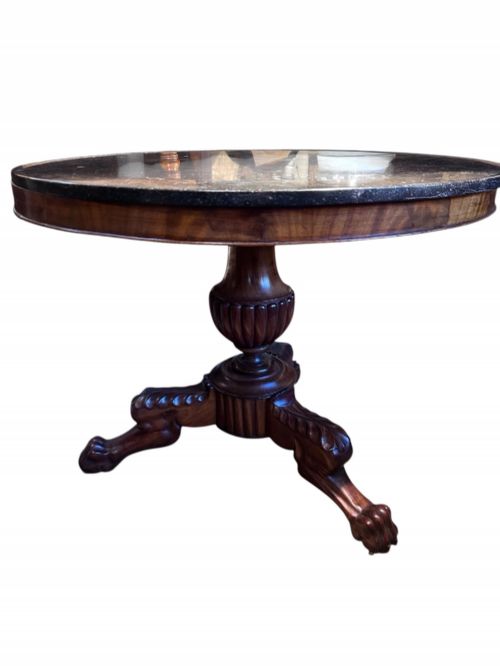
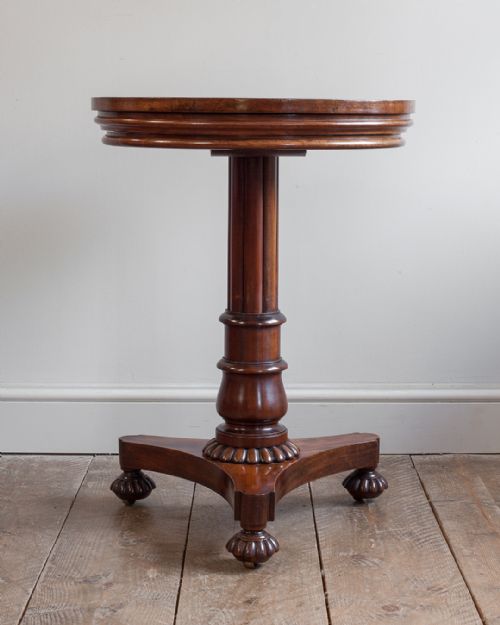
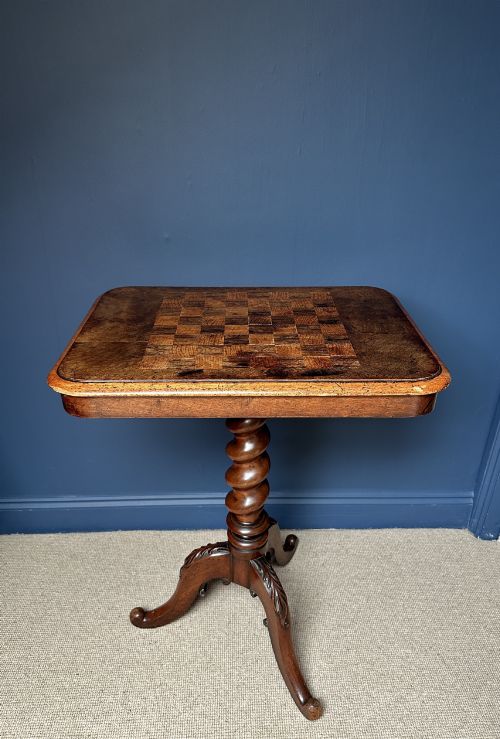
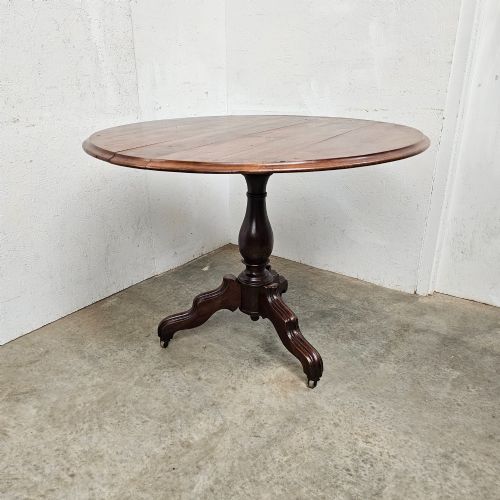
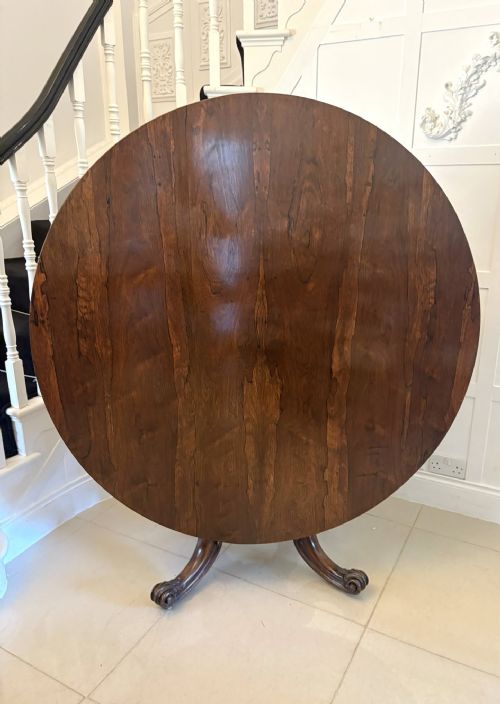
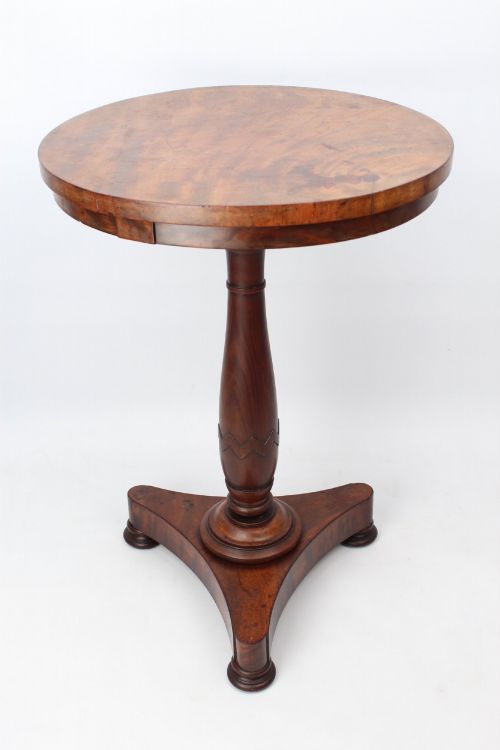
A carved tripod base table brings a circular top supported by a central pillar and three spreading feet into a room. These pieces function as side tables, centre tables, lamp tables, dining tables, occasional tables, or tilt top tables.
Most examples found here date from the nineteenth century, including the Victorian and Louis Philippe periods, alongside earlier eighteenth century pieces. Walnut, rosewood, and mahogany form the primary woods seen across these listings.
How they were made
Cabinet makers utilised solid timbers alongside flame mahogany veneer to construct the tops and columns. Marquetry embellishment and boxwood stringing occasionally decorate the surface.
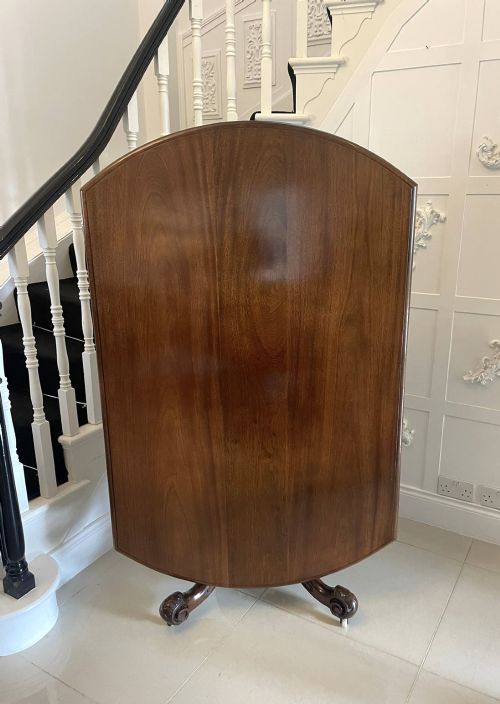
The characteristic pillar stands on three carved feet, sometimes joined by a birdcage mechanism or a tip top joint that allows the table surface to fold flat for storage.
Retail Price Guide 2026
Typical UK retail prices for carved tripod base table, calculated from the Sellingantiques database of over a million retail prices indexed since 2003. This retail price guide relies exclusively on Sellingantiques data; no external sources or auction records are used, so the figures do not describe the wider market.
Some tables tilt so the top folds flat, acting like a wooden flag waiting for tea time.
What varies in quality
The distinction between standard and superior pieces rests on the depth and crispness of the carved detail upon the pillar and feet. Choice of timber grain, such as figured flame mahogany or richly grained rosewood, elevates an example.
Integration of clever mechanics like birdcage actions and stable snap top mechanisms demonstrates higher workshop capability. Proportions between the top diameter, pillar height, and leg spread determine the visual balance.
Gillows of Lancaster
The Carved Tripod Base Table Glossary
- Tripod base
- A table support comprising three legs radiating from a central pillar. This construction provides stable floor contact on uneven historic surfaces.
- Birdcage
- A timber framework beneath the tabletop that allows the surface to both rotate and tilt. This mechanism uses small turned wooden spindles.
- Snap top
- A tabletop fitted with a catch that locks the surface horizontal or releases it to fold vertically. Also known as a tilt top.
- Gueridon
- A small French table supported by a central column or figures. These pieces often serve as lamp or occasional tables.
- Flame mahogany veneer
- Thin slices of mahogany cut from the fork of the tree to reveal a rippled, flame-like grain pattern. Cabinet makers applied this over a secondary wood base.
Frequently Asked Questions
What is a birdcage action?
A birdcage action is a wooden frame beneath the tabletop that allows the surface to tilt and rotate independently. This mechanism uses small turned spindles resembling a birdcage.
Cabinet makers utilised this clever design on eighteenth and nineteenth-century circular tables to save space when the furniture was not in use.
What woods are typical for these tables?
Mahogany, walnut, and rosewood form the primary timbers seen across these nineteenth and eighteenth-century pieces. Makers also applied flame mahogany veneer and boxwood inlay for decorative effect.
These dense hardwoods provided the structural strength required for the slender central pillar and the three spreading feet.
How do I tell Victorian from earlier periods?
Victorian examples frequently display heavier proportions, darker finishes, and specific stylistic traits associated with mid-nineteenth-century manufacturing. Earlier eighteenth-century pieces often incorporate refined birdcage mechanisms and lighter framing.
Examining the construction methods beneath the top helps reveal the manufacturing period of the table.