




Louis Philippe Table
A louis philippe table brings restrained nineteenth-century French elegance to a room through clean lines and figured timber.
Louis Philippe Table
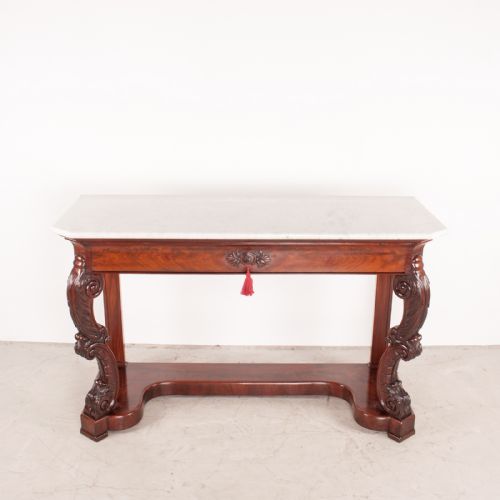
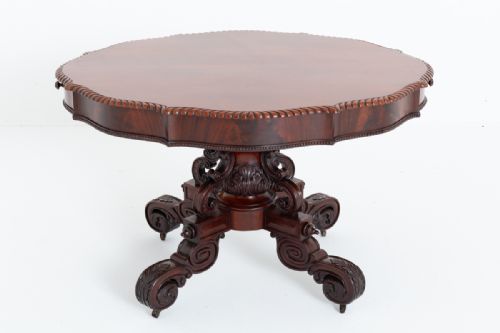
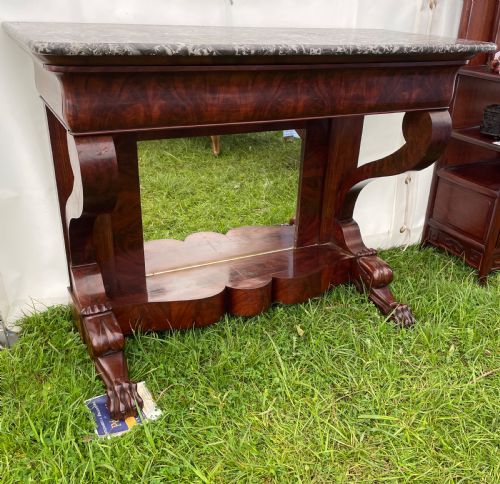
When searching for a louis philippe table, you are looking at nineteenth-century French furniture defined by simplicity of form and warmth of timber. These pieces emerge from the middle decades of the eighteen-hundreds, stepping back from the heavy ornamentation of earlier French styles.
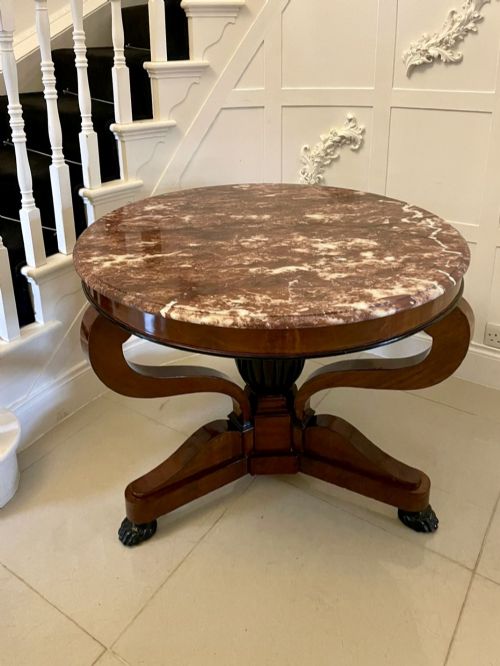
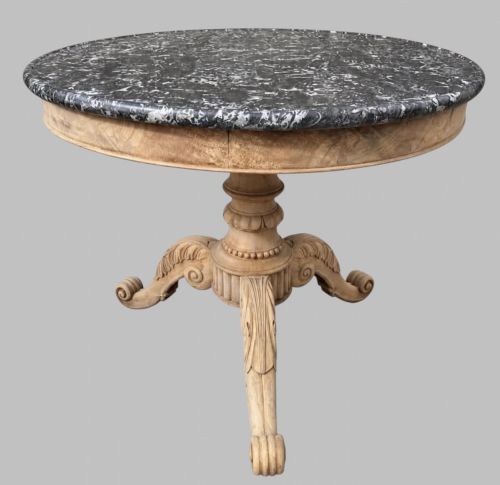
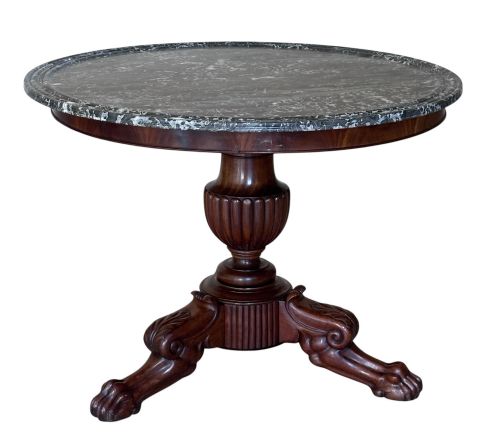
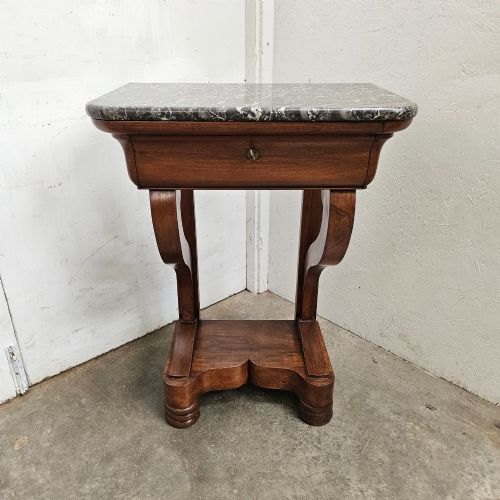
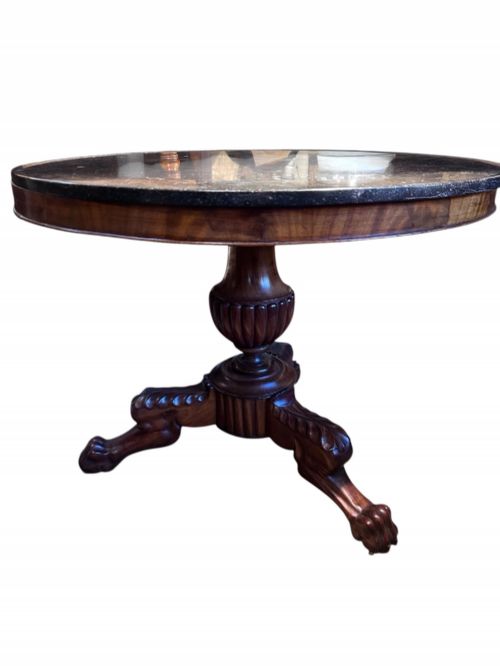
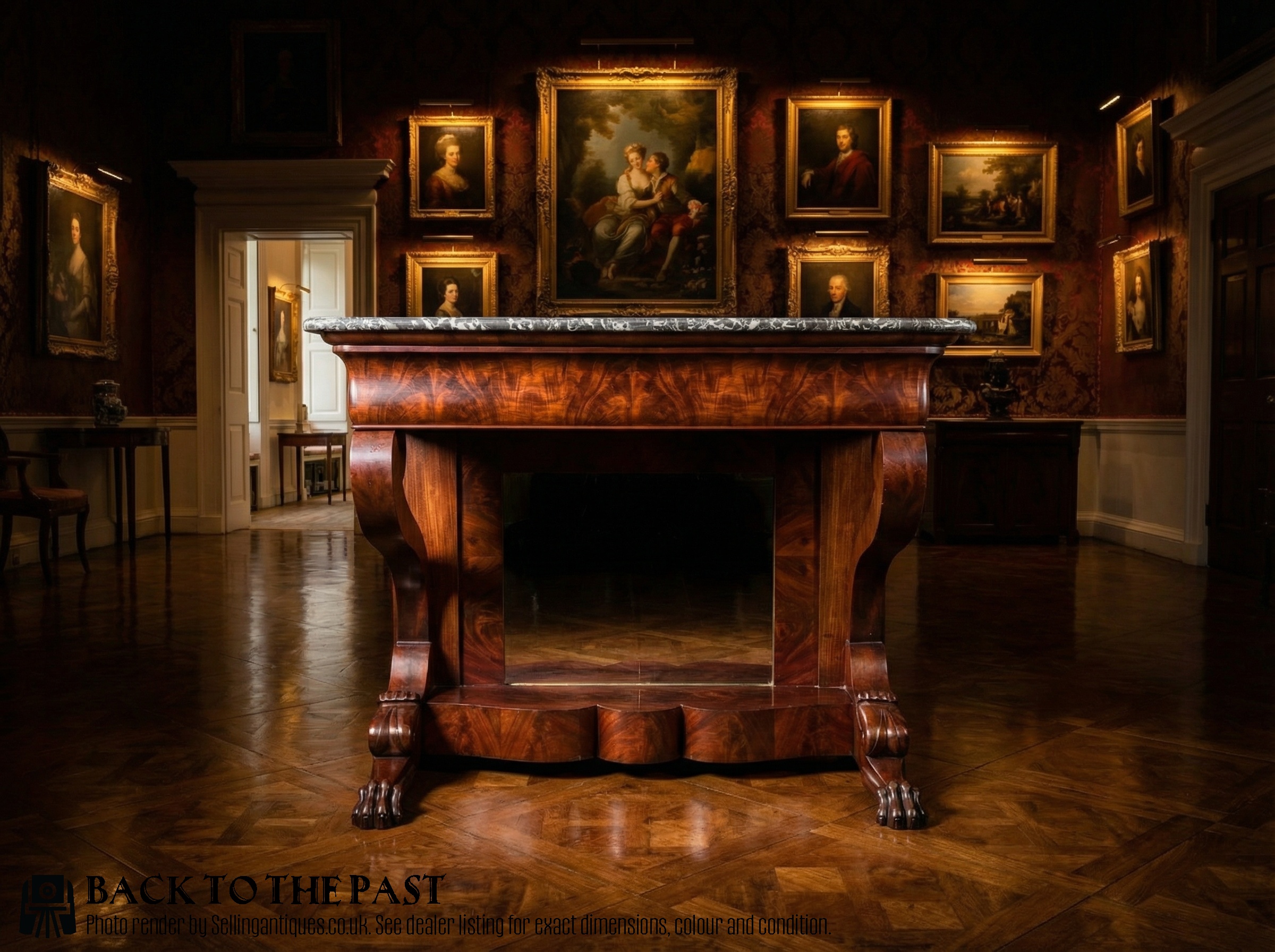
The most common versions met here are circular gueridon centre tables and console tables designed to sit against a wall. Mahogany and walnut dominate the surviving examples, frequently paired with heavy white or breccia marble tops.
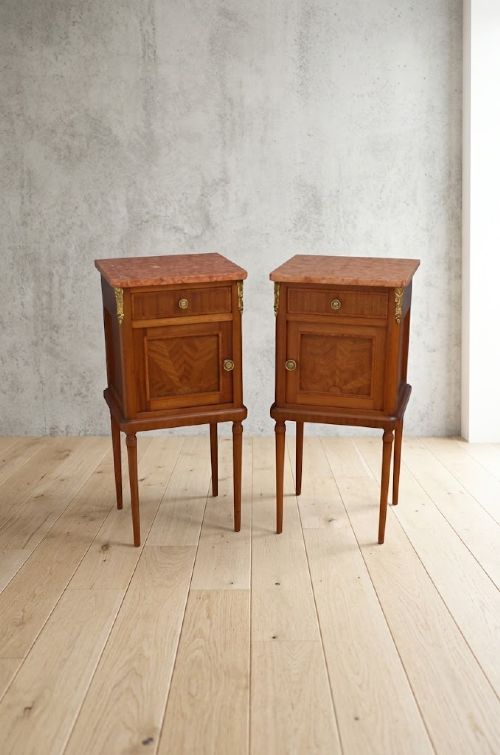
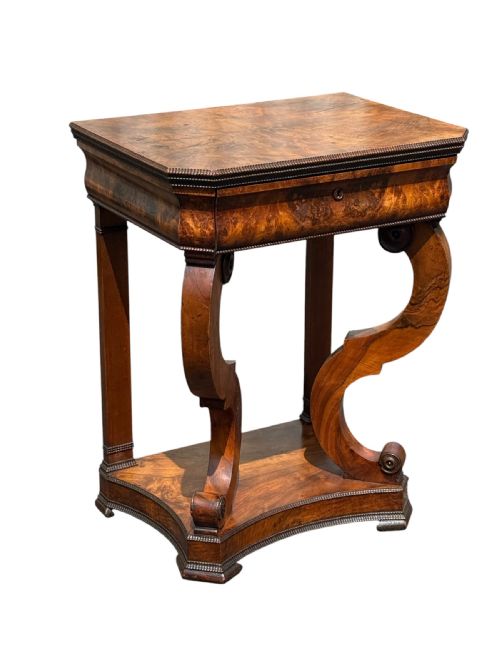
Forms also extend to occasional tables, writing desks, and bedside cabinets carrying the same understated aesthetic. The structural honesty of the design relies on fine grain and balanced proportions rather than excessive carving.
What varies in quality
The selection of timber sets the baseline for quality, moving from plain mahogany boards to highly figured burr walnut and carefully matched flame veneers. Superior pieces display thoughtful grain continuity across the entire top surface.
Marble selection also distinguishes the tiers of production, ranging from standard white slabs to richly coloured breccia and marble with complex natural veining. The precision of the joinery in the underframe determines the lasting stability of the piece.
Finishing work such as hand-cut boxwood inlay and crispness in the cast ormolu mounts separates standard utility furniture from high workshop output.
Some nineteenth-century bedside cabinets clearly possessed a social life far more glamorous than their name suggests.
Maison Pretot Paris
The Louis Philippe Table Glossary
- Gueridon
- A small round table on a central pillar, frequently topped with marble. This form serves well as a centre table in an entrance hall or drawing room.
- Console table
- A table designed to stand flat against a wall, often featuring a heavy marble top. These pieces traditionally anchored the space beneath a large wall mirror.
- Ormolu
- Gilded bronze used for decorative mounts and feet. The technique involves applying a mercury and gold amalgam to cast bronze.
- Marquetry
- Inlaid patterns formed by fitting small pieces of veneer into a prepared ground. Cabinetmakers used contrasting woods to create geometric or floral designs.
- Breccia marble
- A multicolored marble composed of broken fragments cemented together by a fine matrix. It provides a striking, variegated surface on nineteenth-century tables.
Louis Philippe Table: Frequently Asked Questions
How do I use a console table?
Console tables sit flat against a wall in hallways, living rooms, or dining spaces. Their shallow depth allows them to occupy narrow areas without blocking movement.
Many historic examples feature marble tops that provide a durable surface for lamps, decorative objects, or everyday items.
What is a gueridon table used for?
A gueridon serves primarily as a centre table in the middle of a room or as an occasional surface for holding a lamp or vase. Its central column design allows chairs to tuck neatly underneath.
These round tables anchor an open floor plan and offer practical display space without sharp corners.
How do I care for a marble top?
Marble requires gentle cleaning with warm water and a soft cloth to protect its polished surface from acidic spills and staining. Using coasters and mats prevents the stone from absorbing liquids.
Avoid harsh commercial cleaners that can etch or dull the natural finish of the nineteenth-century stone.
How do I date a Louis Philippe table?
Dating relies on examining construction methods, timber choices, and stylistic cues recorded across the nineteenth century. Simpler mahogany forms generally align with the mid-century period, while veneering techniques shift over time.
Matching the materials and hardware against documented examples helps narrow the decade of production.