
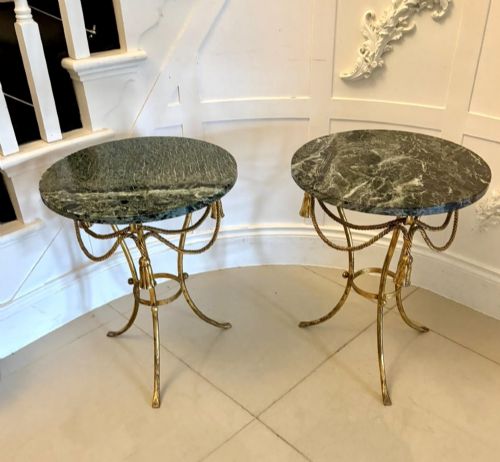
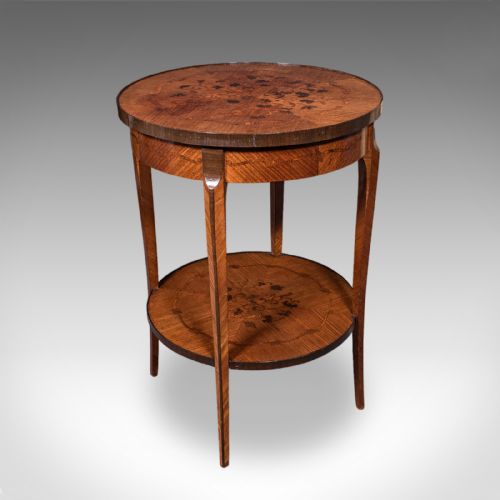
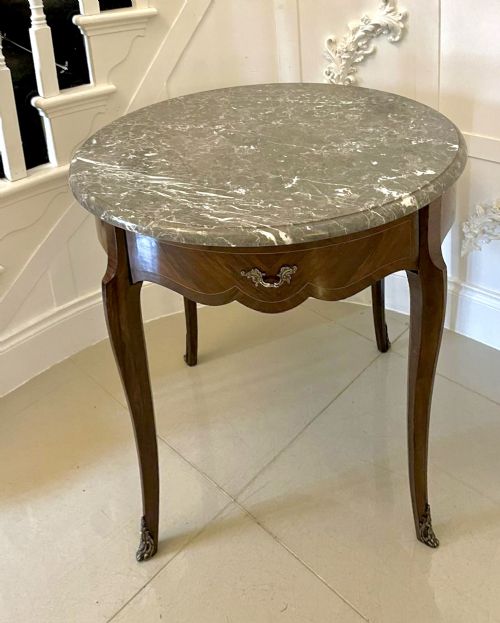

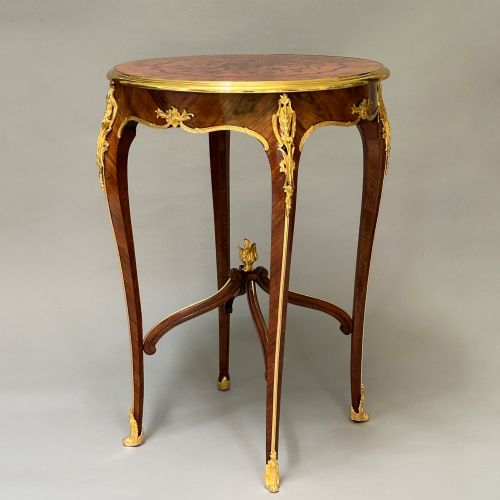


Vintage Gueridon Table
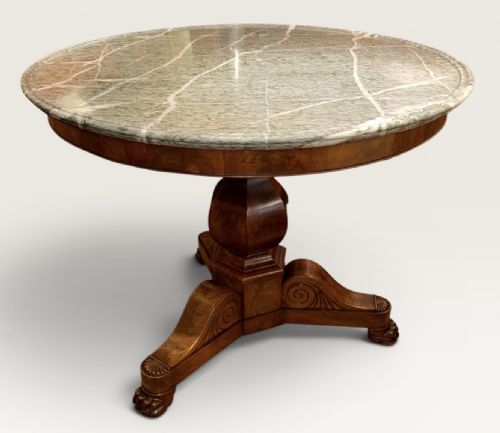
A vintage gueridon table brings French elegance to a room, offering a round top on a central pedestal.
Vintage Gueridon Table
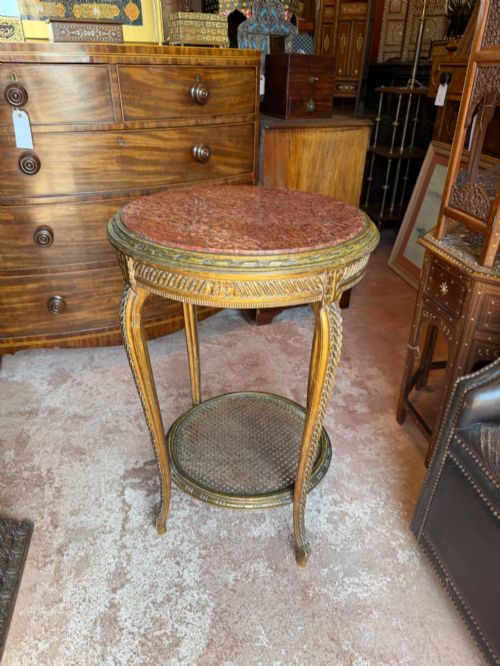
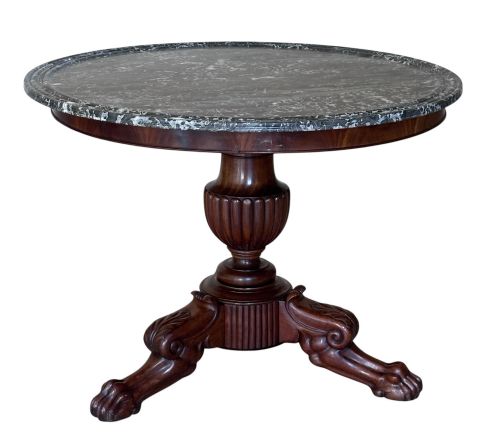
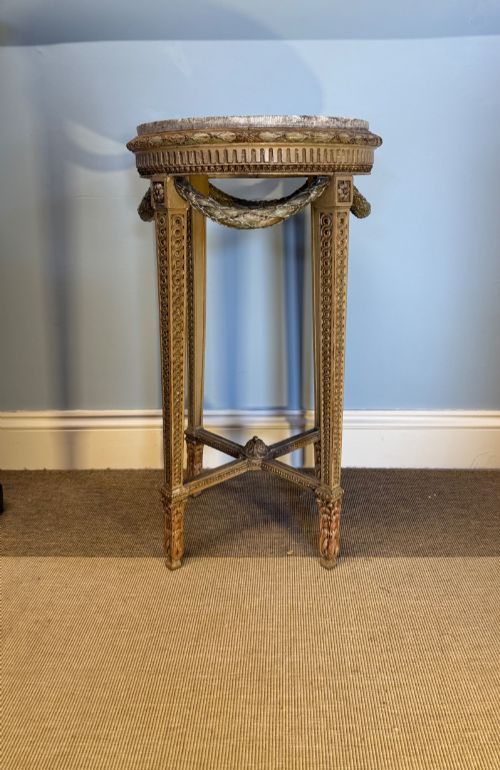
A vintage gueridon table functions primarily as a centre table, lamp table, or small occasional table within domestic interiors. These round pedestal tables often feature prominent stone or timber tops supported by a single central column.
Most examples originate from the nineteenth century or early twentieth century, reflecting French design influences such as Louis XVI style, French Empire, and Louis XV style. Buyers frequently encounter variations that serve as plant stands, bedside tables, or bistro tables.
The form spans decades of craftsmanship, incorporating classic proportions designed to occupy minimal floor space while providing a functional surface for lamps, vases, or decorative objects.
Materials and construction methods
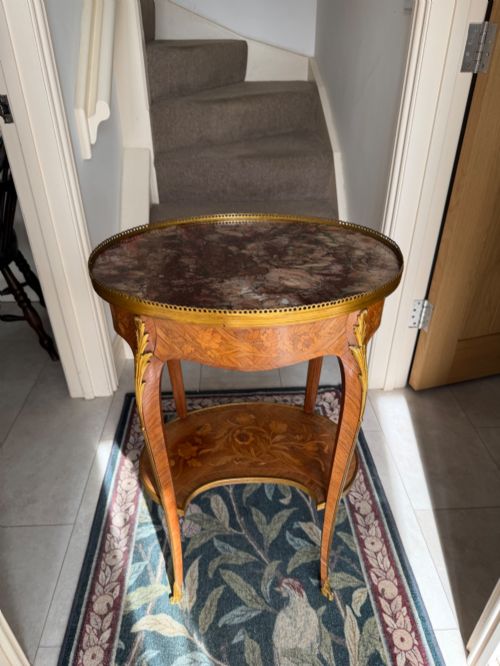
Cabinetmakers utilised timber frameworks of mahogany, kingwood, walnut, and satinwood, frequently enhanced by intricate marquetry, parquetry, or burr elm veneers. These wooden structures provide the stable chassis necessary to support heavier stone elements.
Many tables incorporate polished marble or onyx tops, sometimes encircled by pierced brass galleries or mounted with gilded bronze and ormolu ornaments. Cast iron and painted finishes also appear on specific industrial or regional variants.
Vintage Gueridon Table Retail Price Guide 2026
Typical asking prices for vintage gueridon table among the pieces listed under this phrase on Sellingantiques today, from the lower quarter to the upper quarter. They describe what is for sale here now, not the wider market.
Object types span side tables, occasional tables, centre tables, plant stands, bistro tables, pedestal tables, and bedside cabinets.
Distinguishing quality and execution
The refinement of the cast bronze or ormolu mounts separates standard production from exceptional work, with crisper chasing and heavier gilding indicating superior manufacture. The selection of timber veneers, particularly matched parquetry or intricate marquetry patterns, demonstrates the maker's skill.
Structural integrity relies upon the connection between the central pedestal and the tabletop or base, where tighter joints and heavier stabilizing elements ensure lasting durability without wobble.
Francois Linke
The Vintage Gueridon Table Glossary
- Gueridon
- A small round table supported by a central column or pillar. This traditional French form frequently serves as a centre table or lamp stand.
- Ormolu
- Gilded bronze ornamentation applied to furniture. This decorative metalwork is finely cast and chased.
- Marquetry
- Decorative veneer patterns formed by fitted pieces of wood. Craftsmen arrange different coloured timbers to create pictorial or geometric designs.
- Parquetry
- Geometric mosaic woodwork used for tabletops. The small wood blocks form repeating patterns across the surface.
- Galleried
- A tabletop edged with a raised decorative metal or wood border. This rim prevents small items from rolling off the surface.
Vintage Gueridon Table: Frequently Asked Questions
What is a gueridon table used for?
A vintage gueridon table serves as a versatile surface for lamps, drinks, or decorative objects in a living space or bedroom.
Because of its compact round footprint, it fits easily beside seating or in small hallways where rectangular furniture proves impractical.
How do I identify a French gueridon?
French examples typically feature a circular top supported by a central pedestal, often incorporating marble, brass galleries, or fine wood veneers.
Stylistic cues such as Louis XV curves or Empire bronze mounts help distinguish these continental pieces from domestic tables.
Are marble top tables heavy?
The marble or onyx inserts on these tables add considerable weight to the overall piece, ensuring a stable base.
Despite this weight, the central pedestal design keeps the silhouette slender and easy to reposition in a room.
What periods do these tables span?
The listings encompass items produced from the nineteenth century through the early twentieth century.
During this time, cabinetmakers reinterpreted earlier monarchical styles like Louis XVI and French Empire for modern interiors.