


19th Century Marble Table
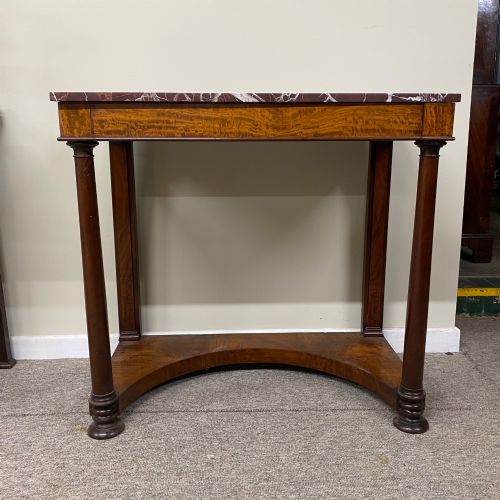
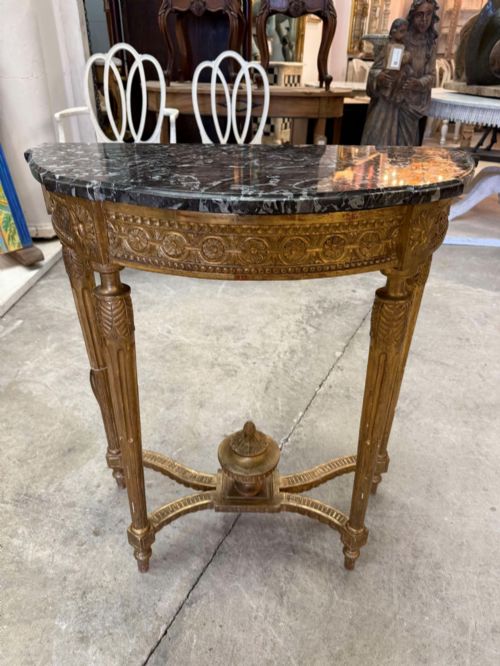
When choosing a 19th century marble table, you select between heavy mahogany centrepieces and gilt console designs built to carry veined stone.
19th Century Marble Table
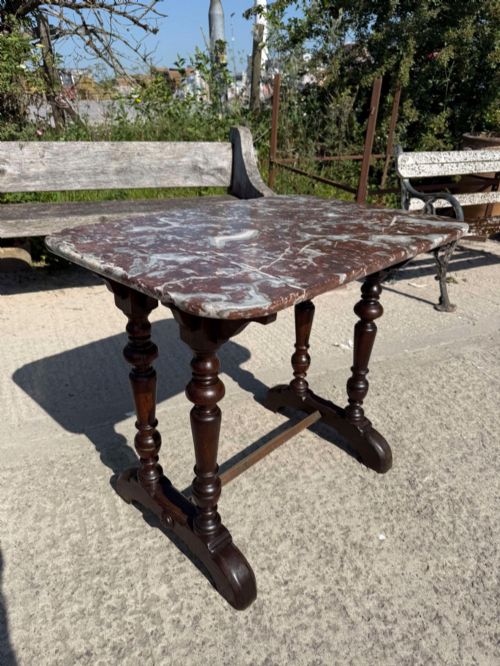
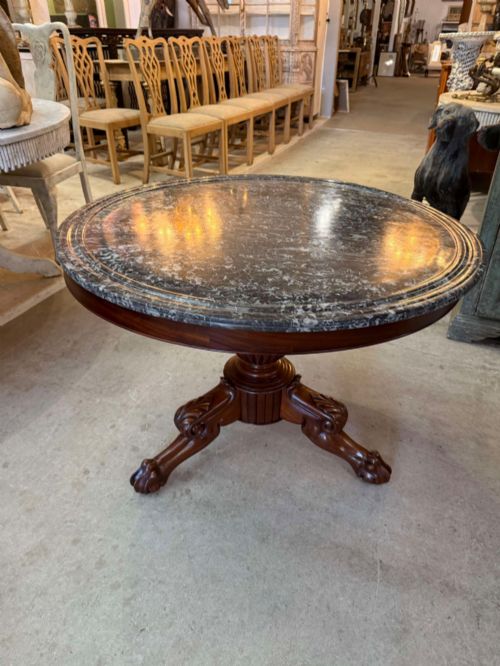
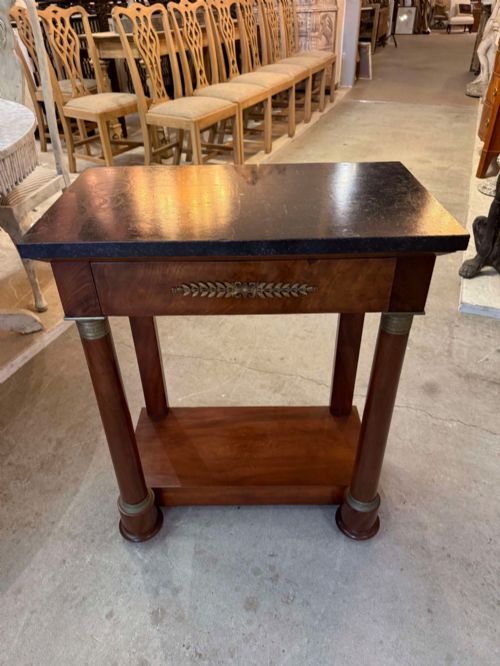
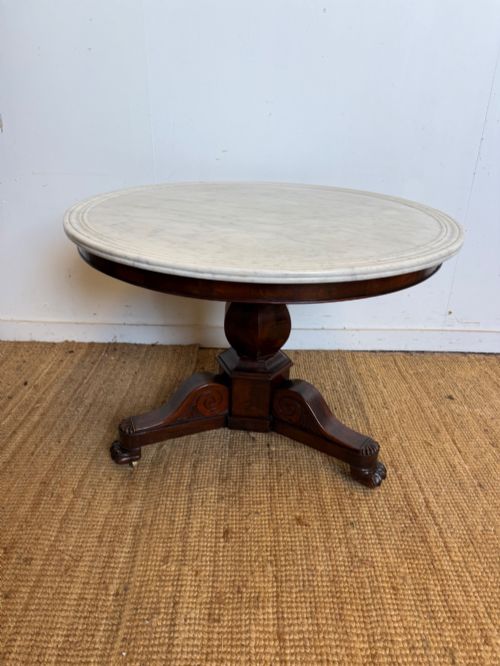
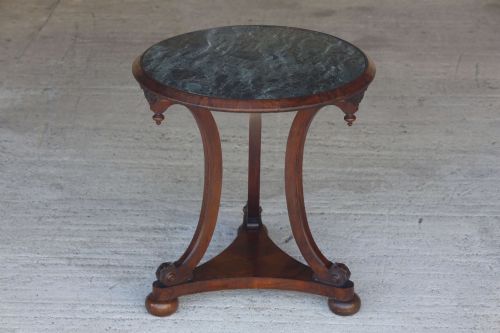
A 19th century marble table spans several distinct forms recorded in the evidence, dominated by console tables, circular gueridon centre tables, and side tables designed for domestic display. These pieces originate primarily from French workshops, English cabinet makers, and Italian studios, spanning periods from Regency and French Empire through to Victorian and late nineteenth-century revivals.
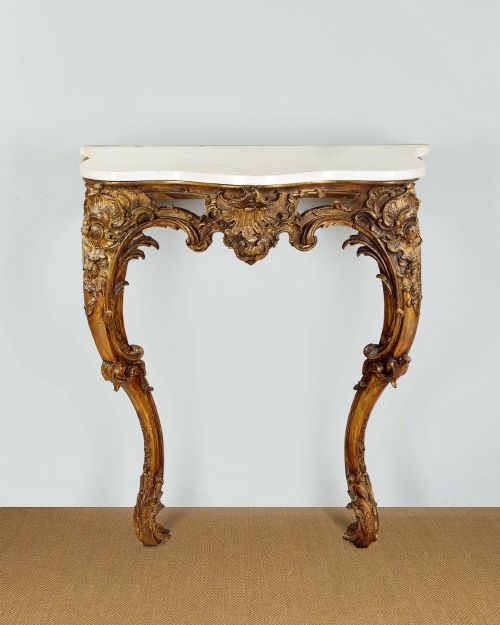
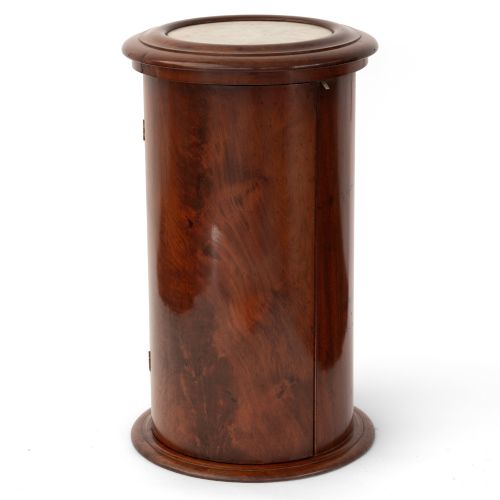
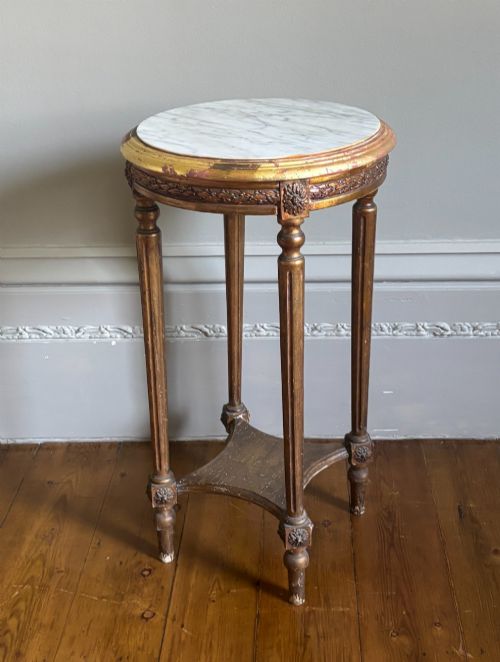
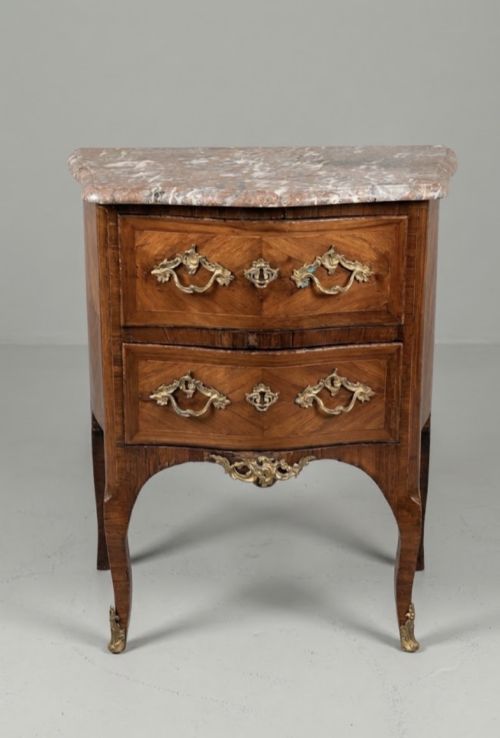
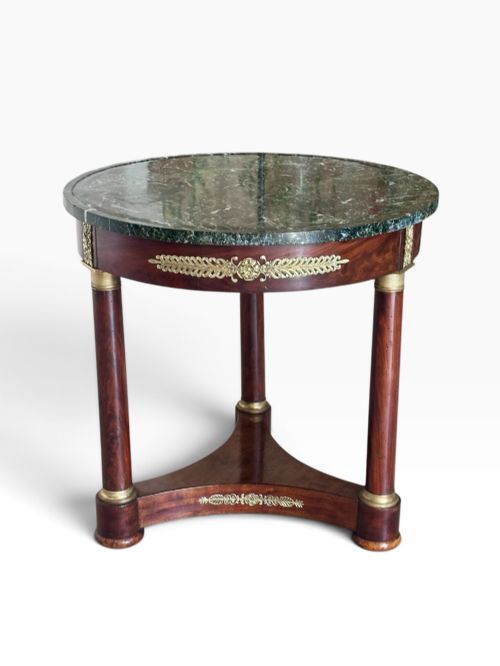
Console tables frequently feature shaped or break-front wooden frames designed to stand against a wall, often paired with giltwood, mahogany, or walnut. Circular gueridon tables sit centrally in a room, supported by central pedestals or tripod legs beneath heavy white, grey, or red marble tops. Smaller occasional tables, bedside cabinets, and plant stands also appear across the selection.
The integration of stone and timber defines the category, linking utilitarian washstands and serving surfaces with high-status drawing room furniture. Buyers encounter variations in scale, from grand Italian specimen marble tables to compact French occasional pieces intended for domestic parlours.
Materials and Construction
Makers constructed the structural frames of these tables using dense timbers such as mahogany, walnut, oak, and ebonised wood, alongside carved giltwood and painted finishes. Joinery relied on traditional cabinet-making techniques to support the considerable downward pressure exerted by solid stone tops.
Surface ornamentation incorporates cast brass, ormolu, gilt bronze, and iron mounts, particularly evident on French Empire and Victorian pieces. Marble slabs - ranging from white and black varieties to rouge, fossil, and multi-coloured specimen marble - were cut, polished, and fitted directly into rebated wooden frames or supported by console brackets.
19th Century Marble Table Retail Price Guide 2026
Typical asking prices for 19th century marble table among the pieces listed under this phrase on Sellingantiques today, from the lower quarter to the upper quarter. They describe what is for sale here now, not the wider market.
Materials recorded across the inventory include mahogany, walnut, oak, brass, ormolu, and various types of marble.
Evaluating Craftsmanship
Quality in a 19th century marble table rests upon the depth of carving in the wooden frame and the geological selection of the stone top. Superior examples display crisply cast ormolu mounts, hand-carved giltwood, and timbers with rich natural grain figures that complement the embedded minerals of the marble.
The integration between the stone slab and the timber base reveals the level of workshop competence. Finer pieces utilise heavy, highly figured veined or specimen marble fitted with precision into custom-rebated frames, whereas simpler utility pieces employ standard grey or white marble over straightforward mahogany or pine structures.
Charles à Orléans·Siffel and Cartier·Joseph Darmanin and Sons
The 19th Century Marble Table Glossary
- Gueridon
- A small circular table supported by a central column or tripod base, frequently topped with marble and originating in French interior design. These pieces served diverse functions as occasional or centre tables.
- Console Table
- A wall-mounted or flat-backed table fixed with brackets or standing on front legs, designed to hold decorative objects beneath mirrors. They commonly feature elaborate giltwood or mahogany carving.
- Ormolu
- Gilded bronze ornamentation applied to furniture frames and clock cases during the eighteenth and nineteenth centuries. The technique involves creating a finely chased bronze base before applying a gold amalgam.
- Specimen Marble
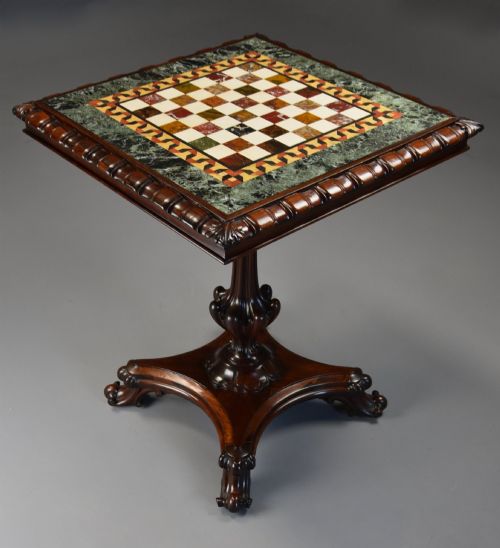
- A mosaic-like arrangement of various coloured marbles assembled to create geometric or pictorial tabletops. This technique flourished in Italian workshops during the nineteenth century.
- Breccia Marble
- A composite stone made of broken rock fragments embedded in a fine-grained matrix, creating a naturally mottled and varied surface pattern. It appears frequently on revival console tables.
19th Century Marble Table: Frequently Asked Questions
What is a gueridon table?
A gueridon is a circular table featuring a central pedestal base, commonly fitted with a stone top for domestic use.
These pieces function effectively as centre tables in reception rooms or as occasional surfaces.
How do I identify French Empire furniture?
French Empire pieces display classical motifs, dark mahogany timbers, and prominent gilt bronze or ormolu mounts.
They often incorporate architectural lines and heavy marble surfaces reflective of early nineteenth-century design.
What is specimen marble?
Specimen marble consists of multiple coloured stone fragments assembled into decorative tabletops or geometric patterns.
Italian workshops utilised this technique to showcase geological variety and expert stonemasonry.
Where were console tables placed?
Console tables stood flush against walls, frequently positioned beneath matching pier mirrors in formal drawing rooms.
Their shallow depth allowed them to serve as display surfaces without obstructing walkways.