

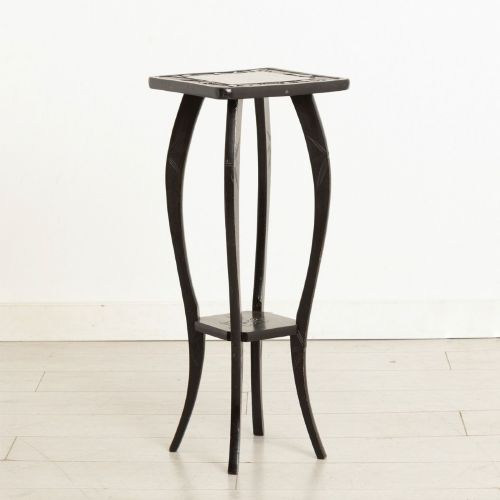
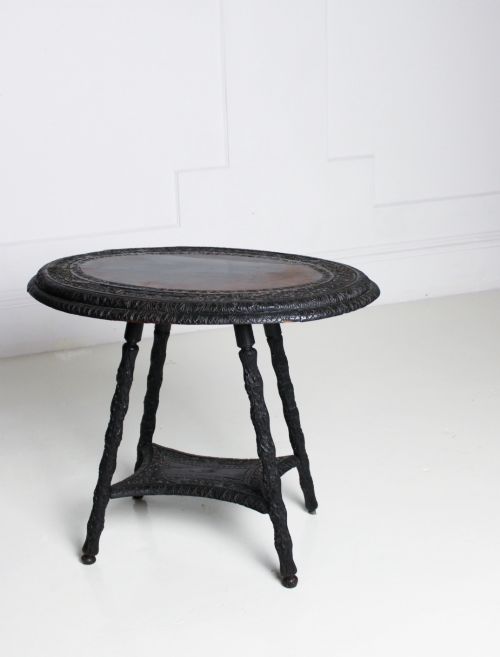
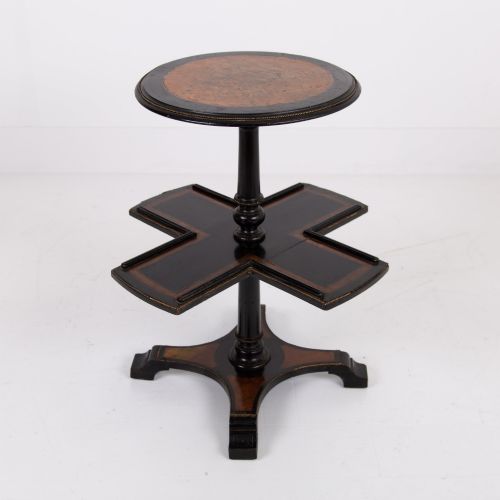
Ebonised Plant Stand
An ebonised plant stand brings dark, crisp lines to a room, lifting ferns or porcelain on a deep, polished surface.
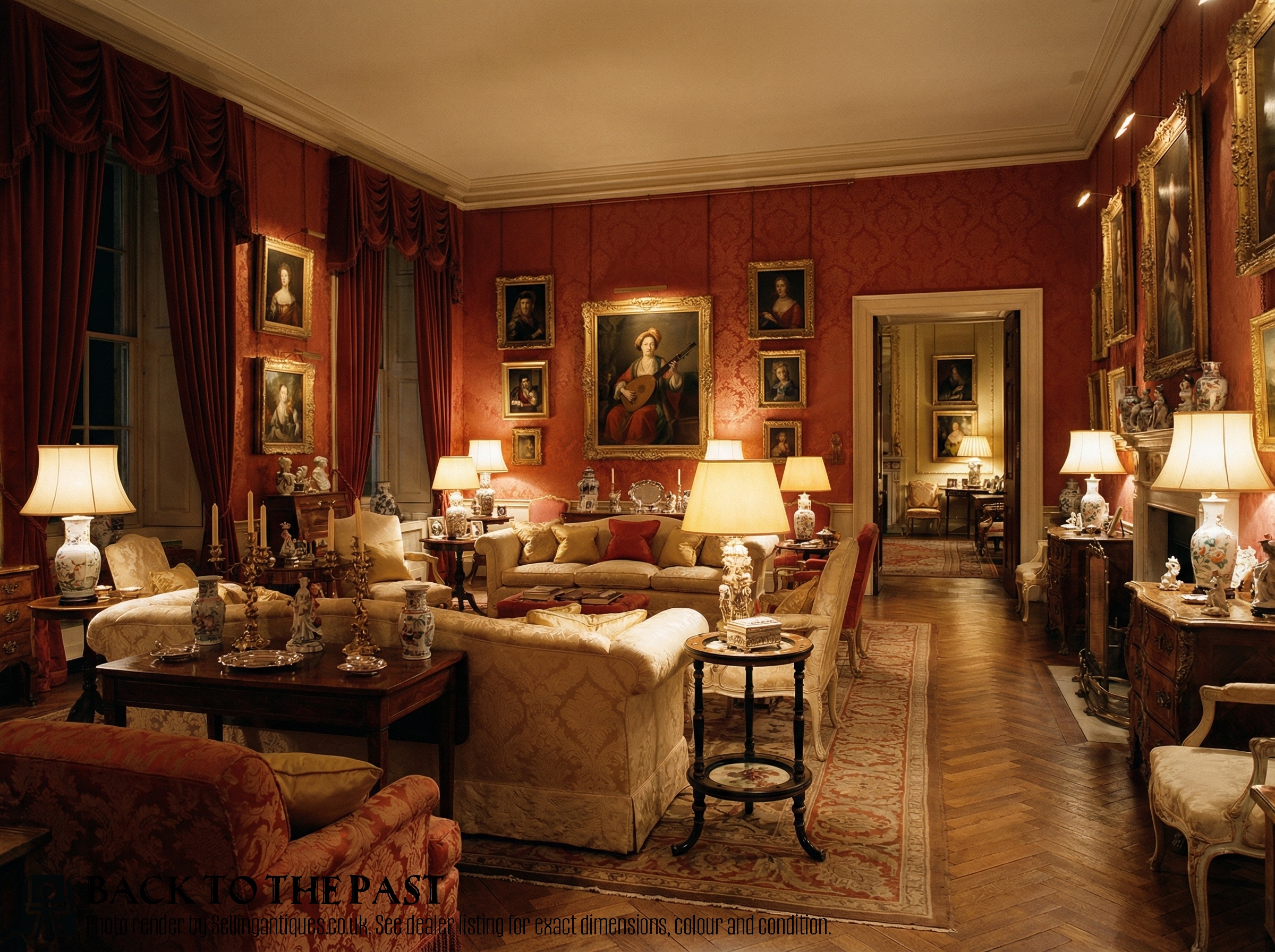
Ebonised Plant Stand
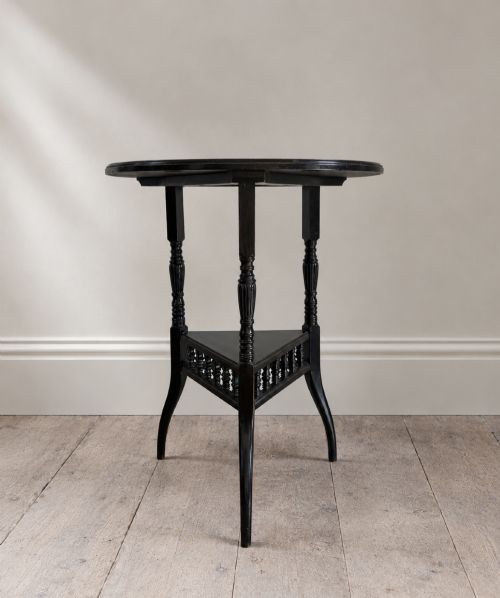
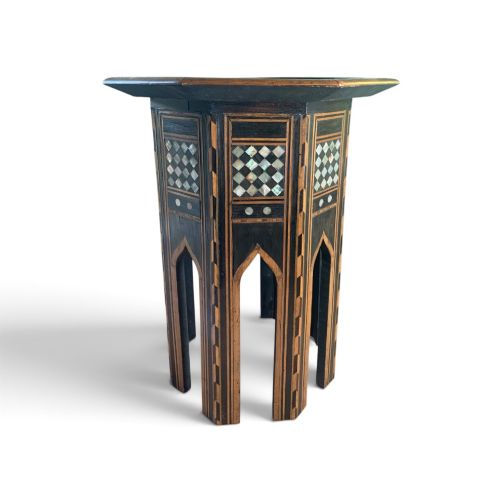
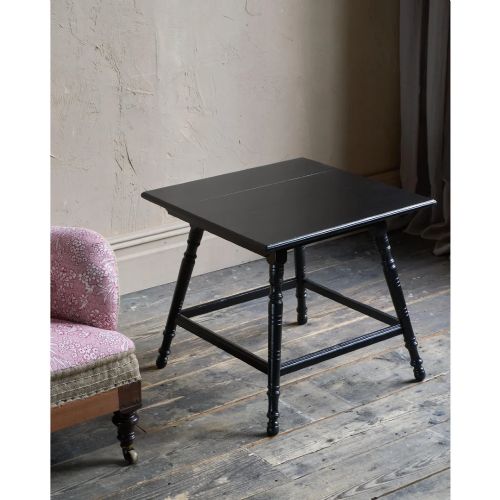
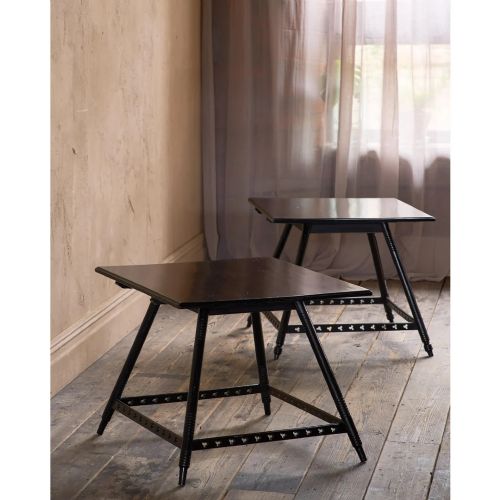
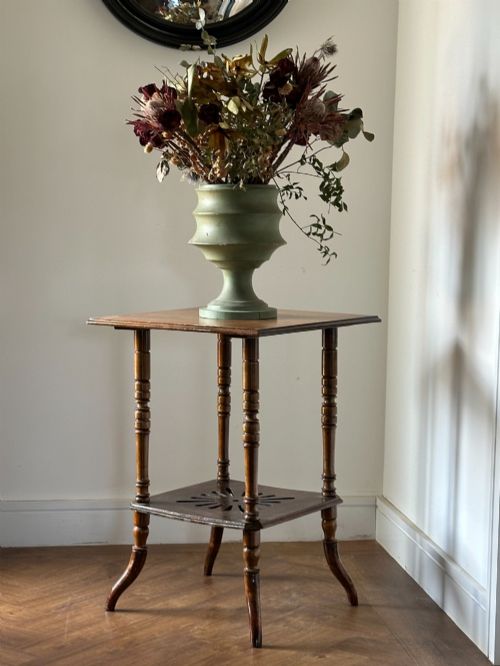
An ebonised plant stand is a sturdy column, pedestal, or small table designed to elevate flora, lamps, or decorative objects within a room. When you search for an ebonised plant stand, you encounter Victorian, nineteenth-century, and early twentieth-century examples shaped by Aesthetic Movement, Moorish, and French Napoleon III designs.
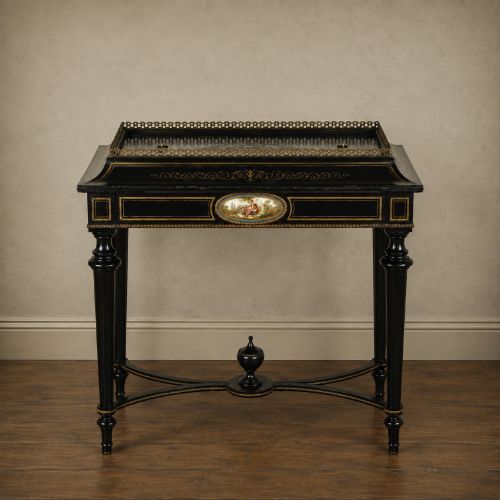
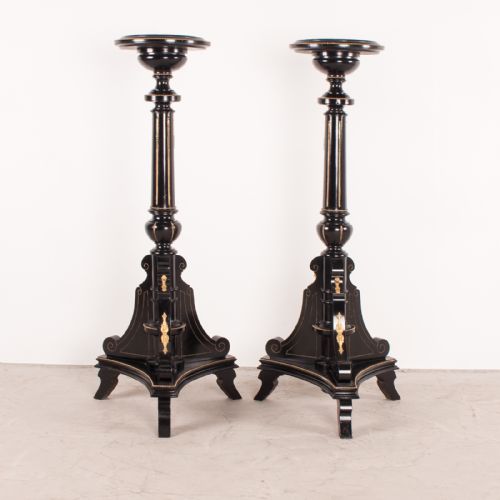
The form ranges from tall torchers and columns to low occasional tables, side tables, and jardinieres. Many pieces combine ebonised wood with contrasting materials such as marble inserts, painted porcelain plaques, or intricate bone and marquetry inlay.
Nineteenth-century iterations dominate the selection, often reflecting the tastes of English makers like Liberty or Hindley and Sons, alongside continental French and Italian workshops. These pieces serve practical functions in hallways and drawing rooms while introducing architectural silhouettes to an interior.
How they were made
The foundation of these pieces relies on timbers like hardwood, walnut, mahogany, and amboyna, which underwent an ebonising process to imitate expensive ebony. Craftsmen applied dark stains or black finishes to close-grained wood, creating a uniform, deep black surface that accepted high polish.
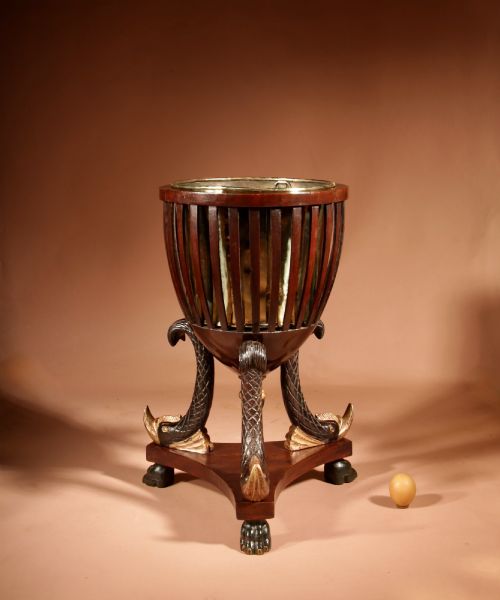
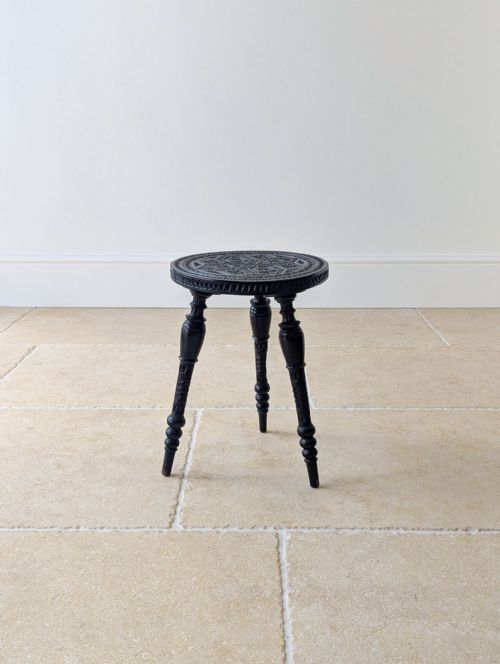
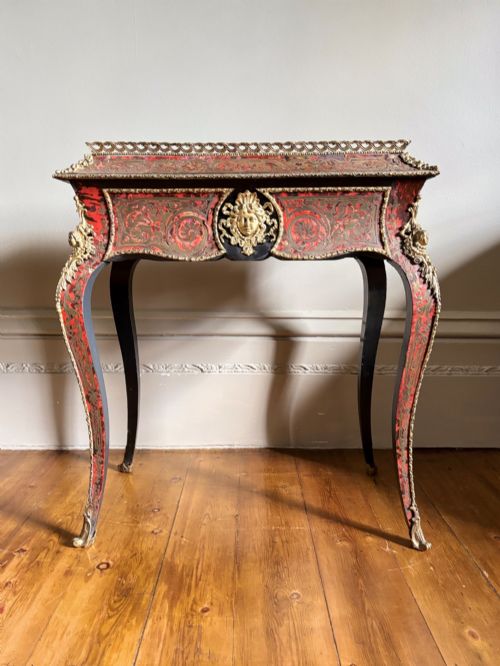
Decoration involved varied specialist techniques including chip-carving, hand-painting, and meticulous marquetry using bone, brass, and exotic veneers. Metal components such as ormolu mounts, brass galleries, and gilt highlights frequently punctuate the dark timber.
Many French and Italian examples incorporate inset marble tops or glazed porcelain plaques secured into the wooden framework. Joinery standards reflect the period, utilising turned columns, shaped aprons, and pegged joints to support heavy stone and ceramic vessels.
Ebonised Plant Stand Retail Price Guide 2026
Typical asking prices for ebonised plant stand among the pieces listed under this phrase on Sellingantiques today, from the lower quarter to the upper quarter. They describe what is for sale here now, not the wider market.
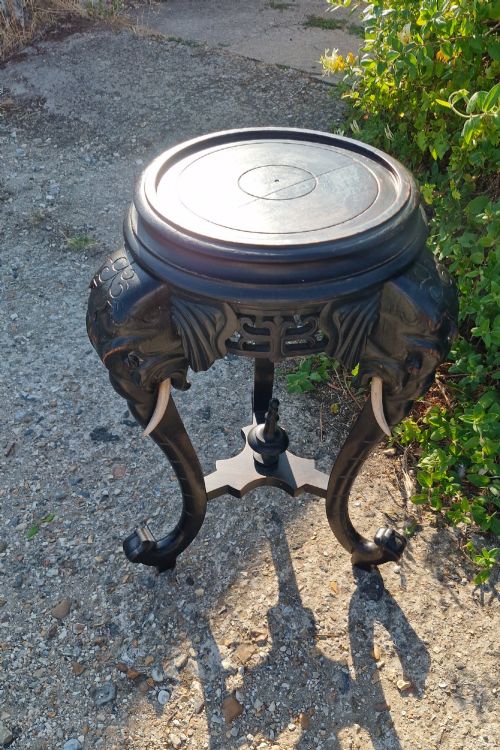
Several stands double as elephant tables complete with painted wooden tusks, bringing unexpected wildlife charm to the drawing room.
What varies in quality
The distinction between standard production pieces and finer workshop examples lies in the depth of the ebonising and the crispness of the secondary decoration. Superior stands display meticulous hand-carving, precise bone or marquetry inlay, and high-grade gilt mounts rather than mass-stamped metalwork.
Material selection dictates much of the value, with heavy inset marble slabs, painted porcelain plaques, or secondary timbers like amboyna and rosewood elevating a piece above basic softwood or plain hardwood framing. Structural stability under weight also separates robust pedestals from more delicate occasional tables.
Attribution to documented makers such as Liberty & Co, Gillow, or Hindley and Sons introduces a layer of workshop pedigree. The integration of design influences, from Anglo-Japanese aesthetics to French Napoleon III Boulle work, determines the stylistic cohesion of the object.
Hindley and Sons·Druce And Co London·Liberty And Co·Gillow And Co
The Ebonised Plant Stand Glossary
- Ebonised
- Timber treated with stain, dye, or paint to simulate the dark, dense appearance of genuine ebony. This finish was widely utilised during the nineteenth century to achieve a sleek, neoclassical aesthetic.
- Torchere
- A tall, slender stand or pedestal originally intended to hold a candle or torch, later adapted for lamps and floral arrangements. These pieces provide vertical height in corners or narrow spaces.
- Jardiniere
- A decorative pot or stand designed to hold growing plants or flowers. French examples often incorporate metal liners and porcelain or gilt mounts.
- Gueridon
- A small French table supported by one or more columns, often featuring a round marble top. The style originated in the seventeenth century and remained popular through the nineteenth century.
- Marquetry
- Decorative veneer patterns applied to the surface of a piece using pieces of wood, bone, or shell. This technique creates complex pictorial or geometric designs across tabletops and pedestals.
Ebonised Plant Stand: Frequently Asked Questions
What is an ebonised plant stand used for?
These pieces elevate potted plants, vases, and lamps to eye level, adding height and structure to interior corners or window spaces. They functioned historically as focal points in Victorian drawing rooms and hallways.
Today, they serve the same practical purpose while introducing period craftsmanship and dark architectural lines to modern rooms.
How do I identify an Aesthetic Movement stand?
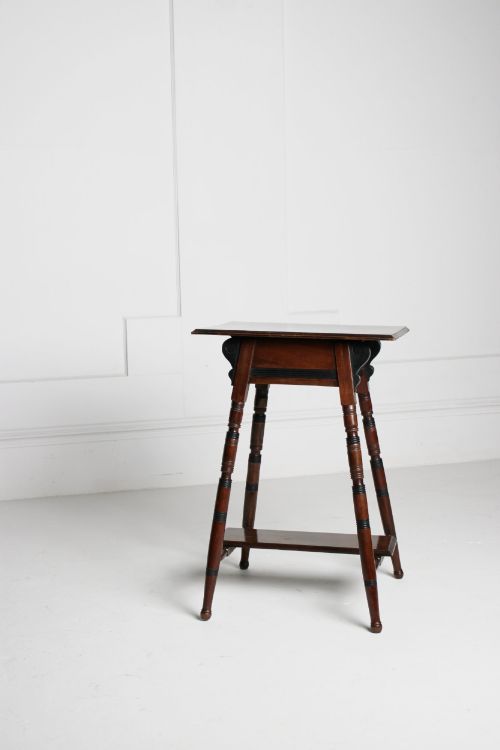
Aesthetic Movement pieces often show Japanese or Anglo-Japanese influences, featuring ebonised surfaces combined with simple geometric forms or delicate hand-painted details. They frequently date to the late nineteenth century and reject heavy Victorian clutter in favour of cleaner lines.
Look for touches of gilt, bamboo-turned legs, or motifs inspired by nature on the woodwork.
Are marble top plant stands original?
Many nineteenth-century jardiniere stands and gueridons were manufactured specifically to house inset marble slabs, which protected the wood from water damage caused by watering plants. These stone tops are typically heavy and fitted directly into a rebated wooden frame.
Examining the underside reveals whether the supporting structure was built to bear the weight of solid marble.
Where were most ebonised stands made?
The listings show production spanning English workshops in London, French cabinetmakers producing Napoleon III and Empire styles, and Italian makers specialising in marquetry. Regional preferences influenced whether a stand took the form of a bamboo-style table or a heavy classical column.
British firms like Liberty retailed designs sourced from both domestic and international makers.