


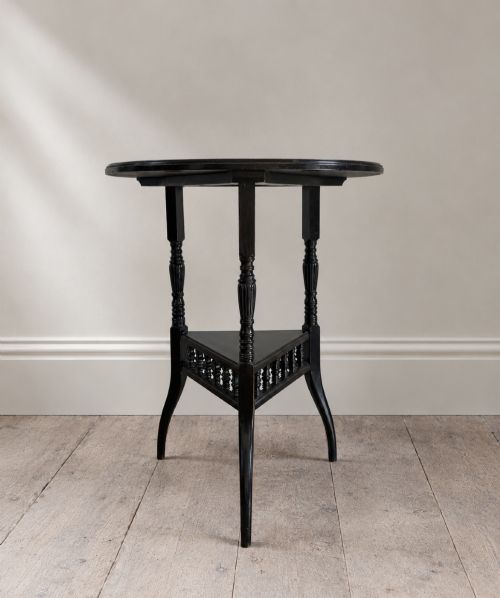
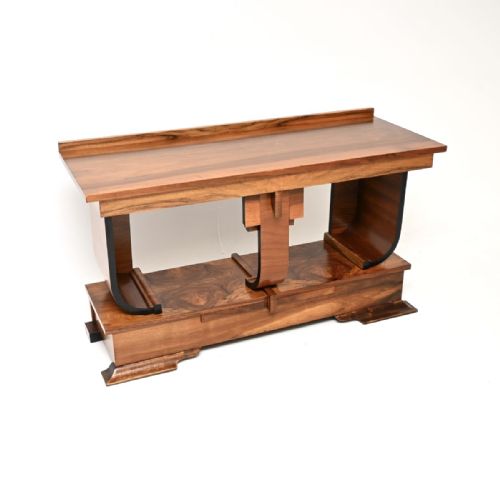
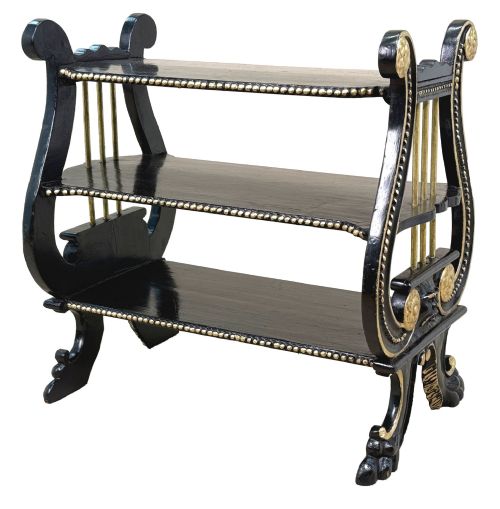
Ebonised Wood Table
An ebonised wood table brings depth and theatrical dark contrast to an interior, drawing on centuries of cabinet-making traditions.
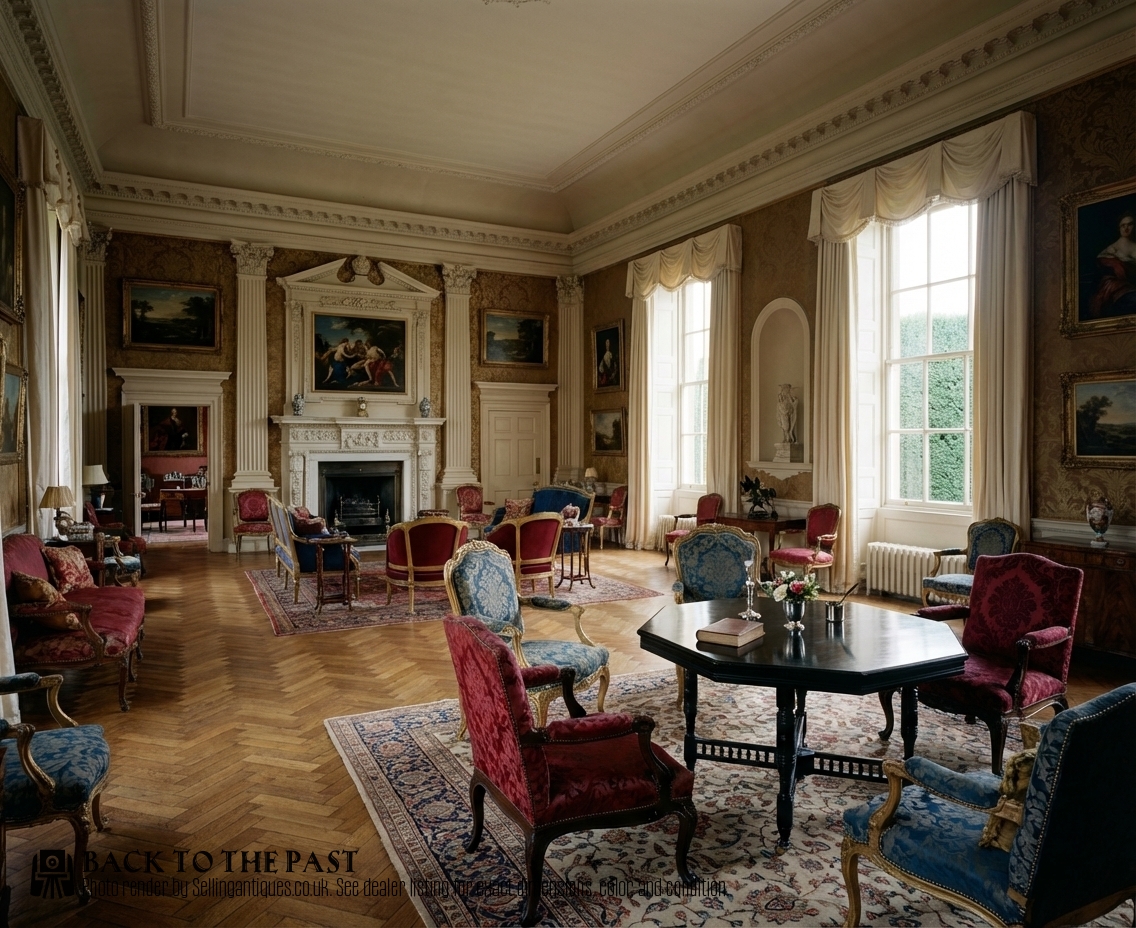
Ebonised Wood Table
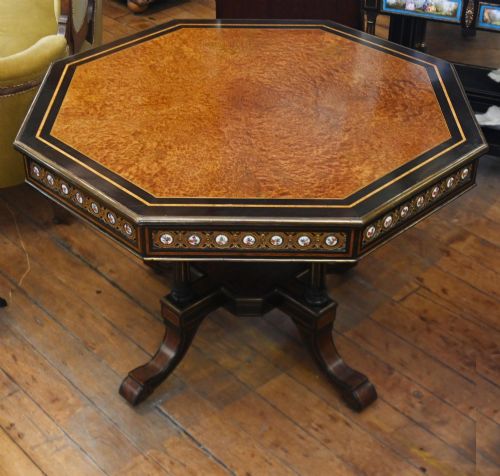
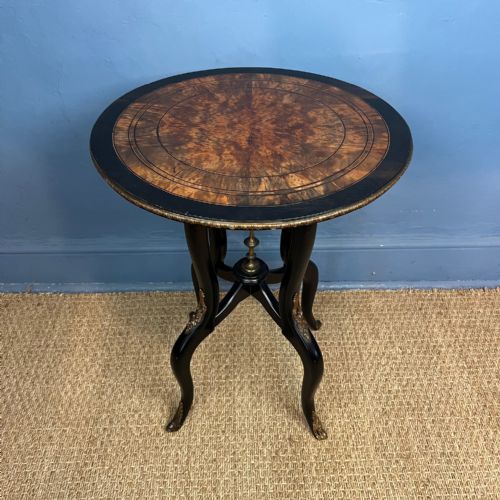
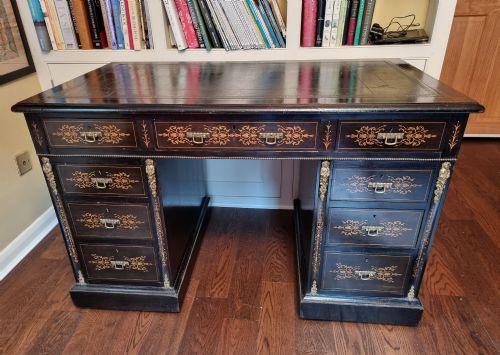
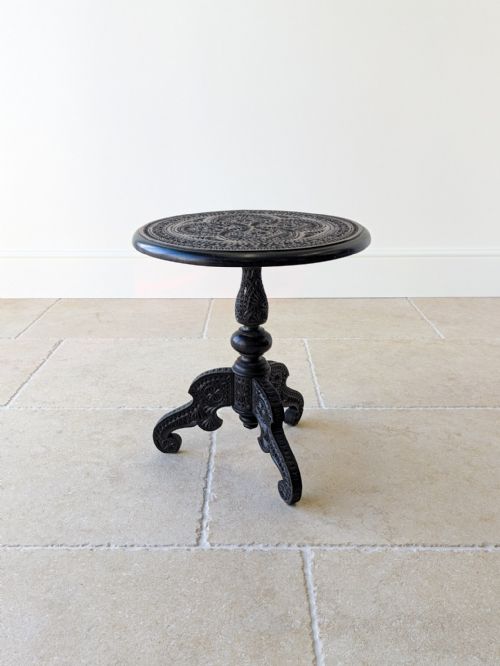
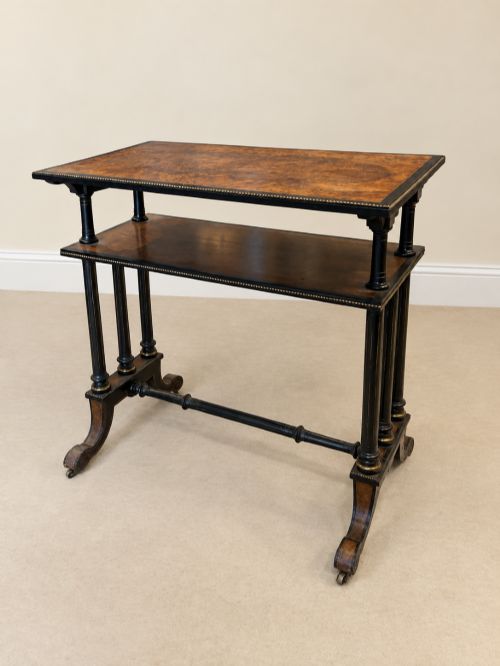
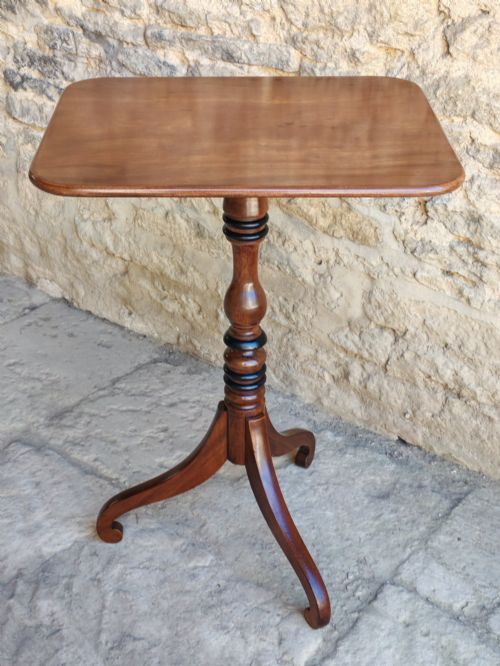
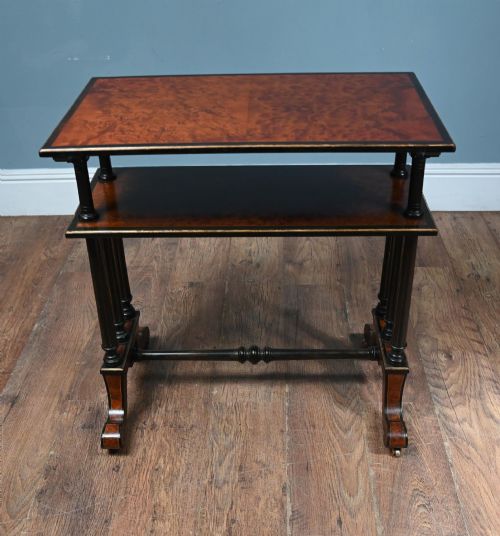
An ebonised wood table spans periods from the Regency era through the Victorian period and into the Art Deco epoch, taking forms such as occasional tables, centre tables, and side tables. These pieces utilise dark finishes to mimic expensive ebony, often incorporating contrasting materials like brass, ivory, or porcelain.
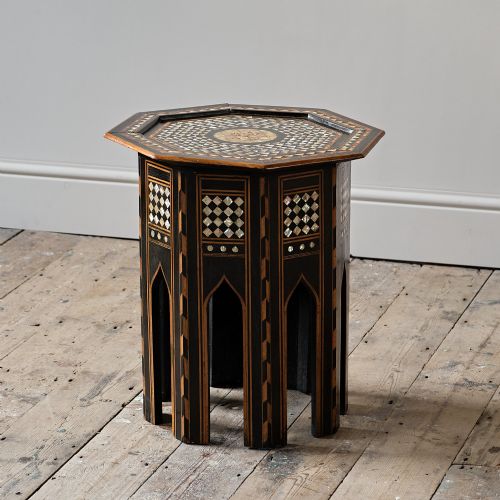
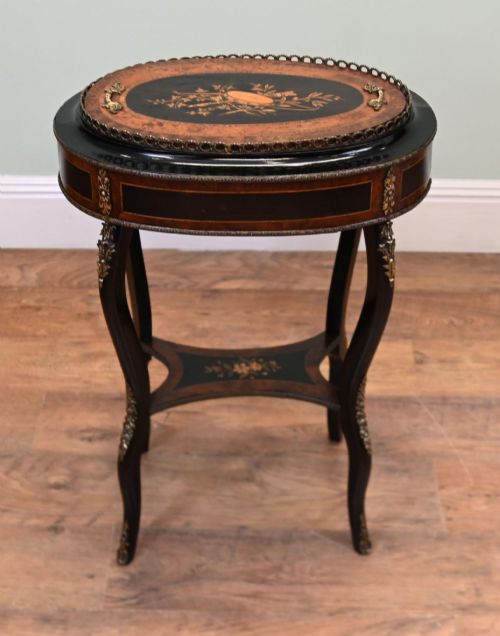
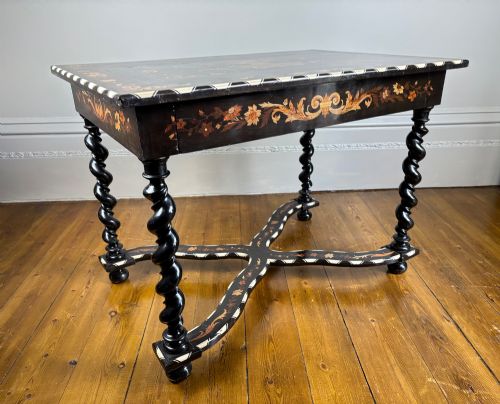
The aesthetic movement and Anglo-Japanese styles heavily influence the selection, alongside Moorish revival and Arts and Crafts examples. Buyers most frequently encounter Victorian and late nineteenth-century iterations featuring turned legs, parcel gilding, or marquetry inlay.
Materials and Construction
Makers construct these tables using secondary timbers like hardwood, oak, or beech, which are then stained, painted, or chemically treated to achieve a dense black ebonised surface. Cabinet-makers frequently combine this dark finish with contrasting lighter woods such as boxwood, satinwood, or thuyawood.
Detailing often involves parcel gilding, bone inlay, brass mounts, or ceramic plaques set into the top. Construction relies on traditional joinery techniques suited to the period, from nineteenth-century turnings to early twentieth-century assembly.
Ebonised Wood Table Retail Price Guide 2026
Typical asking prices for ebonised wood table among the pieces listed under this phrase on Sellingantiques today, from the lower quarter to the upper quarter. They describe what is for sale here now, not the wider market.
Elephant tables complete with painted wooden tusks stand ready to bring a touch of nineteenth-century menagerie charm to the parlour.
Distinctions in Quality
Quality rests in the precision of the ebonisation process and the depth of the underlying wood preparation, where superior examples retain a rich sheen rather than a flat, opaque paint layer. The choice of primary and secondary timbers dictates the structural integrity and weight of the piece.
The finesse of secondary decorative elements, such as hand-carved details, precise marquetry, and original brass or porcelain mounts, separates standard production items from distinguished workshop outputs.
Jackson and Graham·Druce and Co London·Liberty and Co·Edwards and Roberts·Marsh and Tatham
The Ebonised Wood Table Glossary
- Ebonised
- Wood treated with stain, dye, or polish to imitate the dark, heavy appearance of ebony. This finish became particularly popular during the Victorian and Aesthetic periods.
- Parcel Gilded
- Partially gilt with gold leaf or powder to highlight carved details or raised mouldings against a dark background. It creates a striking contrast on ebonised surfaces.
- Marquetry
- Decorative veneer patterns applied to furniture to form pictures or geometric designs. Artisans utilise contrasting woods, bone, or mother-of-pearl.
- Aesthetic Movement
- A late nineteenth-century design reform emphasising visual beauty over narrative subject matter. It heavily incorporated Japanese design motifs and ebonised finishes.
- Étagère
- A piece of furniture consisting of a set of open shelves for displaying small objects. These often feature slender ebonised supports.
Ebonised Wood Table: Frequently Asked Questions
How do I care for an ebonised surface?
Maintain the finish by dusting with a soft, dry cloth and avoiding direct sunlight or excessive moisture, which can degrade the dark stain.
Feed the wood periodically with a suitable wax formulated for dark antique furniture to preserve the deep lustre.
Are these tables sturdy enough for daily use?
Most occasional and centre tables are constructed for light display and everyday domestic placement, though delicate inlay requires care.
Heavier Victorian and Edwardian examples offer robust frames suited to holding lamps, books, or decorative objects.
What defines the Aesthetic Movement style?
The style emerged in the late nineteenth century, championing simplicity, asymmetry, and inspiration from Japanese art and culture.
Pieces often feature ebonised wood contrasted with gilt highlights, bamboo turnings, or geometric incised decoration.
How can I distinguish a Victorian piece?
Examine the construction methods, secondary timbers, and characteristic decorative vocabulary such as parcel gilding, porcelain plaques, or heavy turned legs.
Victorian makers frequently combined ebonised finishes with exotic veneers like thuyawood or amboyna.