
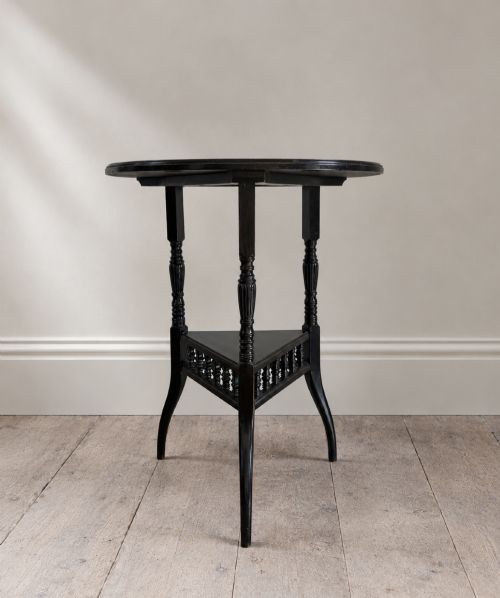
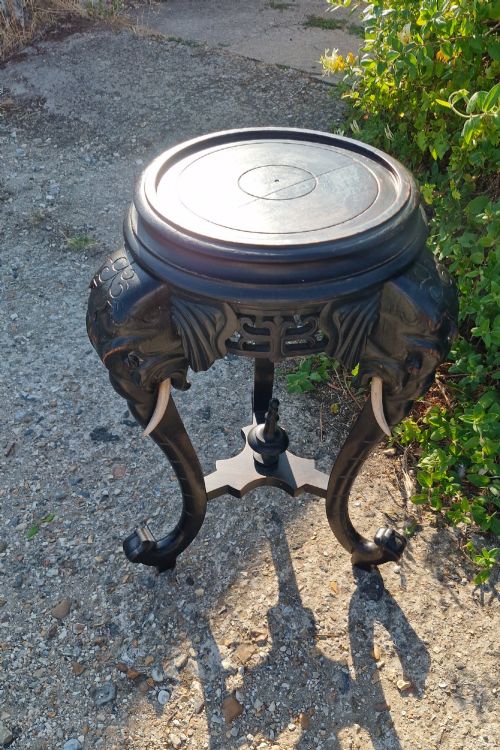
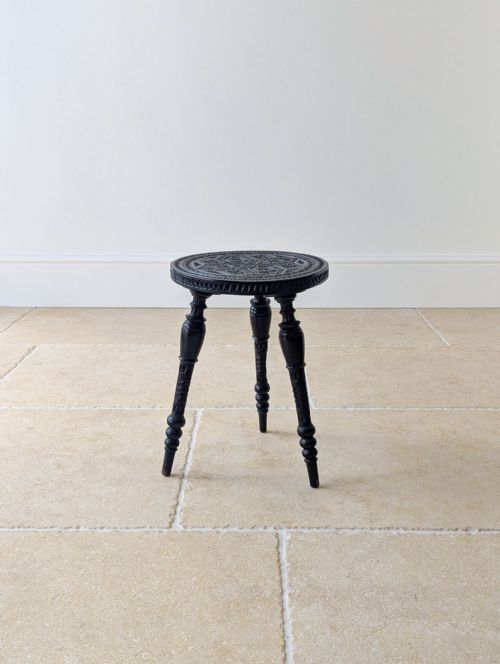
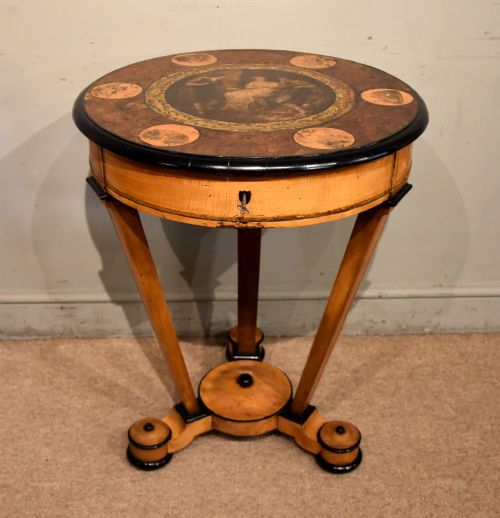
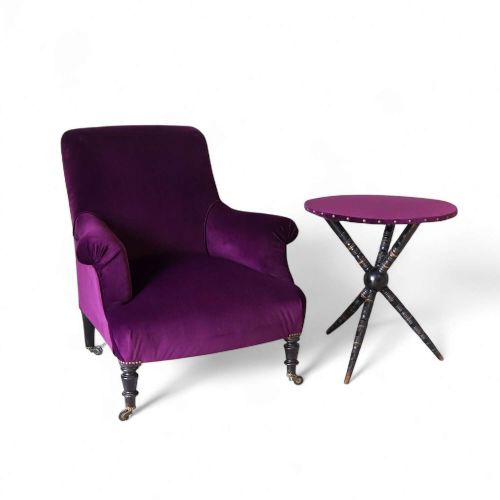
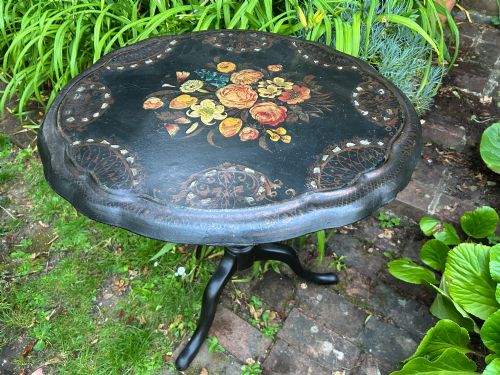
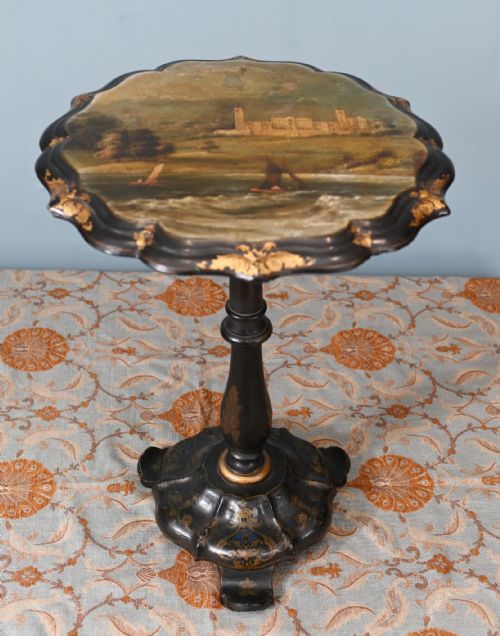
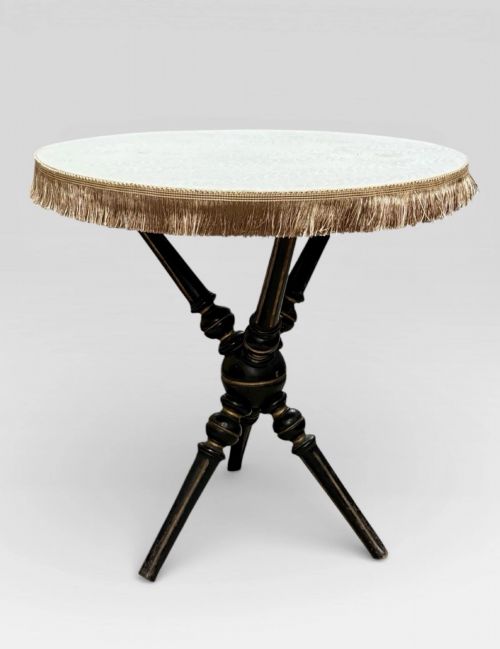
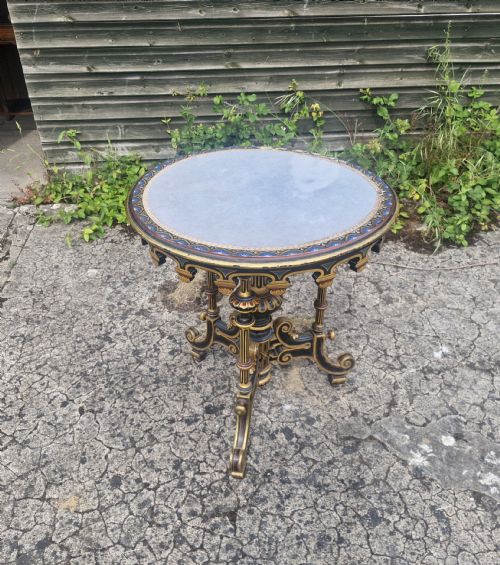
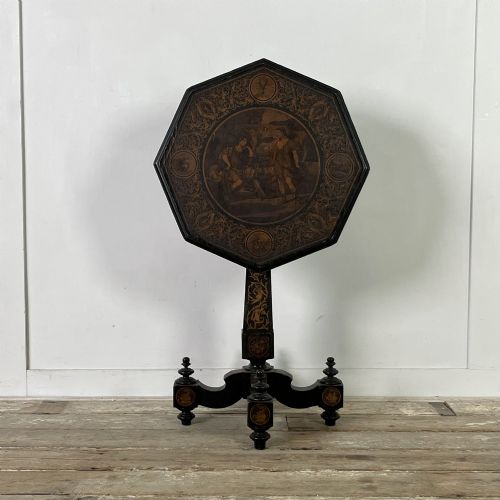


Ebonised Tripod Table
An ebonised tripod table brings dark elegance and slender support to a room, drawing the eye with its polished black finish and three-legged base.
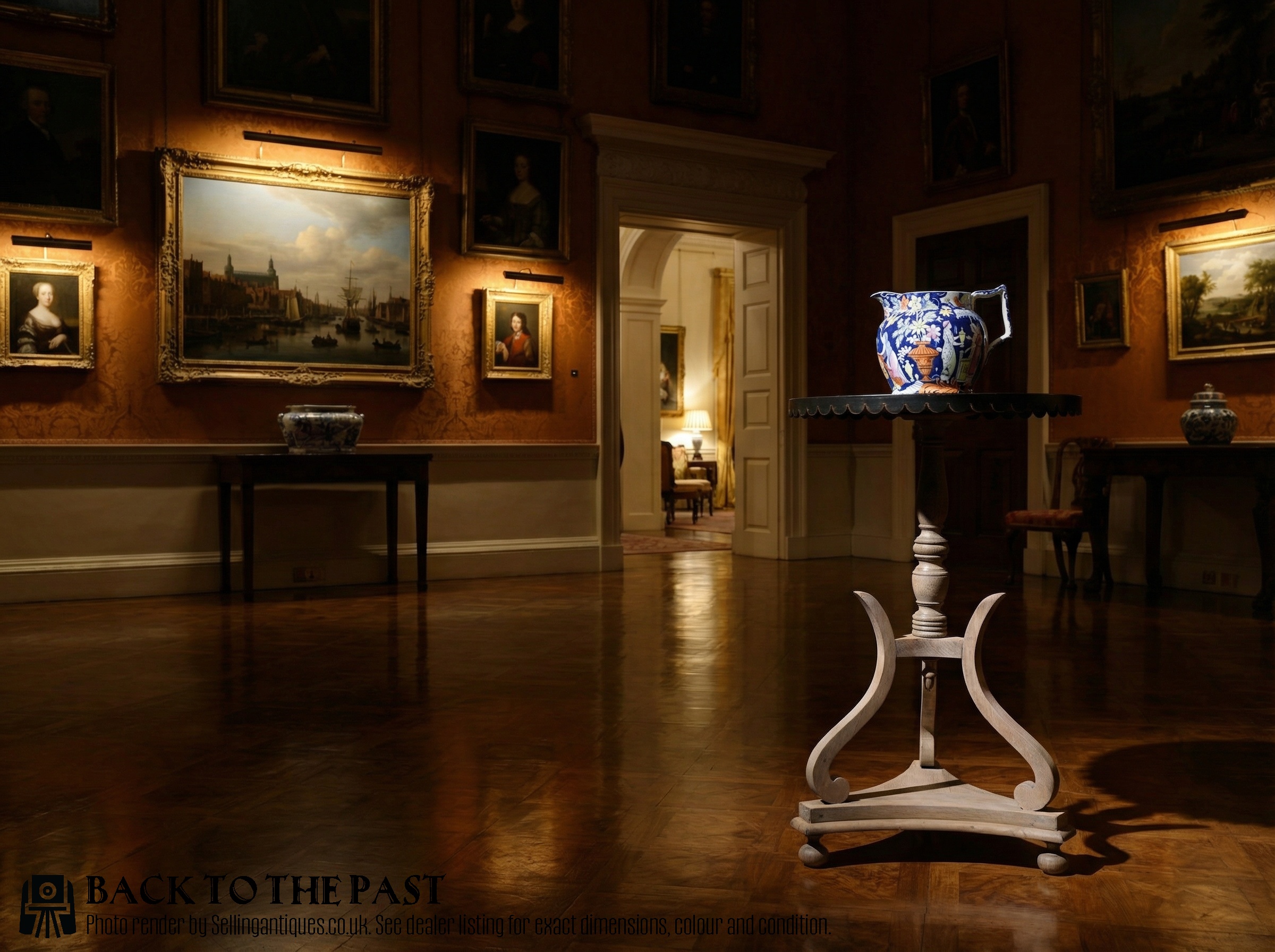
Ebonised Tripod Table
An ebonised tripod table is a compact support piece defined by a dark, simulated ebony surface raised on a three-legged base. These pieces appear frequently from the nineteenth century, spanning Victorian, Regency, and Aesthetic Movement designs.
The form encompasses various functional types, including wine tables, games tables, and occasional tables. Buyers encounter forms ranging from simple round tops to tilt-top and folding tripod designs.
Origins stretch across English workshops as well as continental European centres. Examples show diverse stylistic influences from Chinoiserie and Arts and Crafts to Napoleon III and Biedermeier.
How they were made
Cabinetmakers utilised dense timbers such as walnut, maple, and general hardwoods, applying black paint, japanning, or specialised ebonising techniques to mimic solid ebony. Parcel-gilt highlights, hand painting, and penwork frequently decorated the dark surfaces.
Tripod bases required precise joinery to secure the three legs firmly to a central pillar, often incorporating tilt-top mechanisms with brass catches or hinges. Tops range from plain wood to marble inserts, papier mâché, and intricate marquetry.
Ebonised Tripod Table Retail Price Guide 2026
Typical asking prices for ebonised tripod table among the pieces listed under this phrase on Sellingantiques today, from the lower quarter to the upper quarter. They describe what is for sale here now, not the wider market.
The archive records folding papier mâché tops and book-reading stands among the ebonised tripod forms.
What varies in quality
The refinement of the ebonised finish and the crispness of any parcel-gilt or hand-painted detail set examples apart. Superior pieces exhibit smooth, deep black surfaces without crude overpainting.
Structural stability in the tripartite base determines daily utility, as slender legs and central pillars demand tight, honest joinery. The choice of secondary materials, such as genuine marble tops or finely turned wooden tusks, elevates the status of the piece.
George Merrifield·EW Godwin
The Ebonised Tripod Table Glossary
- Ebonised
- Wood treated with stain, paint, or chemical processes to imitate costly solid ebony. This dark finish gained immense popularity during the Victorian and Aesthetic periods.
- Tripod table
- A small standalone table supported by three legs radiating from a central pillar. This design prevents rocking on uneven floors.
- Gypsy table
- A lightweight occasional table with a fabric-draped or decorated top resting on slender wooden legs. These pieces became fashionable during the late nineteenth century.
- Penwork
- Decoration created by drawing intricate designs in black ink upon a light wooden ground before sealing. Regency examples often display elaborate geometric or pictorial motifs.
- Tilt-top table
- A table featuring a hinged mechanism that allows the surface to rotate and stand vertically when not in use. This clever engineering saved valuable floor space in period rooms.
Ebonised Tripod Table: Frequently Asked Questions
How were these tables used originally?
These versatile pieces functioned primarily as occasional tables for serving wine, playing games, or holding reading material. Tilt-top variants allowed households to store the tables flat against walls when floor space was required.
Drawing rooms and parlours utilised them beside armchairs for temporary placement of small items. Their portable nature meant servants moved them about the house as daily needs shifted.
How do I style an ebonised tripod table today?
An ebonised tripod table works effectively beside a sofa or armchair as a dark focal point. The slender footprint suits compact corners where heavier furniture would overwhelm the space.
Pair the dark finish with contrasting ceramics, lamps, or books to highlight the silhouette. The neutral black tone allows these tables to complement both traditional period rooms and modern interiors.
How do I tell Victorian from Regency examples?
Regency ebonised tripod tables often display classical restraint, featuring precise penwork, brass inlay, and clean architectural lines. Victorian and later Aesthetic Movement pieces tend toward bolder ornamentation, including japanning, parcel-gilt, and chip-carving.
Examining the construction methods and secondary timbers provides further clues to dating. Earlier pieces rely on hand-turned pillars and traditional joinery, while later nineteenth-century versions embrace eclectic global influences like Chinoiserie.