





Pietra Dura Table
A pietra dura table brings hardstone inlay into domestic rooms, offering surfaces composed of polished marble and mineral specimens.

Pietra Dura Table
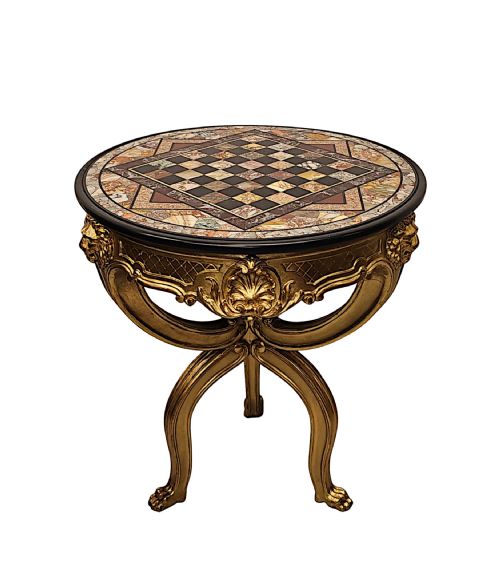
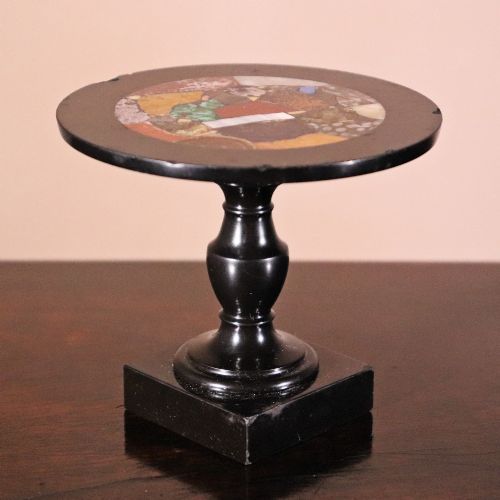
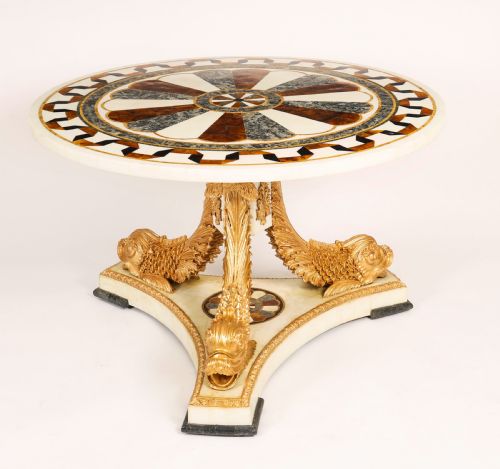
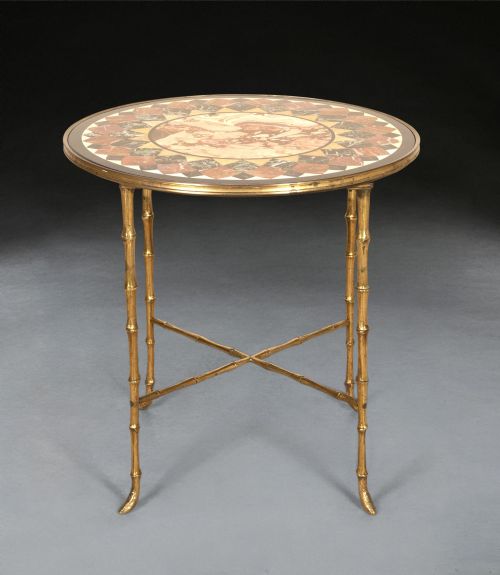
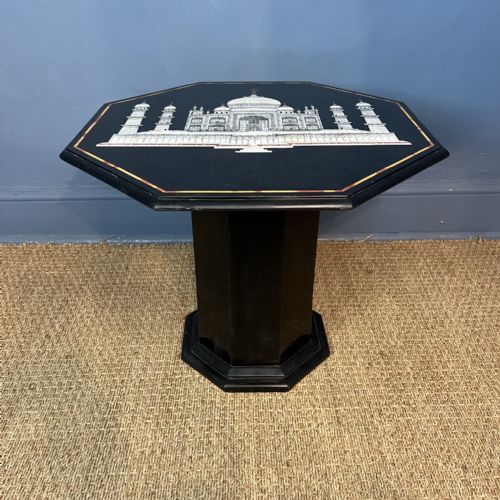
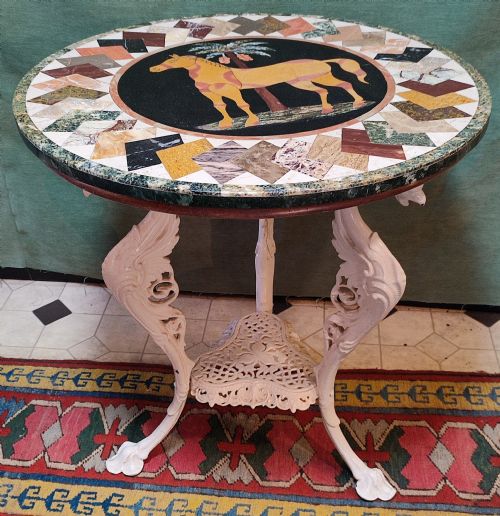
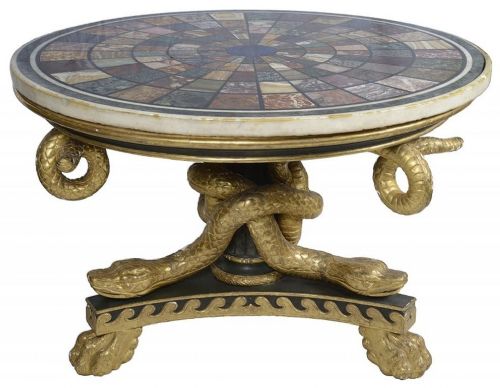
A pietra dura table displays intricate geometric or pictorial inlays composed of coloured stones and mineral specimens set directly into a solid stone or wooden surface. These pieces range from occasional and coffee tables to large centre formats supported by pedestals or carved legs.
Most examples found in commerce date from the nineteenth century, reflecting periods such as the Victorian era, the Regency period, and Grand Tour influences. Italian workshops produced many of the pictorial mosaic tops, while English makers adapted specimen marbles into indigenous timber frames.
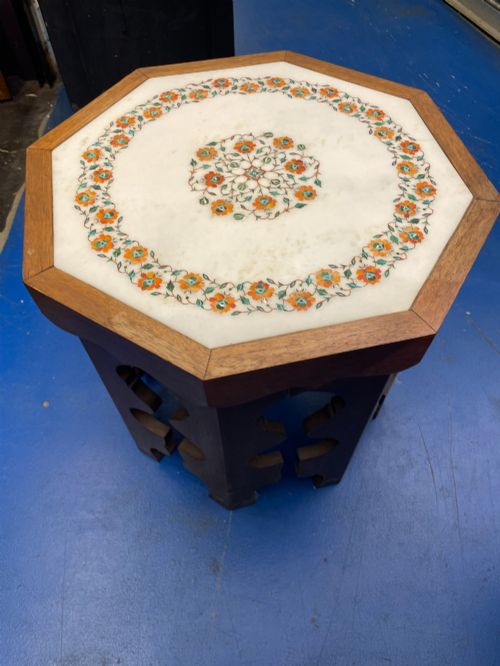
The format serves multiple domestic functions, appearing as compact side tables, games tables, or grand centre tables placed in reception rooms. Buyers encounter variations spanning circular occasional tables to octagonal and rectangular shapes.
How they were made
Craftsmen shaped hardstones such as jasper, chalcedony, lapis lazuli, and various marbles into precise geometric or pictorial components before recessing them tightly into a marble or slate foundation. The mosaic pieces fit together with microscopic joints, then underwent grinding and polishing to achieve a continuous, mirror-like plane.
The decorative tops rested upon diverse structural timbers and metals, including mahogany, rosewood, ebonised wood, walnut, brass, and cast iron. Cabinetmakers constructed robust pedestals and frames to support the considerable weight of the stone surfaces.
Pietra Dura Table Retail Price Guide 2026
Typical asking prices for pietra dura table among the pieces listed under this phrase on Sellingantiques today, from the lower quarter to the upper quarter. They describe what is for sale here now, not the wider market.
Nineteenth-century travellers frequently packed entire Italian marble table tops into horse-drawn carriages to survive the bumpy journey home.
What varies in quality
The integration between the mosaic top and the supporting woodwork dictates overall execution. Master workshops achieved harmonious proportions where the carved or turned timber base complements the weight and colour palette of the stone slab above.
James Shoolbred·Woodley family
The Pietra Dura Table Glossary
- Pietra dura
- Hardstone inlay technique using cut and fitted polished coloured stones to create pictorial or geometric designs. This Italian term translates literally to hard stone.
- Specimen marble
- A collection of diverse marble samples gathered from different quarries and arranged into a geometric composition. These tops often map geological variety across a single surface.
- Scagliola
- A composite material made from selenite, glue, and pigments, painted and plastered to imitate inlaid marble. Artisans utilised this technique to achieve the appearance of pietra dura at a different scale.
- Tessera
- An individual small block of stone or marble used in the creation of a mosaic or inlaid surface. Artisans shaped each piece by hand to fit surrounding stones.
- Grand Tour
- A cultural journey undertaken by nineteenth-century travellers across Europe, returning with Italian mosaic tables and decorative objects as souvenirs.
Pietra Dura Table: Frequently Asked Questions
How do I clean a pietra dura table?
Dust the surface regularly with a soft, dry cloth to prevent abrasive particles from scratching the polished stone mosaic. Avoid commercial chemical cleaners, oils, or acidic substances that can etch marble or dissolve historic adhesives.
For stubborn marks, use a damp cloth with mild neutral soap, drying the area immediately afterwards. Professional conservation is advised for historic pieces showing looseness in the stone inlay.
Where should I place a pietra dura table?
Position the table away from direct sunlight and heat sources, which can dry out timber bases and affect historic adhesives used in stone inlays. Centre tables suit prominent positions in reception rooms, while smaller occasional formats fit alongside seating.
Ensure the floor beneath is level to support the weight of the stone top without straining the underlying wooden or cast iron frame.
How do I date a pietra dura table?
Examine the construction of the wooden base, timber species such as rosewood or mahogany, and fixing methods to determine the period of manufacture. Nineteenth-century examples often display specific regional characteristics, such as Italian Florentine workshops or English Regency cabinet-making.
The geological composition of the marble and the style of the stone cutting also provide strong indicators of the era of production.
Are pietra dura tables fragile?
The stone tops are exceptionally heavy and durable, yet the individual mineral inlays can be vulnerable to sharp impacts or deep scratching. Care must be taken when placing heavy objects onto the surface to prevent chipping the delicate mosaic edges.
The structural timber frames require standard environmental controls to prevent wood shrinkage and joint loosening over time.