





Geometric Marble Inlay Table
A geometric marble inlay table brings rich Italian stone work and classical proportions into a room.
Geometric Marble Inlay Table
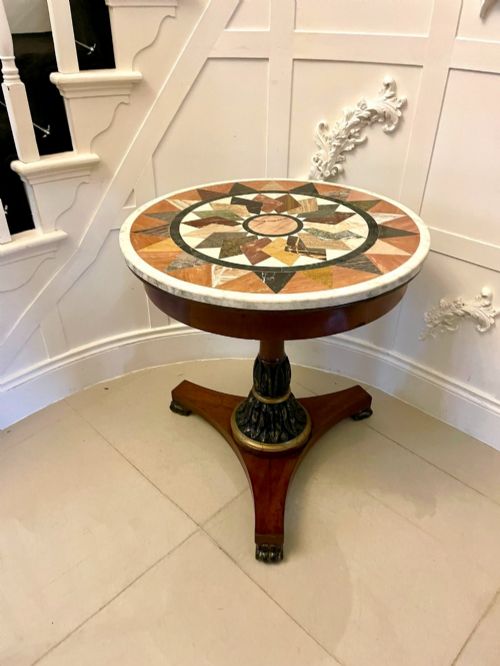
A geometric marble inlay table combines precision stone work with functional furniture forms, often taking the shape of occasional, centre, or coffee tables. These pieces emerge predominantly from nineteenth-century workshops, drawing inspiration from Grand Tour and Neoclassical aesthetics.
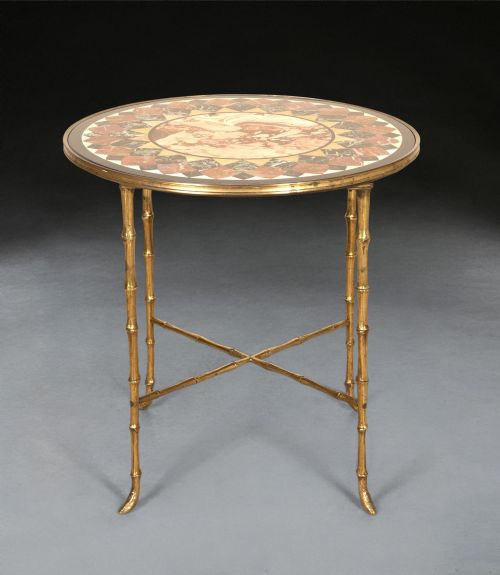
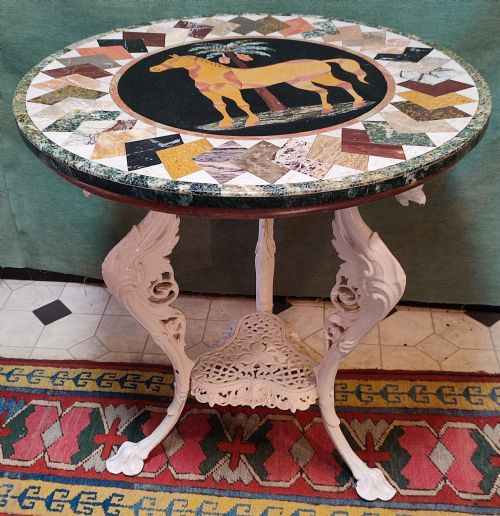
Buyers frequently encounter circular specimen marble tops paired with timber bases or metal supports. The selection ranges from compact lamp tables to grand console tables finished with hand-painted details or parcel gilt accents.
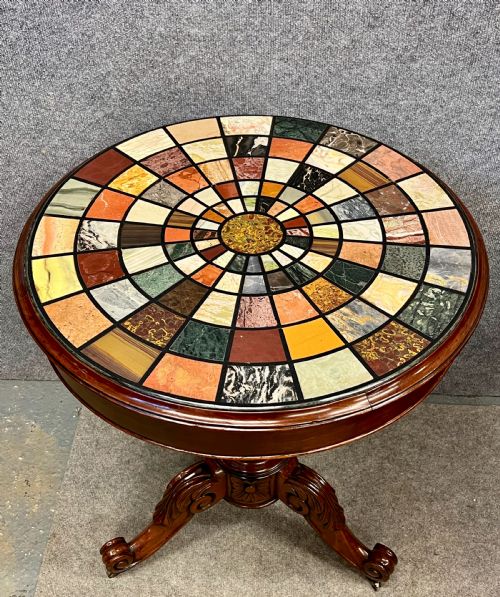
Origins span distinct eras, including Regency, Victorian, and Edwardian periods, alongside mid-century Italian creations. Each specimen top demonstrates meticulous arrangement of coloured mineral fragments to form intricate patterns.
How they were made
Craftsmen built these tables using durable hardwoods such as mahogany, rosewood, and satin birch to support heavy stone surfaces. Cast iron and gilt metal also appear as structural bases, providing robust foundations for the dense marble tops.
The stone surfaces utilise specimen marble, where numerous small pieces of coloured marble are cut and fitted tightly together in geometric compositions. Artisans secured these stone elements into a solid base, finishing the borders with gesso or parcel gilt highlights.
Geometric Marble Inlay Table Retail Price Guide 2026
Typical asking prices for geometric marble inlay table among the pieces listed under this phrase on Sellingantiques today, from the lower quarter to the upper quarter. They describe what is for sale here now, not the wider market.
Current listings feature occasional, side, centre, console, and coffee tables alongside cabinets, spanning the Regency, Victorian, Edwardian, and mid-century Italian periods.
What varies in quality
Quality rests in the precision of the stone cutting and the tightness of the joints within the geometric pattern. Superior examples display seamless alignment between contrasting marble fragments, creating a smooth, unified surface.
The choice of secondary materials and the refinement of the base construction separate standard production from finer pieces. Tables that pair richly figured mahogany or satin Birch with flawless stone work represent the higher tier of craftsmanship.
The Geometric Marble Inlay Table Glossary
- Specimen marble
- A decorative surface composed of many small geometric pieces of different coloured marbles arranged in patterns. This technique showcases the varied natural hues of mineral stones.
- Grand Tour
- A cultural journey undertaken by wealthy Europeans in the eighteenth and nineteenth centuries to collect art and antiquities. Tables associated with this movement often feature souvenir stone work from Italy.
- Parcel gilt
- Wood or metal partially decorated with gold leaf or gold paint. This technique highlights carved details on the table base.
- Gesso
- A plaster-like mixture applied to wood surfaces as a base for painting or gilding. It provides a smooth ground for decorative finishes.
- Occasional table
- A small, portable table designed for specific, intermittent uses within a room. These pieces often serve as lamp or display stands.
Geometric Marble Inlay Table: Frequently Asked Questions
Where should I place a geometric marble inlay table?
These tables function well as central display pieces in a drawing room or as striking occasional tables beside seating. Their decorative stone tops benefit from placement near natural light sources that reveal the colours of the marble.
Because the surfaces are stone, avoid positioning them in areas prone to dampness or extreme temperature shifts. Pairing them with understated seating allows the geometric patterns to remain the visual focus.
How can I tell a nineteenth-century table from a later copy?
Examine the underside of the top and the construction methods used on the wooden base. Nineteenth-century pieces typically exhibit hand-cut joinery, aged patina on the timber, and traditional hand-polishing techniques on the stone.
Later reproductions often display modern machine tool marks and standardised fixings. Checking the density and variety of the marble fragments also offers clues to the era of manufacture.
What is the difference between a centre table and a console table?
A centre table stands freely in the middle of a room, finished with detail on all sides so it can be viewed from any angle. These pieces often feature circular specimen marble tops supported by pedestals or multi-legged frames.
A console table is designed to stand flat against a wall, frequently secured with brackets or legs at the front. They generally accommodate rectangular or demi-lune tops rather than freestanding circular designs.