





Black Marble Occasional Table
A black marble occasional table brings striking depth and a cool, solid surface to a room, drawing the eye with its dark, polished stone top.
Black Marble Occasional Table
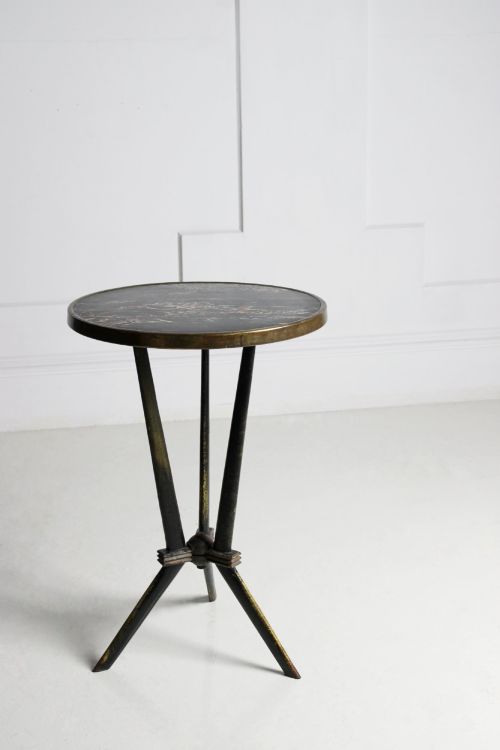
A black marble occasional table combines a dark stone top with a timber or metal base, serving smaller functional roles around a room as a side, lamp, or coffee table. The selection spans the nineteenth century through the art deco period, offering both English country house pieces and continental European forms.
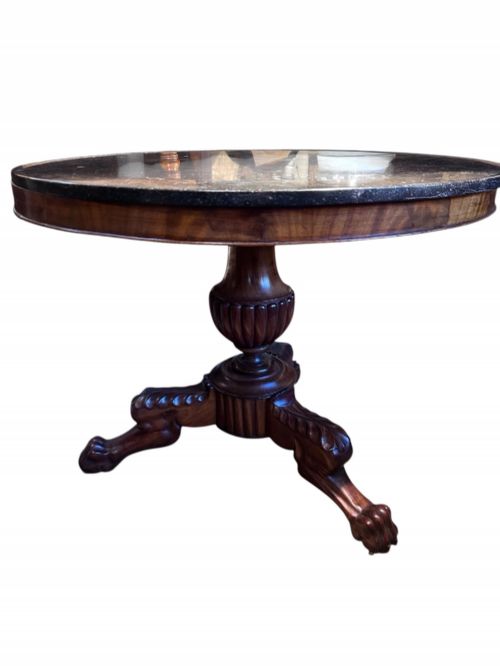
You will frequently encounter French gueridon tables alongside Victorian and Georgian revival examples, each resting on slender or pedestal supports. These forms range from simple side tables to more ornate inlaid and gilt designs intended for display.
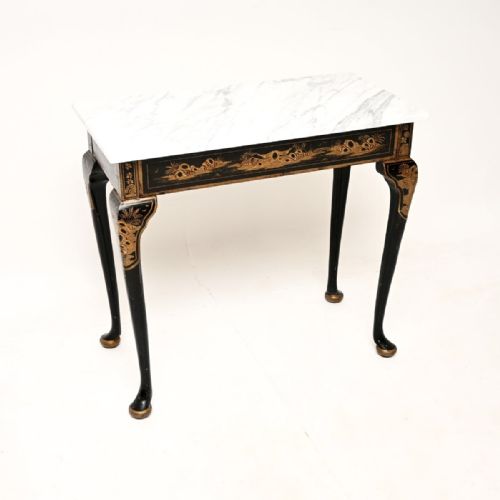
The materials paired with the black marble surface include mahogany, burr elm, ebonised wood, and lacquered finishes. This variety allows the tables to fit easily into both traditional and twentieth-century interiors.
How they were made
The makers constructed the structural frames from timbers such as mahogany, walnut, and ebonised wood, sometimes adding brass mounts, gilt, or parcel silvering for decorative contrast. These wooden bases support heavy stone tops that demand solid joinery to remain stable.
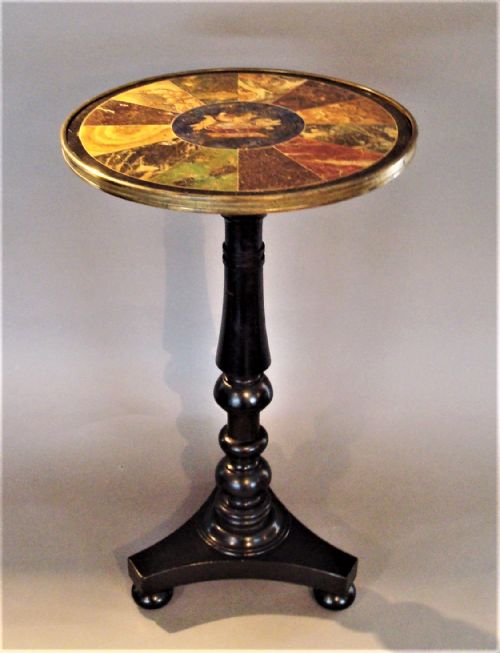
The stone work involves cutting and polishing dense marble, occasionally featuring pietra dura work or specimen marble inlays embedded directly into the dark surface. French and English cabinetmakers utilised traditional turning, carving, and lacquer techniques to shape the legs and aprons.
Black Marble Occasional Table Retail Price Guide 2026
Typical asking prices for black marble occasional table among the pieces listed under this phrase on Sellingantiques today, from the lower quarter to the upper quarter. They describe what is for sale here now, not the wider market.
One Chinese Qing Dynasty table arrived with ebonised hardwood framing an inset marble top, bridging distant craft traditions.
What varies in quality
Quality rests upon the selection and preparation of the materials, distinguishing simple turned softwood frames from densely figured burr elm, solid mahogany, or finely carved ebonised hardwood. The finesse of the marble top also dictates the tier, separating plain polished stone from intricate pietra dura or multi-hued specimen inlays.
The harmony of proportion between the heavy stone top and the supporting base defines the better pieces. Finer examples display crisp carving, precise brass mounts, and thoughtful integration of styles like French Empire or Louis Philippe.
The Black Marble Occasional Table Glossary
- Gueridon
- A small French table, typically round and supported by a central pillar or slender legs. These tables often feature marble tops designed for display or serving.
- Pietra dura
- An artistic technique using cut and fitted polished coloured stones to create geometric or pictorial designs. This work frequently appears inlaid into the dark marble tops of finer tables.
- Specimen marble
- A tabletop composed of various types of marble assembled in geometric patterns or panels. This technique showcases different geological colours within a single surface.
- Ebonised wood
- Timber treated to imitate ebony, giving it a deep black finish that matches or complements a dark marble top. It appears frequently on nineteenth-century and revival pieces.
- Ormolu
- Gilt bronze mounts applied to the wooden frames of furniture. This decorative technique adds metallic warmth and contrast to the dark stone.
Black Marble Occasional Table: Frequently Asked Questions
What is a gueridon table?
A gueridon is a small French round table supported by a central column or pillar, originating in the seventeenth century and remaining popular through the nineteenth century.
These pieces typically feature stone or timber tops and function easily as compact side or lamp tables in modern rooms.
How do I clean a black marble top?
Black marble requires gentle cleaning with warm water and a soft cloth, avoiding acidic substances that can etch the polished stone surface.
Regular dusting and careful placement away from moisture will help preserve the deep lustre of the material.
Are these tables sturdy enough for daily use?
Most occasional and side tables are built with solid timber frames and heavy stone tops that provide natural stability through their own weight.
Care should be taken with taller pedestal forms, ensuring they sit on even flooring to prevent tipping.
What is pietra dura?
Pietra dura involves inlaying precisely cut pieces of coloured stone into a background slab to form decorative motifs or scenes.
This painstaking craft creates a smooth, durable surface prized on nineteenth-century display tables.
How do I tell an art deco table apart from a Victorian one?
Art deco pieces from the 1930s lean towards streamlined geometric silhouettes and minimal ornament, reflecting modernism.
Victorian and revival tables tend to display heavier carving, turned supports, and more complex historical references like French Empire or Louis Philippe.