


Italian Inlaid Marble Top
An italian inlaid marble top brings mineral colour and precise stonework into a room through tables and chests.
Italian Inlaid Marble Top
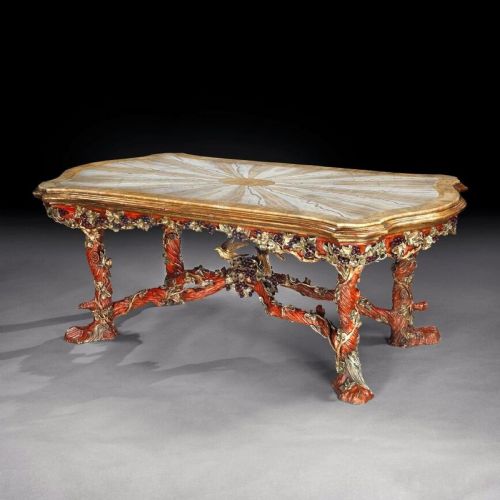
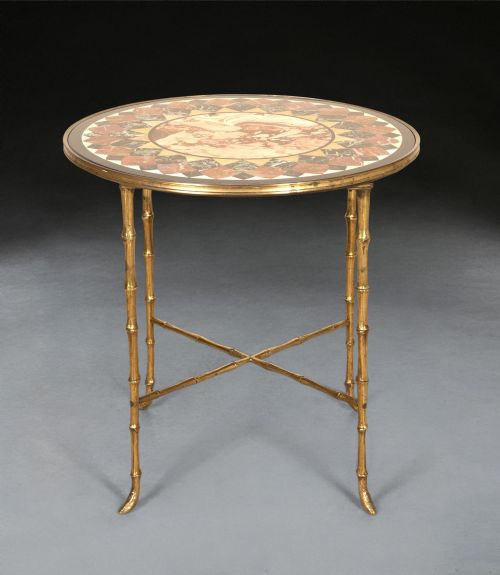
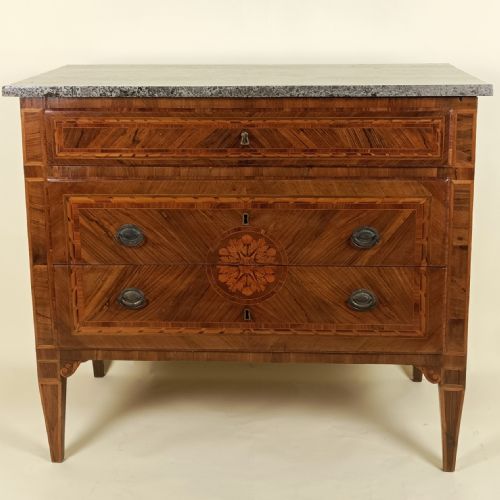
An italian inlaid marble top denotes a surface composed of fitted hardstones, specimen marbles, or scagliola, mounted to walnut, mahogany, oak, or giltwood frames. You will encounter centre tables, occasional tables, side tables, and chests of drawers most frequently on this page.
The objects span the nineteenth century, including Victorian, William IV, and Grand Tour periods, alongside Italian Neoclassical and Rococo Revival styles. Occasional tables and centre tables dominate the forms, often resting on carved or parcel gilt supports.
Materials and Construction
Stonework combines marble, specimen marble, hardstone, and scagliola, cut and fitted tightly into geometric or pictorial patterns. Pietra dura techniques set polished slices of coloured stone into a solid marble or slate ground.
Support furniture utilises walnut, mahogany, kingwood, and oak, shaped into commodes, chests of drawers, and console tables. Gilding, brass mounts, and hand-painted details finish the wooden bases that carry the heavy stone tops.
Some nineteenth-century travellers carried miniature marble table tops home as paperweights when full-sized furniture proved too heavy for the carriage.
Assessing Quality
Quality rests upon the precision of the stone joints and the variety of mineral specimens utilised in the mosaic or inlay. Tighter seams between individual marble and hardstone pieces signal superior craftsmanship in the workshop.
The secondary wood and the carving of the table base or chest frame reflect the overall ambition of the piece. Solid walnut or mahogany structures with detailed carving support the heavy marble slabs far better than lesser timbers.
Amleto Bertoni
The Italian Inlaid Marble Top Glossary
- Pietra dura
- An inlay technique using cut and fitted polished coloured stones to create pictorial or geometric designs. This laborious method defines the finest Grand Tour tables.
- Specimen marble
- A collection of diverse natural marbles gathered from various quarries and assembled into a single decorative surface. Each marble type brings a distinct geological colour and grain.
- Scagliola
- A composite material made from pigmented selenite, glue, and plasters, applied to imitate true inlaid marble. Artisans polished the surface to achieve the appearance of genuine hardstone.
- Grand Tour
- A cultural journey undertaken by wealthy Europeans in the nineteenth century, returning home with portable antiquities and inlaid stone tables. These pieces reflect classical Italian motifs.
- Commode
- A low decorative chest of drawers or cabinet, often fitted with a marble or hardstone top. Italian examples frequently feature bombe silhouettes and rich marquetry.
Italian Inlaid Marble Top: Frequently Asked Questions
What is an italian inlaid marble top?
It is a decorative stone surface composed of fitted marbles, hardstones, or scagliola, mounted onto antique wooden furniture.
These tops appear on centre tables, occasional tables, and chests of drawers from nineteenth-century Italy and Victorian Britain.
How do I care for marble and stone tops?
Keep the surface clean using a soft, dry cloth and avoid harsh chemical cleaners that can etch the polished stone.
Support the heavy weight properly and protect the stone from acidic spills which damage the natural minerals.
Where were these pieces made?
Workshops across Italy produced these tables and cabinets, with Florence and Lombardy noted for pietra dura and marquetry.
Many items were acquired by travellers on the Grand Tour and brought back to British homes.
How do I tell different periods apart?
Early nineteenth-century pieces often display Neoclassical restraint or Grand Tour pieties, while Victorian examples embrace ornate revival styles.
Wood selection and base carving styles help date the support structure beneath the stone top.