
Antique Ebonised Table
An antique ebonised table brings the deep, dark finish of ebony to period rooms through Victorian and Aesthetic designs.

What the pieces are
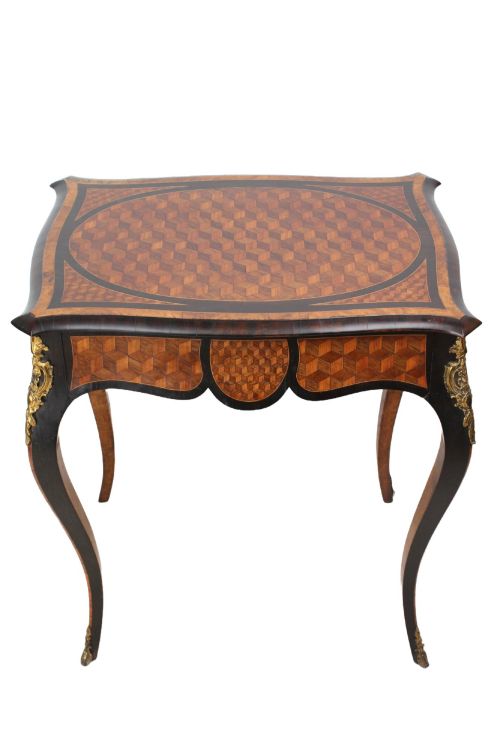
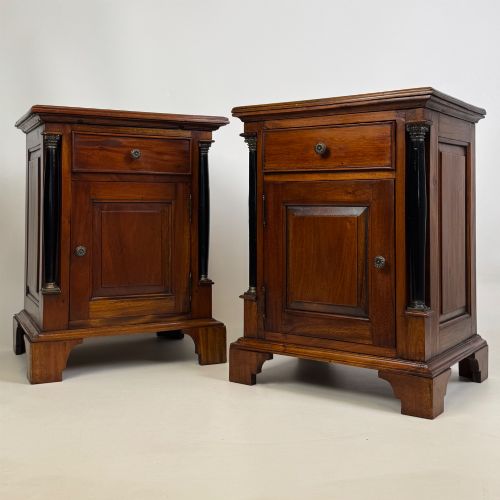
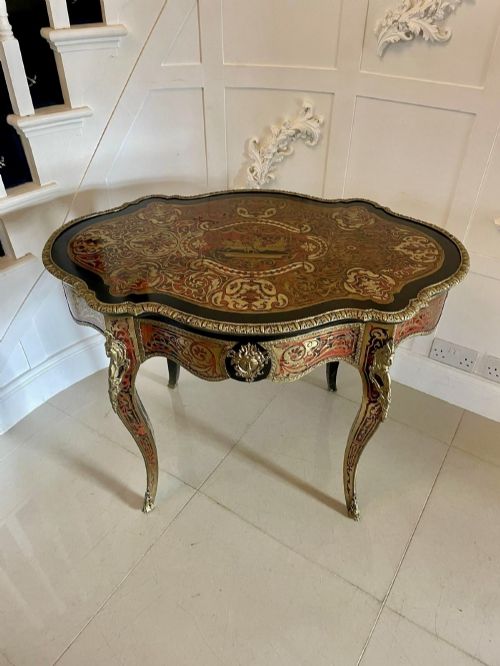
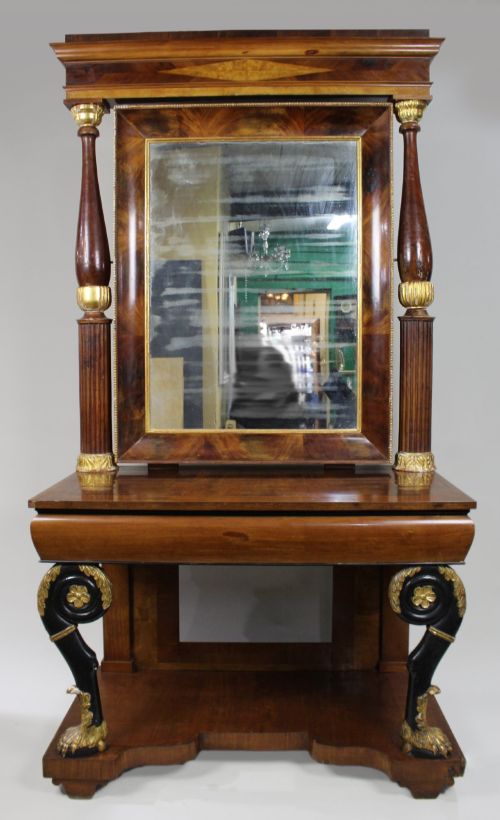
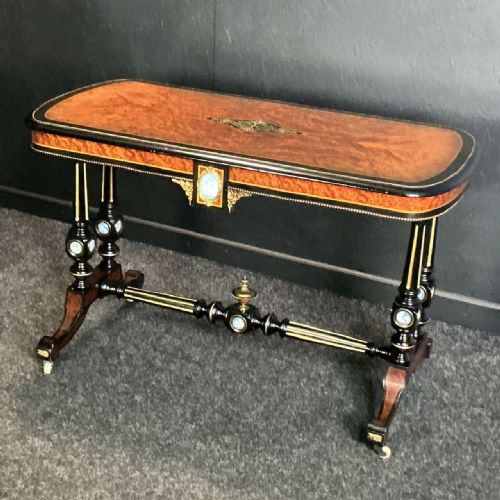
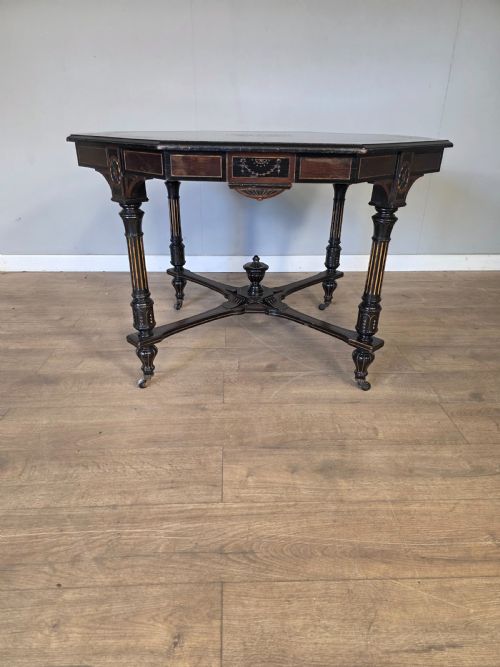
An antique ebonised table covers a range of Victorian and early twentieth century forms designed for drawing rooms and parlours. Side tables, centre tables, and occasional tables dominate the selection, often bearing the distinct stamp of the Aesthetic Movement.
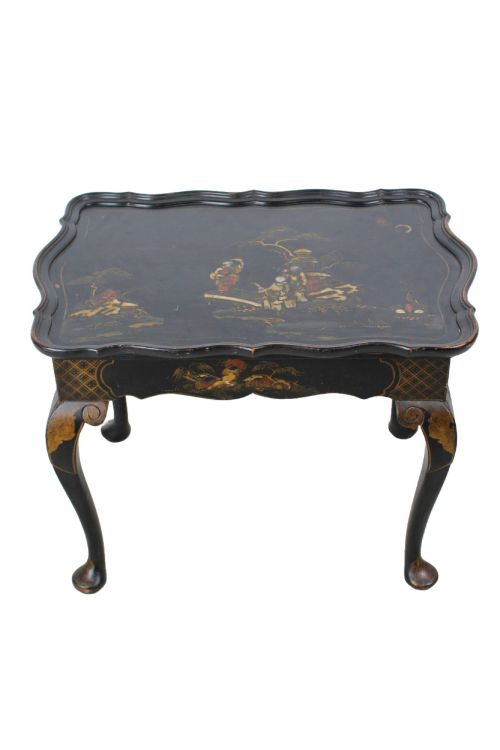
Makers utilised ebonised timber to mimic expensive ebony, creating striking dark surfaces that served as a backdrop for gilt details or inlay. These forms span simple tripod wine tables to larger rectangular and kidney shaped writing or card tables.
How they were made
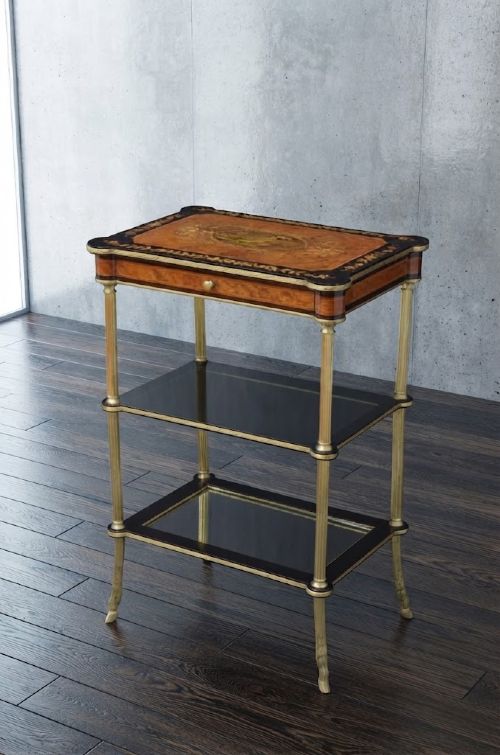
Craftsmen applied dark stain or lacquer to cheaper hardwoods like beech, mahogany, and oak to achieve the dense black surface associated with ebony. Surfaces frequently integrate contrasting materials, incorporating brass mounts, mother of pearl inlay, and amboyna veneers.
Details such as velvet tops with textile fringe and hand painted Chinoiserie decoration appear on specific Victorian and Oriental influenced examples. Construction methods rely on traditional joinery suited to nineteenth century cabinet making workshops.
Retail Price Guide 2026
Typical UK retail prices for ebonised table, calculated from the Sellingantiques database of over a million retail prices indexed since 2003. This retail price guide relies exclusively on Sellingantiques data; no external sources or auction records are used, so the figures do not describe the wider market.
Listings feature Victorian and early twentieth century pieces incorporating brass, velvet, and gilt alongside ebonised wood.
What varies in quality
The refinement of the ebonised finish and the crispness of applied gilt or brass details dictate the standing of a piece. Superior examples display careful timber selection beneath the dark finish, whereas simpler items utilise plain woods without secondary decorative veneers.
The integration of secondary elements, such as amboyna banding, hand painted motifs, or intricate brass inlay, separates standard production furniture from workshop pieces attributed to prominent cabinet makers.
Gillows·Gillow and Co·Holland and Sons
The Antique Ebonised Table Glossary
- Ebonised
- Wood stained or painted black to imitate true ebony. This finish gained popularity during the Victorian era for furniture mimicking luxury Asian imports.
- Aesthetic Movement
- A late nineteenth century design style emphasising beauty over narrative. Pieces from this movement often feature ebonised surfaces with gilt highlights.
- Amboyna
- A highly figured exotic wood used for contrasting panels. Cabinet makers paired it with ebonised timber to create visual depth.
- Gypsy Table
- A small occasional table with three legs and a fabric draped top. They became fashionable in late Victorian parlours.
Frequently Asked Questions
What is an ebonised table?
An ebonised table is a piece of wooden furniture treated with a dark finish to replicate solid ebony. These pieces date predominantly from the nineteenth century.
Cabinet makers used this technique on alternative timbers to achieve a sophisticated, uniform black surface popular in period interiors.
How do I clean an ebonised surface?
Dust the surface regularly with a soft, dry cloth to prevent dirt accumulation. Avoid harsh chemical cleaners that might strip the dark finish.
Apply a minimal amount of appropriate furniture wax occasionally to maintain the sheen of the ebonised timber.
Where were these tables used?
These tables served primarily as occasional, side, or centre furniture in Victorian drawing rooms and parlours. They held decorative items, lamps, or writing materials.
Smaller formats like wine tables and gypsy tables allowed for flexible placement around residential living spaces.
How do I identify Aesthetic Movement pieces?
Aesthetic Movement pieces typically feature ebonised wood accented with gilt lines, brass elements, or Japanese inspired motifs. They prioritize artistic design over heavy historical revivalism.
Construction dates usually fall between the eighteen seventies and eighteen eighties.