

Antique Kidney Table
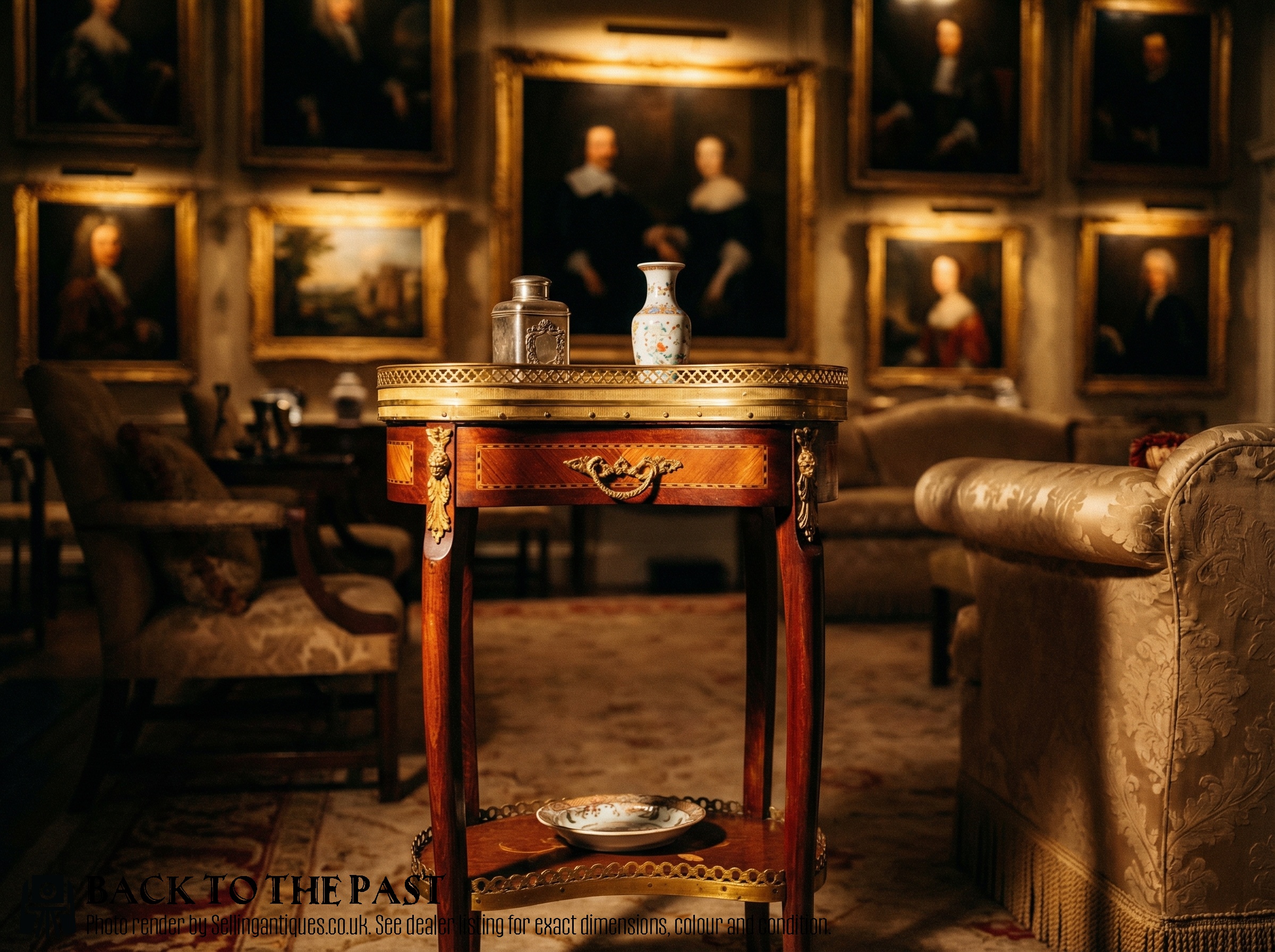
When you search for an antique kidney table, you enter a world of graceful concave curves designed to tuck comfortably against the body.
Antique Kidney Table
An antique kidney table provides a distinctive, indented outline that historically served practical functions for writing, dressing, or serving in period interiors.
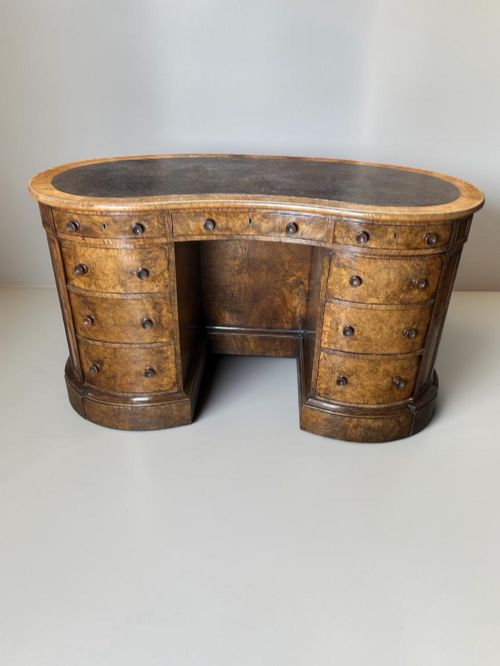
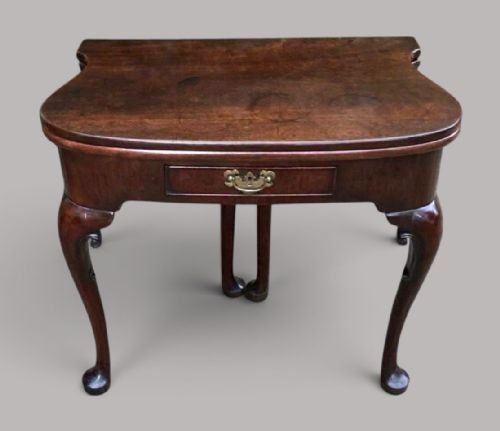
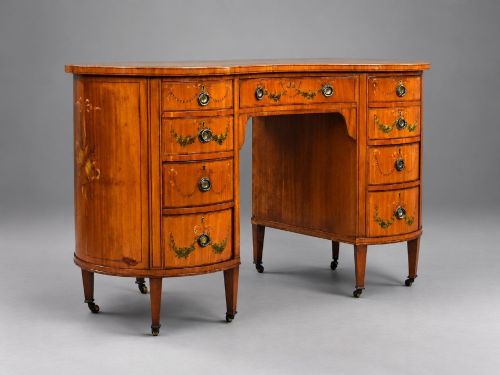
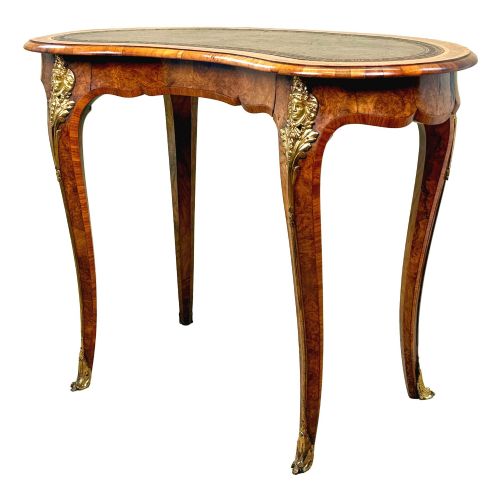
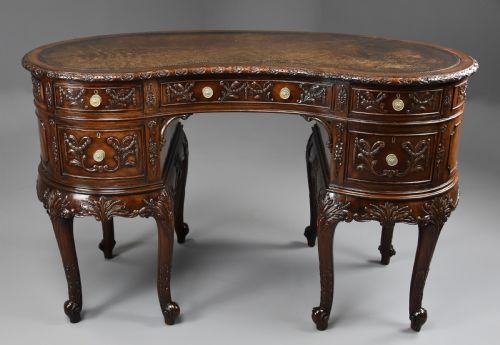
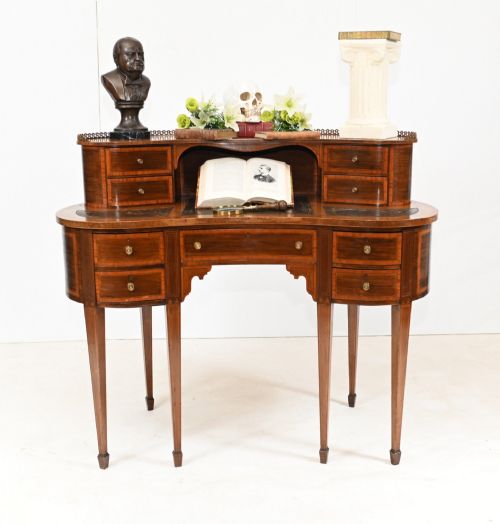
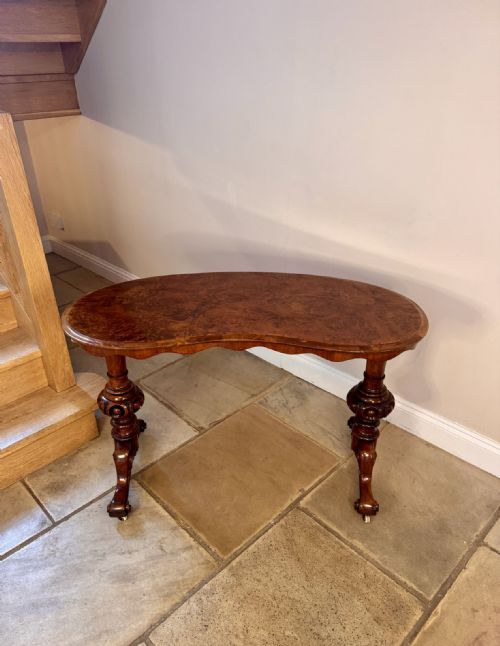
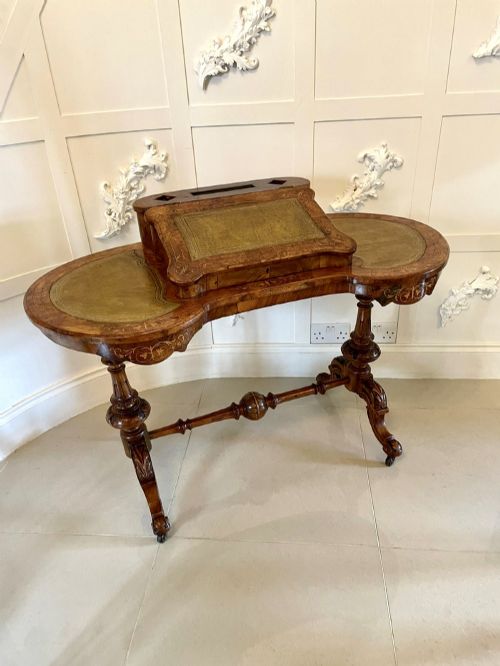
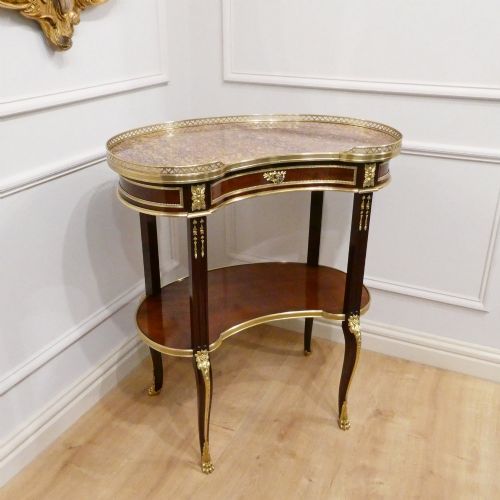
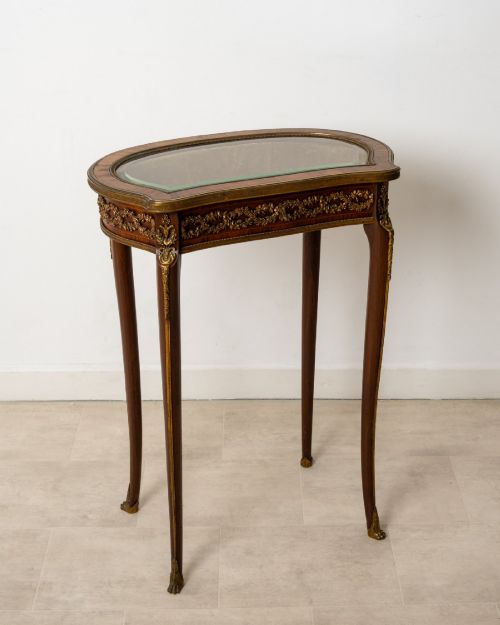
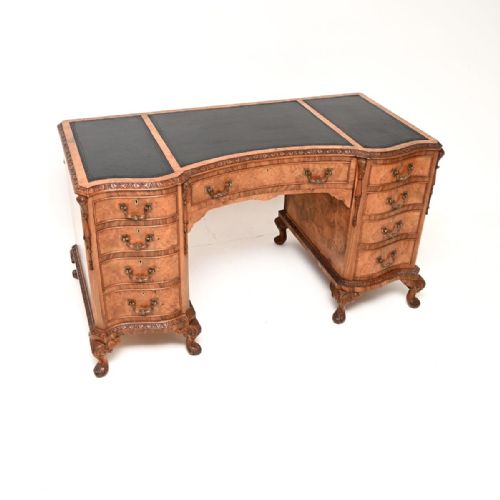
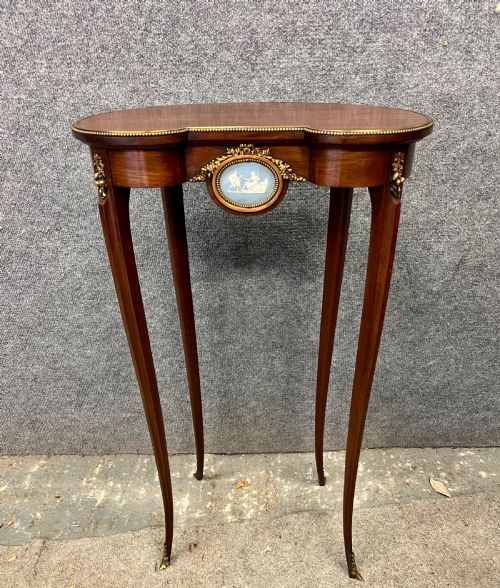
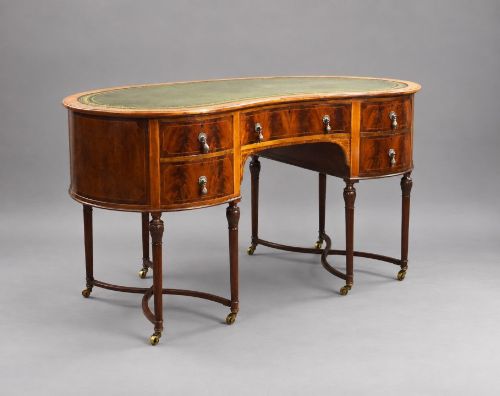
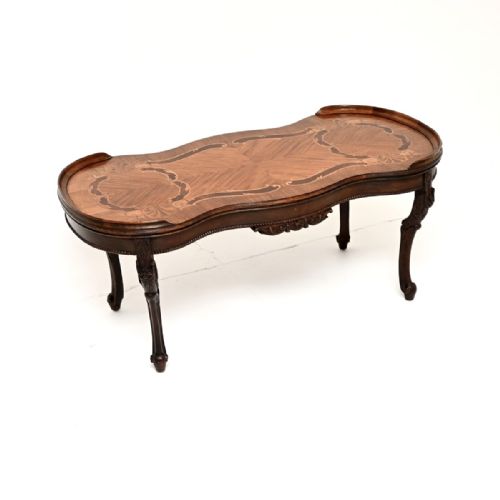
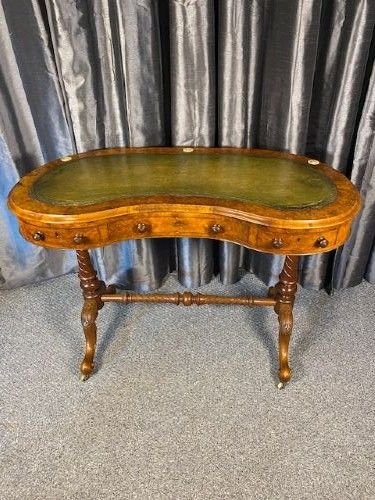
The pieces appearing on this page span the Victorian and Edwardian eras through to the early twentieth century, taking the form of writing desks, occasional tables, coffee tables, and dressing tables.
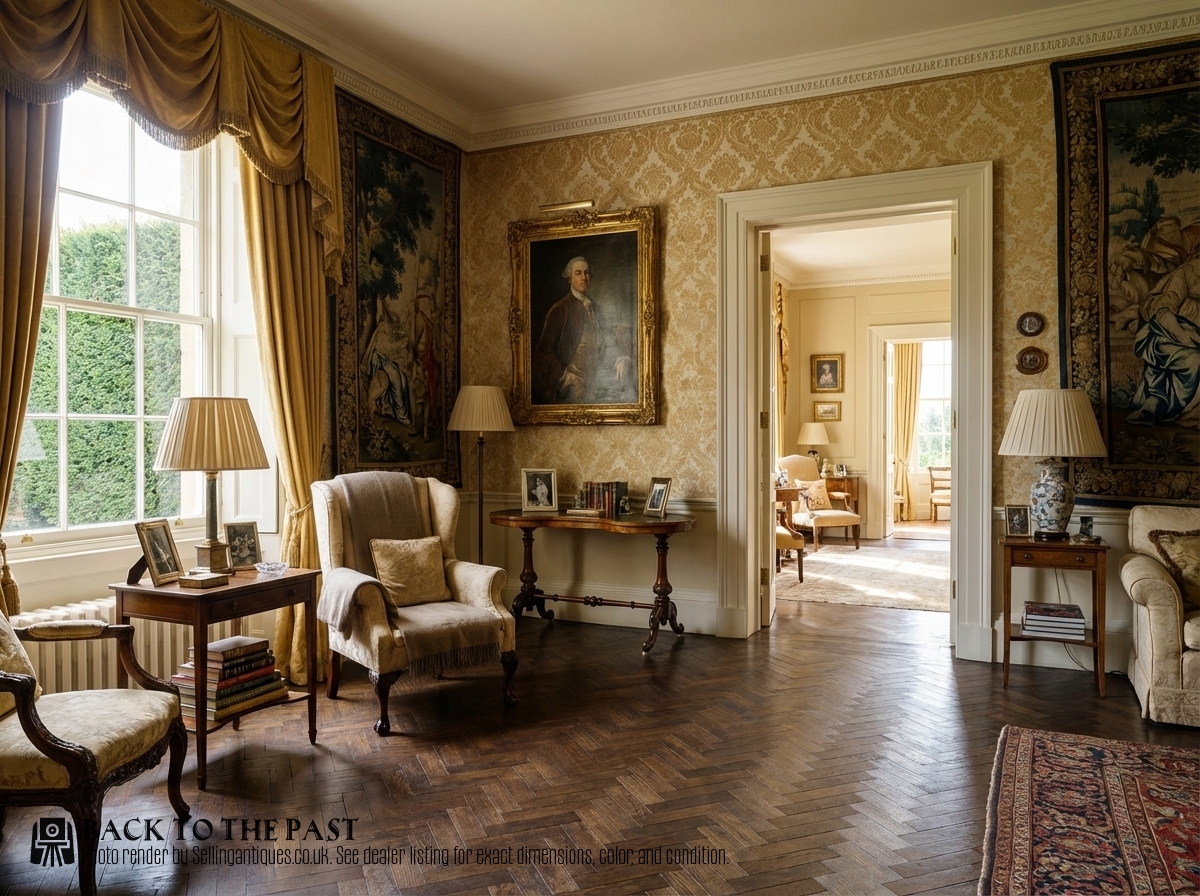
Makers utilised this specific curved footprint to create freestanding furniture that could sit comfortably in the centre of a room without dominating the floor space.
How They Were Made
Craftsmen built these tables using timbers such as mahogany, walnut, satinwood, and rosewood, often applying intricate marquetry, parquetry, or contrasting veneers across the curved surface.
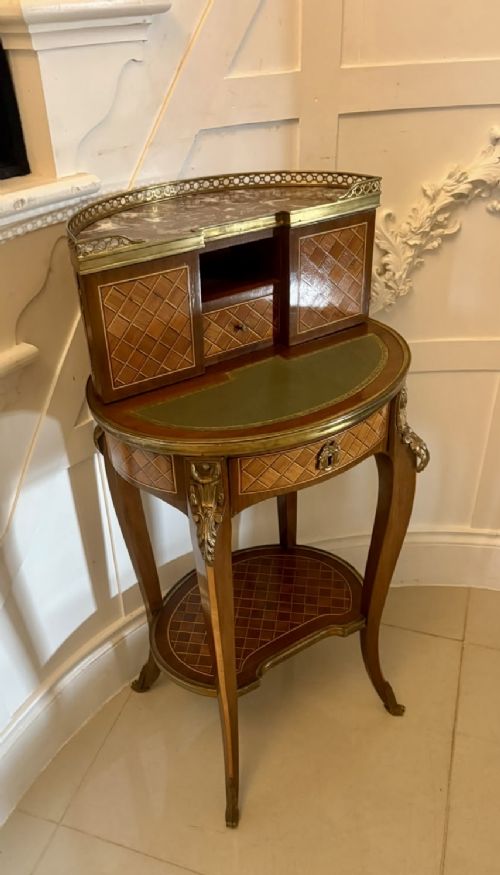
Many examples feature fitted leather writing surfaces bordered by gilt tooling, while others incorporate brass mounts, ormolu details, and painted decoration.
Shaping the signature concave curve required precise carpentry and veneer work to ensure the grain followed the smooth contour of the top without buckling.
Antique Kidney Table Retail Price Guide 2026
Typical asking prices for kidney table among the pieces listed under this phrase on Sellingantiques today, from the lower quarter to the upper quarter. They describe what is for sale here now, not the wider market.
Secret drawers tucked beneath the curves hide away historical love letters and lost stationery.
What Varies in Quality
The standard of an antique kidney table rests upon the choice of timber and the precision of the decorative inlays rather than mere decorative flash.
Finer examples display careful attention to secondary timbers, finished backs for freestanding placement, and well-executed joinery around the complex curved drawer fronts.
Maison Millet·Maple & Co·Edwards & Roberts·Wolfe & Hollander·JAS Shoolbred
The Antique Kidney Table Glossary
- Marquetry
- A decorative technique where small pieces of veneer are assembled to form pictorial or geometric patterns across a wooden surface. It frequently decorates the tops of Edwardian and Victorian writing tables.
- Parquetry
- Geometric wood-mosaic work used to create repeating patterns such as cubes or chequers on furniture tops. This technique highlights the skill of the cabinetmaker.
- Ormolu
- Gilded bronze mounts applied to furniture for ornamental effect, common in French-influenced revival styles. It adds metallic contrast to polished timber surfaces.
- Satinwood
- A durable, lustrous timber with a natural golden yellow sheen, highly favoured for fine 19th-century and Edwardian desks. Pieces made from this wood catch the light in domestic interiors.
Antique Kidney Table: Frequently Asked Questions
What were antique kidney tables used for?
These tables served primarily as writing desks, dressing tables, and occasional side furniture in domestic settings. The curved front allowed the user to sit closer to the surface while keeping inkwells or vanity items within easy reach.
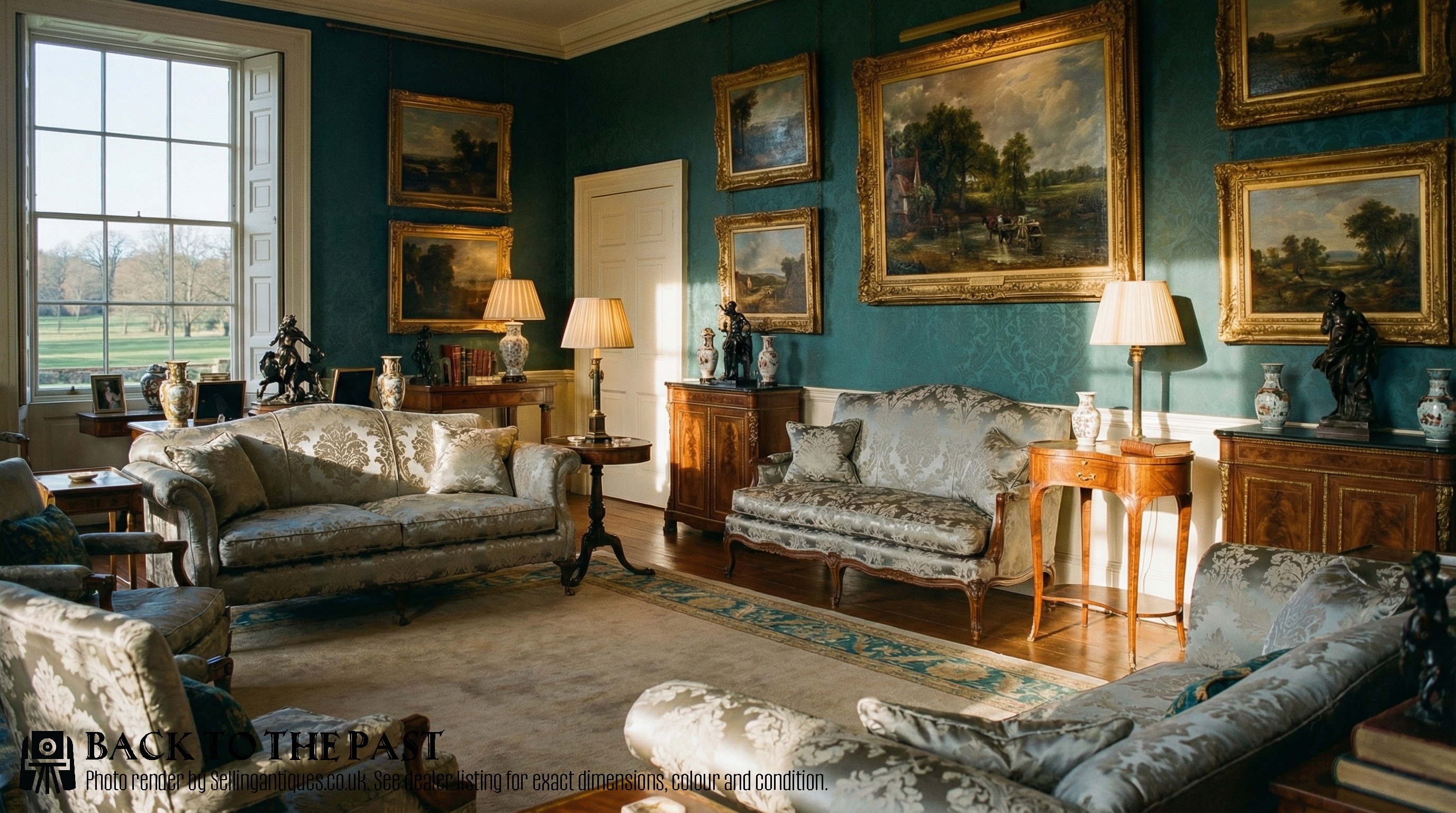
Over time, smaller versions also functioned as lamp tables or bedside stands in refined bedrooms and drawing rooms.
How do I identify an Edwardian kidney table?
Edwardian examples frequently feature light mahogany or satinwood construction paired with delicate floral marquetry and inlaid borders. They often stand on slender tapering legs connected by low stretchers.
Cabinetmakers of this period leaned towards Sheraton Revival designs, producing lighter and more decorative pieces than their Victorian predecessors.
Can I use an antique kidney desk for daily work?
Many of these pieces were built for correspondence and paperwork, making them suitable for modern laptops and writing tasks. Their compact footprints allow them to fit into smaller studies or living spaces.
Care should be taken with original leather surfaces, which benefit from protective pads when used intensively for daily work.
Are all kidney shaped tables English?
While many pieces originate from English workshops, a significant portion follows French design traditions, particularly the Louis XV and Louis XVI revival styles. French versions often incorporate marble tops, ormolu mounts, and kingwood veneers.
English makers frequently adapted these continental forms to suit local tastes during the 19th century.