

Antique Kidney Shaped Desk
An antique kidney shaped desk offers a sweeping serpentine curve that fits cleanly into a room while providing a generous writing surface.
What They Are
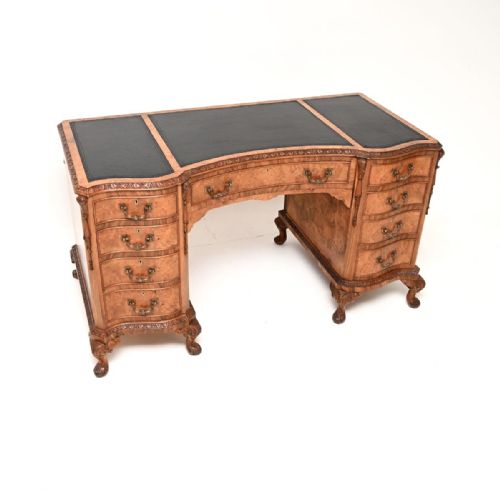
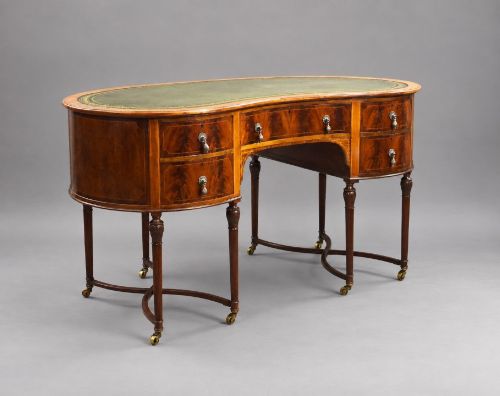
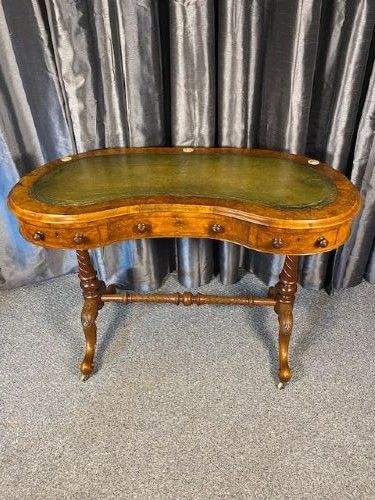
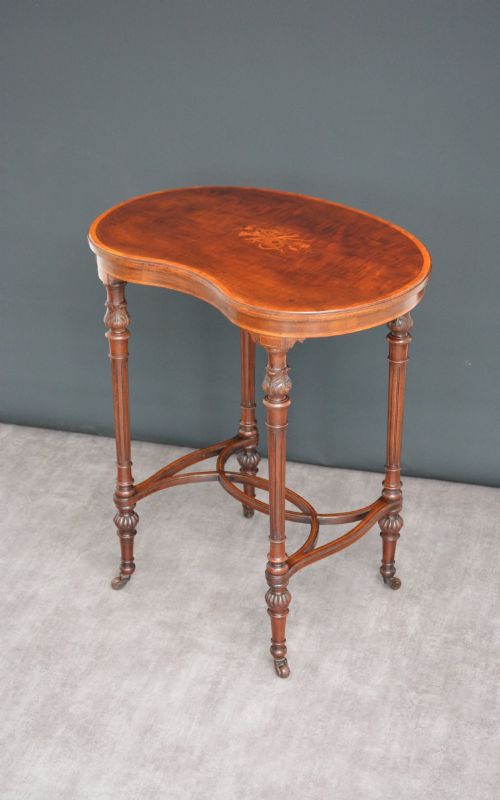
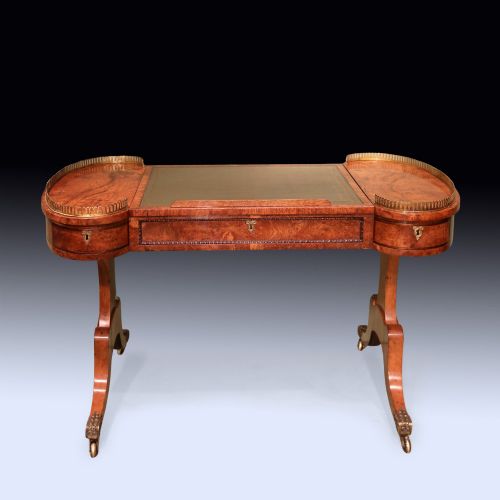
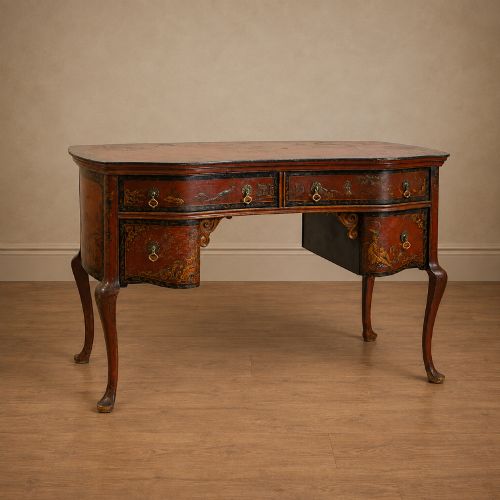
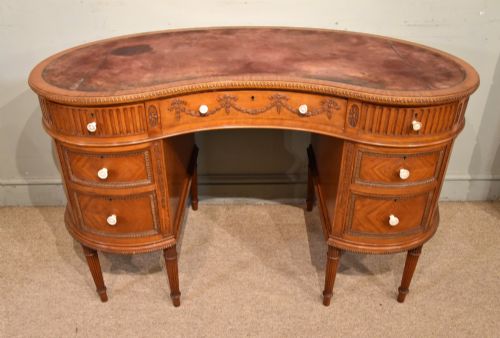
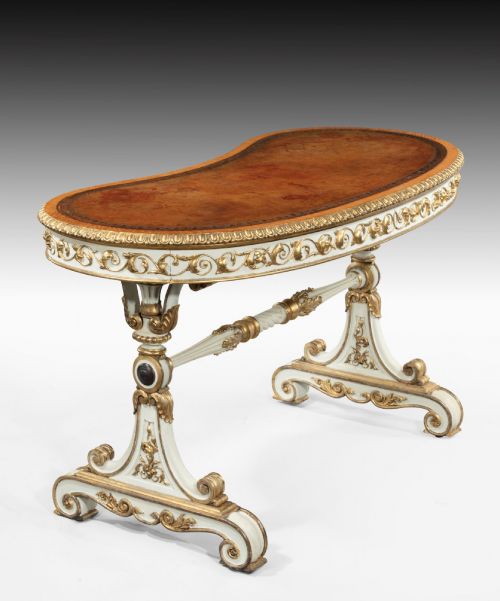
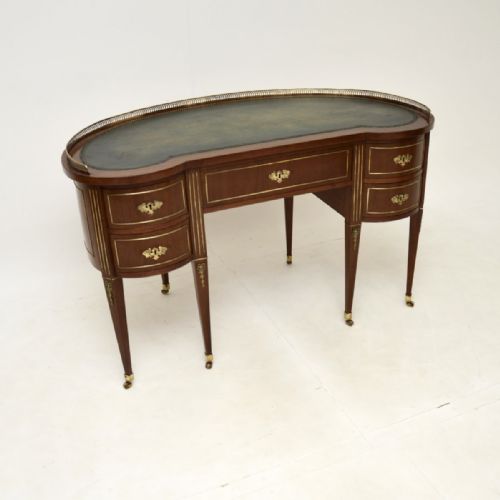
An antique kidney shaped desk is a distinctive writing surface designed with a concave front that curves gracefully around the user. These pieces span the Victorian, Edwardian, and nineteenth-century periods, taking the form of freestanding writing tables, twin pedestal desks, and occasional tables.
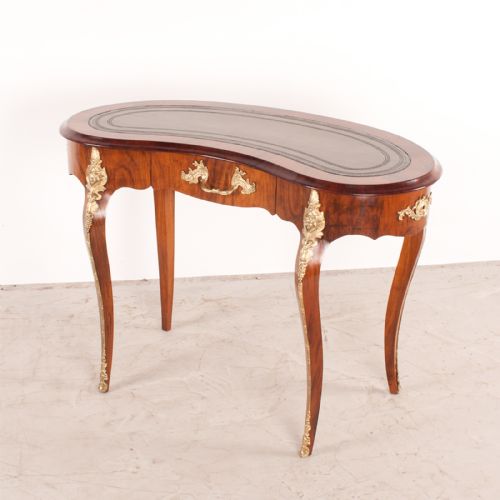
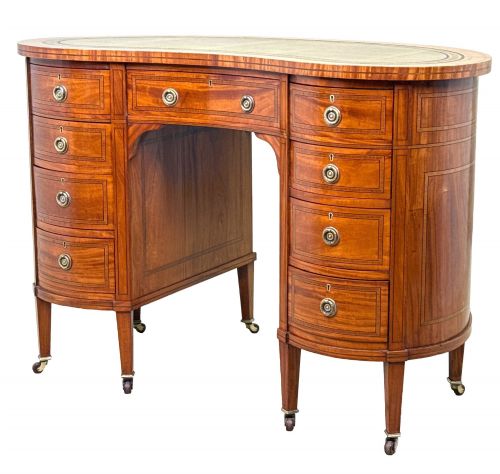
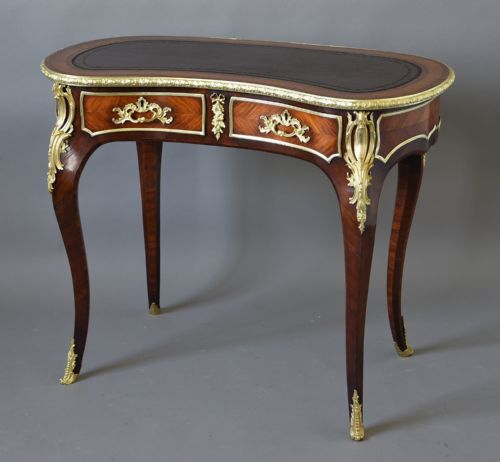
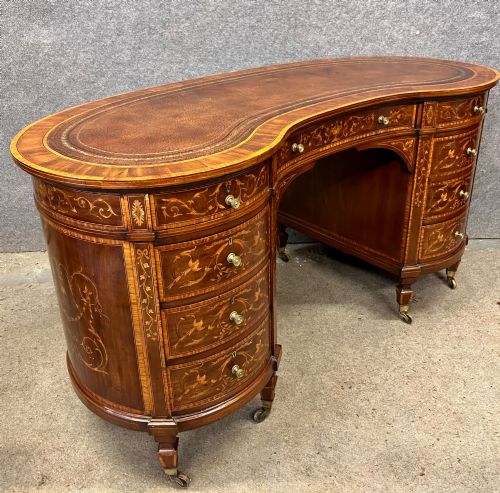
Mahogany and burr walnut dominate the selection, often finished with inset leather writing surfaces and elaborate boxwood inlay or marquetry. The Sheraton Revival and Edwardian styles bring lighter woods like satinwood into the mix, alongside French-influenced designs featuring ormolu mounts.
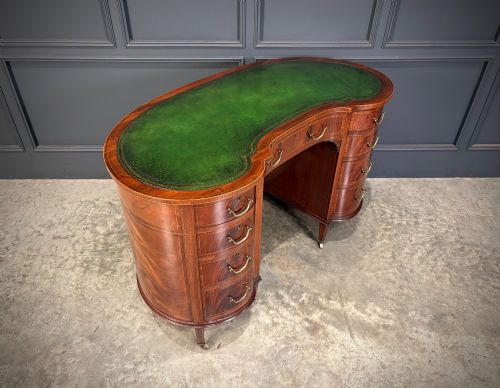
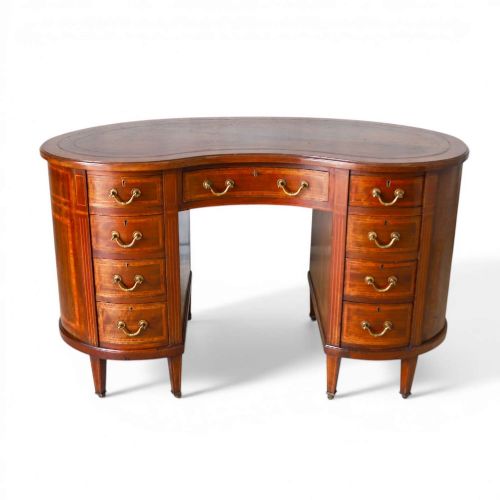
Most examples encountered on this page function as compact partners or ladies writing desks, though larger freestanding library versions appear from time to time. The curved profile allows the furniture to sit comfortably away from a wall rather than hiding in a corner.
How They Were Made
Cabinet makers built these frames using dense timbers such as mahogany and walnut, frequently applying burr veneers to achieve highly figured surfaces on the curved drawers and top. Boxwood inlay and delicate marquetry decorate the borders of many Edwardian and Sheraton Revival pieces.
The writing surfaces generally feature inset panels of tooled leather, bordered by blind tooling or gold leaf decoration. Ormolu mounts cast in bronze provide decorative accents on French-influenced and mid-nineteenth-century tables.
Retail Price Guide 2026
Typical UK retail prices for kidney shaped desk, calculated from the Sellingantiques database of over a million retail prices indexed since 2003. This retail price guide relies exclusively on Sellingantiques data; no external sources or auction records are used, so the figures do not describe the wider market.
Common forms include writing desks, occasional tables, and freestanding double-sided examples.
What Varies in Quality
The distinction between standard commercial pieces and top-tier examples rests on the choice of timber and the precision of the joinery along the tight curve. Burr walnut and figured mahogany with matched grain patterns across multiple drawers indicate superior workshop selection.
Secondary details such as hand-cut dovetails on the drawers, substantial cast ormolu mounts, and finely executed marquetry separate ordinary production from pieces originating in notable cabinet houses.
JAS Shoolbred·Waring & Gillows·Gillows
The Antique Kidney Shaped Desk Glossary
- Kidney shaped desk
- A writing table featuring a curved, indented front that wraps around the sitter. This form became popular during the nineteenth and early twentieth centuries for its ergonomic profile.
- Burr walnut
- Timber taken from the gnarled growths of walnut trees, yielding complex swirling grain patterns. Cabinet makers prized this wood for veneering prominent surfaces.
- Ormolu
- Gilt bronze mounts applied as decorative ornaments to furniture corners and feet. The technique involves finishing metal with gold amalgam.
- Marquetry
- Inlaid patterns formed from pieces of different coloured wood veneer fitted into a ground. Artisans used this technique to create floral and geometric motifs.
- Sheraton Revival
- A late nineteenth and early twentieth century design movement that reinterpreted the lighter neoclassical furniture forms of the eighteenth century. Pieces often incorporate satinwood and delicate inlay.
Frequently Asked Questions
Where do you put a kidney shaped desk?
Because the back of the piece is often finished with veneer or inlay, these desks work well placed away from the wall in the centre of a room.
The curved front allows a comfortable seating position while keeping writing materials within easy reach across the span.
How do I identify a Victorian kidney desk?
Victorian examples tend to use darker timbers like mahogany and burr walnut, sometimes paired with heavier proportions and rich leather inserts.
Later Edwardian versions often incorporate lighter satinwood, boxwood stringing, and painted decoration typical of the Sheraton Revival.
Were these desks used for writing?
Many of these pieces served as ladies writing desks, boudoir tables, or occasional writing surfaces rather than heavy administrative partners desks.
The smaller proportions made them suitable for drawing rooms and bedrooms.
What is ormolu on a desk?
Ormolu refers to cast bronze mounts finished with a gold coating, used to accent the corners and framing of nineteenth-century tables.
These metal fittings point towards French design influences seen in revival pieces.