

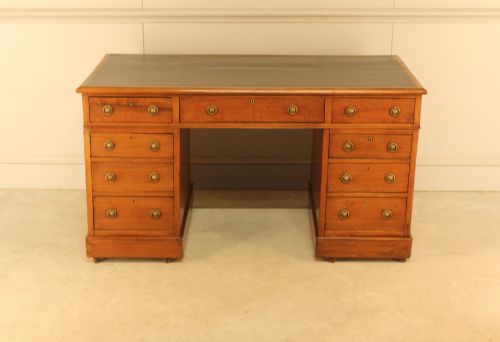
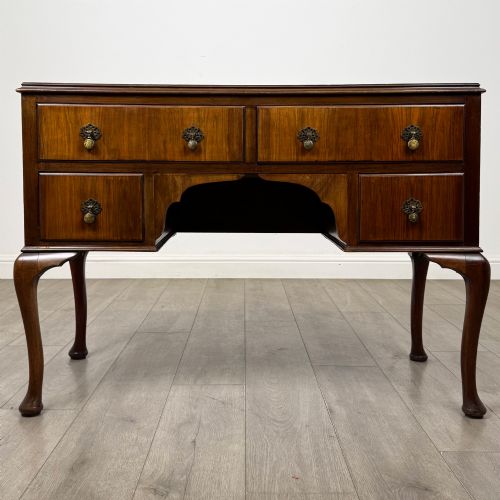
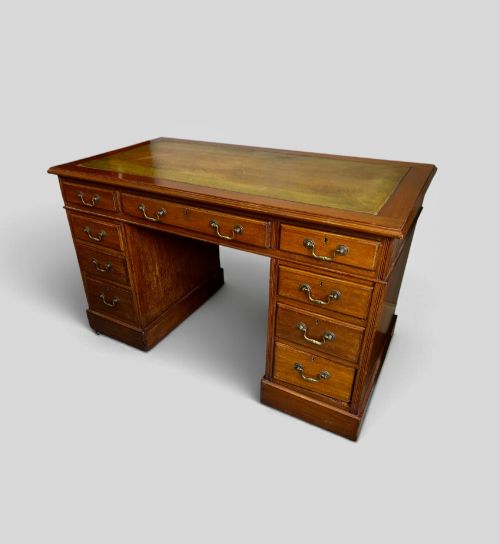
Walnut Study Desk
These walnut study desk pieces combine domestic utility with deep timber tones, offering a solid surface for writing and administrative work.
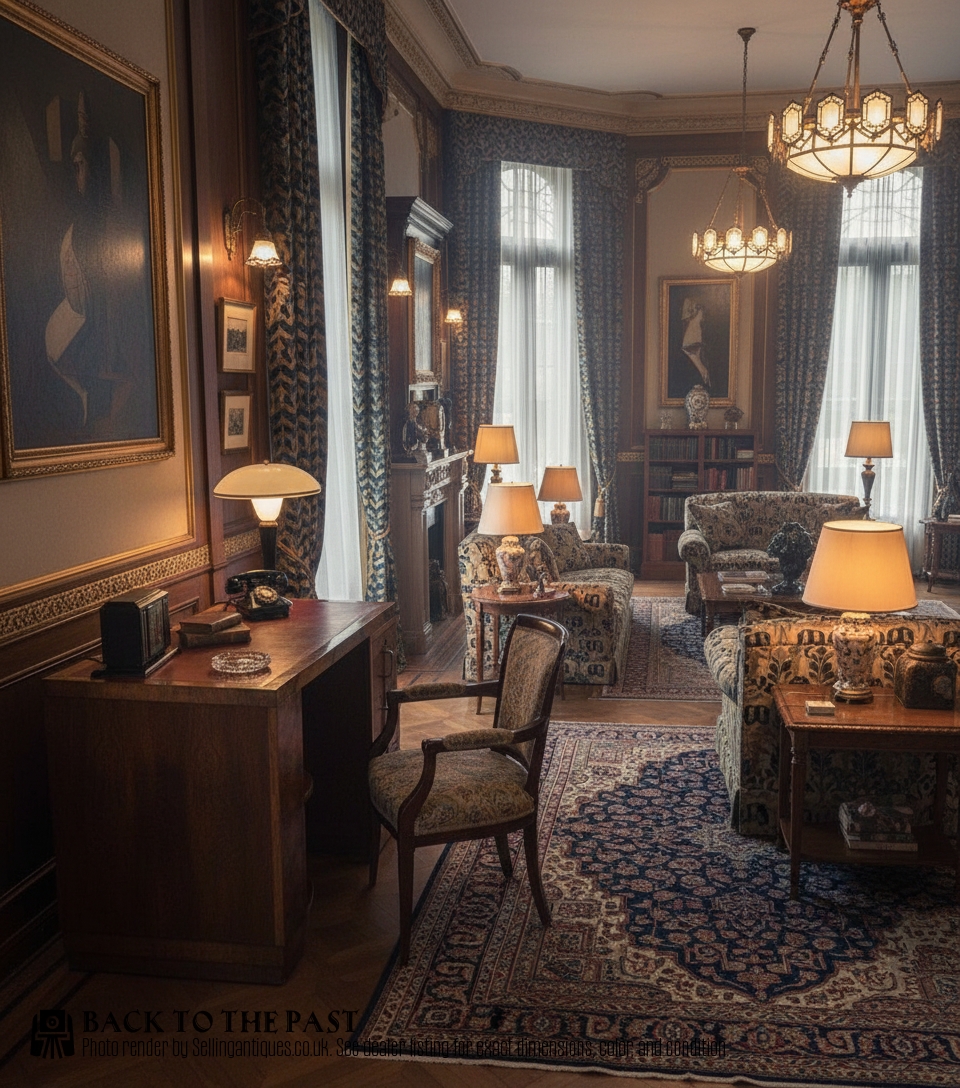
What They Are
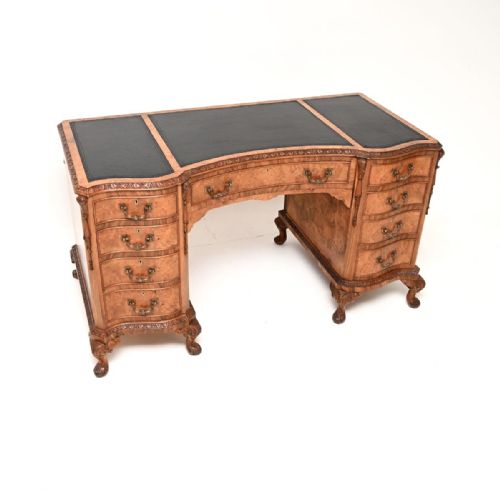
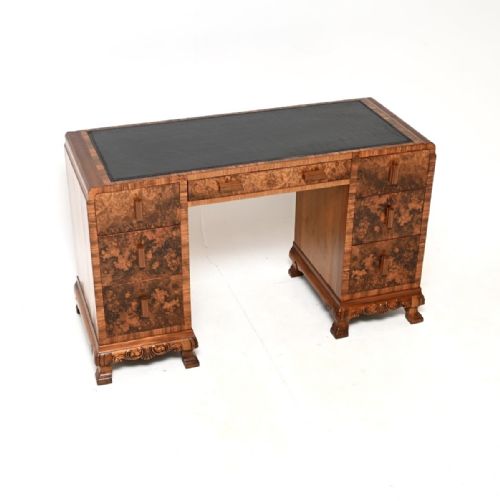
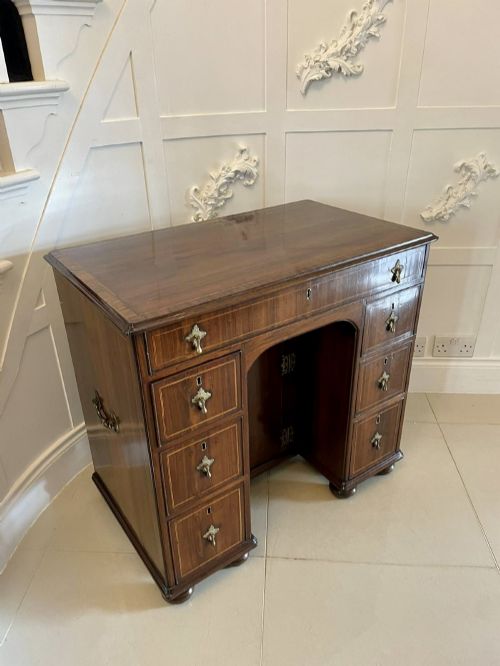
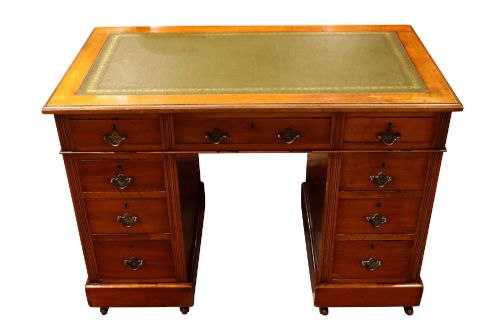
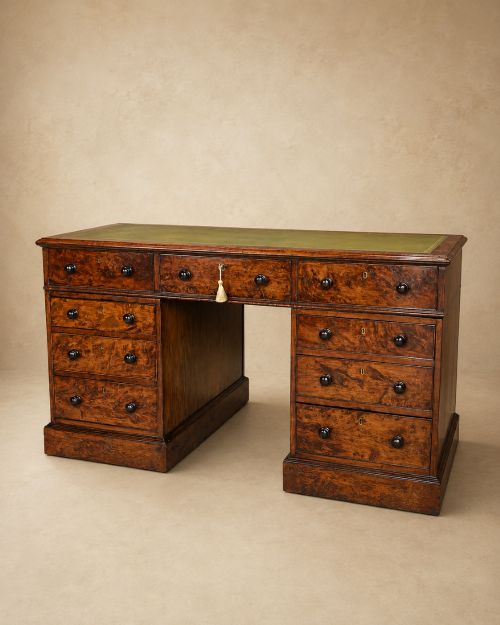
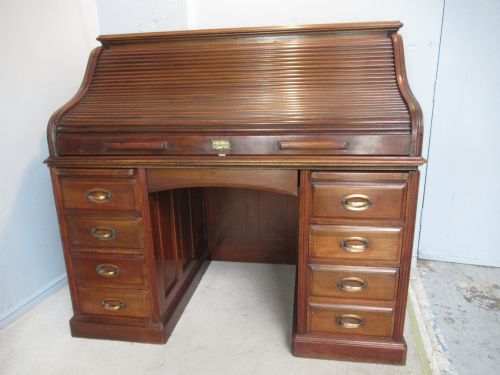
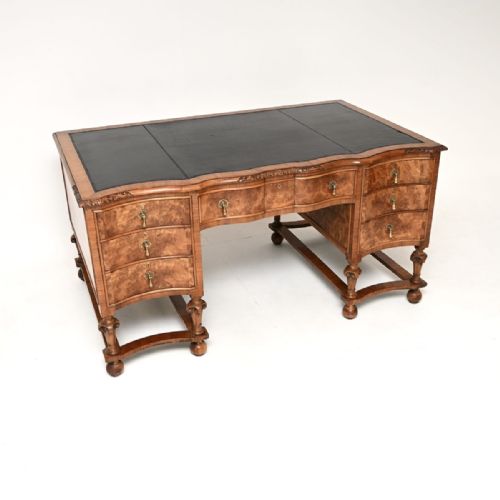
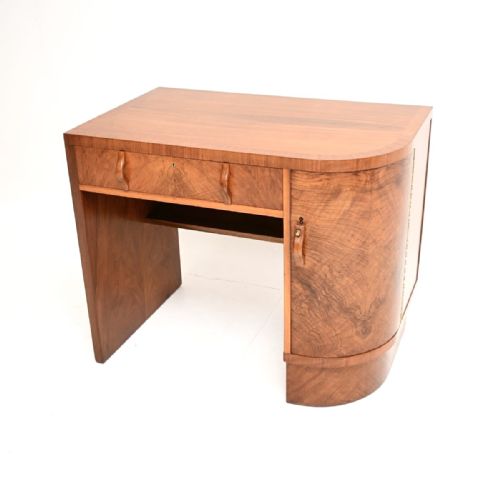
A walnut study desk is a fitted writing surface intended for home offices, studies, or libraries, utilising rich brown hardwoods. The examples recorded here span from the mid nineteenth century through the Art Deco era, covering Victorian and French Chateau styles.
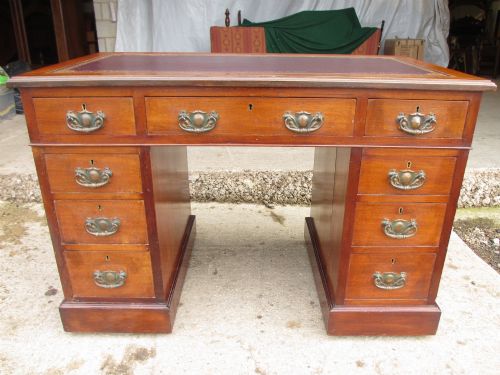
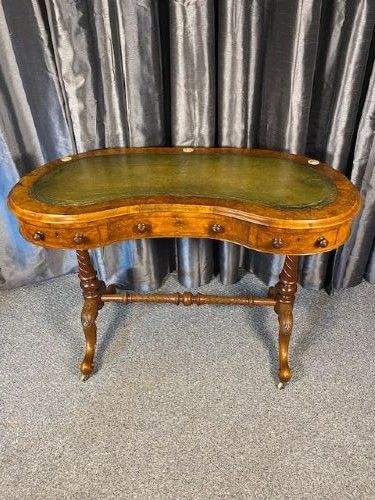
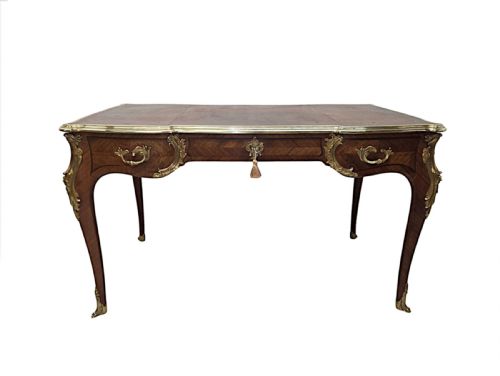
Buyers will encounter forms such as kidney-shaped writing tables, bureau-plat designs, pedestal layouts, and davenports. Materials frequently paired with the primary timber include leather inserts, brass fittings, and ormolu mounts.
Origins represented across the inventory are predominantly English, alongside continental pieces. Dates range from eighteen fifty through to nineteen thirty-five, showing both traditional nineteenth-century craftsmanship and twentieth-century modernist lines.
How They Were Made
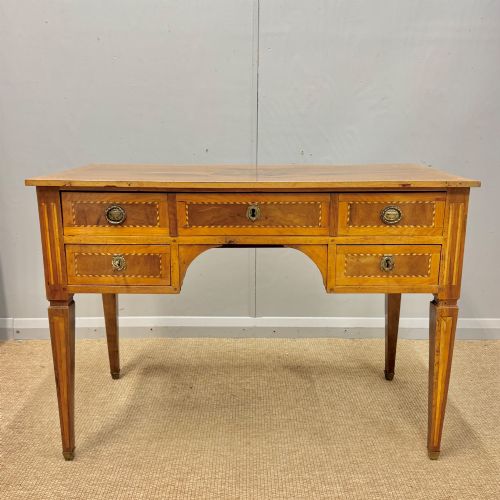
Construction relies heavily on walnut and burr walnut timbers, valued for their distinctive grain patterns and warm hue. Artisans also incorporated figured walnut veneers over secondary woods to create decorative surfaces on writing tops and drawer fronts.
Functional details include leather writing inserts, brass hardware, and cast ormolu mounts applied to nineteenth-century and Art Deco frames. Solid oak and metal components appear alongside the primary walnut structure in specific periods.
Retail Price Guide 2026
Typical UK retail prices for walnut study desk, calculated from the Sellingantiques database of over a million retail prices indexed since 2003. This retail price guide relies exclusively on Sellingantiques data; no external sources or auction records are used, so the figures do not describe the wider market.
Recorded materials span walnut, burr walnut, leather, brass, ormolu, and metal across Victorian, French Chateau, and Art Deco styles.
What Varies in Quality
Quality rests in the selection of timber, particularly the choice of burr or figured walnut veneers across prominent surfaces. Finer items demonstrate careful matching of grain patterns and integration of decorative mounts or inlays.
The sophistication of the hardware and the execution of specialised forms, such as kidney-shaped tables or pedestal structures, distinguish standard workshop production from more ambitious cabinet work.
The Walnut Study Desk Glossary
- Burr walnut
- A prized timber harvested from tree growths that produces intricate, swirling grain patterns. It is typically applied as a veneer on high-status nineteenth and twentieth-century furniture.
- Bureau-plat
- A flat-topped freestanding writing table, often featuring multiple drawers and decorative mounts. This French form gained popularity in formal study rooms.
- Ormolu
- Gilded bronze mounts applied to the corners and legs of furniture. This decorative technique appears on mid-nineteenth-century pieces.
- Davenport
- A compact writing desk featuring a sloping top above a bank of drawers. The form includes a stationery compartment positioned on the upper section.
Frequently Asked Questions
What periods do these desks cover?
The recorded pieces date from the mid nineteenth century up to the nineteen thirties. This includes Victorian, Edwardian, and Art Deco eras.
Construction styles shift from heavily ornamented nineteenth-century forms to clean twentieth-century geometric lines.
Which timber variations are most common?
Plain walnut, burr walnut, and figured walnut appear frequently across the inventory. Veneers are often selected to highlight natural grain patterns.
Secondary materials like oak and leather inserts are also integrated into the writing surfaces.
What decorative features should I expect?
Common embellishments include ormolu mounts, brass hardware, and inlaid details. Some surfaces incorporate contrasting leather writing panels.
These additions vary according to the specific Victorian or Art Deco style of the piece.
Are these desks suitable for modern offices?
These tables provide functional writing surfaces with historical character for home studies and libraries. Their dimensions accommodate contemporary paperwork and seating.
Different formats, from pedestal desks to compact davenports, suit various room sizes.