



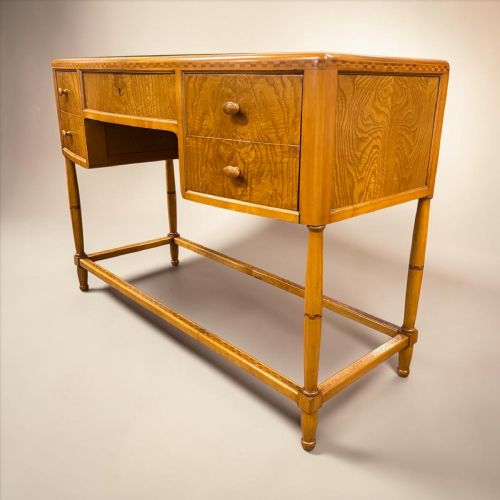
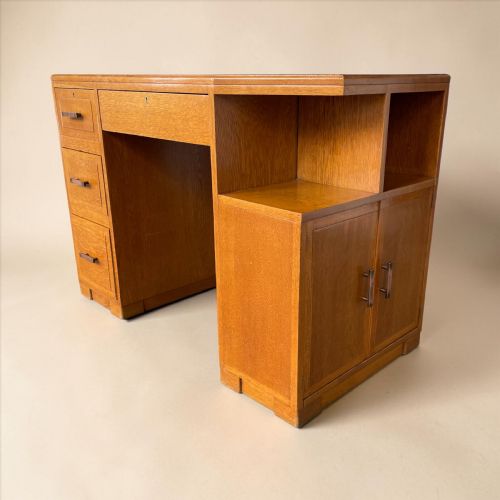
Art Deco Writing Table
An art deco writing table brings clean geometric lines and striking veneers into a study, offering a functional workspace defined by interwar design.
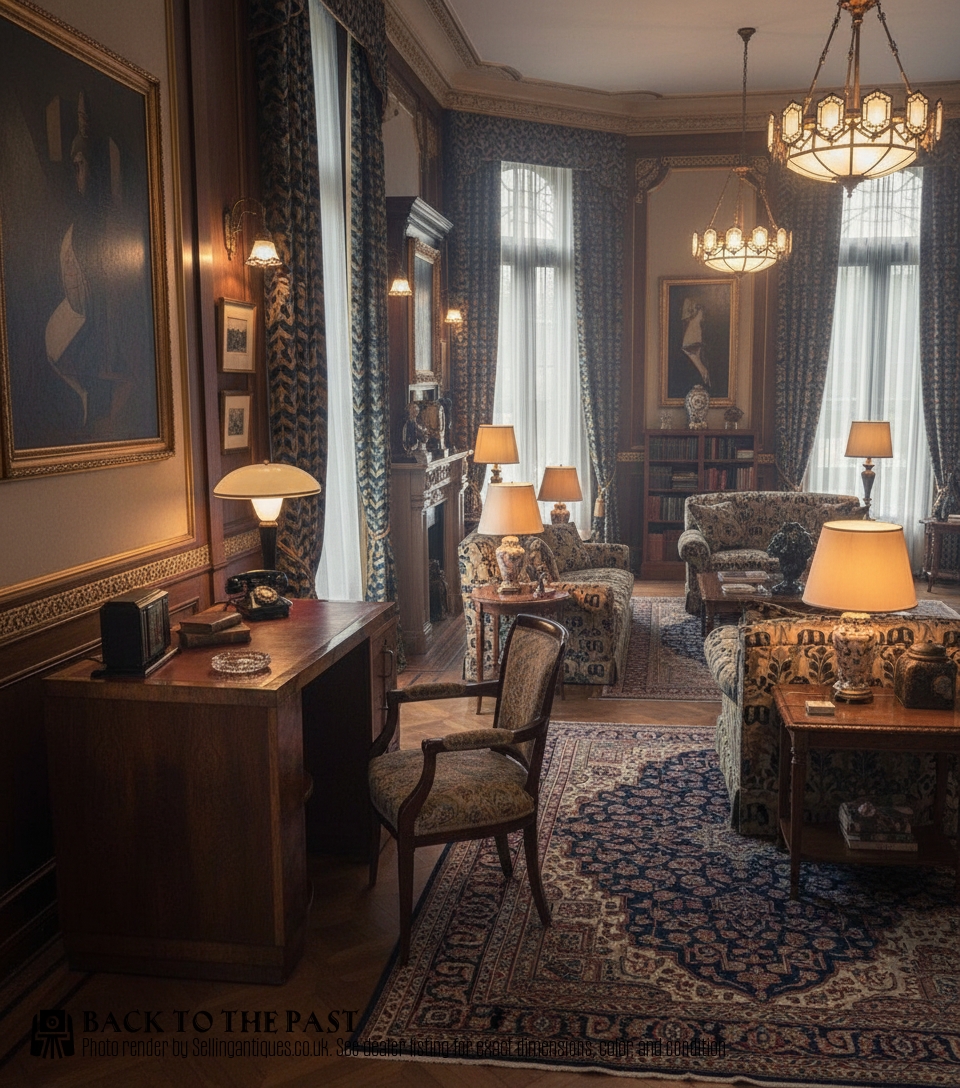
Art Deco Writing Table
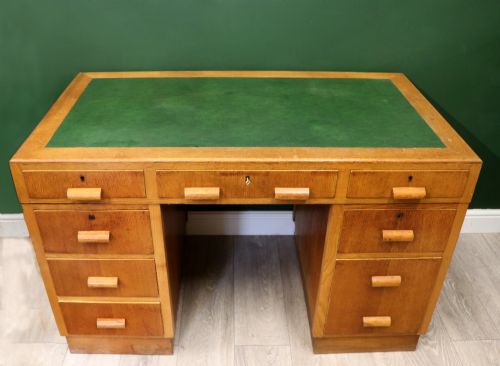
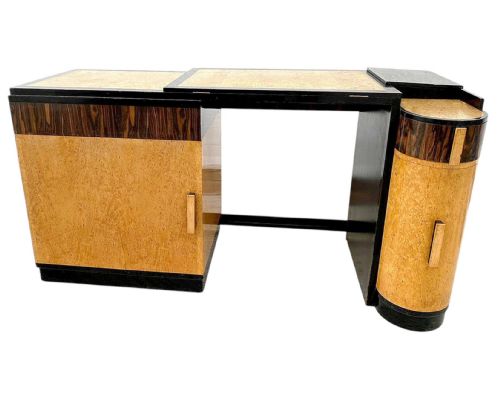
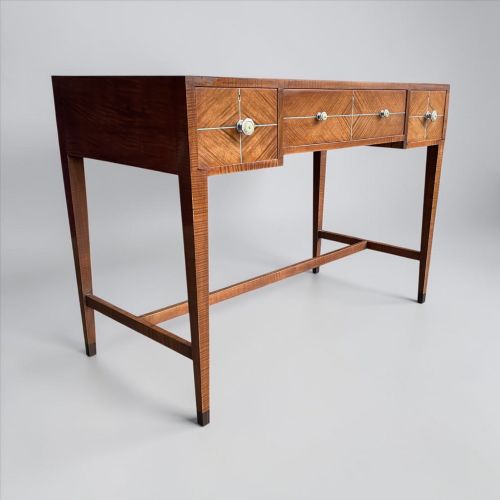
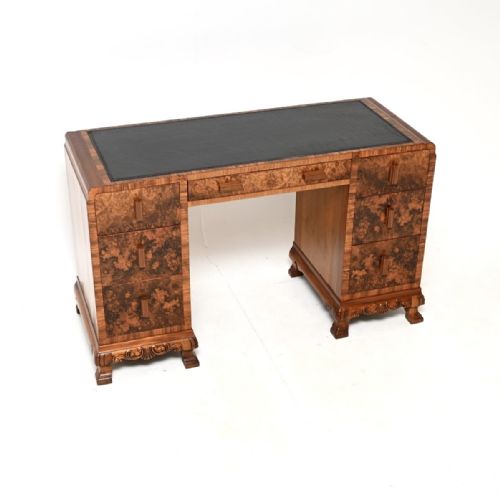
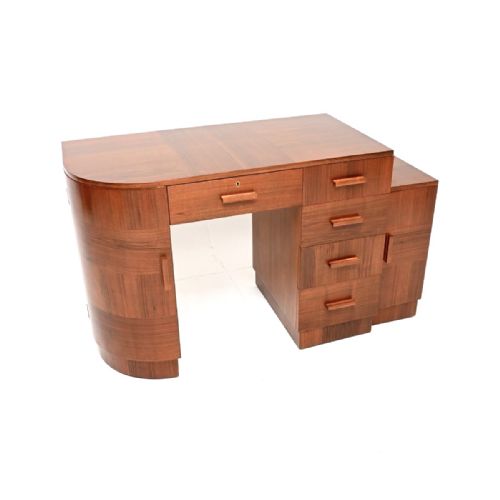
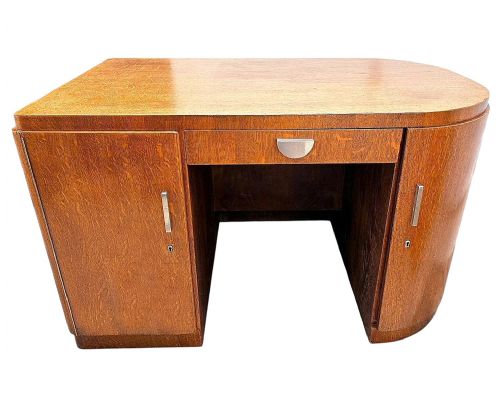
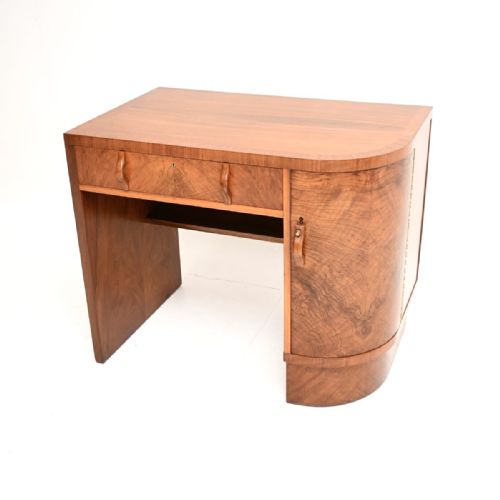
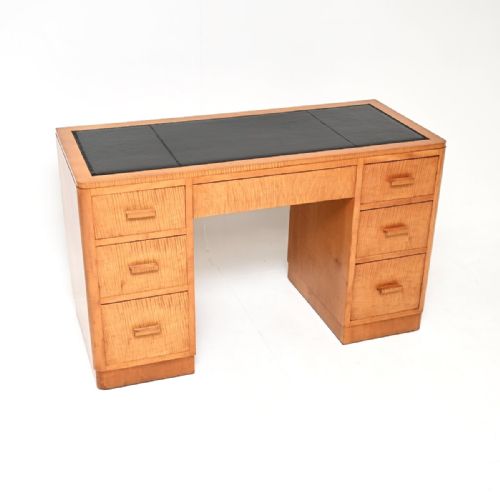
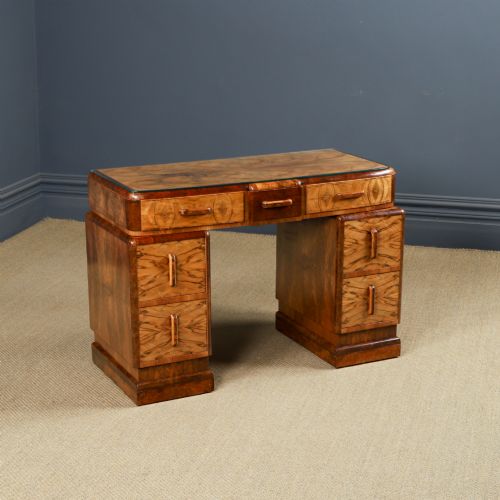
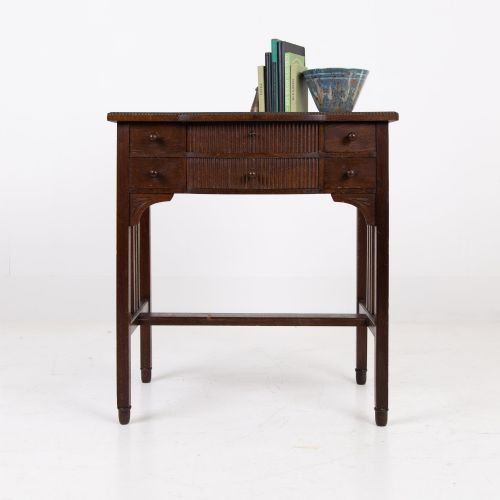
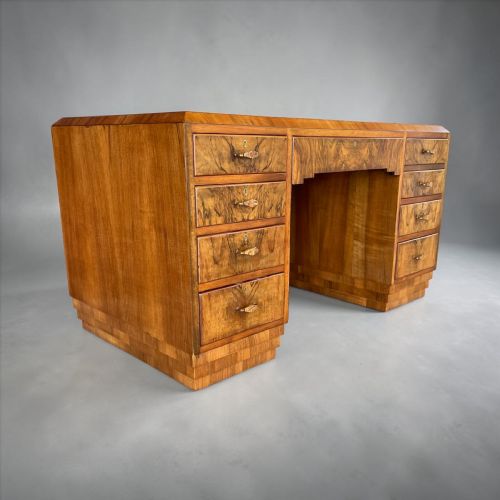
An art deco writing table provides a dedicated surface for correspondence and study, typically taking the form of a pedestal desk, a compact writing table, or a streamlined console. These pieces frequently date from the 1920s and 1930s, aligning with the height of the modernist movement, though Edwardian and 1940s examples also appear.
Buyers encounter pedestal forms with multiple drawers alongside simpler side tables and kidney-shaped variants. English and French workshops produced the majority of these pieces, adapting the style for domestic studies and professional offices alike.
Materials and construction methods
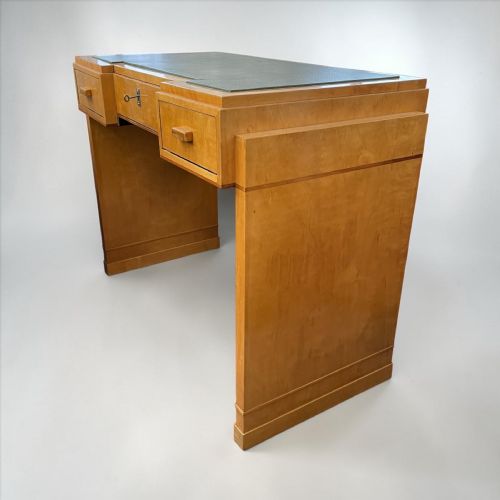
Cabinetmakers utilised rich timbers such as walnut, burr walnut, rosewood, oak, and birch, often applying figured veneers to create striking symmetrical patterns across the writing surface and drawer fronts. Leather inserts frequently form the writing pad, providing a smooth, durable surface bordered by woodwork.
Metal and glass components appear in handles, legs, and skyscraper tiers, integrating industrial elements into traditional cabinetmaking. Integrated lighting and complex drawer configurations reflect the practical innovations of the period.
Art Deco Writing Table Retail Price Guide 2026
Typical asking prices for art deco writing table among the pieces listed under this phrase on Sellingantiques today, from the lower quarter to the upper quarter. They describe what is for sale here now, not the wider market.
Listings feature walnut, burr walnut, oak, and satin birch, spanning Edwardian origins through to mid-century modernist designs.
Distinctions in quality and execution
Quality rests upon the selection and matching of wood veneers, where book-matched burr walnut or exotic hardwoods display deliberate symmetry. Master workshops and documented designers elevate a piece through superior joinery, balanced proportions, and integrated metal or glass details.
Simpler production pieces rely on plain oak or standard walnut without figured grain, showing utilitarian construction rather than decorative ambition. The precision of the drawer fit and the crispness of the geometric lines separate standard commercial items from exceptional designer commissions.
Heal's·Betty Joel·Maurice Adams·Étienne Kohlmann·Maurice Dufrêne·Bath Cabinet Makers·McIntosh
The Art Deco Writing Table Glossary
- Pedestal desk
- A form featuring two supporting columns of drawers beneath a rectangular writing surface. This layout provides substantial storage alongside the central workspace.
- Burr walnut
- Wood grain taken from a growth on the walnut tree, producing swirling patterns used for decorative veneer. Cabinetmakers prize this material for its rich visual texture.
- Pediment
- The decorative architectural cresting above a desk or cabinet. It adds vertical emphasis to taller writing furniture.
- Sycamore
- A light-coloured hardwood utilised for interior drawer linings or contrasting stringing. Its pale tone balances darker cabinet timbers.
Art Deco Writing Table: Frequently Asked Questions
How do I identify an authentic art deco writing table?
Look for characteristic geometric forms, stepped outlines, and rich wood veneers such as walnut or birch. The hardware often incorporates brass or glass elements typical of the interwar period.
Examine the construction of the drawers and the joinery for period methods. Maker labels or attribution to known workshops provide further confirmation of origin.
Where should I place a writing table in a modern room?
A compact writing table functions effectively as a freestanding desk in a study or as a console table against a living room wall. Because many pieces feature finished backs, they sit comfortably in the middle of a room.
Ensure adequate natural light near a window or complement the built-in lamp if the model includes one. Pair the table with a simple modern chair to maintain the period aesthetic.
What is the difference between a pedestal desk and a writing table?
A pedestal desk incorporates banks of drawers on both sides beneath the top, offering enclosed storage and a heavier architectural presence. It suits daily administrative work and office use.
A writing table is typically lighter, featuring slender legs and fewer drawers, designed for occasional correspondence rather than heavy storage. Both forms share the characteristic geometric styling of the era.
How do I care for leather top writing surfaces?
Clean the leather gently with a slightly damp cloth, avoiding harsh chemical cleaners that strip the natural finish. Nourish the surface periodically with a suitable leather balm to prevent cracking.
Keep the desk away from direct sunlight and heat sources to protect both the leather insert and the underlying wood veneer. Use blotters when writing to preserve the material.