






1930s Executive Desk
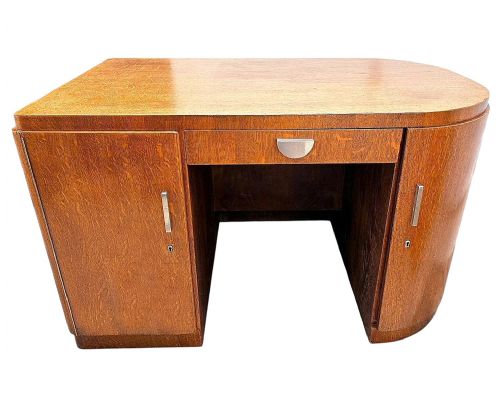
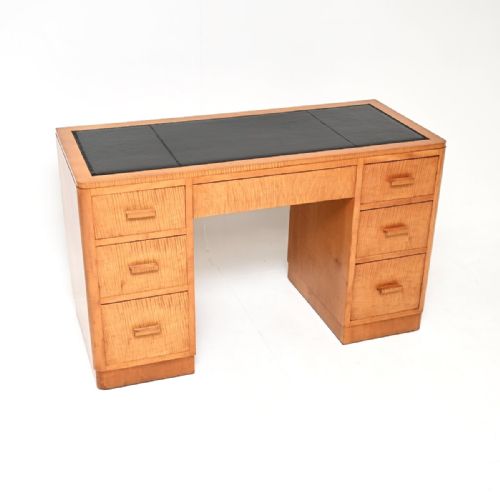
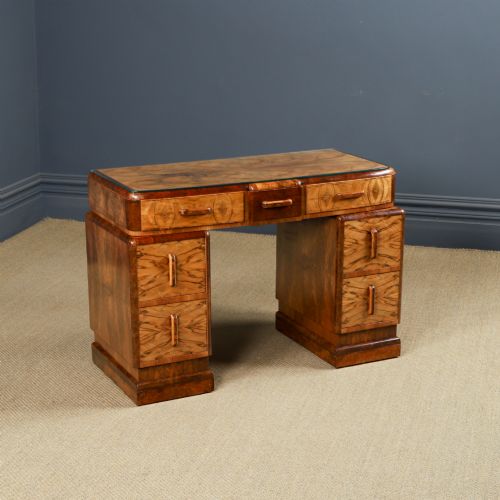
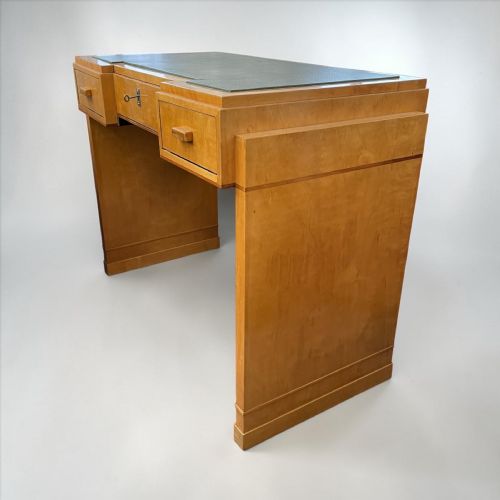
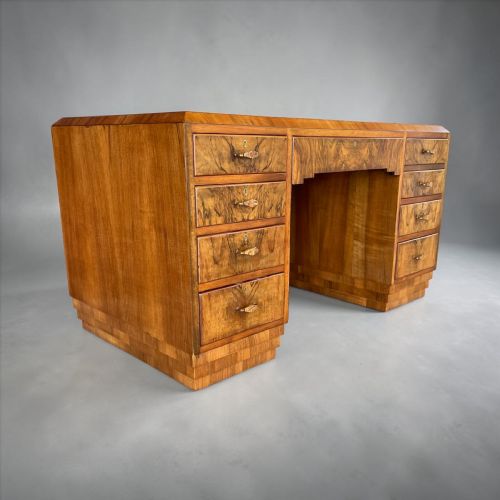
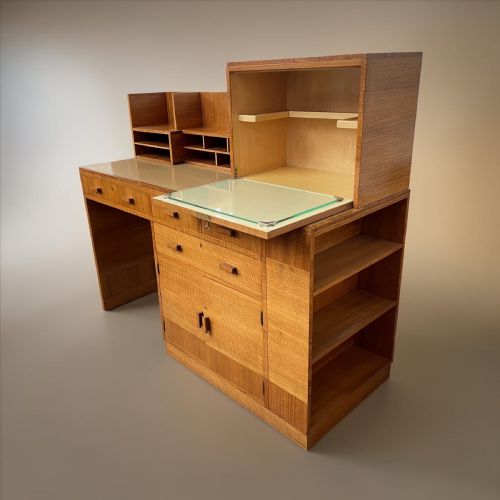
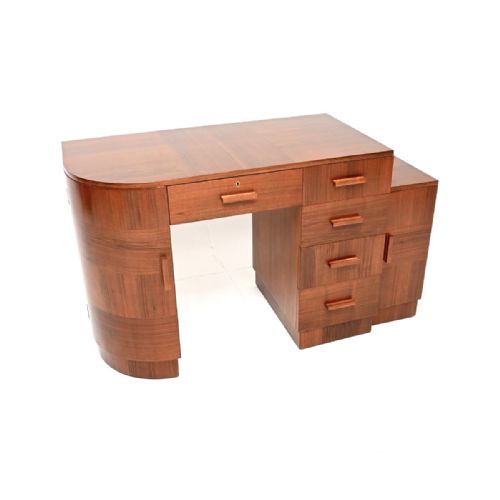
These 1930s executive desk pieces bring geometric presence and rich figured veneers to a workspace.
1930s Executive Desk
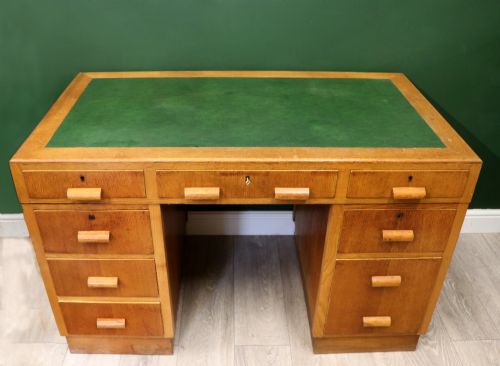
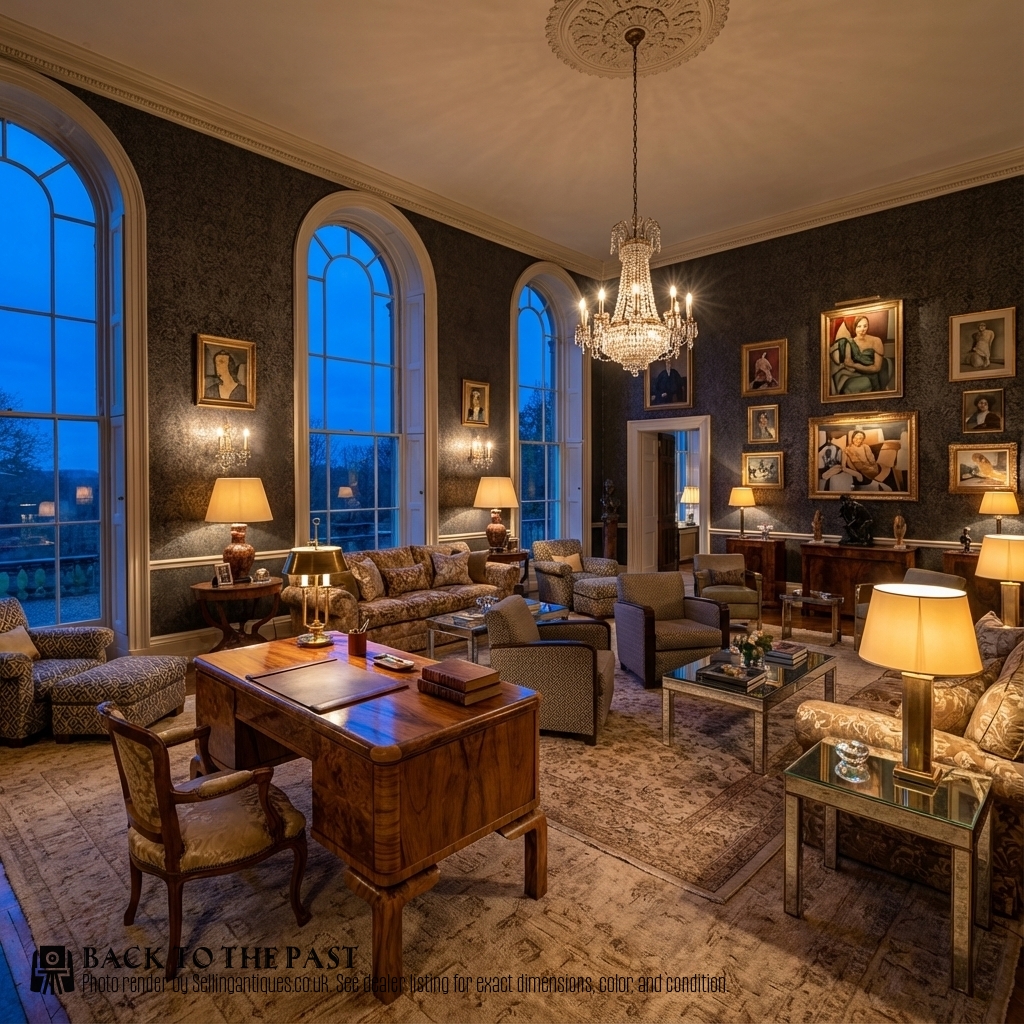
A 1930s executive desk represents the bold design language of the interwar period, combining architectural pedestals with striking modernist forms. These substantial pieces serve as commanding centrepieces in an office, built to project authority and style through heavy timber construction and practical writing surfaces.
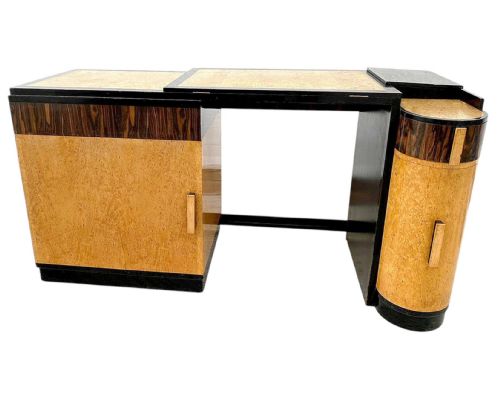
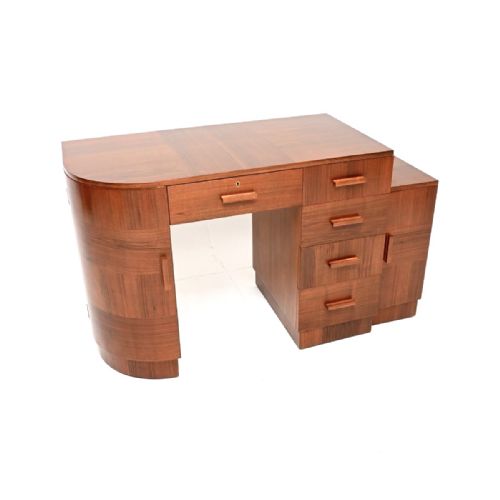
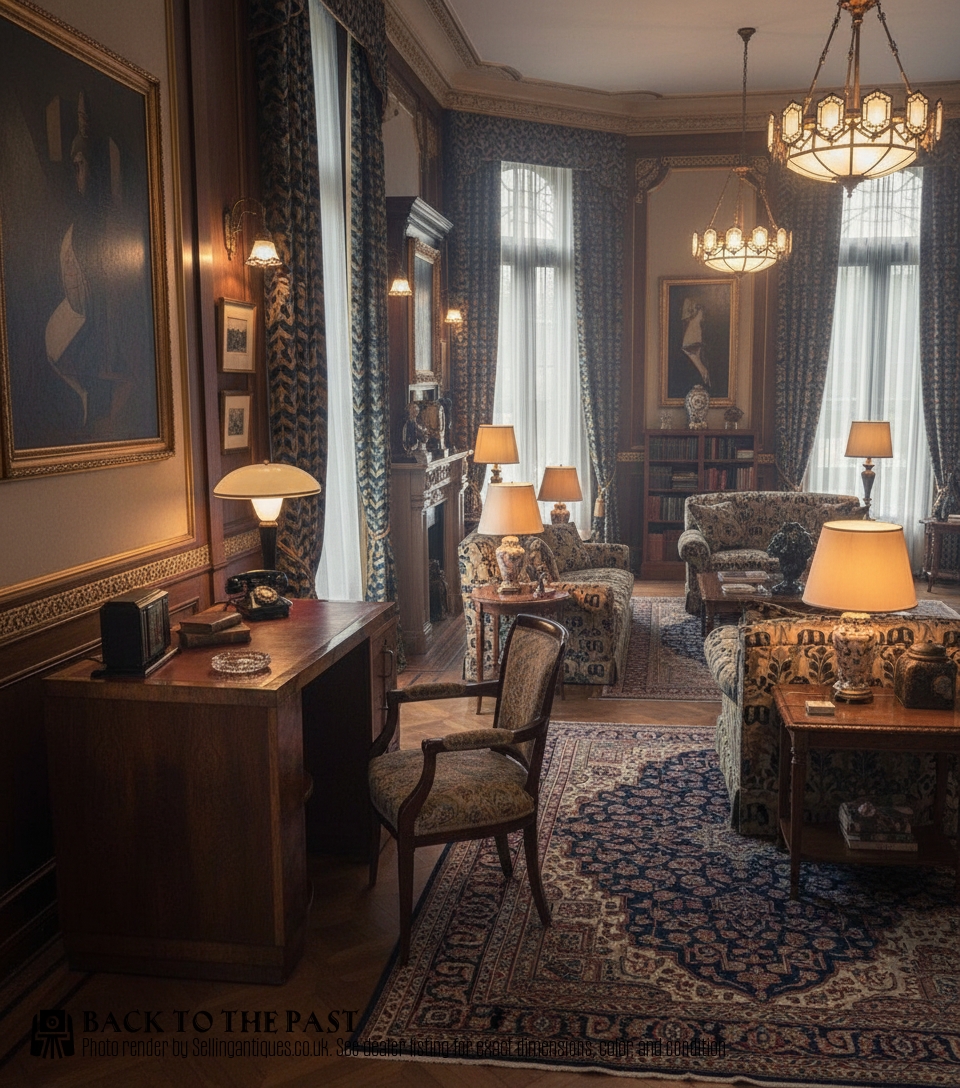
The versions most commonly met on this page span the 1920s and 1930s, often appearing as pedestal desks, writing tables, or two-sided office desks. They frequently display the unmistakable influence of Art Deco and French Art Deco movements, utilising bold outlines and symmetrical drawer arrangements.
Distinguishing quality across the range
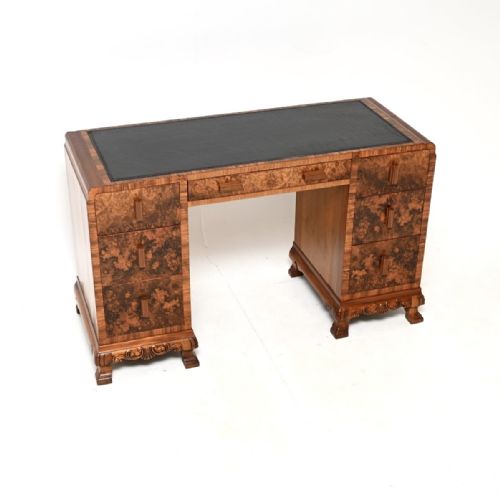
Quality in these desks rests upon the selection of timber veneers and the precision of the cabinetmaker's joinery. Superior examples feature book-matched burr walnut or exotic rosewood that wraps fluidly around curves and drawer fronts, demonstrating exceptional control over complex geometric forms.
Design attribution and maker identity elevate certain pieces significantly above standard commercial production. Desks bearing verifiable workshop labels or attributed to known designers display a finer execution of modernist proportions and internal drawer construction.
1930s Executive Desk Retail Price Guide 2026
Typical asking prices for 1930s executive desk among the pieces listed under this phrase on Sellingantiques today, from the lower quarter to the upper quarter. They describe what is for sale here now, not the wider market.
A shagreen magnifying glass sits quietly among the heavy timber pedestals.
Heal's·Betty Joel·Étienne Kohlmann·Maurice Adams·Maurice Dufrêne
The 1930s Executive Desk Glossary
- Art Deco
- A design style characterised by sleek geometric shapes, streamlined forms, and modern industrial materials. It dominated international architecture and decorative arts through the 1920s and 1930s.
- Pedestal desk
- A freestanding office desk featuring two supporting columns of drawers beneath the main writing surface. This form provides substantial storage capacity while allowing kneehole space in the centre.
- Burr walnut
- A prized timber harvested from walnut tree growths, yielding intricate, swirling grain patterns. Cabinetmakers sliced this wood into thin veneers to cover large flat surfaces.
- Book-matching
- A veneer technique where adjacent slices of timber are opened like a book to mirror each other. This creates symmetrical, decorative patterns across desk tops and drawer fronts.
1930s Executive Desk: Frequently Asked Questions
Are these desks suitable for daily work?
These pieces were originally built for heavy administrative use and remain robust enough for contemporary office duties. Their generous pedestal configurations offer ample storage.
Many examples include protective leather writing surfaces or glass tops that accommodate modern stationery and equipment comfortably.
How do French and English desks differ?
French pieces often embrace extravagant woods like rosewood and experimental silhouettes associated with French Art Deco luxury. English counterparts frequently lean toward functional oak and walnut pedestal office formats.
Both traditions maintain strong geometric discipline, but French designs tend to showcase more avant-garde styling.
How should I care for the wood veneers?
Keep the desk away from direct sunlight and strong heat sources to prevent the delicate burr veneers from drying out or splitting. Regular dusting with a soft, dry cloth maintains the polished finish.
Apply high-quality beeswax sparingly to nourish the timber and preserve the natural lustre of the walnut or maple.