

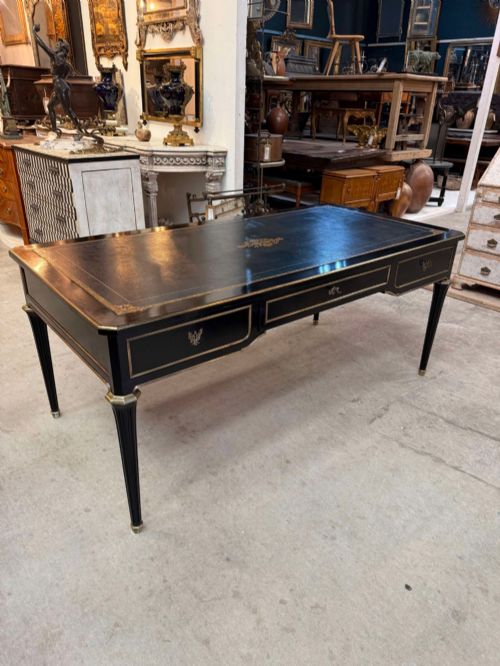
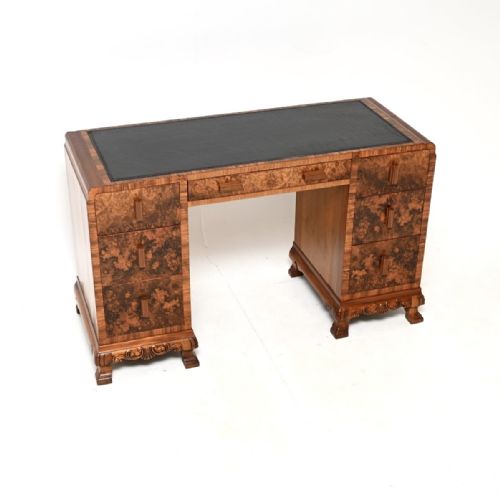
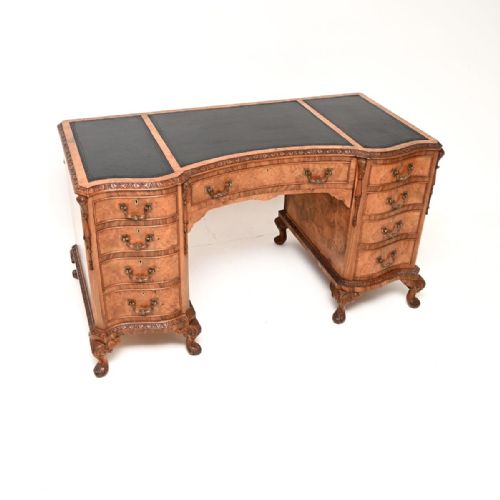
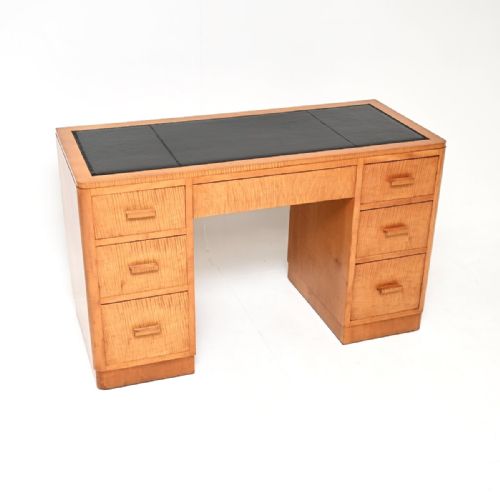



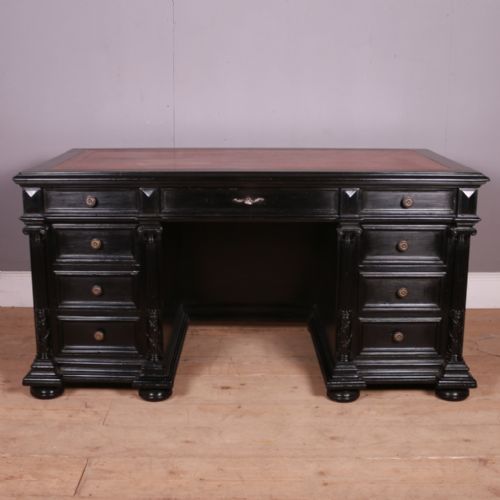
Black Leather Top Desk
A black leather top desk offers a dedicated writing surface defined by dark hide and traditional timber, bringing functional presence to a study.
Black Leather Top Desk
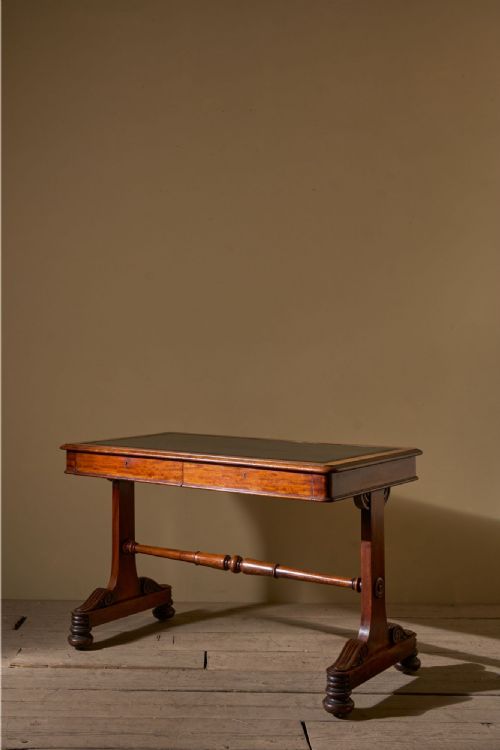
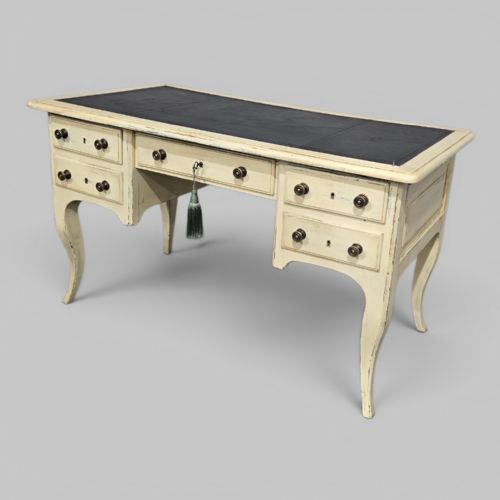
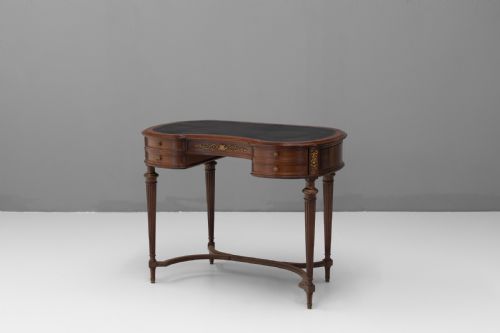
A black leather top desk brings together robust timber forms and a dark hide writing surface designed for daily correspondence and study. These pieces span from the early Victorian era through to Art Deco periods, encompassing pedestal desks, partners desks, writing tables, and kneehole formats.
The version most commonly met on this page is the Victorian or 19th-century pedestal desk in mahogany, walnut, or ebonised wood, alongside Art Deco interpretations in satin birch and burr walnut. Such pieces range from compact single-pedestal office desks to substantial twin-pedestal partners versions equipped with drawers and brass hardware.
How they were made
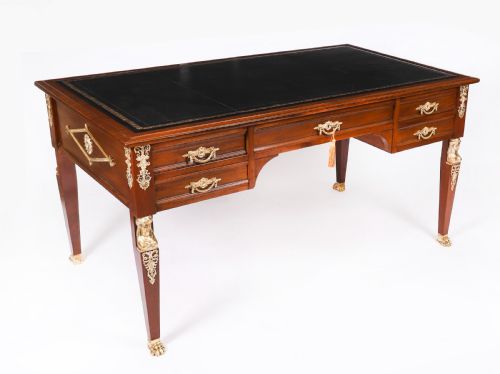
Makers constructed these desks using solid woods and decorative veneers such as mahogany, burr walnut, and satin birch over structural carcasses. Surfaces were fitted with inset black leather or hide, frequently accented with blind tooling or gilt decoration.
Hardware additions included brass handles, drawer pulls, and occasionally ormolu mounts, depending on the stylistic influence from French Empire, Louis XVI, or Queen Anne revival traditions.
Black Leather Top Desk Retail Price Guide 2026
Typical asking prices for black leather top desk among the pieces listed under this phrase on Sellingantiques today, from the lower quarter to the upper quarter. They describe what is for sale here now, not the wider market.
Some partners desks hold enough secret drawers to misplace your stationery for a decade.
What varies in quality
Quality rests in the choice of timber and veneer figure, ranging from plain solid wood to richly figured burr walnut and satin birch. The execution of the joinery and the integration of the leather inset relative to the timber surround also define the tier of the piece.
Maker attribution elevates certain examples, particularly where original cabinetmakers' labels or stamps from firms like Maple and Co or Johnstone and Jeanes remain intact. Hardware quality, from simple brass pulls to elaborate ormolu mounts, further separates standard workshop production from finer studio output.
Maple and Co·Johnstone and Jeanes
The Black Leather Top Desk Glossary
- Partners desk
- A large pedestal desk designed with drawer banks on both sides so two people can sit opposite each other. These pieces often incorporate cupboards or drawers facing both directions.
- Writing table
- A freestanding table with one or more drawers designed primarily for correspondence rather than storage. These generally feature slender legs rather than heavy pedestals.
- Ebonised wood
- Timber treated with a chemical stain or finish to imitate ebony. This dark, uniform treatment appears frequently on 19th-century and Art Deco examples.
- Bureau plat
- A flat-topped French writing table fitted with drawers and standing on cabriole or tapered legs. These pieces often display gilt bronze or ormolu mounts.
- Kneehole desk
- A compact desk featuring a central recessed space for the legs flanked by modest drawer units. This form provides useful workspace while maintaining a smaller footprint than a full partners desk.
Black Leather Top Desk: Frequently Asked Questions
How do I care for the leather top?
The black leather surface benefits from occasional conditioning with specialist leather balm to maintain flexibility and prevent the material from drying out.
Avoid placing excessive moisture directly on the hide and use a soft, dry cloth for routine dusting.
Are these desks suitable for modern office use?
Many of these pieces offer sufficient surface area and drawer space for contemporary laptops and writing materials while providing traditional character.
Buyers should verify the kneehole height and overall dimensions to ensure comfortable clearance for modern seating.
How do I identify a Victorian desk?
Victorian examples typically employ heavy timbers like mahogany, walnut, or satin birch, often featuring traditional hand-cut dovetails within the drawer construction.
Stylistic cues such as brass drawer pulls, turned legs, and inset black leather surfaces further point to 19th-century manufacturing methods.