



Retro Wooden Desk
A retro wooden desk brings warmth and period character to a workspace, combining practical writing surfaces with the distinctive lines of early to mid-twentieth-century design.
Retro Wooden Desk
When you search for a retro wooden desk, you encounter pieces that span the early twentieth century, including Edwardian examples alongside later Art Deco and mid-twentieth-century forms. These pieces serve as functional work surfaces while displaying the rich timber tones characteristic of the period.
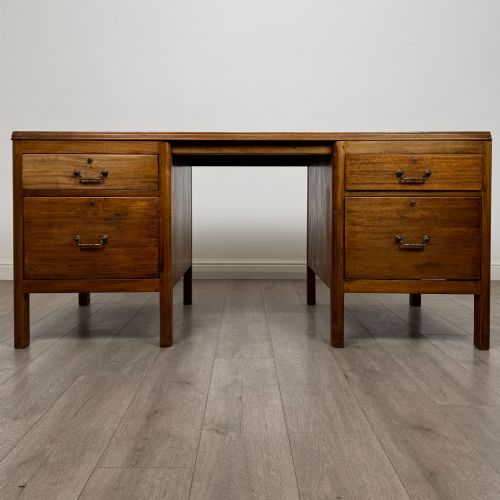
The desks appearing in current listings include traditional office furniture with pedestals and associated seating. They reflect the stylistic shifts from ornate Edwardian cabinet-making toward cleaner geometric shapes of the 1930s.
Origins range from standard British office pieces to military-associated items and continental designs. Each provides a distinct working footprint shaped by the material standards of its specific decade.
Materials and construction
Construction relies heavily on traditional timber selection, utilising solid oak, mahogany, and burr walnut alongside walnut veneers. Cabinet makers combined these woods with brass hardware and occasionally incorporated glass or metal elements for structural or decorative effect.
Veneering techniques allowed workshops to display striking wood grain patterns across large flat surfaces such as desk tops and pedestals. Solid timber framing provided the necessary durability for daily office use.
Current listings demonstrate a strong presence of 1930s Art Deco items alongside Edwardian pieces, utilising oak, walnut, and mahogany.
Assessing quality
Quality in these desks depends on the integrity of the timber and the precision of the joinery rather than mere age. Pieces featuring matched veneers and substantial solid wood carcasses demonstrate superior craftsmanship compared to simpler utilitarian builds.
ELLIOTT of LONDON
The Retro Wooden Desk Glossary
- Art Deco
- A design style prevalent in the 1920s and 1930s characterised by geometric shapes, streamlined forms, and modern industrial materials. It replaced more ornate Victorian and Edwardian aesthetics with sleek symmetry.
- Pedestal desk
- A large freestanding desk featuring two supporting columns of drawers beneath the main work surface. This form provides substantial storage while maintaining a formal appearance in an office.
- Walnut veneer
- A thin layer of decorative walnut wood applied over a secondary timber core to create striking surface patterns. This technique allowed makers to utilise expensive grain patterns economically.
- Edwardian
- Pertaining to the reign of King Edward VII, spanning the early years of the twentieth century. Furniture from this period often retains traditional craftsmanship while moving towards lighter proportions.
- Mid-century modern
- An architectural, interior, and product design development that typically describes modernist styles from roughly the mid-twentieth century. It emphasises function, minimal ornamentation, and clean lines.
Retro Wooden Desk: Frequently Asked Questions
What defines a retro wooden desk?
A retro wooden desk is generally characterised by construction from the early to mid-twentieth century, utilising timbers such as oak, mahogany, or walnut. These pieces reflect design movements like Art Deco or Edwardian traditionalism.
They offer functional workspace combined with period aesthetic qualities, distinguishing them from modern manufactured office furniture.
How do I care for a walnut veneer desk?
Walnut veneer surfaces require gentle cleaning with a soft, dry cloth to remove dust without scratching the thin top layer of timber. Avoid placing them in direct sunlight or near heat sources to prevent the wood from drying out.
Applying appropriate furniture wax periodically helps maintain the sheen and protects the grain from moisture damage.
Are these desks suitable for daily modern work?
Many period desks provide adequate surface area for paperwork and contemporary writing tasks, though older writing heights can occasionally differ from modern ergonomic standards. Checking the kneehole clearance and overall dimensions ensures compatibility with modern seating.
Their solid construction makes them durable enough for regular use when treated with reasonable care.
How can I tell an Edwardian desk from a 1930s piece?
Edwardian desks often display traditional proportions and heavier classical detailing rooted in nineteenth-century traditions. In contrast, 1930s pieces typically embrace Art Deco geometric lines, streamlined pedestal shapes, and contrasting veneers.
Hardware choices and maker labels also provide clear indicators of the specific manufacturing decade.