

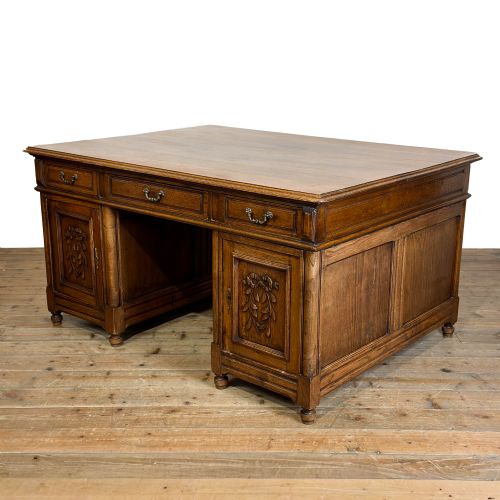
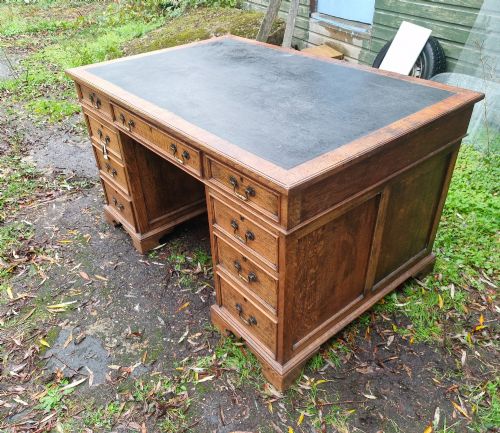
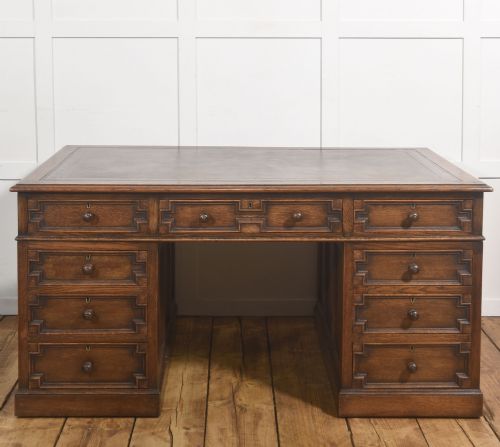
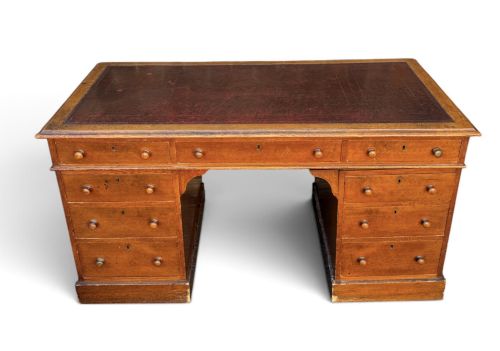
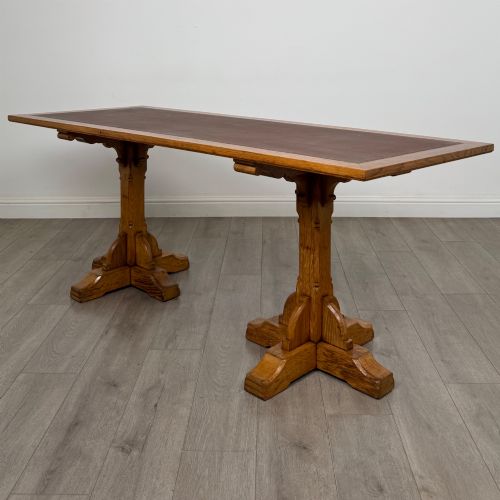
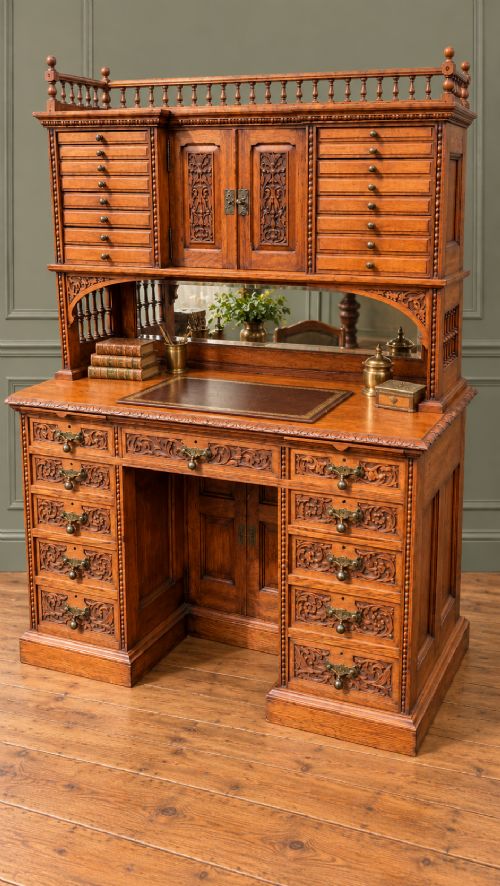
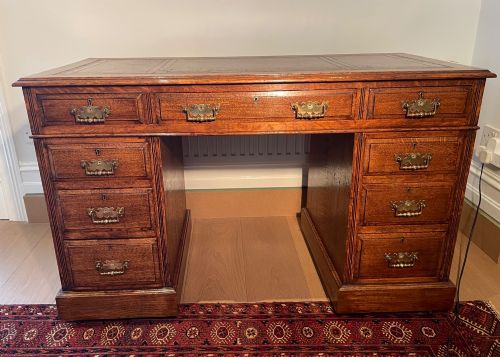
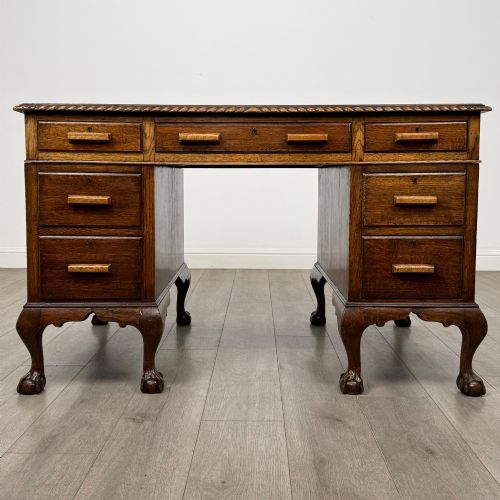
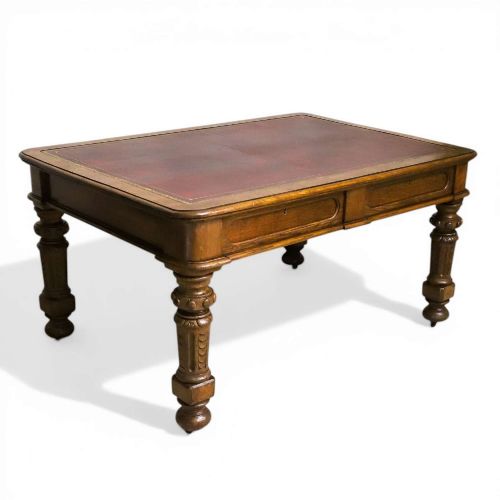
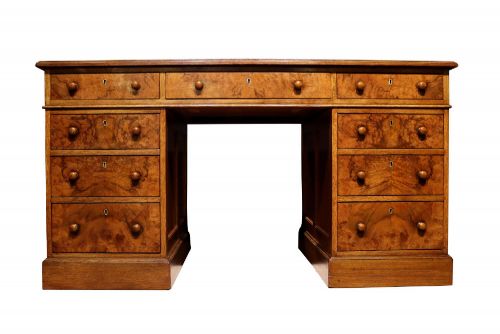
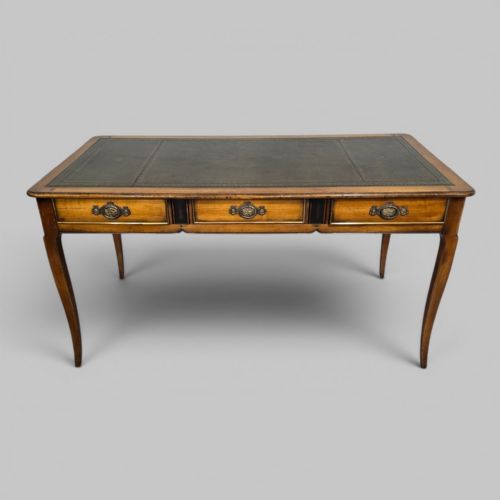


Brown Oak Partner Desk
A brown oak partner desk provides dual-sided workspace in substantial timber, built to serve opposing users in traditional offices.
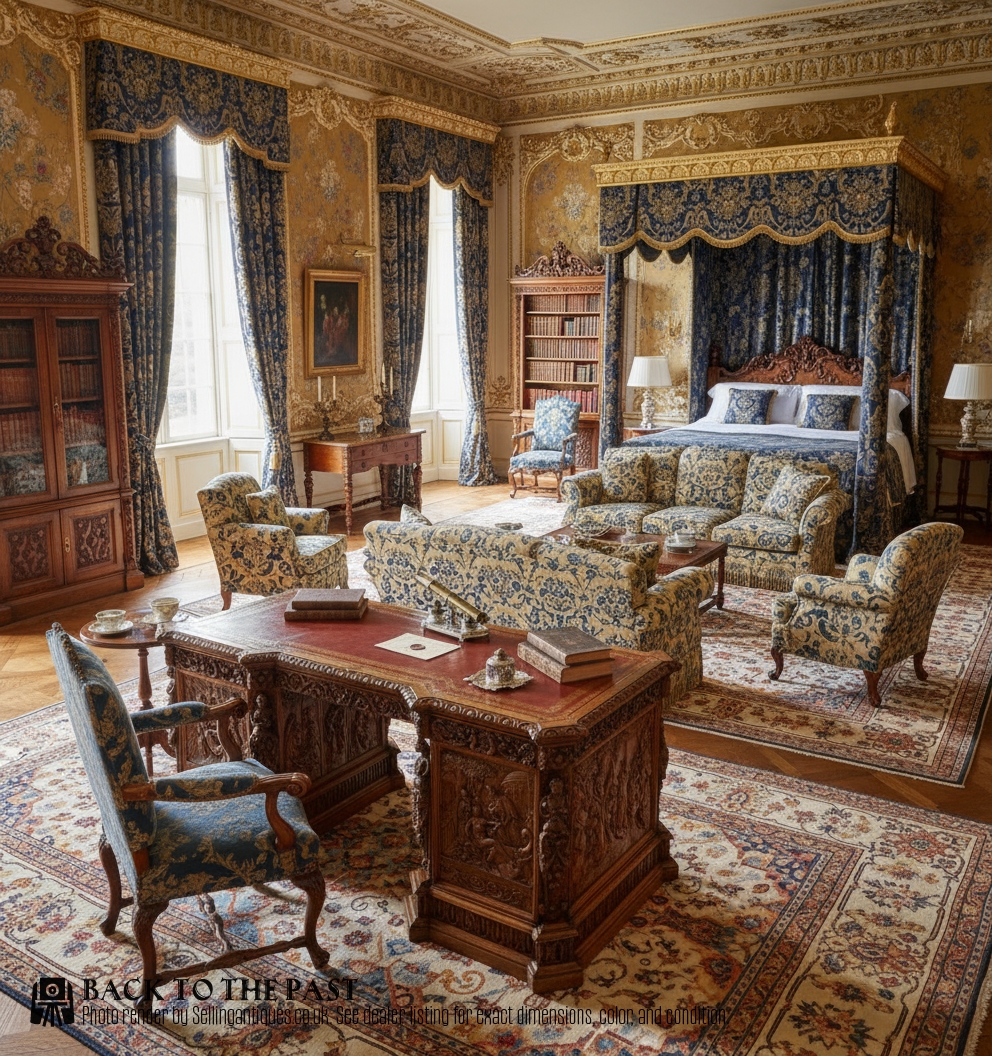
Brown Oak Partner Desk
A brown oak partner desk offers generous writing surfaces and pedestal banks of drawers accessible from both opposing sides, fulfilling administrative tasks for two people simultaneously. The listings show heavy representation from the Victorian and Edwardian eras, alongside pieces spanning the nineteenth and twentieth centuries.
Forms vary between kneehole configurations, pedestal formats, and expansive library tables constructed primarily in oak. Makers and retailers incorporated secondary timbers such as burr walnut, satinwood, and leather writing inserts.
The aesthetic vocabulary ranges from plain Gothic Revival and Arts and Crafts styles to French Provincial and Art Deco variations. Buyers encounter everything from compact kneehole desks to large office partners writing desks.
Judging quality in construction and finish
Finer examples display careful timber selection, utilising figured oak or burr walnut highlights that present rich grain patterns across wide desktop surfaces. The depth of hand carving and the crispness of applied mouldings distinguish standard office furniture from pieces made for prominent libraries.
Internal joinery standards separate superior desks from ordinary ones, evident in dust boards between drawer tiers and smooth drawer operation from both sides. Original hardware, intact leather inserts, and documented maker attributions elevate a desk's standing within the period.
Brown Oak Partner Desk Retail Price Guide 2026
Typical asking prices for brown oak partner desk among the pieces listed under this phrase on Sellingantiques today, from the lower quarter to the upper quarter. They describe what is for sale here now, not the wider market.
T Wilson·Gillow & Co·Deighton & Dunthorne·Merryweather & Son·Edwards & Roberts·Étienne Kohlmann
The Brown Oak Partner Desk Glossary
- Partner desk
- A large double-sided desk designed with drawers and cupboards on both faces so two people can sit opposite each other. These pieces formed the centrepiece of institutional and large residential libraries.
- Pedestal desk
- A heavy writing desk consisting of a top slab resting on two separate pedestals containing banks of drawers. They often feature inset leather writing surfaces.
- Kneehole desk
- A compact desk featuring a central recess for the user's legs, flanked by vertical stacks of drawers. They are typically finished on the front side only.
- Gothic Revival
- An architectural and decorative style popular in the nineteenth century that reintroduced medieval pointed arches, heavy linenfold panelling, and deep relief carving. Pieces in this style utilise robust oak construction.
- Arts and Crafts
- A design movement prioritising honest construction, visible joinery, and natural materials over mass-produced ornamentation. Oak library tables from this period display plain surfaces and sturdy frames.
Brown Oak Partner Desk: Frequently Asked Questions
How do I date an oak partner desk?
Dating relies on examining the construction methods, hardware styles, and prevailing design movements visible in the piece, such as Victorian Gothic Revival or Edwardian Arts and Crafts.
Makers' labels, stamps, or drawer linings also provide historical markers that link the desk to specific nineteenth or twentieth-century workshops.
Will a partner desk fit in my room?
Partner desks are traditionally substantial pieces of furniture built to anchor a spacious study or library rather than a small corner.
Because they offer access from both sides, they require floor clearance all the way around so users can pull out chairs and open drawers.
How do I care for the leather top?
The leather writing surface benefits from occasional cleaning with specialised leather balms to prevent the material from drying out and cracking.
Avoiding direct sunlight and excessive moisture preserves both the hide and the gilt tooling applied around the borders.