


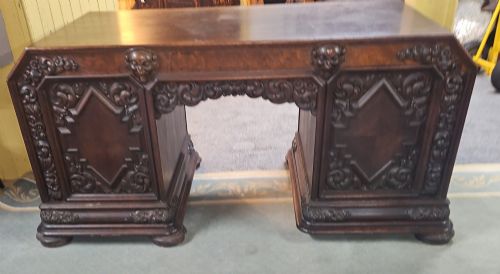


Jacobean Style Oak Desk
These heavy, timber-framed pieces bring seventeenth-century presence into a room, and a jacobean style oak desk offers both a working surface and deep historical character.
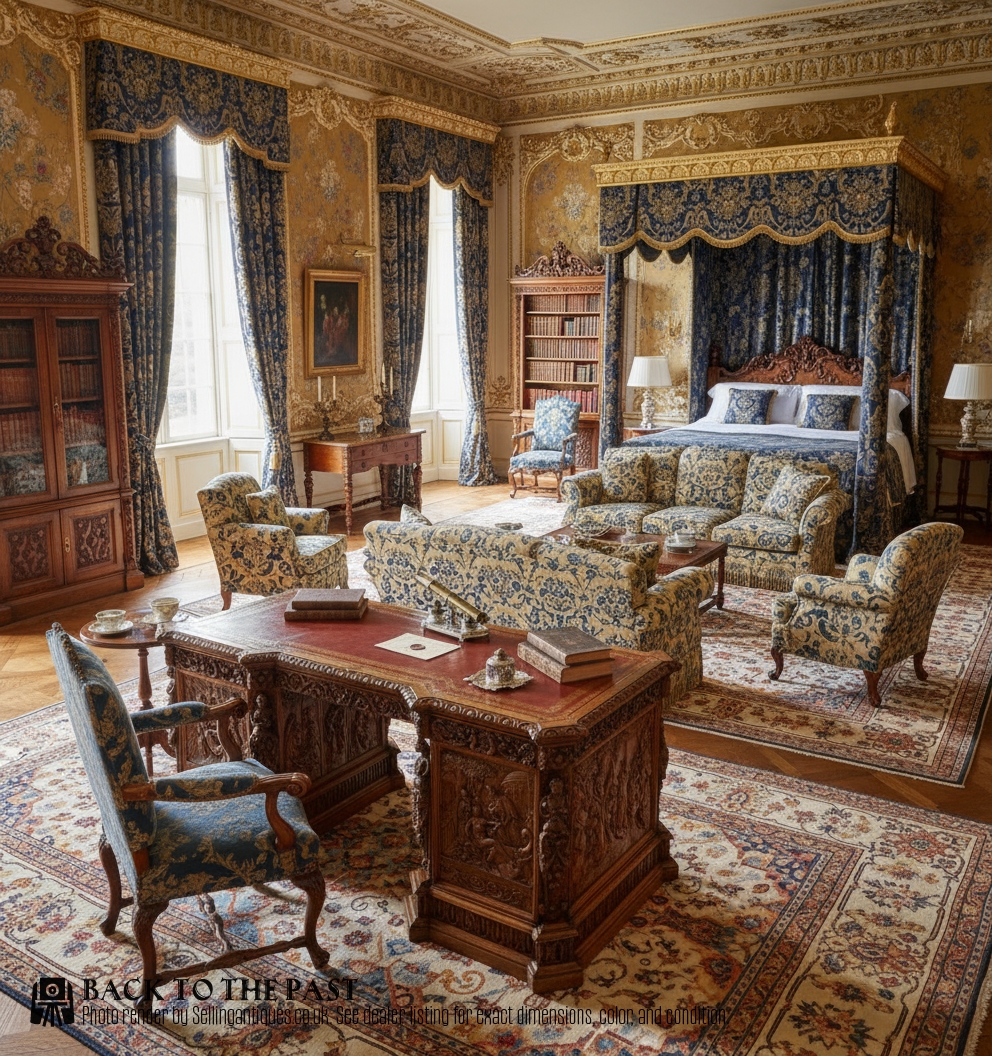
Jacobean Style Oak Desk
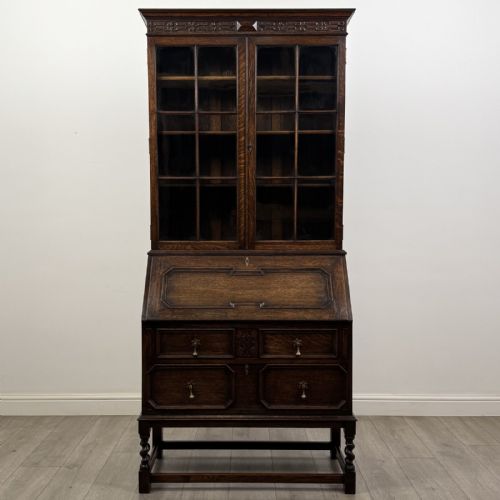
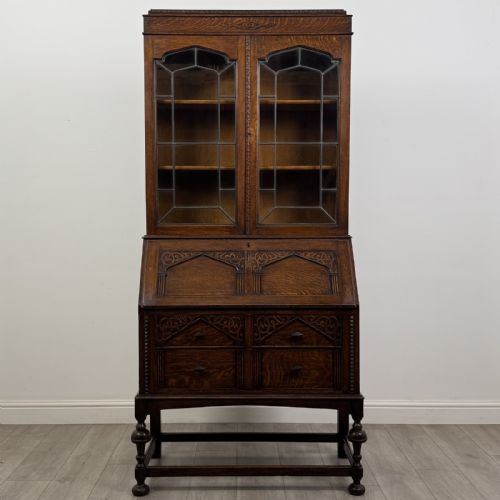
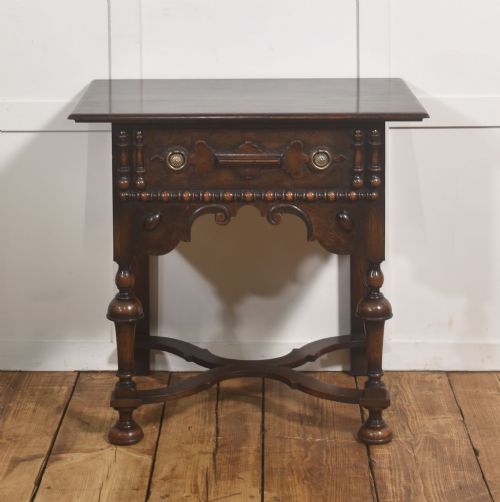
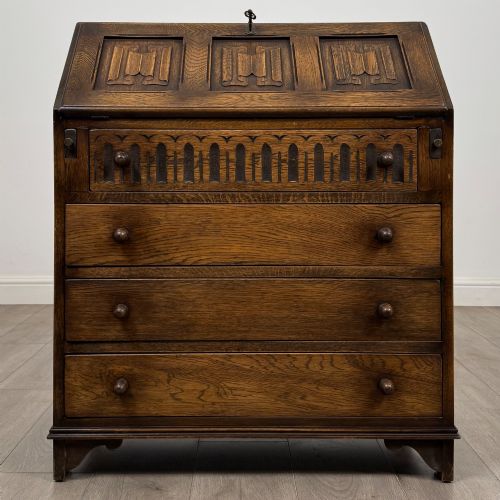
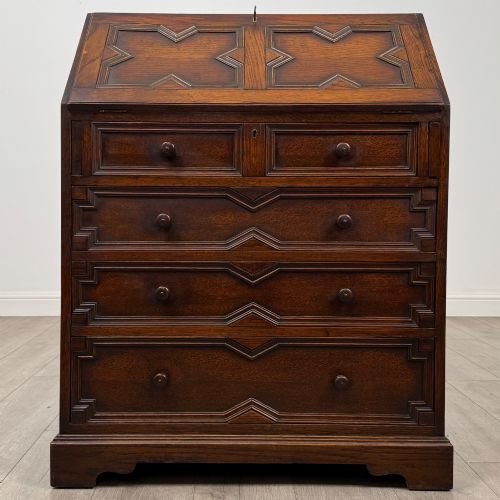
When you search for a jacobean style oak desk, you encounter writing furniture that draws on seventeenth-century motifs, though most examples date from the Victorian era through the 1930s. The selection includes writing tables, writing bureaus, and bureau bookcases that utilise revival designs.
The desks you meet most frequently on this page combine nineteenth-century and early twentieth-century manufacturing with older stylistic vocabulary. Makers from the Edwardian period and the 1920s leaned heavily on Jacobean, Carolean, and Tudor revivals to satisfy demand for substantial, dark wood study furniture.
Beyond dedicated writing desks, related forms appear in the listings, including bureau cabinets and writing tables fitted with drawers. These pieces share the characteristic timber and heavy carving associated with seventeenth-century English joinery.
Assessing Quality and Execution
Quality in these desks rests on the crispness of the hand-carving and the selection of the timber. Pieces with deep, sharply defined relief work and well-figured grain stand apart from examples with shallow, mechanical stamping.
The internal construction of the drawers and the integrity of the writing surface dictate the daily utility of the desk. Well-executed pieces maintain tight joints and substantial weight, showing little timber movement over decades of domestic service.
Jacobean Style Oak Desk Retail Price Guide 2026
Typical asking prices for jacobean style oak desk among the pieces listed under this phrase on Sellingantiques today, from the lower quarter to the upper quarter. They describe what is for sale here now, not the wider market.
Some nineteenth-century makers evidently enjoyed ecclesiastical drama, carving entire biblical scenes into the modest writing box on your lap.
Wylie & Lochhead
The Jacobean Style Oak Desk Glossary
- Bureau
- A sloping desk with a hinged fall-front that opens to reveal internal pigeonholes and small drawers. This form provides a concealed writing surface when closed.
- Linenfold
- A carved panel motif resembling folded fabric or parchment. It is frequently seen on the doors and falls of early twentieth-century oak furniture.
- Carolean
- A stylistic period spanning the reign of Charles II, characterised by rich baroque carving, twisted turnings, and scrolling woodwork. Revivals of this style appear often in nineteenth-century oak furniture.
- Bible Box
- A small, portable desk with a slant lid, originally designed to hold sacred texts. These boxes sit atop tables or serve as compact writing slopes.
- Partner Desk
- A large double-sided desk designed with drawers and cupboards on both faces for two people to work opposite one another. These are substantial pieces often featuring heavily carved panels.
Jacobean Style Oak Desk: Frequently Asked Questions
How do I date a jacobean style oak desk?
Examine the drawer construction, timber colour, and secondary woods used inside the piece. Hand-cut dovetails and uniform tool marks point towards nineteenth or early twentieth-century revival work rather than original seventeenth-century execution.
Hardware and locks also offer clues to the manufacturing date. Modern screws or machine-cut components indicate a later reproduction, whereas period revival pieces often utilise older joining techniques.
Where should I place a heavy oak desk in a room?
These substantial timber pieces anchor a study, library, or living space, often positioned against a wall or floating in the centre of the room if the back is finished. Ensure the floor can support the significant weight of solid oak.
Keep the desk away from direct heat sources and strong sunlight to prevent the timber from drying out or the leather writing surface from cracking. Natural light from the side helps illuminate the carved details.
How do I care for the dark oak finish?
Dust the wood regularly with a soft, dry cloth to prevent grit from accumulating in the carved recesses and mouldings. Avoid silicone-based sprays that can build up a sticky residue on the surface.
Apply a quality beeswax periodically to nourish the timber and maintain a soft sheen. Rub the wax thoroughly into the grain and buff gently with a clean cloth.