

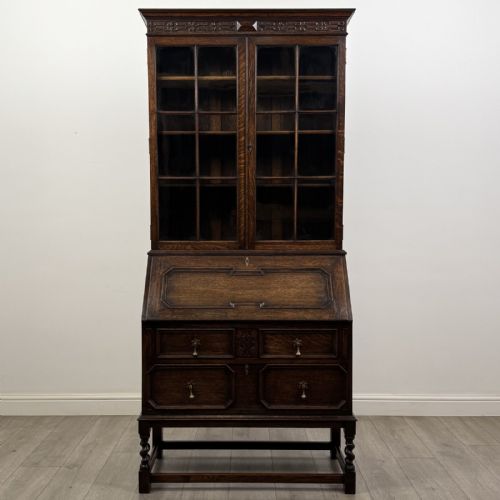
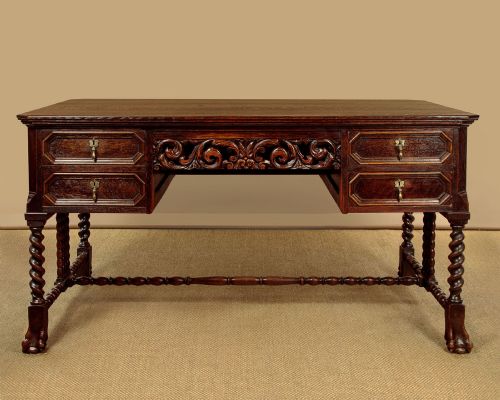

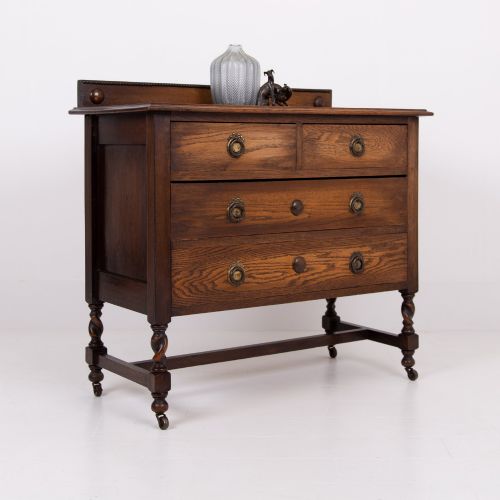
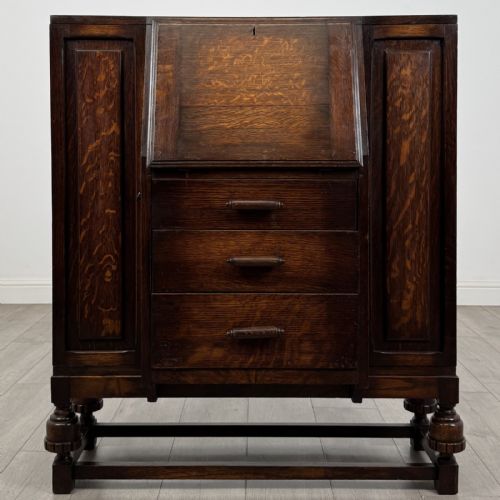
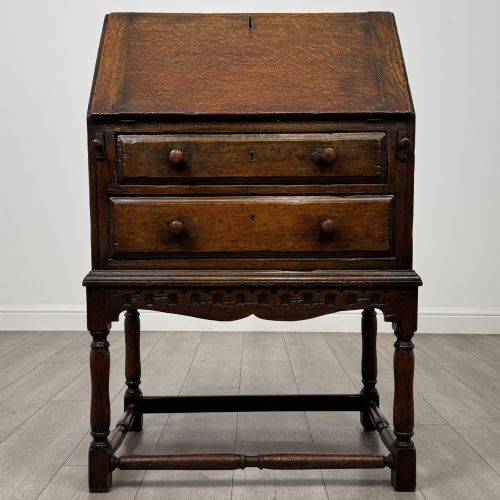
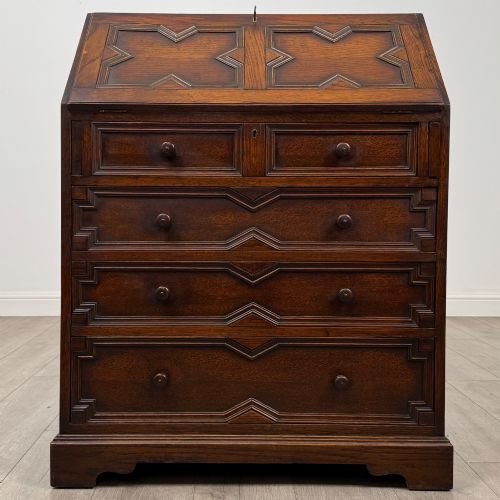


Jacobean Revival Bureau
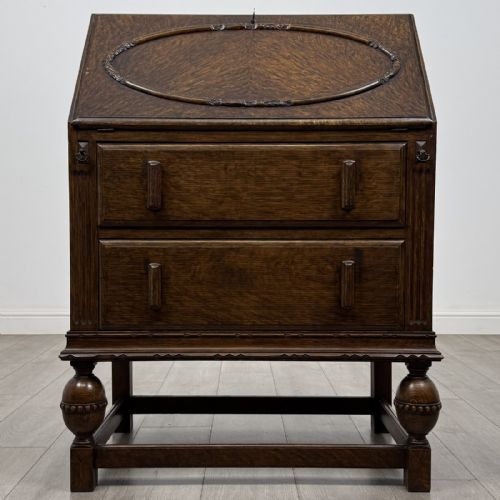
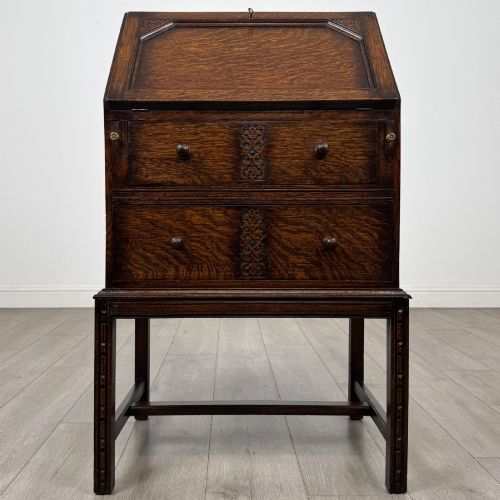
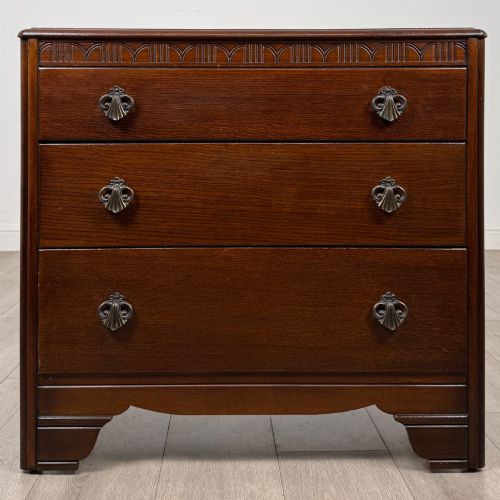
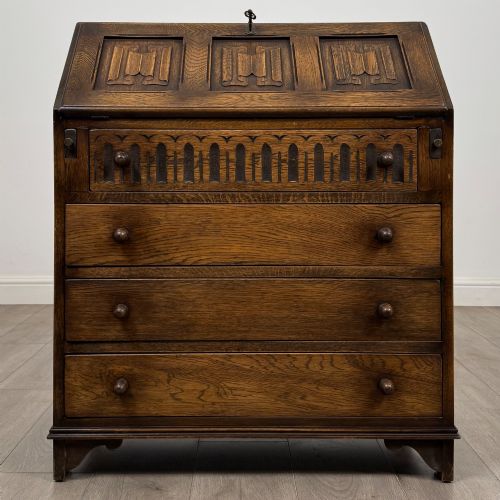
These jacobean revival bureau pieces combine heavy period revival timber with practical writing compartments.
Jacobean Revival Bureau
A jacobean revival bureau offers a fall-front writing surface that conceals fitted interior compartments, appearing frequently across Edwardian and 1920s output. These heavy writing desks and bureau bookcases draw on seventeenth-century motifs, combining substantial storage with a drop-down flap for correspondence.
Most examples encountered here date from the Edwardian era and 1920, executed in solid oak or oak veneer. Buyers often find variations ranging from simple writing desks to tall bureau bookcases featuring glazed upper sections.
Materials and construction
Makers relied principally upon solid oak and oak veneer, supplemented by brass handles, iron hardware, and occasional glass panels in bookcase doors. Wood inlay also appears on select items to accent the dark timber surfaces.
Construction techniques centre on heavy timber panels, often enriched with carved linenfold details or traditional relief work. Interiors frequently house moving parts and small drawers designed to organise writing materials.
Jacobean Revival Bureau Retail Price Guide 2026
Typical asking prices for jacobean revival bureau among the pieces listed under this phrase on Sellingantiques today, from the lower quarter to the upper quarter. They describe what is for sale here now, not the wider market.
Listings span periods from 1850 through the Victorian Renaissance Revival, Edwardian era, and 1930.
Distinctions in quality
Superior items display crisp, deep carving across the fall front and drawer panels, whereas simpler versions rely on plain timber surfaces. The complexity of the interior fitments, including moving compartments and well-configured pigeonholes, marks out finer desks.
The choice between solid oak construction and oak veneer alters the heft and finish of the piece. Bureau bookcases with well-proportioned glazed upper sections represent a more ambitious form than standard writing desks.
The Jacobean Revival Bureau Glossary
- Bureau
- A writing desk featuring a sloping fall-front flap that opens to reveal small drawers and pigeonholes. It provides a concealed workspace when closed.
- Linenfold
- A style of carved wooden panelling resembling folded vertical linen fabric. It is commonly found on the front flaps of Edwardian oak furniture.
- Bureau Bookcase
- A two-part piece combining a lower writing bureau with an upper shelved cabinet, often enclosed by glass doors. It maximises storage and display space.
- Fall-front
- The hinged sloping panel of a bureau that drops down to form a writing surface. It is supported by internal sliding arms or stays.
Jacobean Revival Bureau: Frequently Asked Questions
How do I date a jacobean revival bureau?
Most pieces on this page originate from the Edwardian period or around 1920, drawing stylistic cues from seventeenth-century originals.
Examining the timber thickness, interior drawer construction, and hardware helps distinguish these revival pieces from genuine antique seventeenth-century furniture.
What is the difference between a bureau and a writing desk?
A bureau specifically incorporates a sloping fall-front that covers an organised interior of small compartments when closed.
Standard writing desks typically offer flat or leather-inset tops with frieze drawers beneath, lacking the vertical fall-front enclosure.
How were bureau bookcases used originally?
The upper glass-fronted section served to display and store books, while the drop-front desk below provided a private surface for writing letters.
This dual function made them practical central furnishings for studies and reception rooms in period homes.
Does oak veneer affect the authenticity of these pieces?
Oak veneer appears on several Edwardian and later pieces alongside solid oak timber without diminishing the period integrity.
Cabinetmakers utilised veneers to create stable flat surfaces on large panels while maintaining the grain and colour of solid oak.