



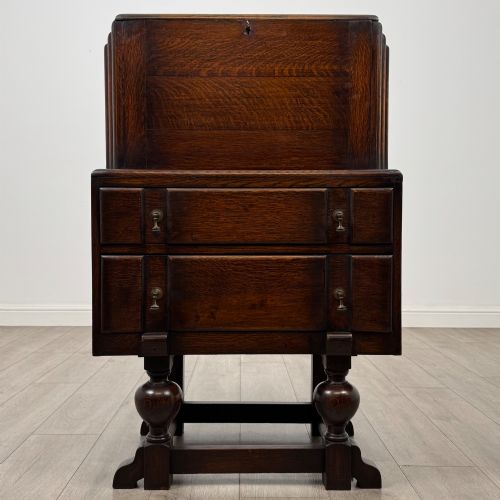
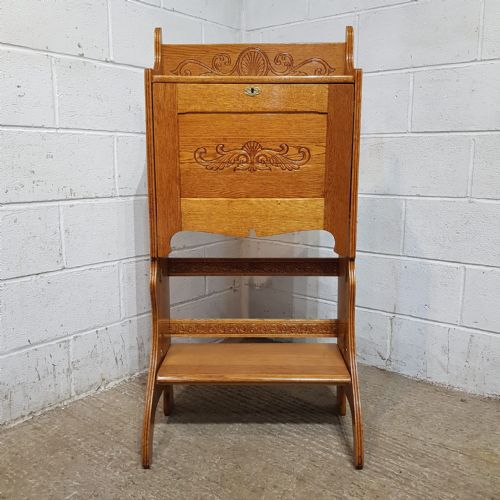
Oak Drop Front Desk
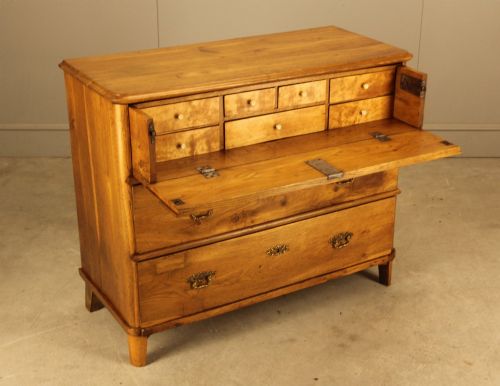
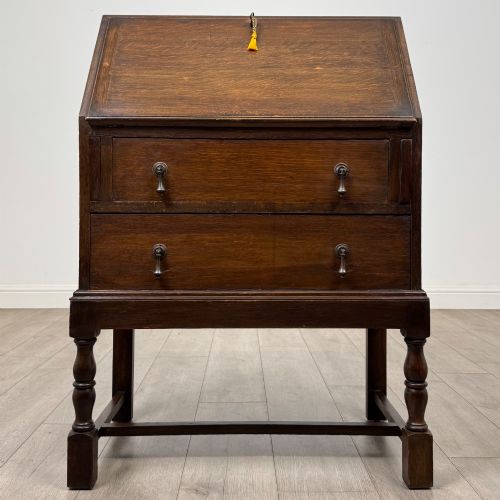
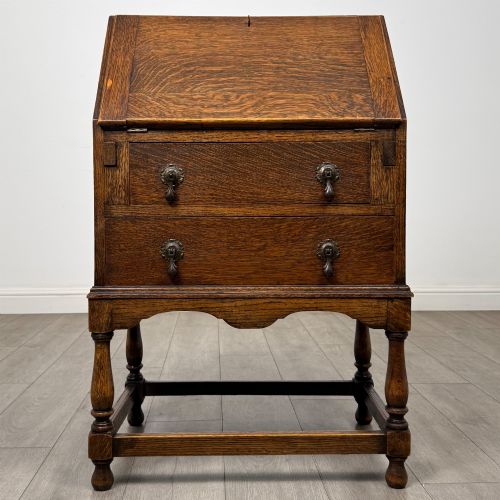
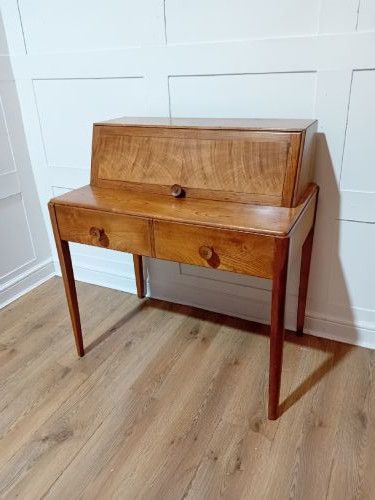
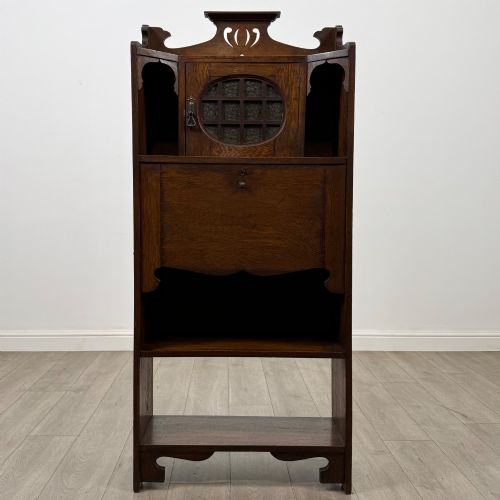
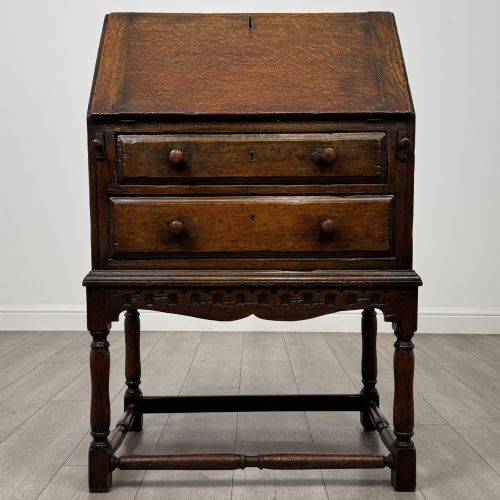
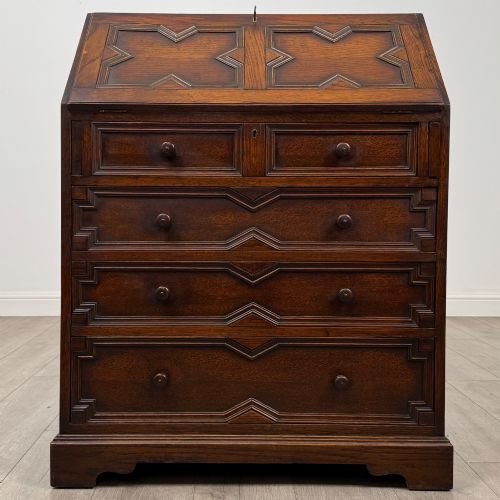
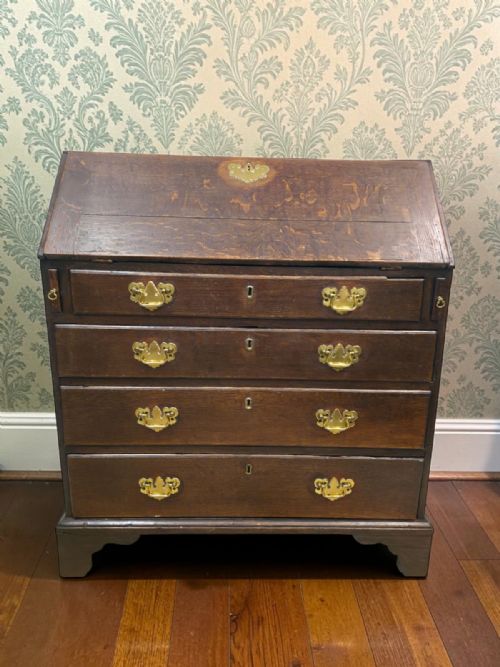
An oak drop front desk offers a practical writing surface that folds away neatly when not in use.
Materials and construction methods
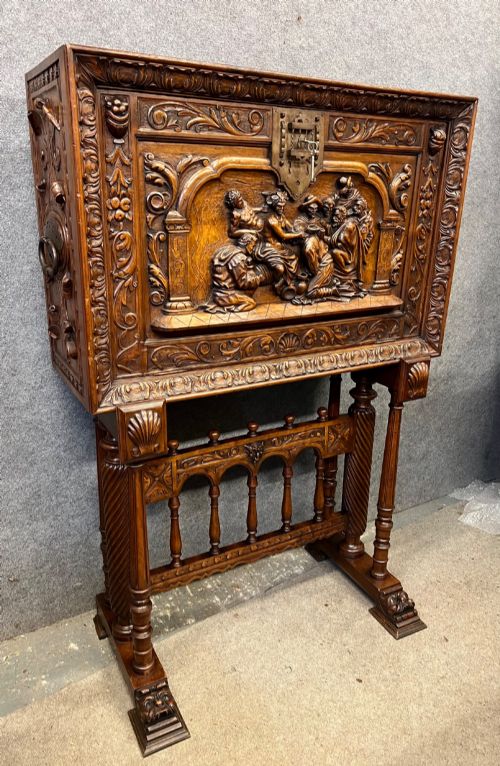
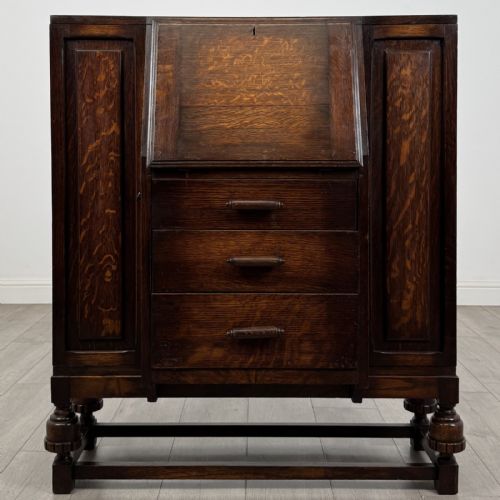
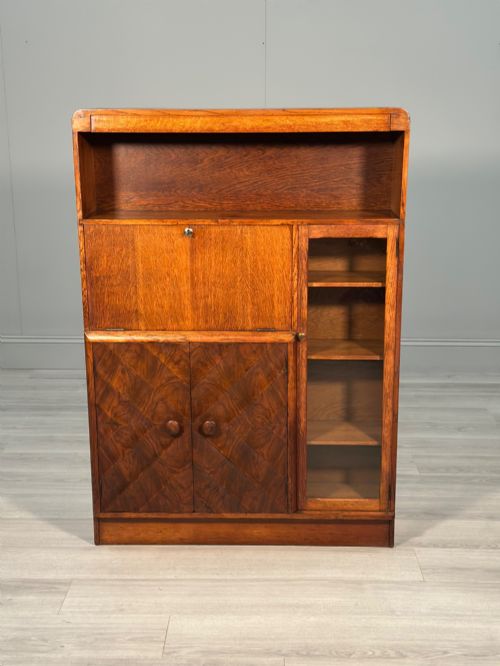
Cabinetmakers utilised solid timber, plank construction, and occasional parquetry veneers applied to a carcase. Oak boards were joined using dovetail joints for drawer construction and traditional mortise and tenon joinery for the main structure.
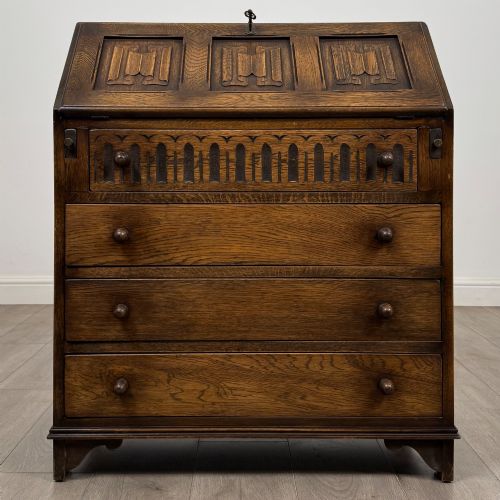
Hardware such as brass handles, escutcheons, hinges, and iron locks secured the fall front and internal drawers. Glass panels appear in the upper sections of bureau bookcases, while interior fittings often incorporate finely carved or shaped pigeonholes.
Assessing craftsmanship and condition
The refinement of the interior arrangement dictates much of the distinction between standard production items and exceptional pieces. Elaborate secret drawers, carved linenfold motifs, or figural details such as Green Man carvings elevate the status of an item.
The selection of timber grain, particularly quarter-sawn oak displaying medullary rays, contributes to the visual depth of the exterior. The integration of original brass hardware and the crispness of hand-carved decorative elements separate basic utility items from masterwork desks.
Oak Drop Front Desk Retail Price Guide 2026
Typical asking prices for oak drop front desk among the pieces listed under this phrase on Sellingantiques today, from the lower quarter to the upper quarter. They describe what is for sale here now, not the wider market.
The listings here span from the 17th Century through to the 1940s, encompassing Georgian, Edwardian, and Arts and Crafts examples in oak.
Arthur Basil Reynolds·Stanley Webb Davies·Robert Mouseman Thompson·Harris Lebus·Larkin
The Oak Drop Front Desk Glossary
- Bureau
- A writing desk with a sloping hinged lid that covers compartments and drawers. This term often applies interchangeably with drop front desks in British antique terminology.
- Fall front
- The hinged panel that drops down to form a horizontal writing surface. It conceals the internal drawers and pigeonholes when closed.
- Lopers
- Pull-out wooden supports that slide out from beneath the drop front to hold the writing flap in place. They prevent excess strain on the hinges.
- Parquetry
- Geometric patterns of wood veneer inlaid into a surface. It appears on select pieces to decorate the fall front or drawer fronts.
- Pigeonholes
- Small, open compartments fitted inside the desk interior for sorting letters and papers. They frequently sit above small concealed drawers.
Oak Drop Front Desk: Frequently Asked Questions
What is a drop front desk called?
These pieces are frequently catalogued as bureaus, writing desks, or bureau bookcases depending on whether they include upper shelving. The terms often overlap in antique inventories.
Historical records and dealer descriptions use these designations interchangeably for furniture featuring a sloping fold-down writing flap.
How do I use an oak drop front desk?
Lower the hinged fall front onto the pull-out wooden lopers to create a stable writing surface. This reveals the interior pigeonholes and small drawers for stationery storage.
When finished writing, simply lift the flap back into the vertical position and secure it with the lock to conceal the workspace.
How do I date an oak drop front desk?
Examine the construction methods, such as hand-cut dovetails on the internal drawers, the presence of vernacular tool marks, and the style of the hardware. Earlier pieces from the 17th Century and 18th Century display different timber preparation compared to Edwardian or 1920s revivals.
Stylistic indicators like Arts and Crafts simplicity or Jacobean Revival carving help place the piece within a specific period.
Where were these desks placed in a home?
They served as functional workspaces in parlours, studies, or bedrooms where correspondence and household accounts were managed. The compact footprint made them suitable for smaller rooms.
Today, they function well in home offices or living spaces as both writing surfaces and storage cabinets.