

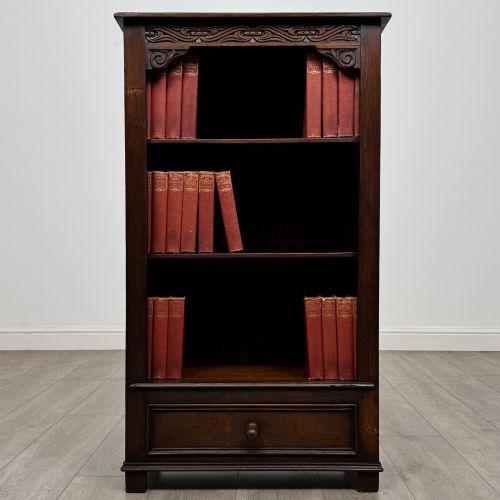


Jacobean Style Bookcase
These jacobean style bookcase pieces bring sturdy timber and historical revival presence straight into a room.

Jacobean Style Bookcase
A jacobean style bookcase delivers heavy timber presence and historical revival character to a room. Buyers searching this phrase look for functional shelving united with the dark wood aesthetic of early seventeenth-century English joinery.
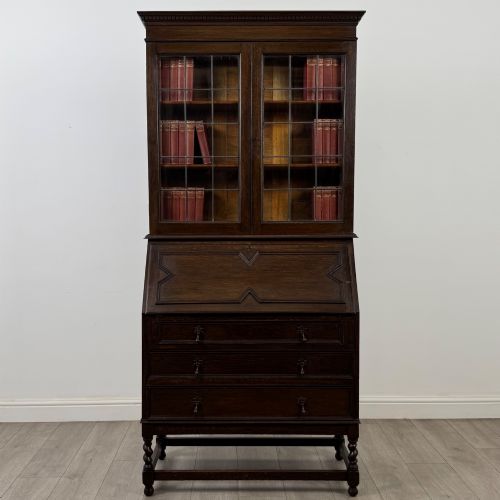
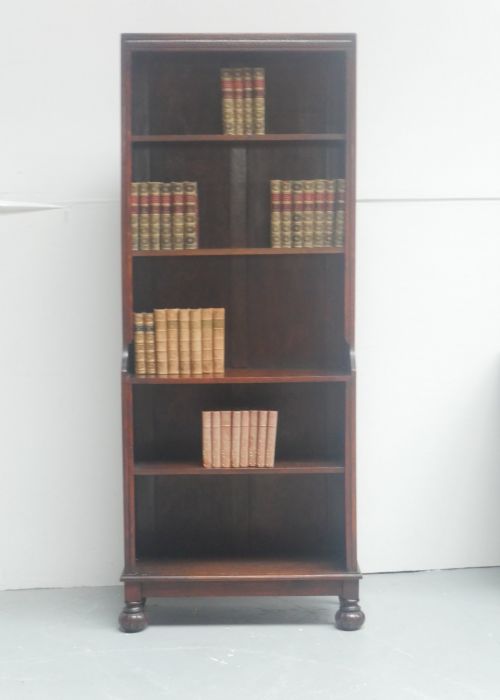
The pieces appearing on this page span several decades from the nineteenth and twentieth centuries, including Edwardian examples and interwar production from nineteen-twenty. Bureau bookcases with drop-down writing slopes sit alongside open shelf formats, corner cabinets, and glazed display units.
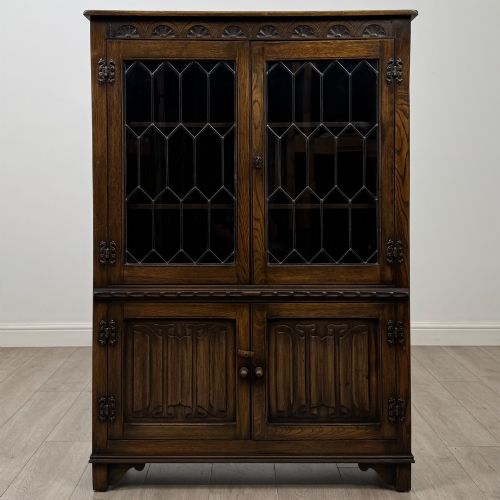
Solid oak provides the primary structural foundation across nearly every recorded piece. Cabinet makers frequently incorporate leaded glass panels, brass fittings, and carved surface decoration to emulate seventeenth-century prototypes.
What varies in quality
The standard of carving determines much of the visual distinction between individual examples. Crisp hand-chiselled details on the oak timber command greater appreciation than softer, more mechanical moulding treatments.
Hardware selection and glass quality further differentiate the items. Original brass handles, leaded window joints, and well-fitted bureau drawers indicate higher execution standards during production.
Jacobean Style Bookcase Retail Price Guide 2026
Typical asking prices for jacobean style bookcase among the pieces listed under this phrase on Sellingantiques today, from the lower quarter to the upper quarter. They describe what is for sale here now, not the wider market.
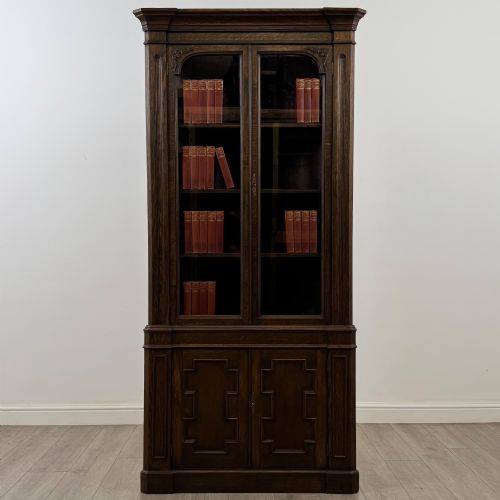
At least one nineteenth-century maker decided books needed Flemish company alongside heavy carved oak.
The Jacobean Style Bookcase Glossary
- Bureau bookcase
- A dual-purpose form combining a sloping writing desk compartment with enclosed shelving above. The drop-front flap reveals small pigeonholes and drawers for correspondence.
- Linenfold
- A style of carved wooden panelling that resembles folded fabric. Cabinet makers utilised this motif extensively on doors and drawer fronts during revival periods.
- Jacobean Revival
- A nineteenth and twentieth-century design movement recreating the architectural motifs and heavy proportions of the early seventeenth century. Furniture from this style employs dark oak and formal geometric carving.
- Glazed bookcase
- A cabinet fitted with glass-panelled doors to protect volumes from dust while maintaining visibility. These frequently incorporate wooden framing bars or leaded came work.
- Corner cabinet
- A space-saving furniture form designed to fit precisely into ninety-degree room angles. These units feature triangular shelving enclosed by single or double doors.
Jacobean Style Bookcase: Frequently Asked Questions
What is a jacobean style bookcase?
A jacobean style bookcase is a piece of furniture built to emulate the heavy timber construction and dark finishes of early seventeenth-century English design. Most examples date from the Victorian, Edwardian, or interwar periods.
These items range from open shelf formats to complex bureau bookcases featuring glazed doors, drop-down writing slopes, and carved wooden panels.
How do I date a jacobean bookcase?
Dating relies on examining the timber preparation, secondary woods, and hardware construction methods. Edwardian and interwar pieces often show machine-sawn components hidden behind hand-finished surfaces.
Style indicators like linenfold carving and Flemish motifs appeared across multiple revival phases during the nineteenth and twentieth centuries rather than a single decade.
Are bureau bookcases practical for daily use?
Bureau variants offer dual functionality by combining a drop-front writing surface with enclosed upper shelving. The internal compartments provide organised storage for stationery alongside standard book storage.
The sloping desk surface folds flat when not in use, making these items suitable for studies or living spaces requiring a compact writing area.
What wood was used for these bookcases?
Oak serves as the primary material across nearly all recorded examples in this category. Cabinet makers utilised solid oak planks and dark finishes to achieve the traditional seventeenth-century aesthetic.
Secondary elements incorporate glass, brass handles, iron hardware, and lead cames for glazed door construction.
Where should I place a corner cabinet?
Corner cabinets fit directly into ninety-degree room junctions to utilise otherwise empty wall space. Their triangular footprint allows them to house books or display objects without projecting far into the room.
Matching the wood tone with existing furniture helps integrate these taller units into a traditional interior scheme.