



Vintage Oak Secretary Desk
A vintage oak secretary desk provides a sturdy writing surface and concealed storage, bringing practical British craftsmanship into a modern study.
Vintage Oak Secretary Desk
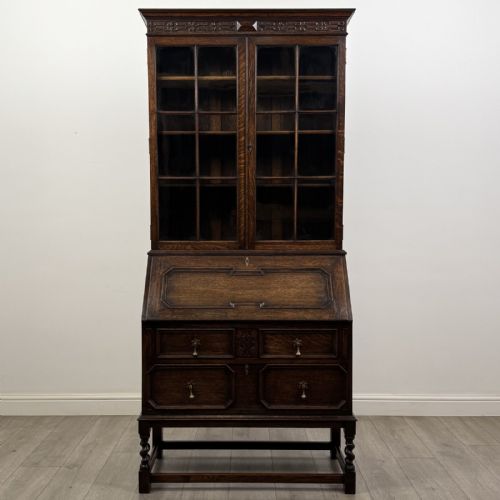
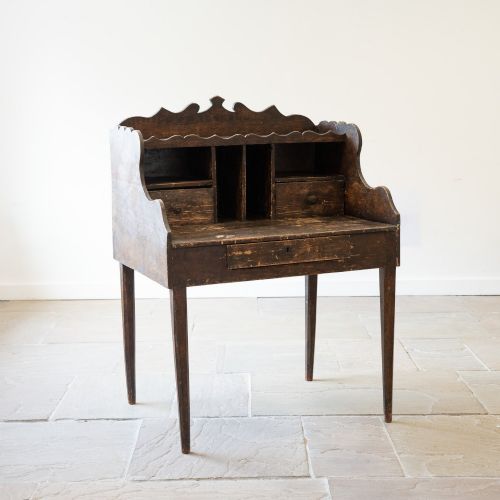
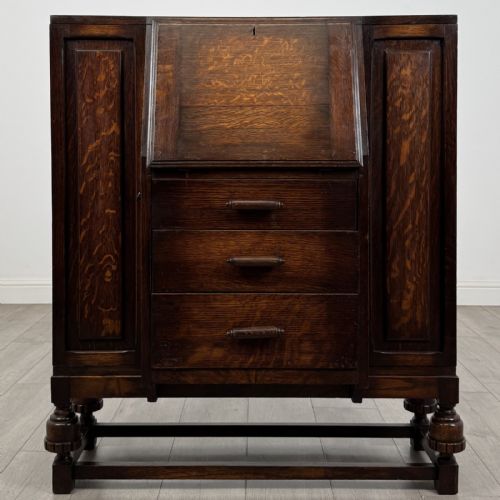
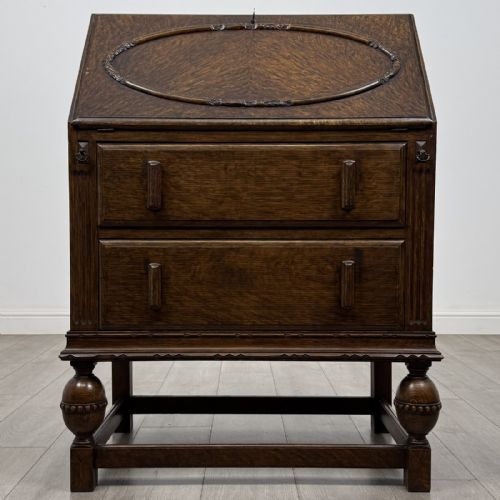
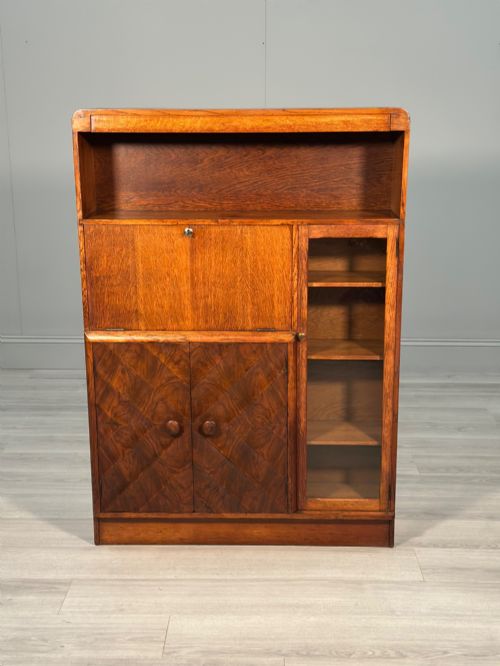
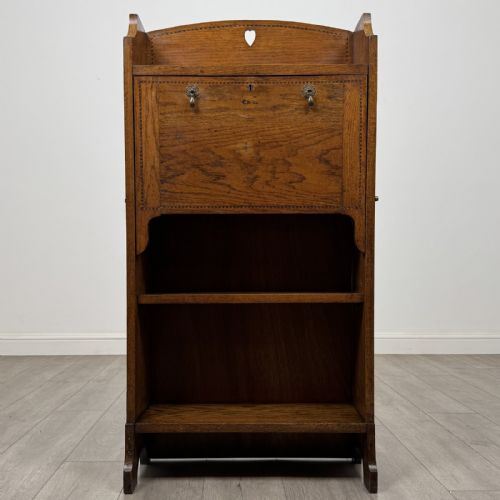
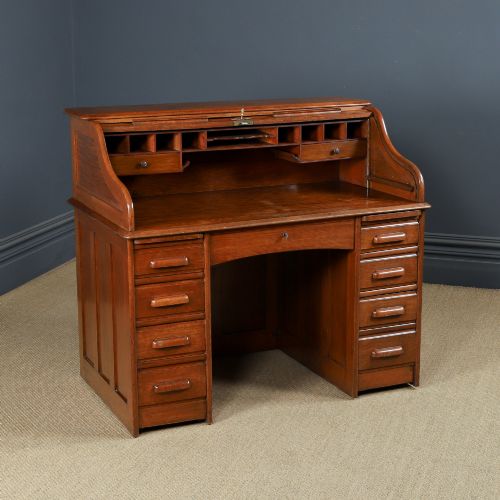
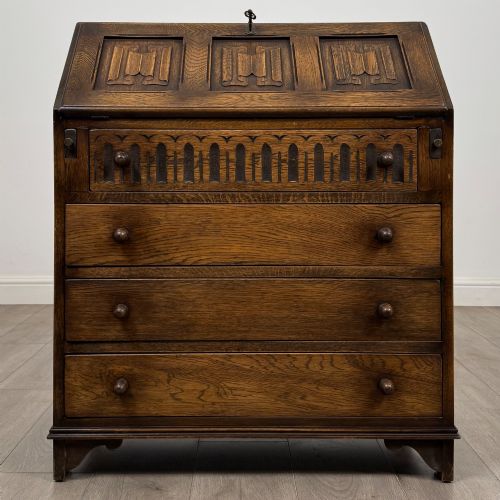
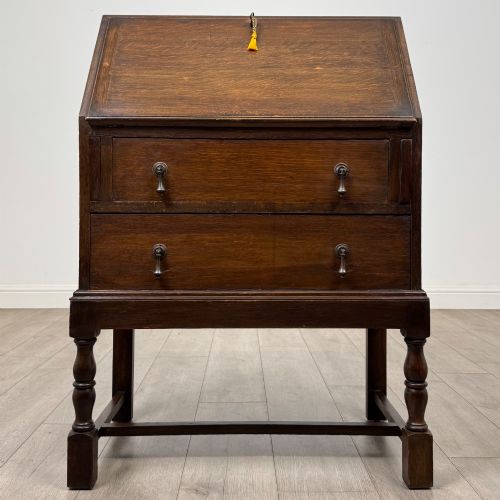
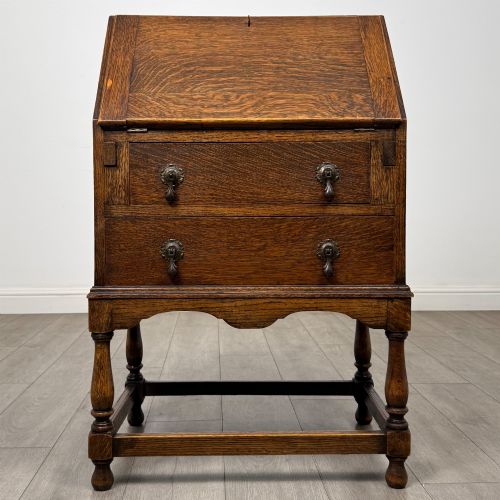
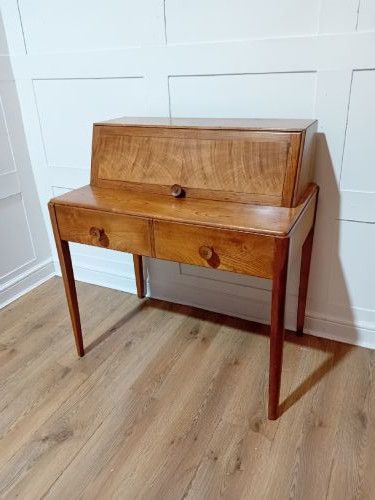
A vintage oak secretary desk combines a drop-front writing flap with internal pigeonholes and drawers beneath, forming a compact workspace that conceals correspondence when closed. These items appear primarily as Edwardian or 1920s writing bureaux, alongside Georgian and Arts and Crafts examples.
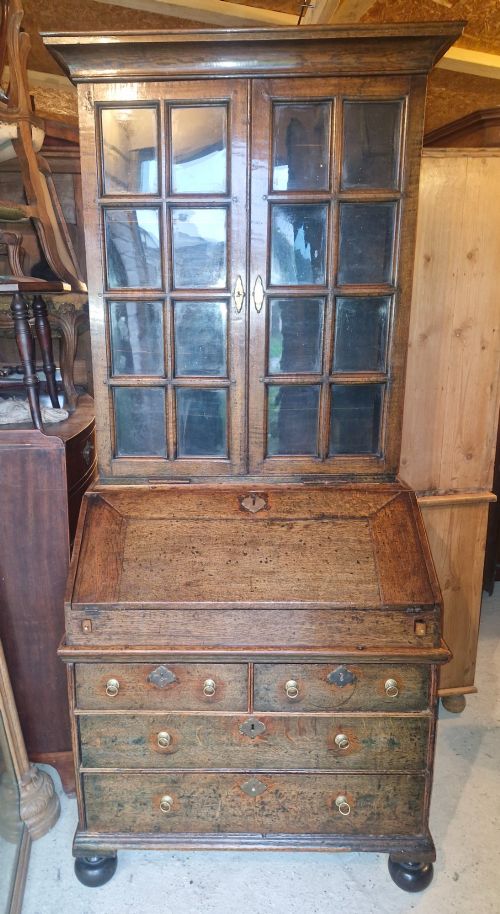
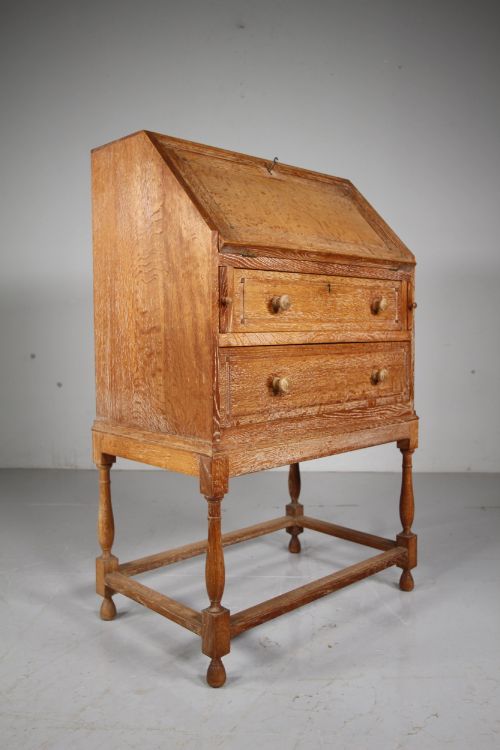
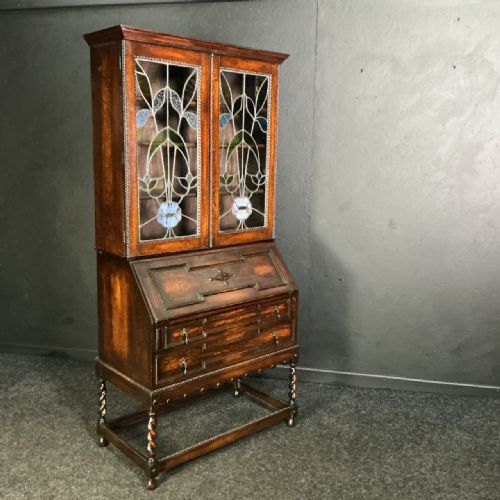
Many variations include upper bookcase sections with glazed doors, while simpler forms rely on standard drawer configurations resting on bracket feet or straight legs. The primary timber across these examples is oak, sometimes finished in golden tones or detailed with linenfold carving.
How they were made
Construction relies on solid oak and oak veneers, shaped with traditional joinery such as dovetailing on internal drawer boxes to ensure structural endurance. Carved panels, linenfold motifs, and applied mouldings decorate the exterior surfaces on revival and Arts and Crafts pieces.
Hardware consists of brass handles, key escutcheons, and hinges that secure the fall-front writing surface. Glass panels feature within the upper bookcase variants to display books or china.
Vintage Oak Secretary Desk Retail Price Guide 2026
Typical asking prices for vintage oak secretary desk among the pieces listed under this phrase on Sellingantiques today, from the lower quarter to the upper quarter. They describe what is for sale here now, not the wider market.
Styles represented include Georgian, Edwardian, Arts and Crafts, Jacobean Revival, and Tudor Revival forms.
What varies in quality
Distinction between examples rests on the crispness of timber carving, the choice of golden or figured oak grain, and the complexity of the fitted interior. Elaborate pigeonholes, small secret compartments, and original brass fittings elevate an item above standard utility furniture.
The integrity of the fall-front hinges and the smoothness of the writing surface determine daily usability. Superior pieces display restrained proportions, thoughtful grain matching, and maker labels from recognised workshops.
Heals of London·Arthur Basil Reynolds·Bryn Mawr·Robert Mouseman Thompson·Harris Lebus·Liberty and Co
The Vintage Oak Secretary Desk Glossary
- Bureau
- A writing desk with a sloping hinged lid that covers compartments and small drawers. This form serves as the primary object type found in this selection.
- Fall-front
- The hinged writing flap that pulls down to create a horizontal desk surface. It conceals the internal pigeonholes when closed upright.
- Linenfold
- A style of wood carving that imitates folded linen cloth, frequently seen on panelled doors and drawer fronts. This motif appears often on Edwardian examples.
- Pigeonhole
- A small, open compartment set within the desk interior for sorting letters and papers. Better examples feature curved dividers and tiny secret drawers.
- Crossbanding
- A narrow strip of veneer laid across the grain direction to form a decorative border around the edges of a surface. This technique frames drawers and writing flaps.
Vintage Oak Secretary Desk: Frequently Asked Questions
How do I use a bureau desk?
Lower the hinged fall-front to access the writing surface and internal compartments for your daily correspondence or laptop work.
Close the flap when finished to hide paperwork and restore a tidy appearance to the room.
What is a bureau bookcase?
A bureau bookcase combines a lower writing desk with an upper shelving unit enclosed by glass or wooden doors.
This tall form provides dual storage for books and stationery within a single footprint.
How do I care for oak furniture?
Dust the oak surfaces regularly with a dry cloth and apply a natural beeswax periodically to nourish the timber grain.
Keep the piece away from direct heat sources and strong sunlight to prevent wood splitting or fading.
How can I tell the period?
Examine the timber finish, hardware style, and structural joinery to identify whether a piece belongs to the Georgian, Edwardian, or Arts and Crafts eras.
Maker labels and distinctive decorative motifs like linenfold carving offer further clues to the manufacturing decade.