


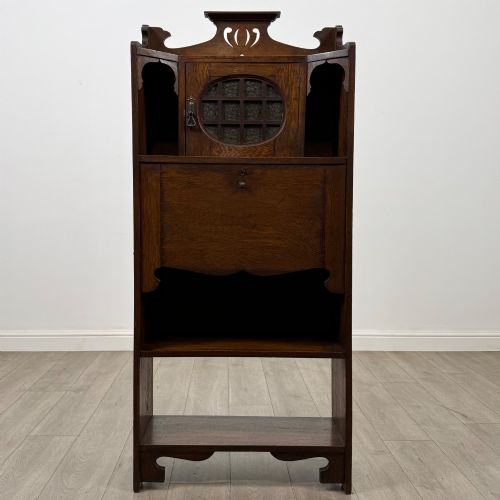
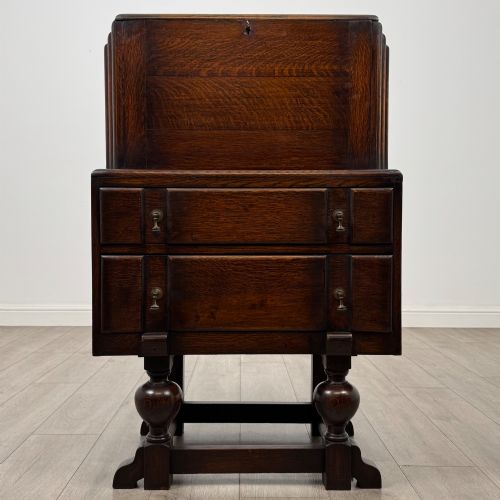
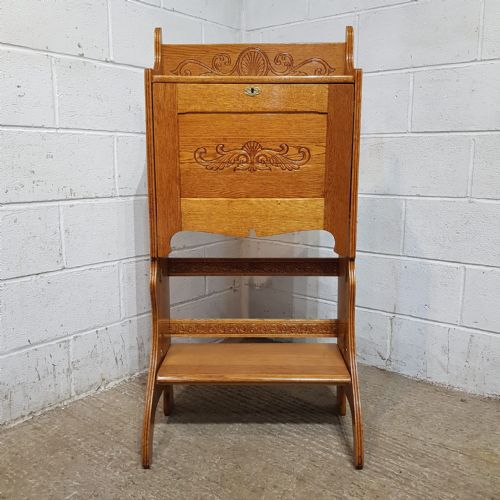
Compact Oak Desk
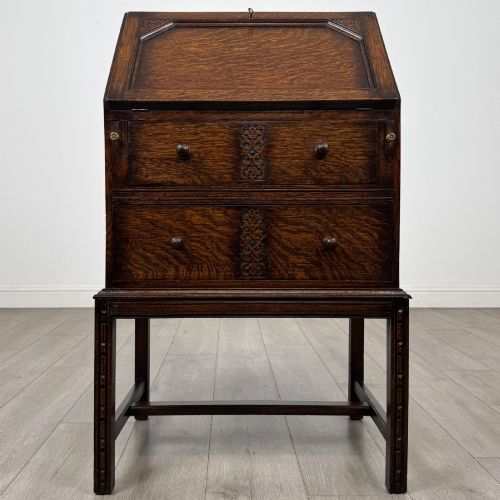
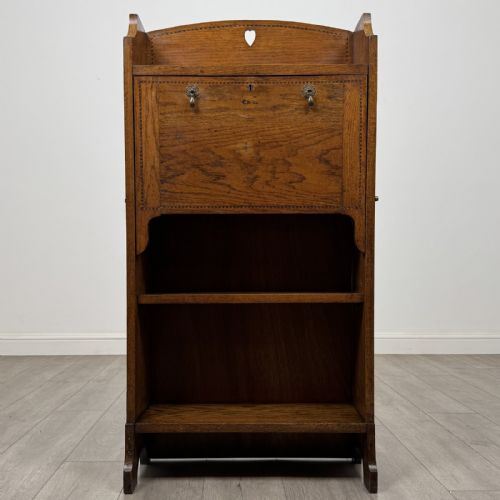
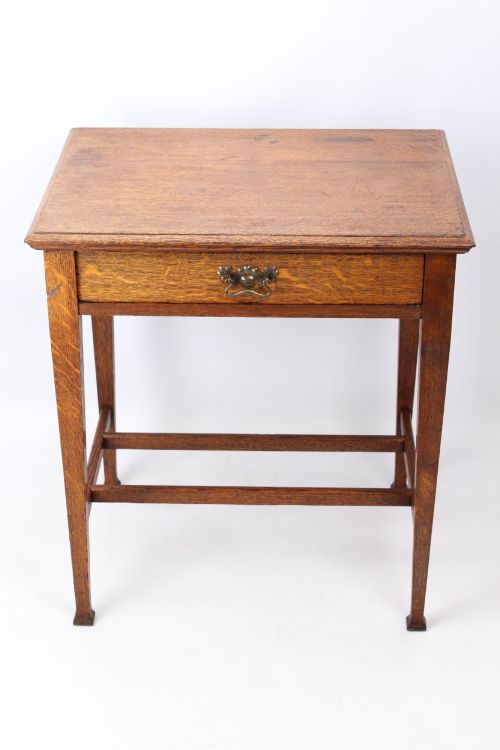
A compact oak desk gives a workspace footprint without dominating a room, appearing in forms from Edwardian writing tables to 18th-century bureaux.
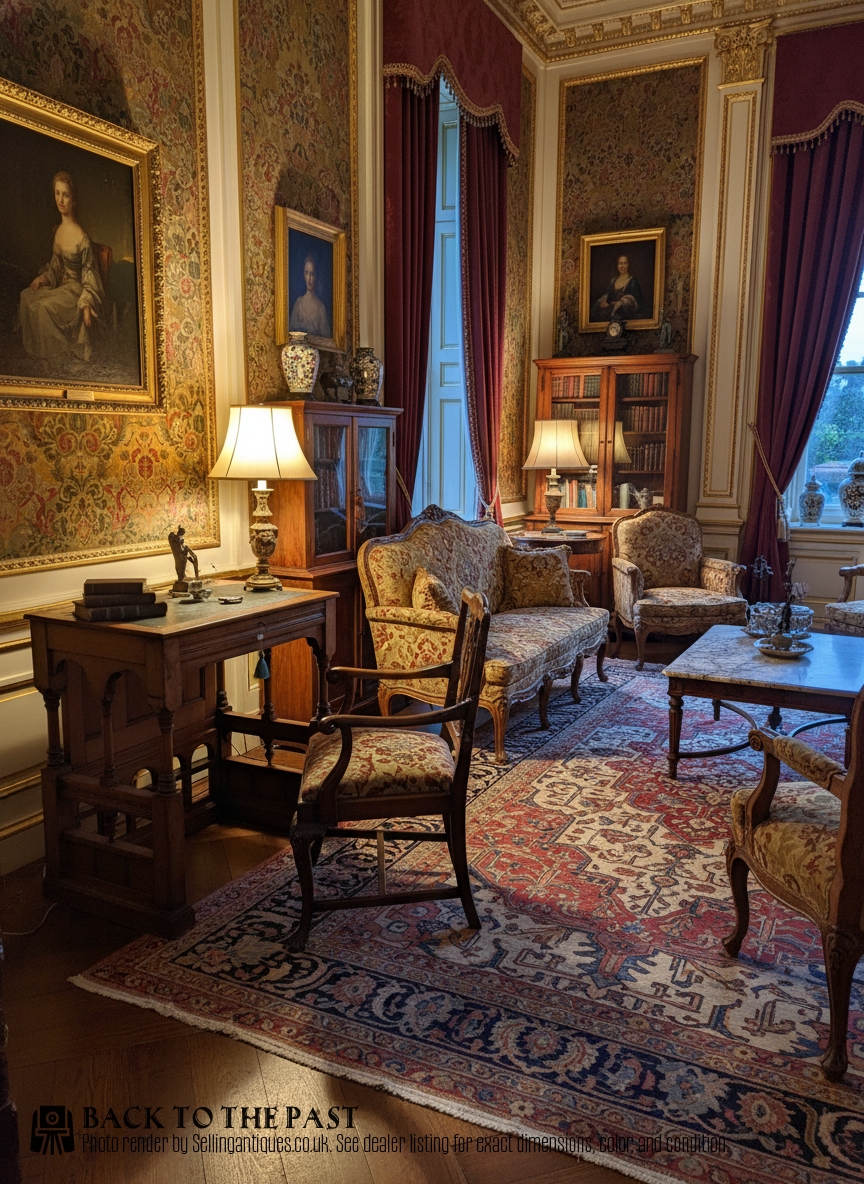
Compact Oak Desk
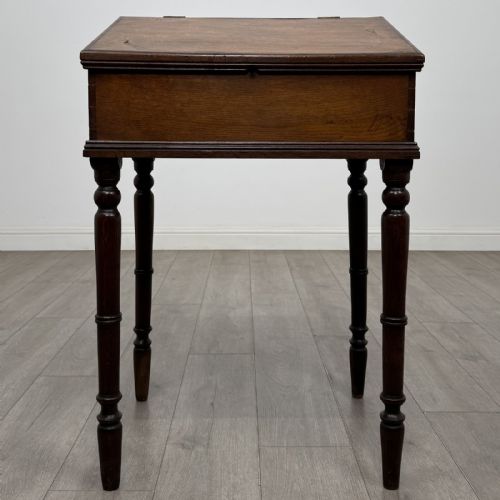
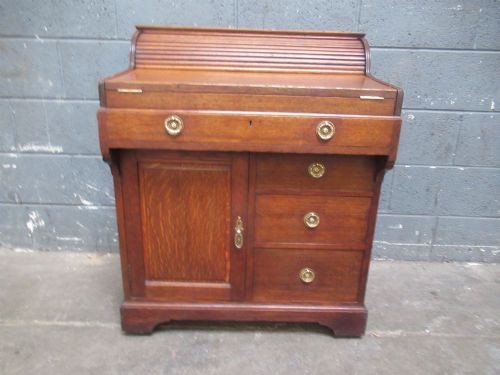
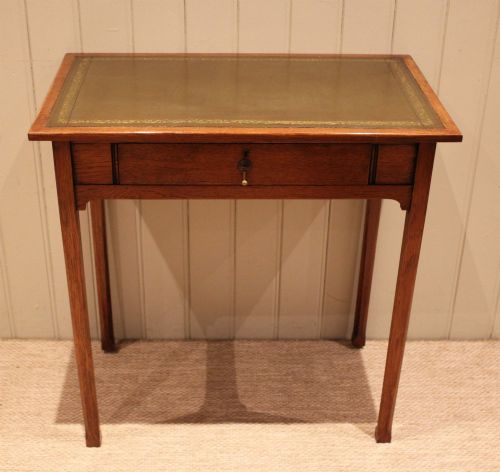
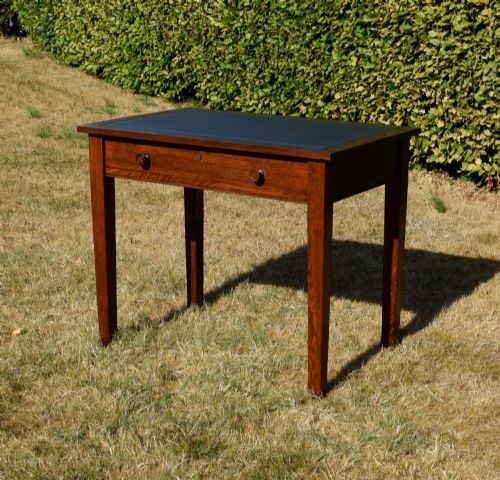
A compact oak desk serves as a practical writing surface or storage piece designed for smaller rooms. When searching for a compact oak desk, buyers encounter forms ranging from simple writing tables and student bureaux to elaborate Davenport desks with drawers on both sides.
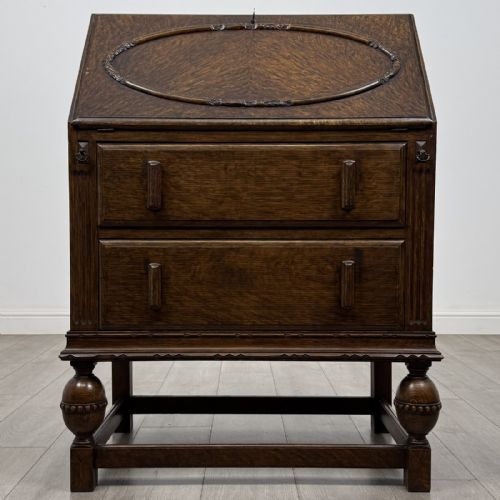
The pieces on this page span several centuries, with a strong representation of Edwardian and 1920s examples alongside Victorian, 19th-century, and 18th-century origins. Styles vary from functional Arts and Crafts designs to Jacobean Revival and Georgian pieces.
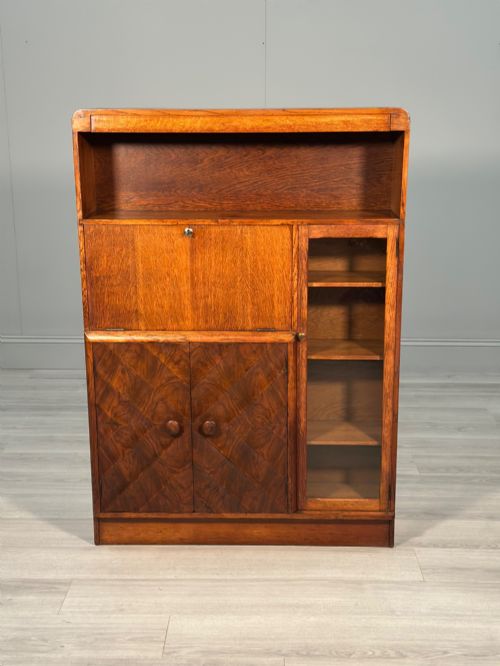
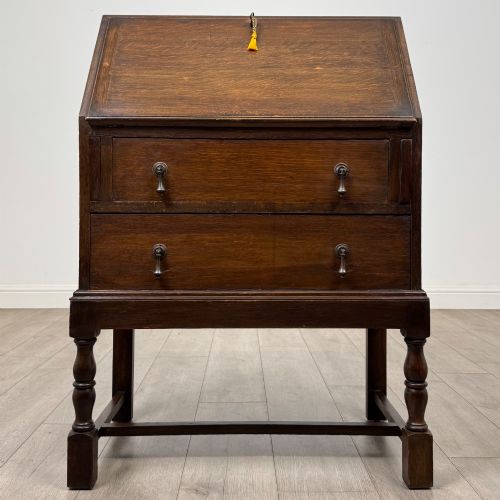
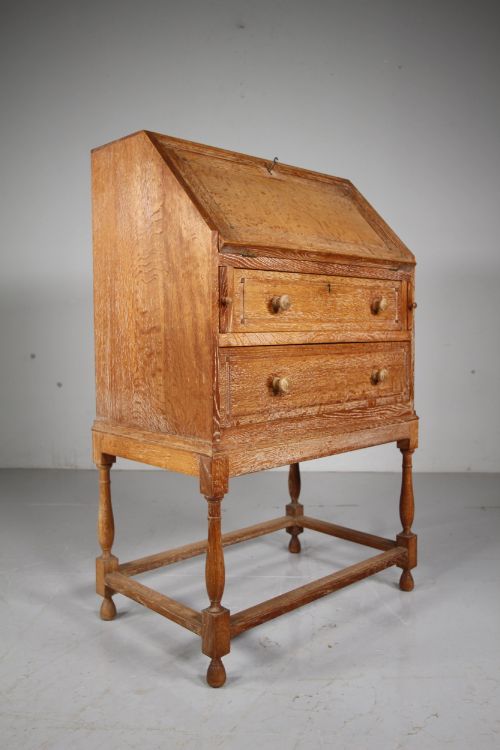
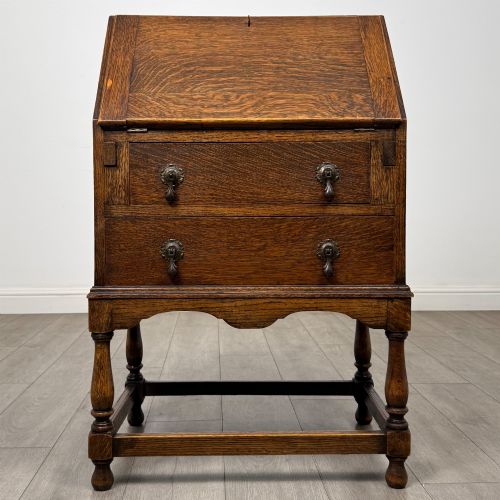
Most entries take the form of writing bureaux, writing tables, and small desks, occasionally incorporating glazed bookcases, linenfold panels, or clever slide-and-turn mechanisms. These items suit studies, bedrooms, and reception rooms where floor space remains at a premium.
How they were made
Makers constructed these pieces primarily from solid oak, sometimes utilising figured pollard oak veneers or lighter golden oak tones to add visual interest. Brass handles, iron hinges, and leather writing inserts frequently complement the wood.
Joinery methods reflect the period, ranging from clean, unadorned Arts and Crafts construction to carved Green Man details and linenfold panels. Structural elements often include fitted interior pigeonholes, small drawers, and drop-down writing flaps.
Compact Oak Desk Retail Price Guide 2026
Typical asking prices for compact oak desk among the pieces listed under this phrase on Sellingantiques today, from the lower quarter to the upper quarter. They describe what is for sale here now, not the wider market.
Listings feature periods spanning from the 17th century through to the 1930s, using materials including oak, brass, leather, and pollard oak.
What varies in quality
The standard of a piece rests on the selection of timber grain, the crispness of any carved detailing, and the integrity of the internal fittings. Desks featuring figural pollard oak or deliberate Arts and Crafts proportions display greater attention from their makers than plain utilitarian items.
Original hardware, sound mechanisms in sliding tops or fall-front desks, and makers' labels elevate the standing of a piece. Finer examples balance robust construction with refined proportions that make small furniture useful rather than merely small.
Heals of London·Bryn Mawr·Jenners·James Shoolbred·Simpsons of Kendall·Harris Lebus
The Compact Oak Desk Glossary
- Bureau
- A desk featuring a sloping hinged writing flap that opens to reveal internal compartments and pigeonholes. These often sit above drawers or bookcase sections.
- Davenport desk
- A compact box-form desk with a sloped, sliding writing top and a set of drawers accessed from the side. They originated in the Regency period and remained popular through the Victorian era.
- Writing table
- A freestanding table with one or more drawers designed primarily for writing rather than heavy storage. They typically feature turned or square legs without a fall-front flap.
- Linenfold
- A style of wood carving that mimics folded linen fabric, frequently seen on panelled doors of Edwardian and revival furniture.
- Pollard oak
- Timber taken from trees that have been pollarded, producing a highly figured, knobbly grain pattern prized for decorative veneer work.
Compact Oak Desk: Frequently Asked Questions
What is a compact oak desk used for?
These pieces provide a dedicated surface for writing, laptop use, or correspondence while occupying minimal floor space in a home. Their internal compartments and drawers also help organise stationery and small documents.
Historically, smaller desks served students, ladies in sitting rooms, or individuals managing household accounts in rooms where a full-sized partner desk proved too large.
How do I tell an Edwardian desk from an 18th-century one?
Edwardian desks often feature lighter golden oak, simple linear Arts and Crafts influences, or machine-cut dovetails and modern brassware styles. Eighteenth-century pieces display dense, heavier timber with hand-cut joinery, deeper patination, and different internal configurations.
Examining the drawer linings, backboards, and construction marks usually reveals the manufacturing period, as older pieces show distinct hand-tool signatures.
How do I live with a bureau desk?
Living with a bureau involves keeping the writing flap clear so you can close it quickly to hide paperwork and maintain a tidy room. The internal pigeonholes work well for sorting daily mail, chargers, and small notebooks.
When positioning the desk, ensure there is sufficient clearance for a chair and that the drop-down flap does not block walkways when open.
Are Davenport desks comfortable for writing?
A Davenport desk offers a sloping top that supports writing at a comfortable angle, though the fixed stool position and side drawers limit leg movement. They suit short tasks, ledger entries, or correspondence rather than extended computer work.
The top writing surface often slides forward to adjust the user's seating position relative to the sloped pad.