

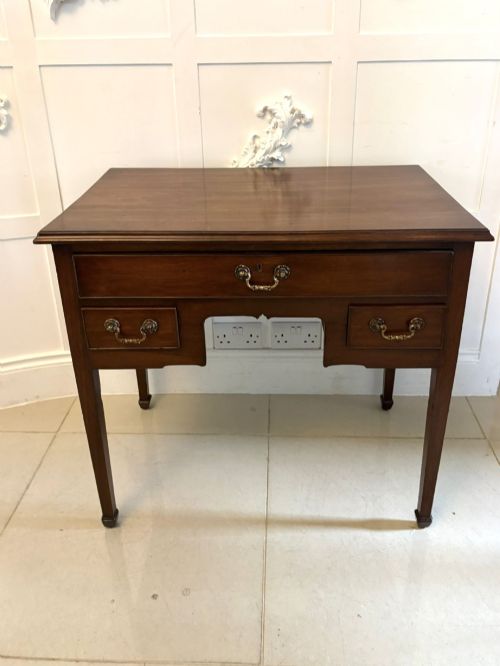
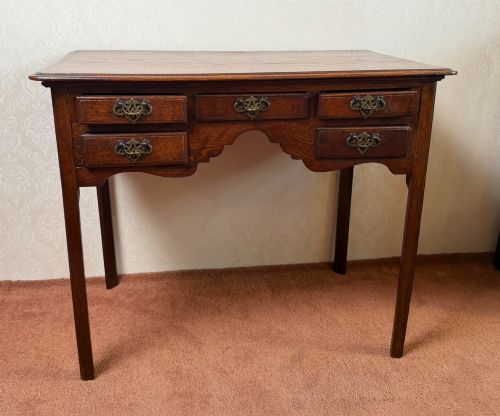
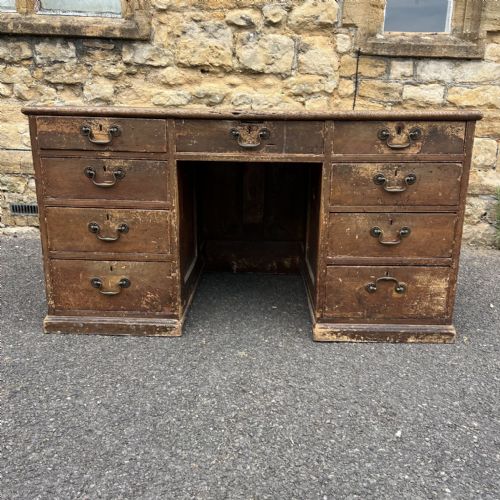
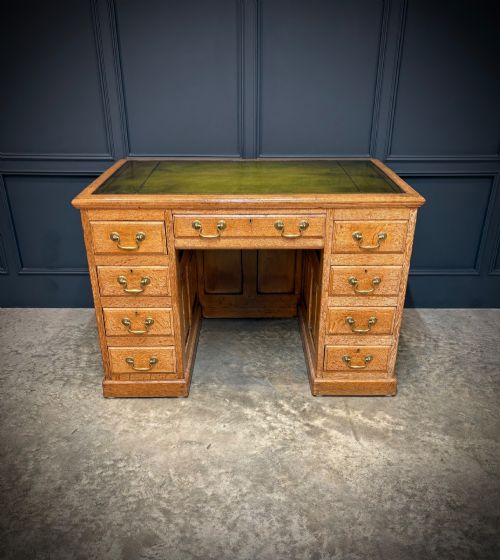



Oak Kneehole Desk
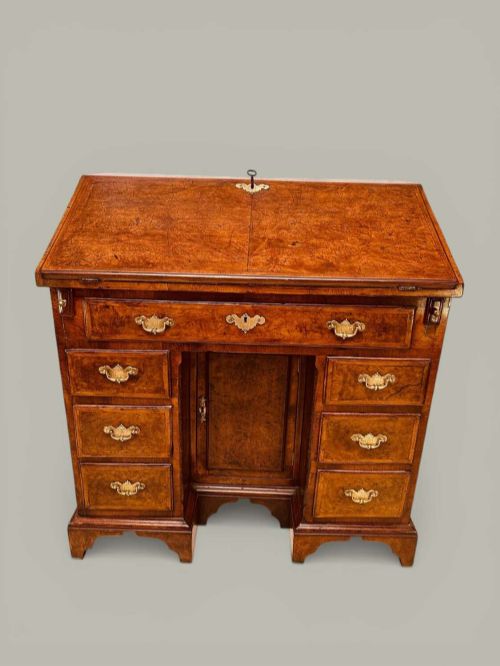
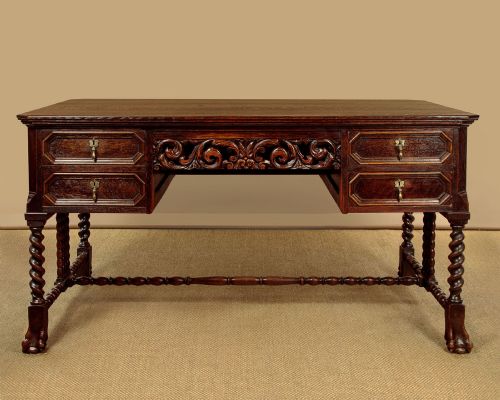
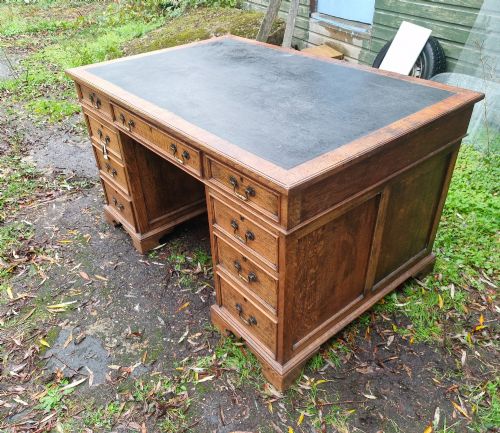
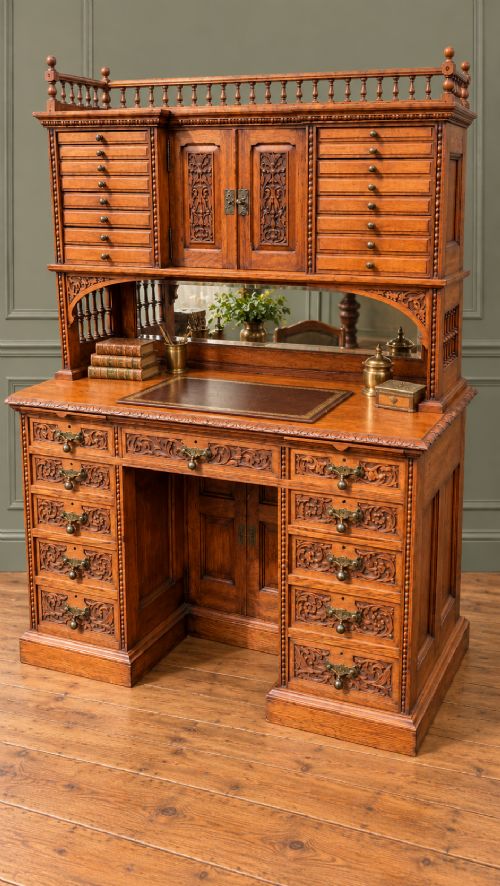
An oak kneehole desk offers a compact architectural form with central recessed space flanked by pedestals, combining practical writing surfaces with generous storage.
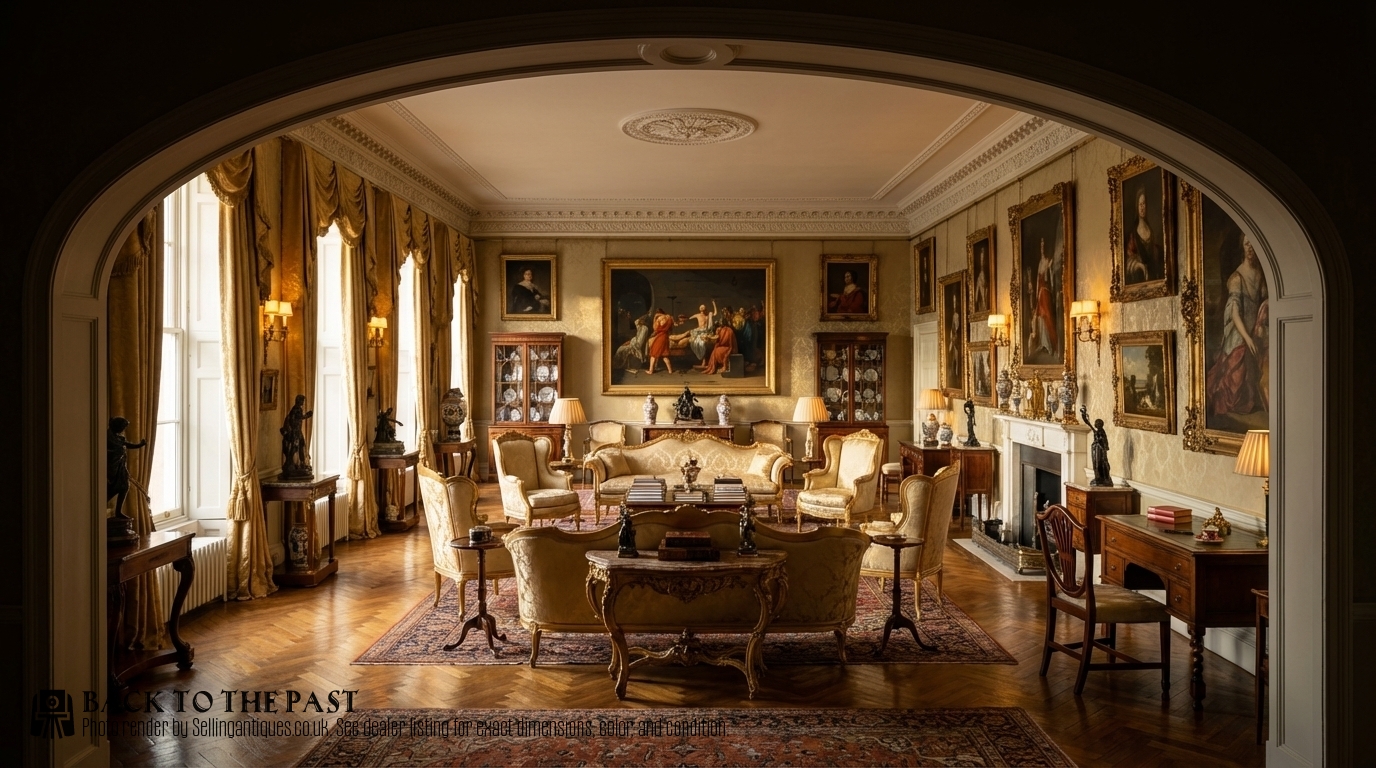
Oak Kneehole Desk
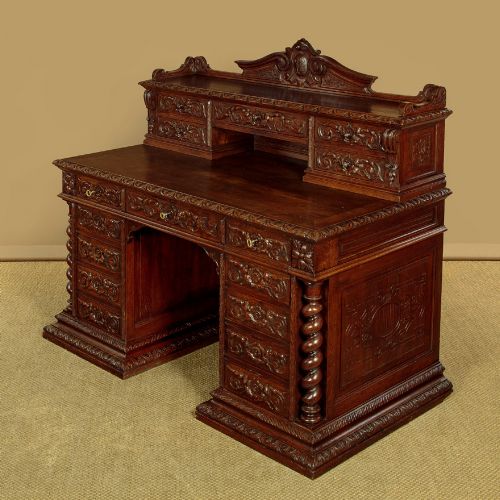
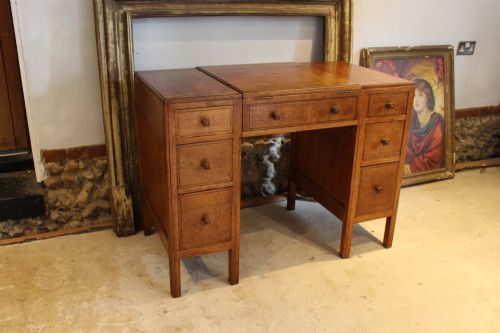
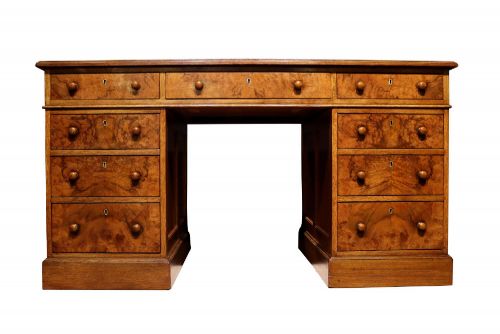
An oak kneehole desk is a fitted writing station characterised by a central recess or kneehole, usually flanked by banks of smaller drawers, creating a symmetrical arrangement. This form serves domestic studies and libraries alike, offering a sturdy surface paired with concealed compartments for correspondence and ledgers.
The pieces appearing most frequently range from the Georgian period through the Victorian era and into the Edwardian years. These examples vary from formal pedestal designs to country pieces and lowboys, reflecting diverse regional cabinet-making traditions.
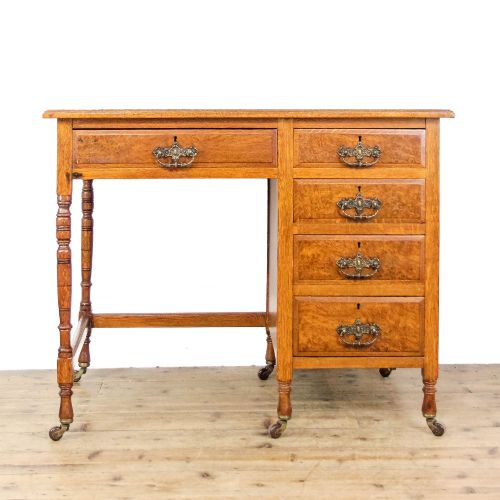
Victorian and late Victorian iterations often adopt twin pedestal configurations with numerous drawers, while 18th-century pieces tend toward leaner proportions and single drawer banks beneath the top. Buyers encounter everything from carved revival styles to plain golden oak office furniture.
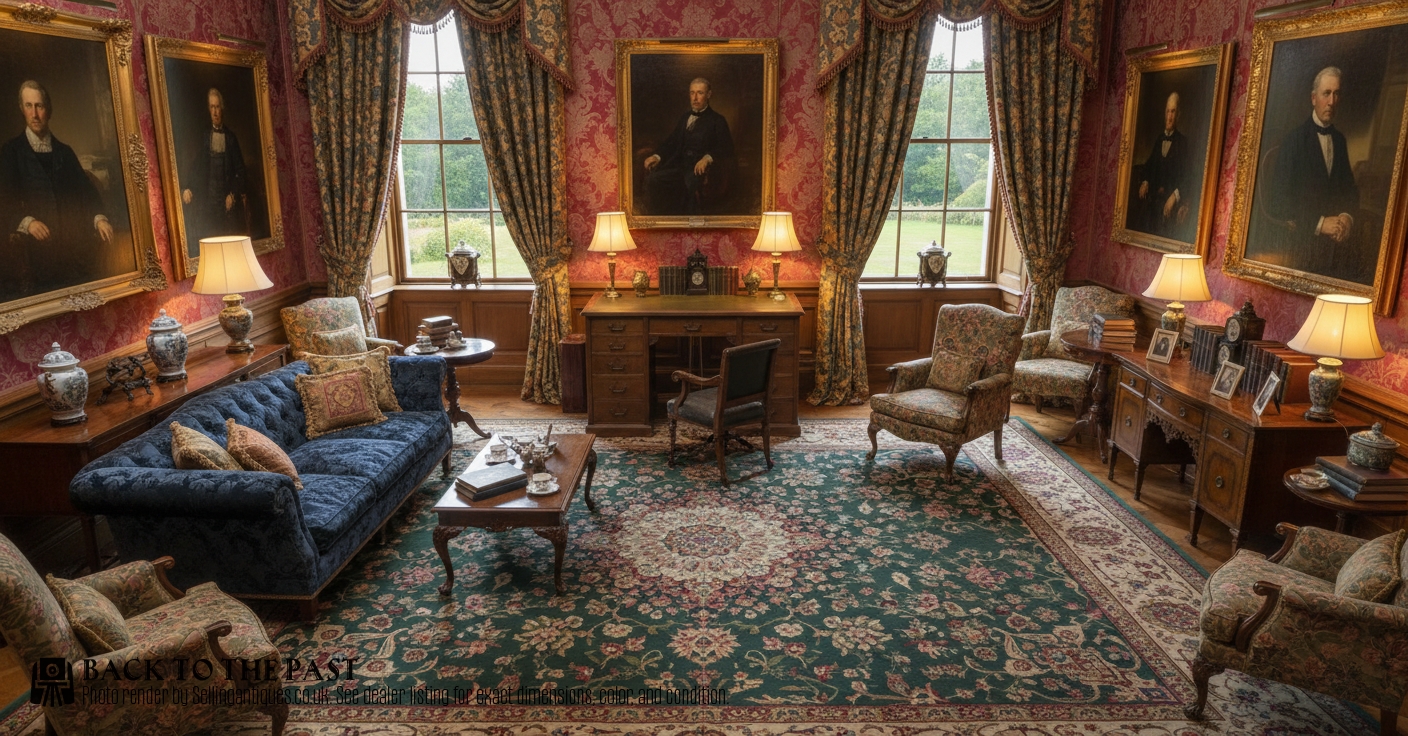
What varies in quality
Construction methods determine durability, separating simpler country-made items from workshop-produced furniture with dovetail drawer joints and tight structural framing. The selection of timber grain, particularly figured oak or burr walnut veneers, elevates the visual presence of finer pieces.
Originality of surface finish and hardware preserves the historical integrity of a desk, whereas heavy alterations or replaced handles alter the character. Proportion and depth dictate how successfully the pedestals balance the central kneehole space.
Oak Kneehole Desk Retail Price Guide 2026
Typical asking prices for oak kneehole desk among the pieces listed under this phrase on Sellingantiques today, from the lower quarter to the upper quarter. They describe what is for sale here now, not the wider market.
Listings feature oak kneehole desks spanning the 18th century, the Victorian period, and the Edwardian era, alongside related forms like lowboys and sideboards.
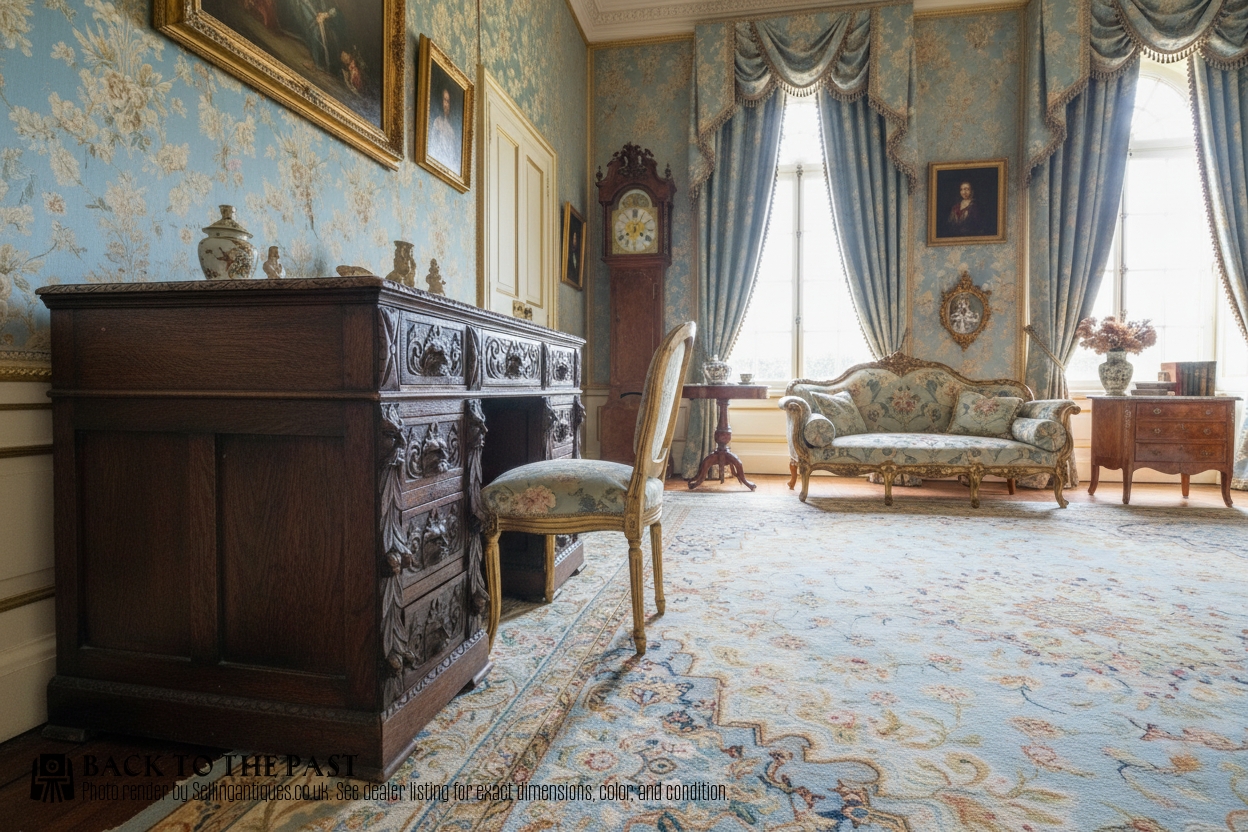
Heal & Sons·Gillow & Co·Shapland and Petter·Galloway & Sykes·Étienne Kohlmann
The Oak Kneehole Desk Glossary
- Kneehole
- A recessed space beneath the central section of a desk, designed to accommodate the user's legs while seated. This architectural arrangement allows pedestals of drawers to sit on either side.
- Pedestal desk
- A heavy freestanding writing table supported by two vertical columns of drawers resting on the floor. This format provides substantial storage capacity.
- Lowboy
- A small 18th-century table with one or more rows of drawers beneath the work surface, often functioning as a dressing table or writing desk. These pieces typically stand on slender cabriole or straight legs.
- Burr walnut
- A figured wood veneer derived from the knotted growths of walnut trees, prized for its swirling patterns. Cabinet makers applied it to drawer fronts to create decorative contrast against oak carcases.
- Campaign style
- Portable furniture constructed for travel, featuring recessed brass handles and reinforced corners to withstand frequent transit. Such details appear on military and estate desks.
Oak Kneehole Desk: Frequently Asked Questions
How do I spot an 18th-century piece?
Eighteenth-century examples typically display hand-cut dovetails, simpler timber thicknesses, and proportions that predate the heavier pedestal formats of the Victorian era. Examination of the drawer linings reveals hand-planed tool marks rather than uniform machine production.
These earlier desks often take the form of lowboys or compact writing tables with restrained carving. Their patination develops a deep warmth through decades of use.
Were these desks used for writing or storage?
They served primarily as administrative desks for managing correspondence, household accounts, and estate records. The surrounding drawers kept ledgers, inkwells, and papers organised close to hand.
The central kneehole also frequently concealed a small cupboard door or shallow hidden drawer behind the user's legs. This added a layer of security for private documents.
How should I care for an oak surface?
Maintain the wood by applying traditional beeswax sparingly to nourish the grain and preserve the surface sheen. Avoid placing timber furniture near direct heat sources or strong sunlight, which can dry out the historic boards.
Cleaning requires only a soft, dry cloth to remove dust without disturbing the aged patina. Moisture should be wiped away immediately to prevent staining.
What distinguishes Victorian styles from Edwardian ones?
Victorian models tend to be heavier and more substantial, often featuring darker finishes, bold mouldings, or revivalist carving such as Green Man motifs. Edwardian pieces generally shift toward lighter golden oak tones with simplified lines and restrained ornamentation.
Proportions also changed as domestic interiors modernised, leading Edwardian makers to produce compact writing desks suited to smaller studies. Both periods utilised solid oak construction but applied different aesthetic priorities.