
Oak Partners Desk
An oak partners desk provides double-sided workspace with drawers on both faces, designed for two people to work opposite each other.
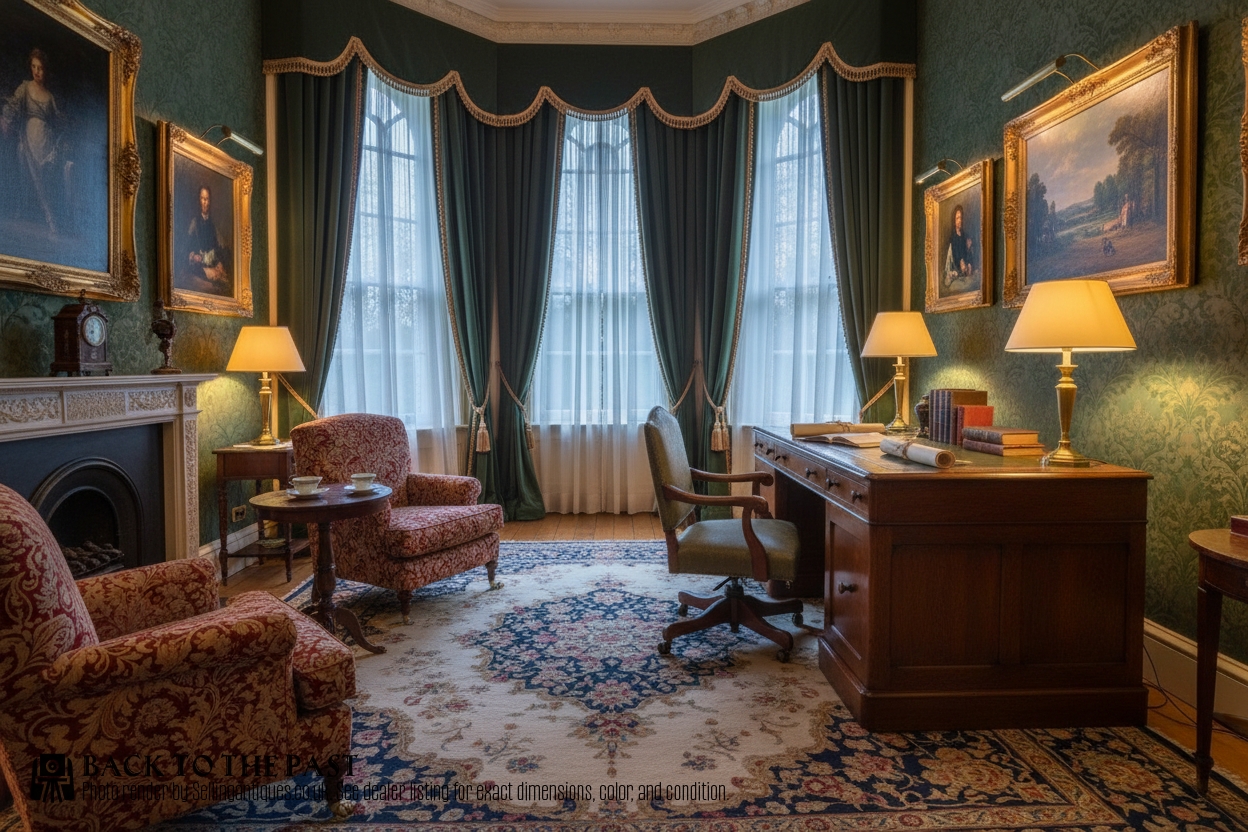
Oak Partners Desk
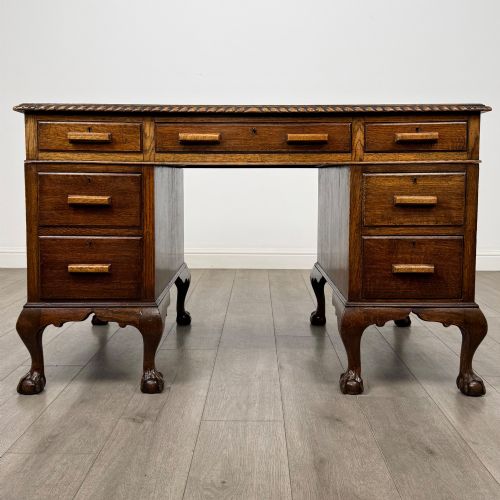
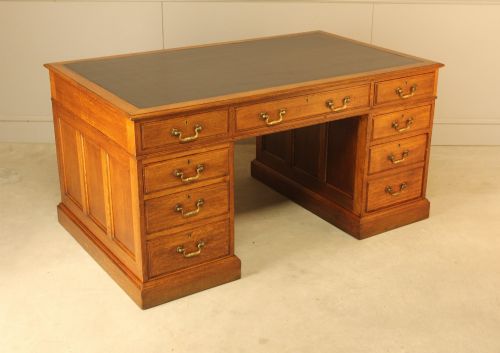
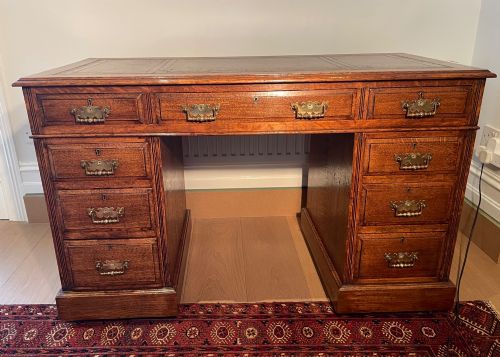
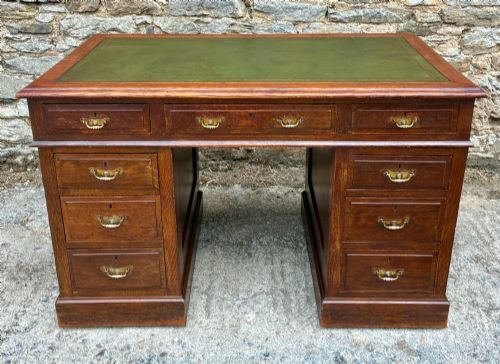
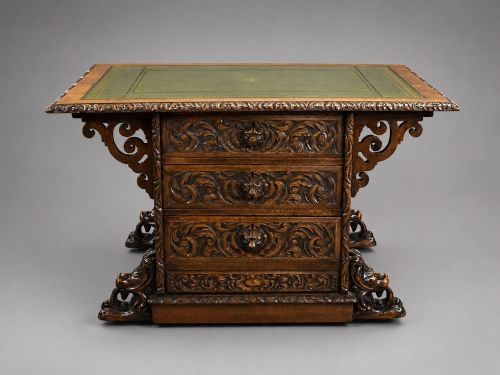
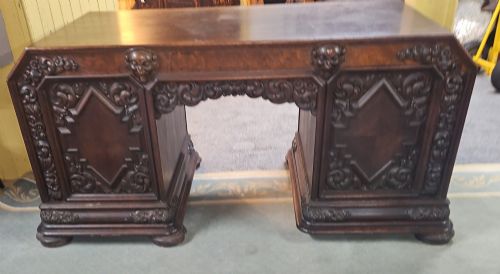
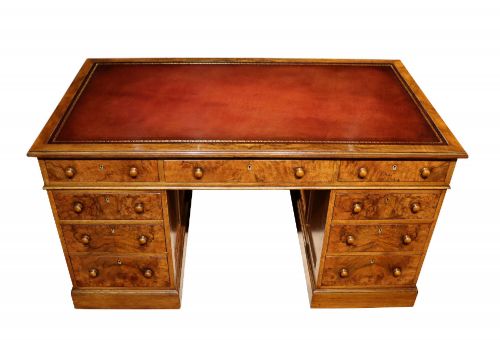
An oak partners desk is a large pedestal writing table built to accommodate two users facing one another across a shared surface. The form typically pairs banks of drawers and cupboards on both long sides, offering equal storage and kneehole space for a pair of workers.
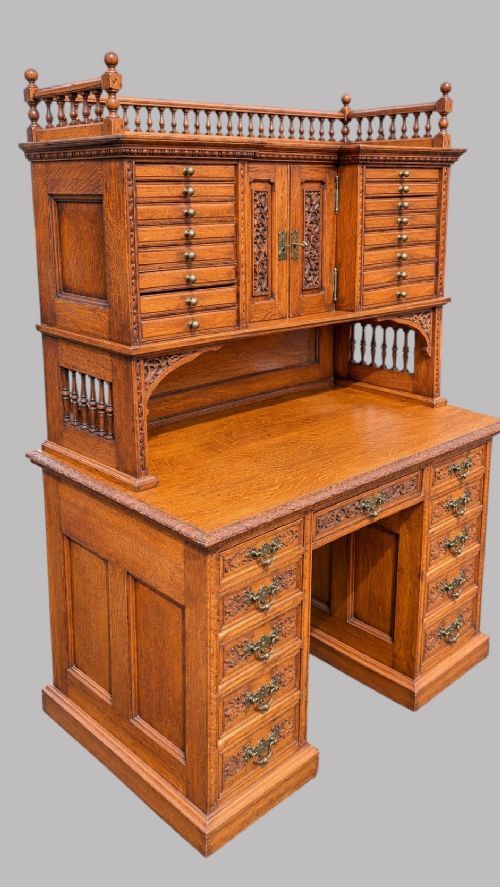
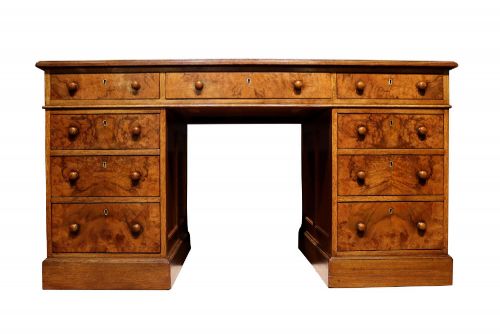
Most examples seen here date from the Victorian and Edwardian eras, constructed in solid oak or finished with veneers such as burr walnut. These substantial pieces served as executive desks in libraries, offices and large country houses.
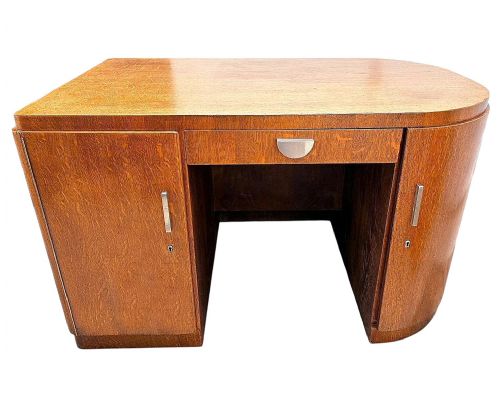
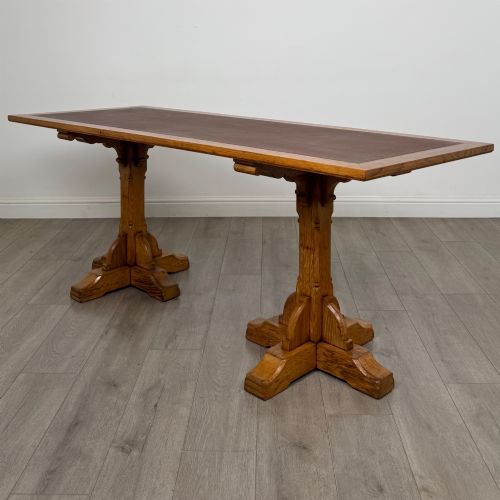
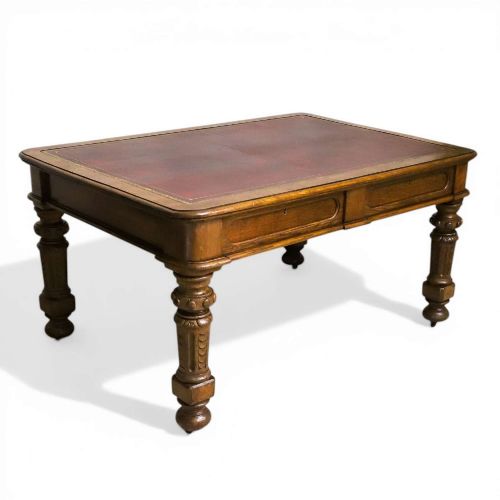
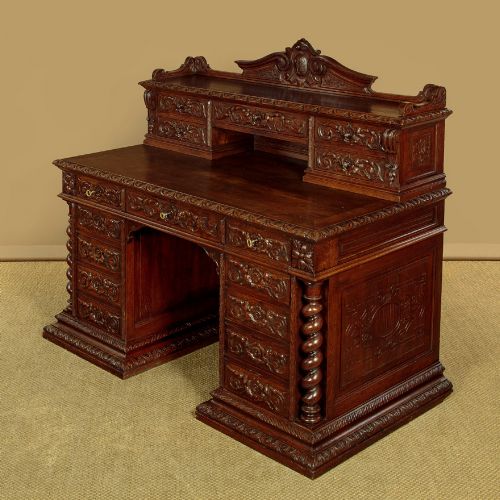
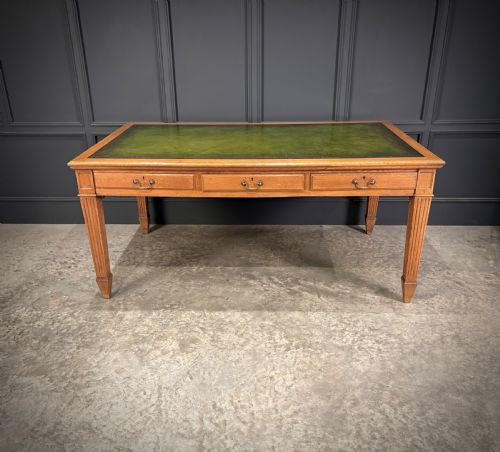
While many take the standard twin pedestal format, variations include Gothic Revival library tables and Art Deco modernist designs. The common thread is the double-sided configuration intended for simultaneous use.
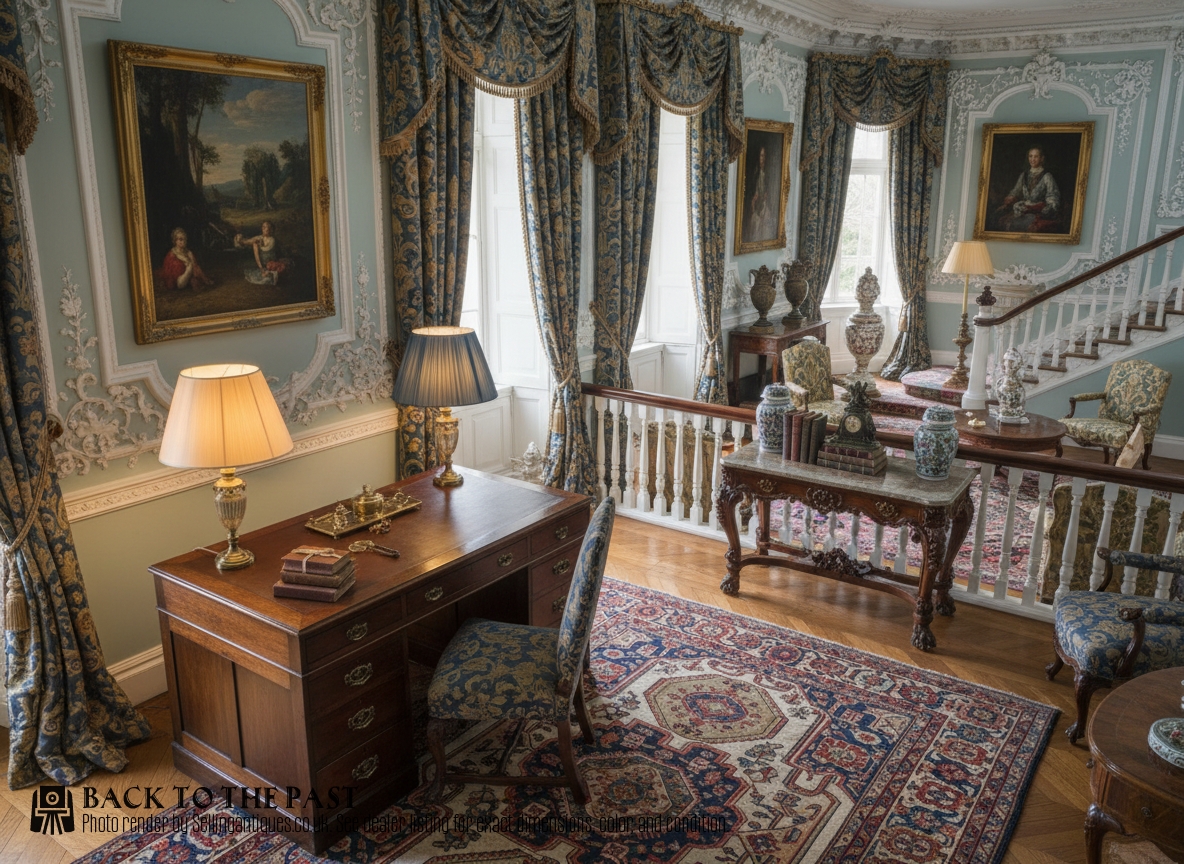
Materials and construction methods
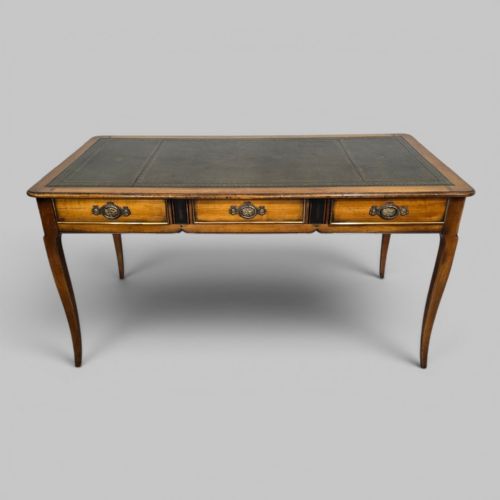
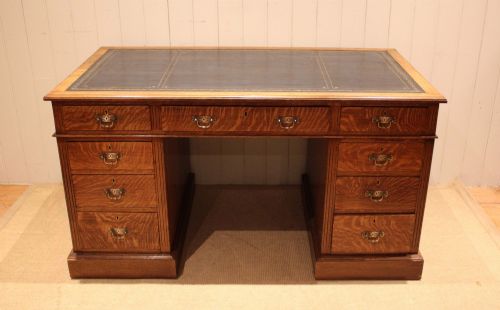
Cabinet makers utilised solid oak and golden oak timbers, sometimes incorporating secondary woods like ash or embellishing surfaces with burr walnut and ebonised details. Leather writing surfaces, often tooled with gold leaf, were inset into the top panels.
Joinery involved sturdy frame-and-panel construction for the pedestals, which supported heavy timber writing tops and accommodated multiple dovetailed drawers. Hardware such as brass drop handles, brass locks and castors completed the build.
Oak Partners Desk Retail Price Guide 2026
Typical asking prices for oak partners desk among the pieces listed under this phrase on Sellingantiques today, from the lower quarter to the upper quarter. They describe what is for sale here now, not the wider market.
Listings feature oak partners desks spanning the Regency period, Victorian era, Edwardian years and the 1930s Art Deco movement.
Distinguishing quality across examples
Quality shows in the selection of timber figure, such as well-matched golden oak or burr oak veneers, and the depth of hand-carved detailing on stiles and drawer fronts. Maker attribution, through stamped locks, paper labels or branded signatures, elevates an example.
Construction integrity dictates longevity, evident in smooth drawer operation, solid secondary framing, and the preservation of original leather writing inserts with gilt tooling.
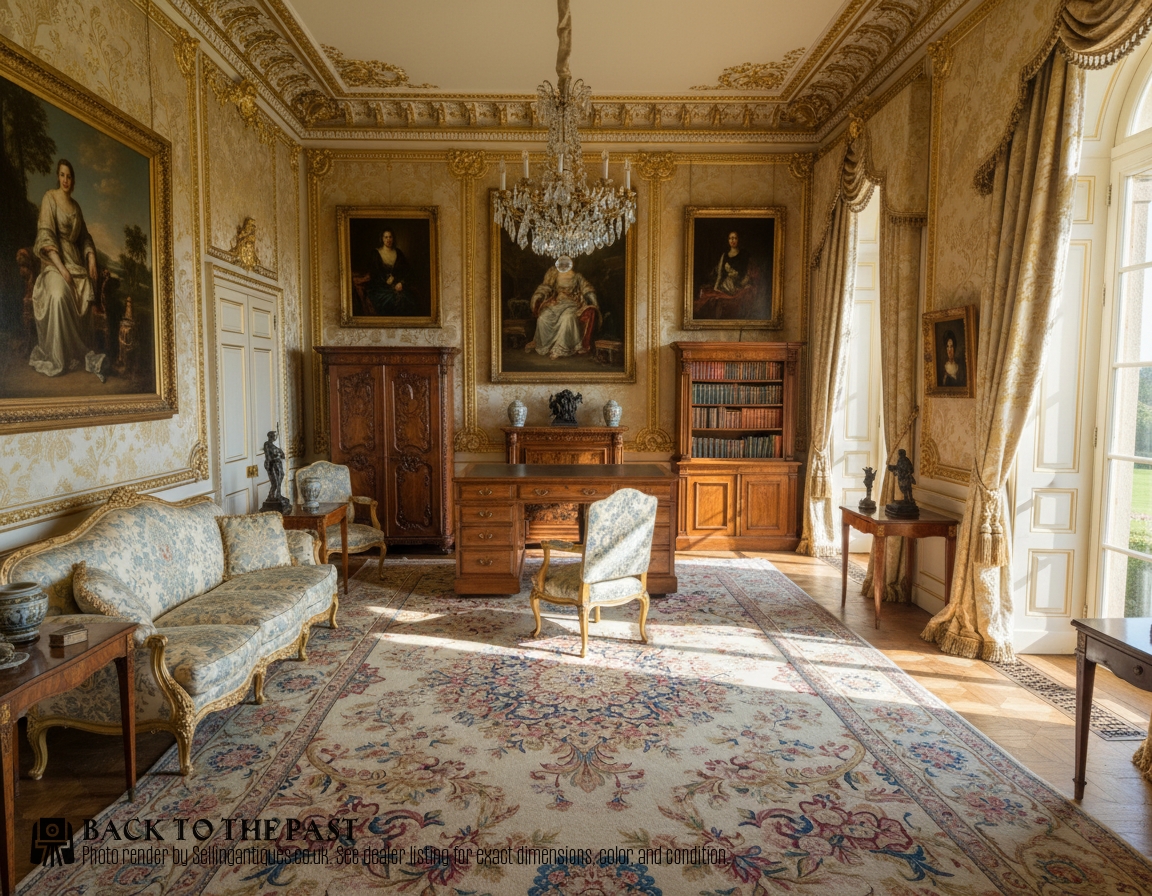
Étienne Kohlmann·T Wilson·Gillow and Co·Deighton and Dunthorne·Holland and Sons·Edwards and Roberts·George Bartholomew and Co
The Oak Partners Desk Glossary
- Partners desk
- A double-sided pedestal desk designed for two people to sit facing each other, featuring drawers and cupboards on both long sides.
- Pedestal desk
- A heavy writing table supported by two vertical banks of drawers rather than conventional legs.
- Kneehole
- The central recessed space beneath a desk top where the user sits.
- Burr oak
- Timber sliced from a tree growth showing swirling, highly decorative grain patterns used for decorative veneer.
- Gilt tooling
- The application of gold leaf into impressed designs around the perimeter of a leather writing surface.
Oak Partners Desk: Frequently Asked Questions
What is an oak partners desk?
An oak partners desk is a large double-sided writing table featuring drawers and cupboards on both faces. It was designed so two people could sit and work opposite each other.
These pieces typically consist of two pedestals supporting a wide top inset with leather. They appeared frequently in 19th-century offices, libraries and substantial homes.
How do I date an oak partners desk?
Dating relies on stylistic clues and construction methods, moving from Regency and Gothic Revival pieces through heavy Victorian carvings to cleaner Edwardian lines and later Art Deco forms. Drawer construction, handles and locks also help narrow the decade.
Earlier 19th-century examples often display rich golden oak or pollard oak with hand-cut dovetails, while later pieces shift toward lighter oak or incorporate modernist influences by the 1930s.
Will a partners desk fit in a modern room?
These desks are substantial items of furniture, often measuring significant lengths and widths to accommodate dual workspaces. Measuring the intended room and checking access routes such as doorways and stairwells is essential before placement.
Because they are finished on all sides, they sit effectively in the centre of a room rather than pushed against a wall, acting as a focal point.
How do I care for the leather top?
The leather writing surface benefits from gentle dusting and occasional conditioning with appropriate leather balms to prevent drying and cracking. Avoid using harsh chemical cleaners that can strip the original dye and gold tooling.
Using blotters or desk pads helps protect the historic leather from daily wear while maintaining the usable surface.